REVIEW · TAY NINH
From Ho Chi Minh: Black Virgin Mount And Cao Dai Holy Mass
Book on GetYourGuide →Operated by Trip in Vietnam · Bookable on GetYourGuide
Ba Den Mountain feels like a day trip with built-in wow. You’ll ride the cable car up to 986 meters, then spend time among temples and pagodas with sweeping views over Tay Ninh. I especially like the pacing: it blends sightseeing with quiet, open-air moments that make the whole mountain feel slower and more personal. You’re also getting a second spiritual layer with Cao Dai Holy Mass, which adds a very different atmosphere than the Buddhist sites.
What I like most is how the trip connects the myths to what you see on the mountain. You’ll learn legends tied to the Black Virgin Mountain (Bà Đen), and you’ll pass Buddhist-style architecture along the way, including areas that relate to monk life and cave residences. Another strong point is the practical tour setup: AC transfer, bottled water, an English-speaking guide, and entrance tickets are part of the package—so you can focus on the day instead of logistics.
The main drawback to consider is the cable car cost. Even though the trip is centered on going up by cable car, it’s listed as not included, so you should budget extra on top of the $67 tour price.
In This Review
- Key things you’ll notice on this Ba Den and Cao Dai day
- Leaving Ho Chi Minh City for Tay Ninh: smooth pickup and an easy day start
- Ba Den by cable car: 986 meters and cloud-level views
- Temples and pagodas on the Black Virgin Mountain route
- The Black Virgin legends: why you’re walking these paths
- Cao Dai Holy Mass: a planned spiritual contrast after the mountain
- Miroku Bosatsu and the giant Buddha sights in Tay Ninh
- Lunch in Tay Ninh: local food that keeps you going
- Price and value: is $67 worth it for this kind of day?
- Who this tour suits best (and who might adjust the plan)
- Should you book this Ho Chi Minh City to Ba Den and Cao Dai tour?
- FAQ
- What is included in the tour price?
- Is the cable car included?
- Where do you get picked up and dropped off?
- Is lunch included?
- Can this tour include a visit to the Cu Chi Tunnels?
- Which languages are available for the tour?
Key things you’ll notice on this Ba Den and Cao Dai day
- Cable car up to Ba Den’s high pagoda areas, with Tay Ninh and cloud views at eye level
- Black Virgin Mountain myths tied to what you’re seeing on the route
- Temple and pagoda stops along the mountain path, with Buddhist cave-residence areas
- Optional extra hiking for two additional temples if you want more time up top
- Cao Dai Holy Mass as a planned spiritual break in the schedule
- A chance to see big-time Buddha icons like Miroku Bosatsu (Maitreya) and other bronze/buddha statues
Leaving Ho Chi Minh City for Tay Ninh: smooth pickup and an easy day start
This tour starts with a guide picking you up at the front of your hotel in Ho Chi Minh City. Then you head north toward Tay Ninh with AC car transfer, plus bottled water in the vehicle. For me, this is the right kind of setup for a mountain day: you’re not scrambling for rides or dealing with unclear meeting points once you’re already out of town.
You also get a professional English-speaking tour guide (other languages are available, but there’s a surcharge). In practical terms, that matters because temple meanings are not always obvious. A good guide helps you connect the architecture and ceremony to the reason people come, instead of just walking past pretty buildings.
One more little thing: the tour design includes lunch and entrance tickets, so you’re not constantly stopping to pay fees or hunt down food. If you’re the type who likes your day structured but not rushed, this does a solid job.
Ba Den by cable car: 986 meters and cloud-level views
The centerpiece is going up Ba Den Mountain, the so-called Roof of the South, which reaches 986 meters. From the top areas, you get panoramic views across Tay Ninh. The best part is the feeling the mountain gives you: clouds can hang low enough that it feels like you’re looking at the world from a different layer of the sky.
Before you reach the highest areas, you’ll ride the cable car to a pagoda temple dedicated to the local Khmer deity, Bà Đen. On the way, you pass sights like fruit orchards and mango trees, along with woodland flowers—small scenery moments that make the climb feel more than just a transfer from street to temple.
One important reality check: the cable car is not included in the listed package. That doesn’t ruin the value, but it does mean you should plan cash or card for the cable car separately. If you’re budgeting tightly, factor this in early so you don’t get surprised later.
If you feel energetic, you can also take an optional hike further up to discover two more temples. That’s not for everyone, but it’s a nice option if you want slightly more depth and fewer crowds in the higher spots.
Temples and pagodas on the Black Virgin Mountain route
Ba Den, also called Black Lady Mountain, is not just one climb—it’s part of a larger mountain area. The trip description frames it as three large mountains covering 24 km, rising about 3,000 feet above rice fields and jungle. So when you’re moving between stops, it’s less like you’re visiting one building and more like you’re tracing a sacred route through multiple viewpoints and structures.
Along the way, you’ll see many temples and pagodas, including “typical Buddhist architectural works.” There are also references to cave areas used as residences for Buddhist monks. This matters because it changes how you look at the place. Instead of only seeing decoration, you start noticing how religious life adapted to the mountain—using caves, corridors, and hidden spaces that fit the terrain.
The tempo here is usually what makes or breaks mountain-then-temple days. A strong guide experience can keep you from feeling herded. One tip I’d follow: don’t sprint between buildings. Give yourself at least a few minutes at each stop to look up at details and then look out at the horizon. The mountain works better when you switch between close-up reading and long-view looking.
If you’re buying small offerings or souvenirs, keep in mind that some temple areas might not accept card. I’d come with cash on hand rather than relying on card payments.
The Black Virgin legends: why you’re walking these paths
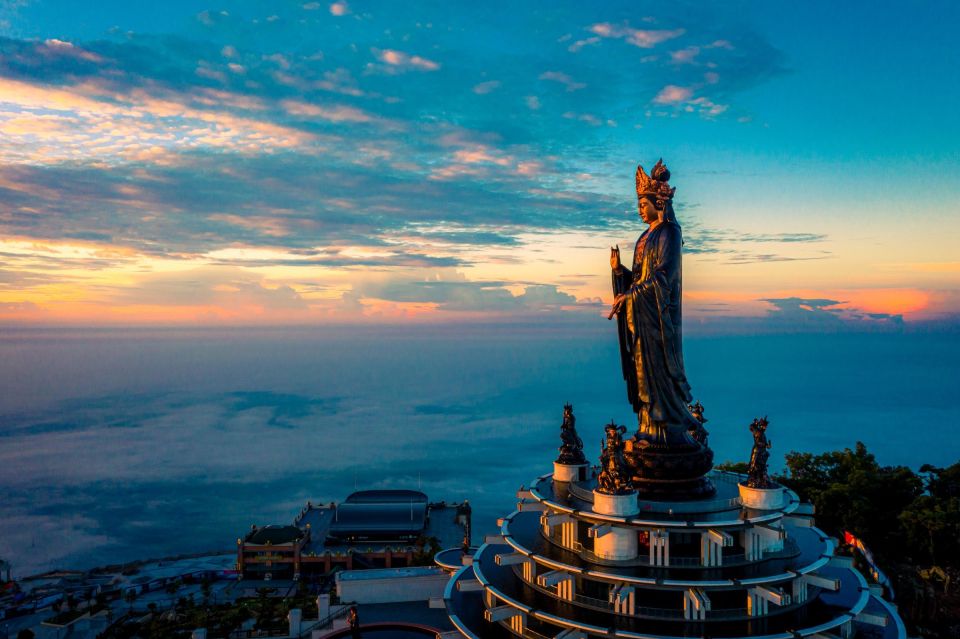
One of the most satisfying parts of this day is the story layer. You’ll learn the myths and legends of Black Virgin Mountain, tied to why the mountain is revered and what people believe the site represents. When you know even a small piece of the background, the architecture feels less random. Doors, statues, and prayer areas start to look intentional.
The tour also frames Bà Đen as a local deity connection, linked to a pagoda temple near the cable car route. That matters because Ba Den isn’t just a generic temple stop for tourists. It’s a place with local meaning, and the legends are part of how faith gets passed down.
You’ll also have the high viewpoint payoff: Tay Ninh’s view from the 986-meter height, with clouds often close to eye level. That combination—story on the way up, sky at the top—is the reason this day trip hits. You’re not only consuming sights. You’re getting a shift in scale: from shrine details to weather and horizon.
Cao Dai Holy Mass: a planned spiritual contrast after the mountain
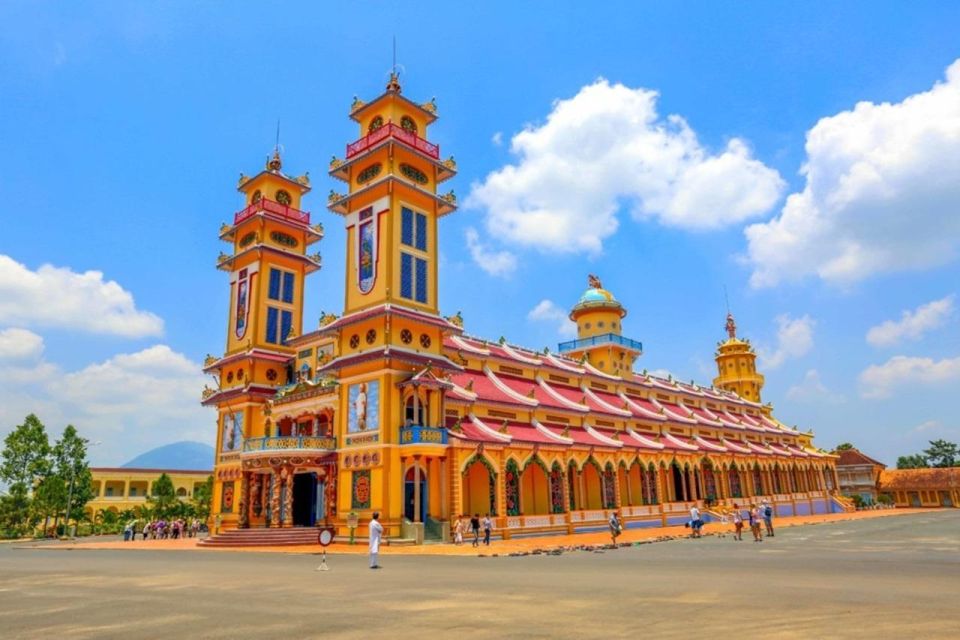
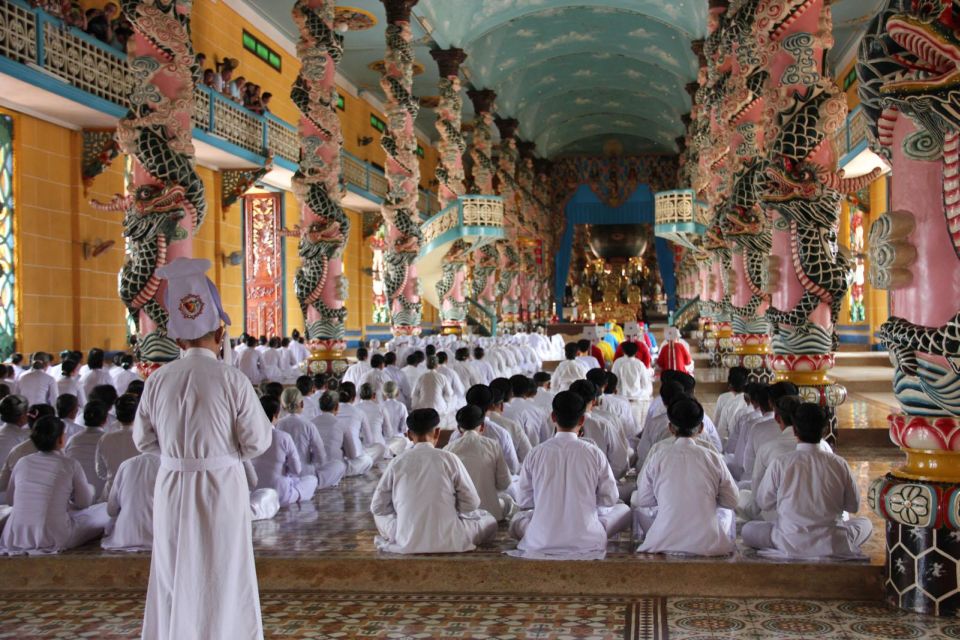
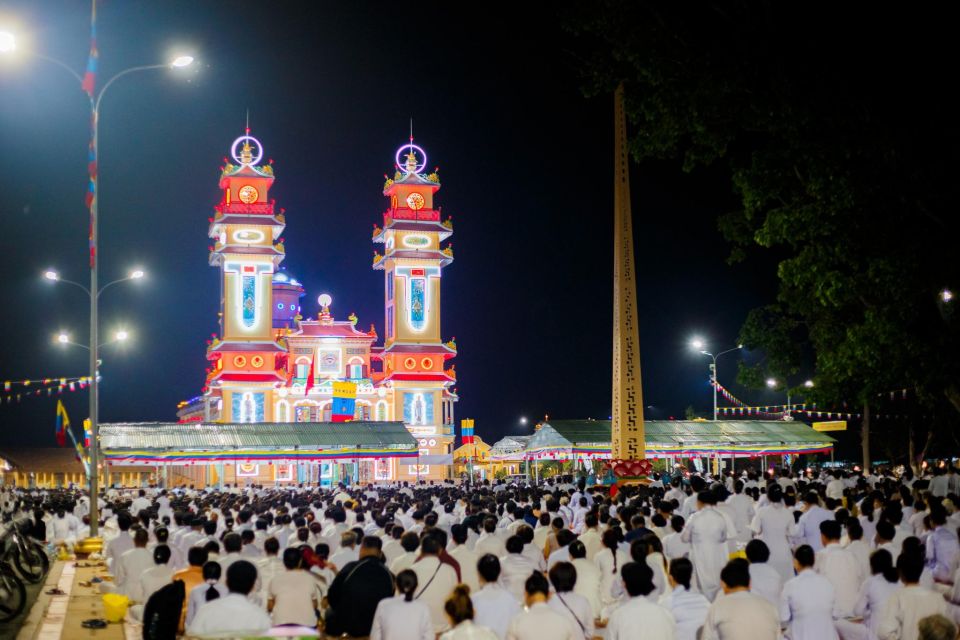
After the mountain time, the schedule includes Cao Dai Holy Mass. This is where the day changes tone. Cao Dai is a different religious tradition than the Buddhist temple complex you’ve been exploring. So even if you’re not someone who studies doctrine, you’ll feel the difference in ceremony style, timing, and atmosphere.
The key is to be mentally ready to switch modes. Mountain sightseeing is movement and views. A mass is more about attention and respectful presence. If you’re hoping to enjoy both fully, plan to arrive with enough energy to sit and watch, not just to take photos and rush out.
There’s also a practical consideration: if you arrive late or if your schedule runs long from temple exploring, you may miss part of the ceremony. One smart approach is to keep your pacing in check during the mountain segments so you reach the mass with some breathing room.
This stop is worth it especially if you want a day that shows Southern Vietnam’s religious diversity in one flow, rather than repeating the same style of worship twice.
Miroku Bosatsu and the giant Buddha sights in Tay Ninh
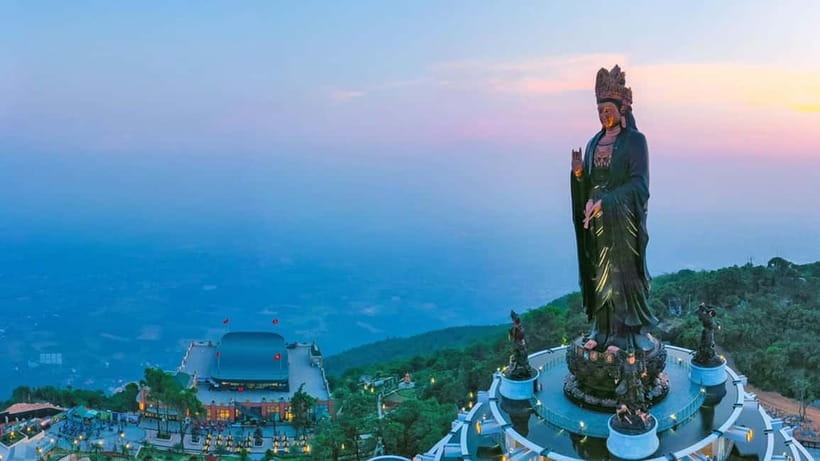
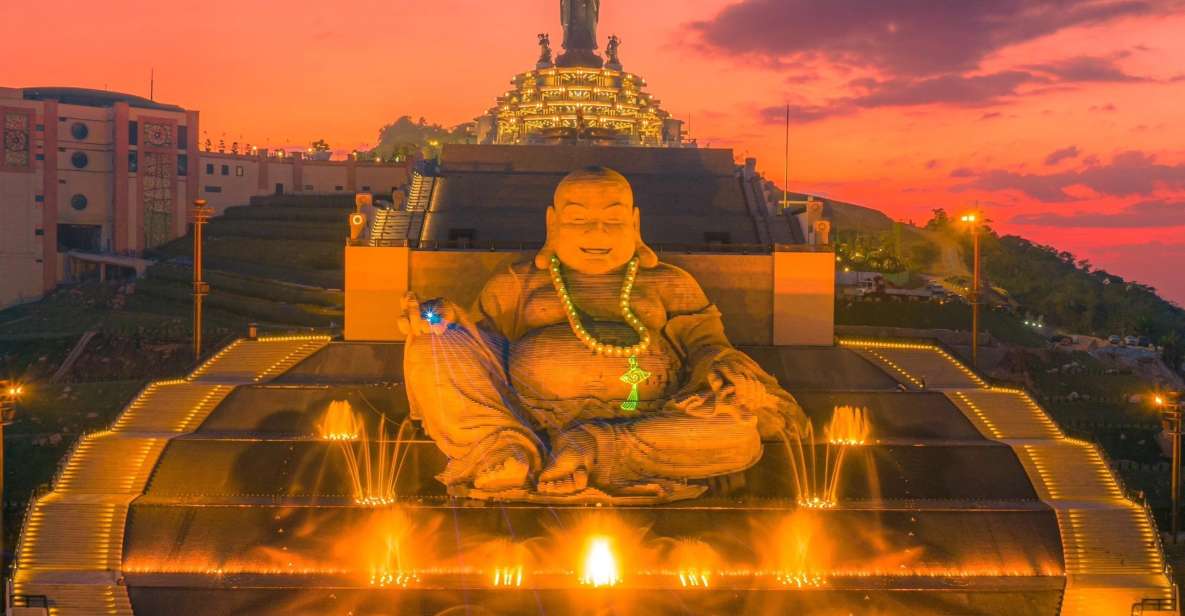
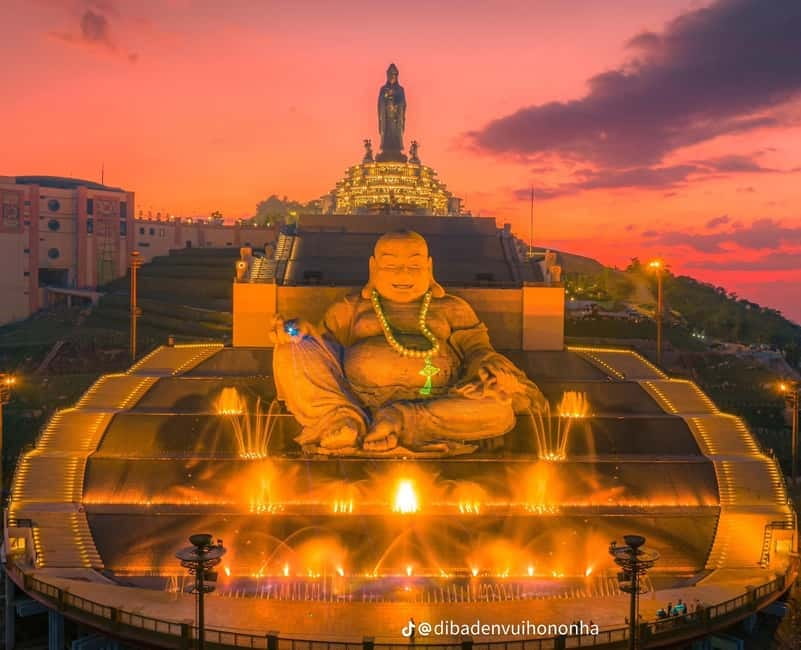
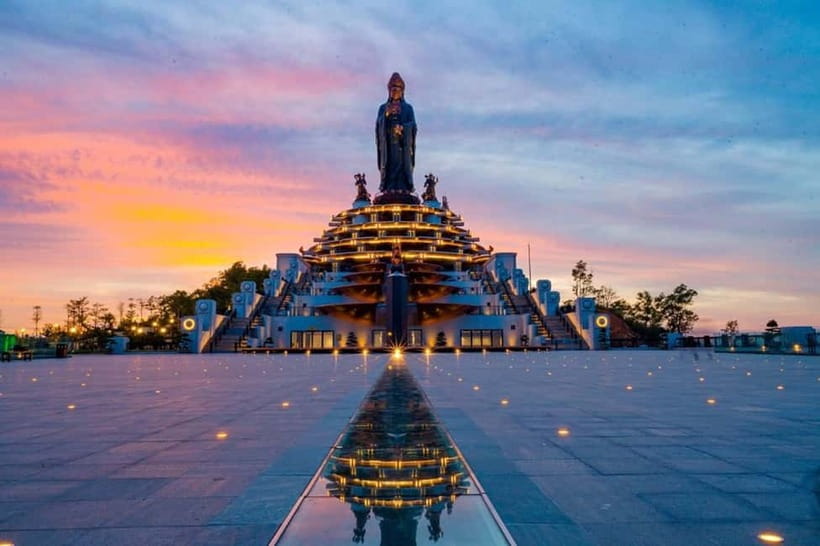
The tour also includes big Buddha icons that change your sense of scale quickly. One highlight is Maitreya Buddha, known in Japanese as Miroku Bosatsu, described as the giant statue in Vietnam and the largest of its kind. The tour provides very specific specs: it’s made of 6,688 sandstone stones, stands 36m tall, has a maximum width of 45m, a surface area of 4,651m², and weighs 5,112 tons.
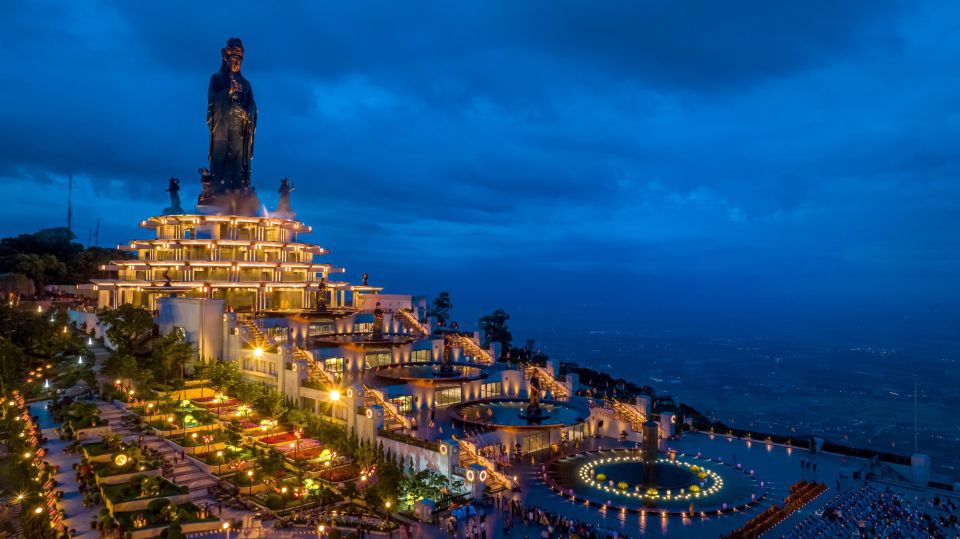
Then there’s another major statue stop: the tallest sacred bronze Buddha statue in Asia, cast with 170 tons of red bronze and measured 72 meters long. Whether you’re into statues or not, these numbers do something helpful. They force you to see the sheer planning behind the site—these aren’t casual monuments. They’re engineered landmarks.
This is also where your travel style matters. If you love quiet viewing and reading details, you’ll do well here. If you only want the spiritual core of the mountain and ceremony, you might feel the big-statue stops take time. But for most people, these icons offer a strong “South Vietnam is bold about faith and art” moment.
My advice: don’t treat these as checkpoints. Spend a few minutes walking around angles if the site allows. When you can see how the design works from multiple perspectives, the size feels real instead of abstract.
Lunch in Tay Ninh: local food that keeps you going
Lunch is included at a local restaurant. For a day that mixes altitude, walking, and ceremonial time, a real meal is not a small detail—it’s energy management.
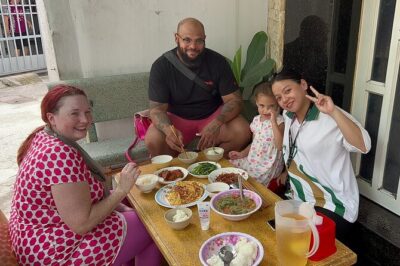
One thing that comes up repeatedly is that the lunch is both traditional and filling. If you’ve had day trips where lunch is a token snack, this isn’t that. I’d still eat lightly before your mountain climb if you get any stomach sensitivity with slopes or steps, but otherwise, plan on lunch as the main fuel break.
You’ll also have time to sample what Tay Ninh is known for, since the tour frames food in the province as part of the experience. Exact dishes aren’t guaranteed in the info you’re given, but you can expect a meal that fits a Southern Vietnam lunch style: hearty, warm, and meant to keep you comfortable through the rest of the day.
Price and value: is $67 worth it for this kind of day?
At $67 per person, this tour is priced like a structured cultural day with real transportation and entry costs included. Here’s what the price covers: AC car transfer, pickup and drop-off at the center of Ho Chi Minh City (with guide pickup at your hotel frontage), a professional English-speaking guide, entrance tickets, lunch, and bottled water during the ride.
What’s not included is the cable car. That’s the one clear budget line you need to plan for. If you’re going to Ba Den, you should assume the cable car is not optional in the way it’s described—so budgeting for it makes the overall cost feel clear instead of surprise-y.
There’s also a “bonus if possible” note: the operator says they can include a free visit to the Cu Chi Tunnels if there are available seats that day. That can add value for people who want more than one major site on the same trip day.
So is $67 a fair deal? For this mix—mountain temples plus Cao Dai ceremony, with guide help and lunch taken care of—I’d say yes, especially if you’d otherwise have to piece together transport and pay entry fees on your own.
Who this tour suits best (and who might adjust the plan)
This is a good fit if you:
- want a single-day religious and cultural mix (Buddhist-style mountain sites plus Cao Dai Holy Mass)
- like mountain views but don’t want to manage your own transportation
- prefer a guide who can explain meaning, not just point
It might be less ideal if you:
- only want one tradition and don’t care about ceremony contrast
- dislike crowds at major sightseeing points (the mountain complex and ceremony sites can get busy)
- feel pressured by fixed schedules (because the mass is on the plan, you’ll want to pace the mountain time)
One small mindset shift helps: treat the day as two chapters—up the mountain and into ceremony. If you try to do everything like it’s all just sightseeing photos, you might feel rushed. If you alternate between viewing and listening (and occasionally just standing still), the day reads like a full cultural experience.
Should you book this Ho Chi Minh City to Ba Den and Cao Dai tour?
I’d book it if you want a day that pairs cloudy mountain views with genuine spiritual stops, without you having to coordinate transport and tickets. The strongest value parts are the included guide, entrance tickets, and lunch, plus the fact that the day doesn’t stop at one kind of faith.
Two things to do before you go:
- Budget for the cable car separately.
- Bring cash for any temple-area purchases, since card acceptance may not be reliable.
If you like paced sightseeing with room for explanation—and you’re curious about how Southern Vietnam expresses religion in different forms—this is the kind of tour that’s easy to recommend.
FAQ
What is included in the tour price?
The tour includes AC car transfer, pick up and drop off at the center of Ho Chi Minh City, a professional English-speaking tour guide, all entrance tickets, lunch at a local restaurant, and bottled water on the car.
Is the cable car included?
No. The cable car is listed as not included.
Where do you get picked up and dropped off?
You’ll be picked up and dropped off at the center of Ho Chi Minh City, with the guide picking you up at the front of your hotel.
Is lunch included?
Yes. Lunch at a local restaurant is included.
Can this tour include a visit to the Cu Chi Tunnels?
Yes, the provider notes they can include a free Cu Chi Tunnels visit if there are available seats on the vehicle that day.
Which languages are available for the tour?
English is available, and other languages are available for a surcharge, including Chinese, French, Japanese, Italian, Spanish, Russian, Korean, and German.