REVIEW · HO CHI MINH CITY
Cu Chi Tunnels – Half Day Luxury Tours
Book on Viator →Operated by Cu Chi Tunnels Tours · Bookable on Viator
Under Ho Chi Minh City, the war goes quiet. This half-day tour takes you to the Cu Chi Tunnels with transport and entrance fees handled, so you spend less time budgeting and more time learning what life underground was like during the Vietnam War. You also get a short film and orientation first, then a guided walk through living areas, workshops, and defensive features, all in a tight, maze-like setting.
I also like the comfort touches after the hard stuff: you finish with period-appropriate tea and cassava, and the tour uses mobile tickets for a smooth pickup. The one thing to think about is the time and travel: you’re looking at about a 6-hour outing and a roughly 43-mile ride each way from Ho Chi Minh City, so it’s not a quick hop.
In This Review
- Key Points to Know Before You Go
- The 6-Hour Plan With Pickup From District 1
- No Hidden Costs: What Your $35 Actually Covers
- Before You Go Underground: Orientation, Video, and Survival Logic
- Exploring The Cu Chi Tunnels: Living Areas, Clinics, and Command Space
- Trap Doors and Dangerous Features You Can’t Ignore
- The Included Shooting Range Try-Out: What It’s For
- Tea and Cassava Afterward: A Small Reset
- Guide Matters: When Son or Jimmy #10 Brings the Story Alive
- Is $35 Good Value for This Half-Day?
- Who This Tour Fits Best (And Who Should Think Twice)
- Should You Book Cu Chi Tunnels – Half Day Luxury Tours?
- FAQ
- How long is the Cu Chi Tunnels tour?
- How much does the tour cost?
- What’s included in the price?
- Do I get hotel pickup?
- How does mobile ticketing work?
- Are refreshments provided?
- Is there anything besides tunnel exploration?
- How long do you spend at the tunnels area?
- What’s the group size like?
- What if I need to cancel?
Key Points to Know Before You Go
- Hotel pickup in central Ho Chi Minh City saves you from figuring out the ride on your own
- Tunnel orientation first includes a short introduction and an intro video on construction and survival
- Living space plus war functions: kitchens, bedrooms, storage, weapons-related work areas, field hospitals, and command spaces
- Security details matter: hidden trap doors and dangerous traps are part of what you’ll see
- Shooting range try-out is included as part of the tour’s “battle feel” goal
- Tea and cassava afterward give you a calmer landing after a heavy visit
The 6-Hour Plan With Pickup From District 1
This tour is built around one main advantage: you’re not stitching together local transport. You start in central Ho Chi Minh City, and the experience includes pickup from your inner-city hotel area, with the tour ending back at the same starting point area.
Even though the experience is called half day, you should plan on about 6 hours total. The drive is part of the package, and the route out to Cu Chi is roughly 43 miles. If you’re prone to motion discomfort or you hate long rides, it’s worth preparing ahead with water and a little patience.
You can also read our reviews of more tours and experiences in Ho Chi Minh City


No Hidden Costs: What Your $35 Actually Covers
At $35 per person, the biggest value is that the ticket price covers the full “get there and get in” part: entrance fees and transport costs. That matters in Vietnam, where you often see tours add on extras later. Here, you can treat the price as a clean, all-in budget for this specific outing.
The tour also keeps the group controlled. It runs with a maximum of 30 travelers, which is usually big enough to feel social but small enough that you’re not lost in a crowd during key moments like the initial briefing and tunnel exploration.
And if you’re booking soon because your schedule is tight, note that it’s typically booked about 5 days in advance. If your travel dates are fixed, I’d book earlier rather than waiting for a last-minute slot.
Before You Go Underground: Orientation, Video, and Survival Logic
One of the smartest parts of this tour happens before you step into the tunnels. You get a short introduction and an intro video that explains how the tunnels were constructed and how people survived in harsh wartime conditions.
This pre-work changes how you’ll read the space. Instead of treating the tunnels like a random maze, you’ll start to notice the “why” behind what you’re seeing—how survival depended on design choices and on staying hidden. For many visitors, this makes the later tunnel walk feel less like a museum route and more like a guided explanation of problem-solving under pressure.
Exploring The Cu Chi Tunnels: Living Areas, Clinics, and Command Space
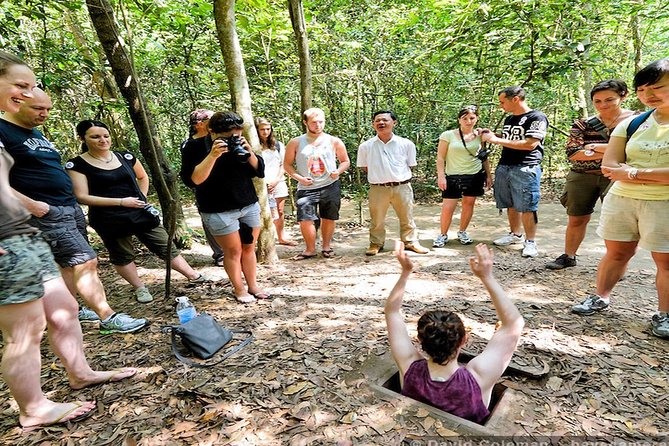
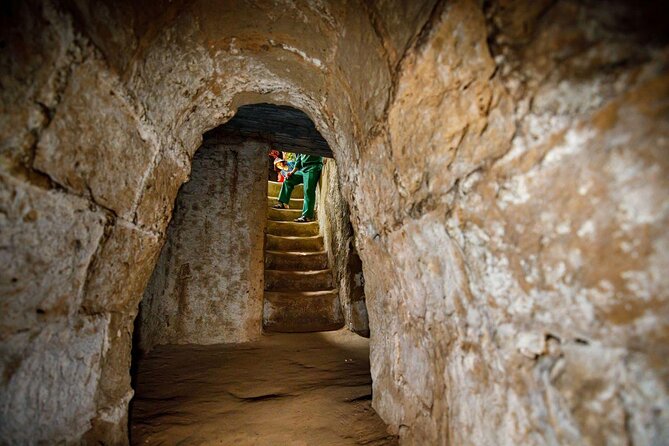
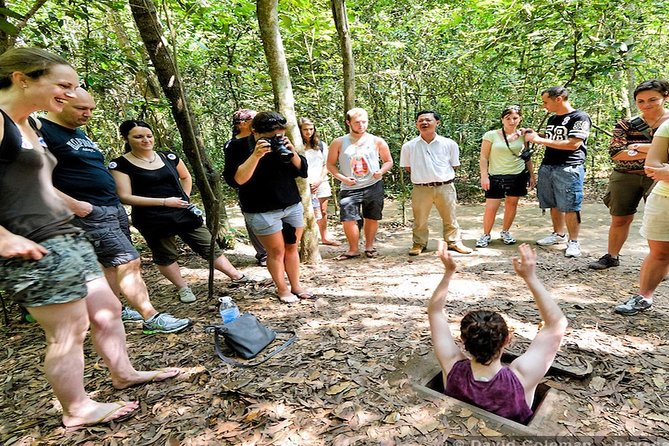
Once you’re ready, you’ll spend about 4 hours exploring the remaining area and the tunnel systems with your guide. The focus isn’t only on cramped passageways. You’ll also be shown special constructed living areas and side-by-side domestic spaces like kitchens and bedrooms.
That matters because the tunnels weren’t just for hiding. They also supported day-to-day needs and longer stays. As you move through what’s been preserved and arranged for visitors, you’ll connect daily routines to the bigger war effort.
You’ll also encounter multiple functional zones tied to fighting and operations. The tour’s route includes areas such as:
- Storage spaces
- Weapons-factory-related areas
- Field hospitals
- Command centers
You don’t need to be a Vietnam War expert to get something meaningful from that list. It shows how the tunnels could support both survival and coordination—medical care, production work, and leadership all connected to the underground world.
Trap Doors and Dangerous Features You Can’t Ignore
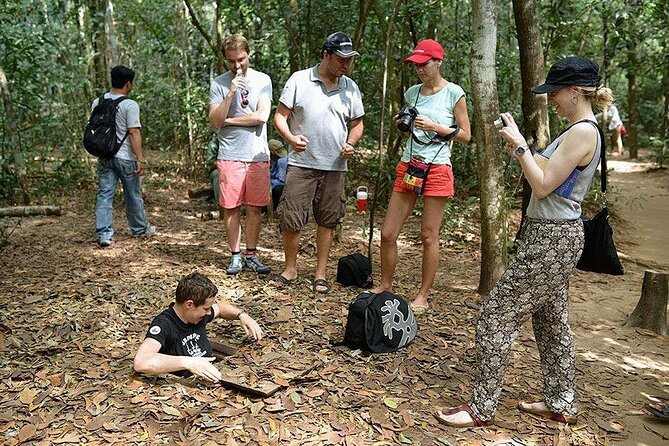
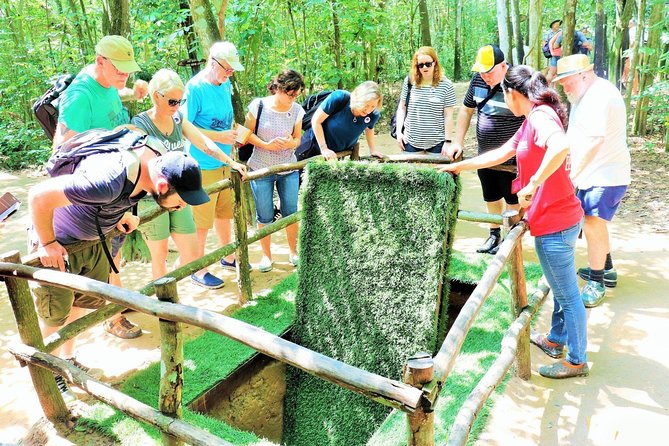
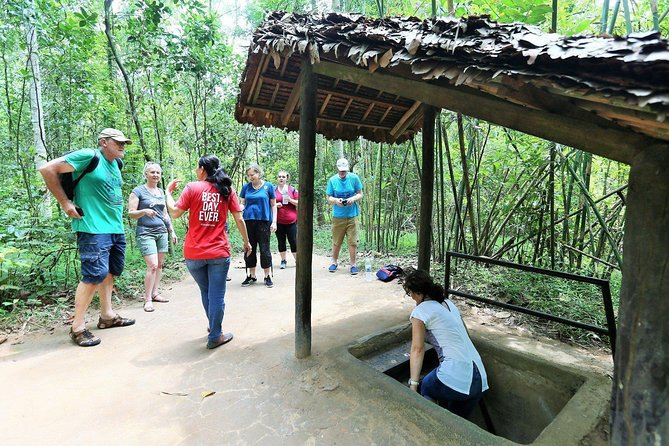
Tunnel tours can sometimes feel overly “safe,” like you’re walking through an attraction. This one doesn’t try to soften the reality. As you explore, you’ll come across hidden trap doors and dangerous traps built into the maze-like system for security.
Seeing these details in person changes the tone fast. You start understanding that movement underground wasn’t just about comfort or convenience. It was about controlling risk—how to defend the area, prevent intrusion, and protect people inside.
If you’re the type who gets uneasy in enclosed spaces, take that seriously before booking. The tour involves head-down exploration of the tunnels, and the entire experience is designed around closeness and concealment.



The Included Shooting Range Try-Out: What It’s For
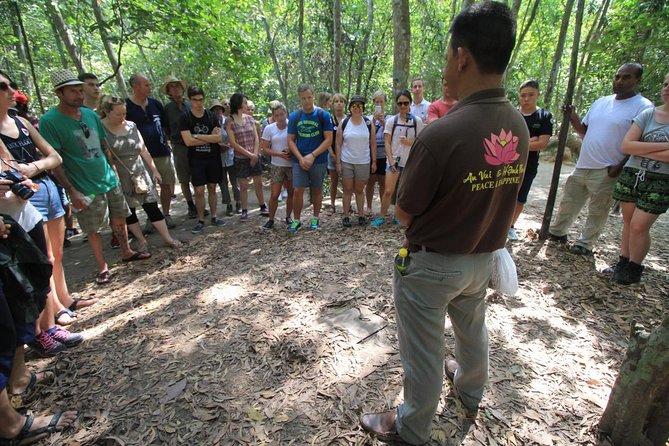
A key highlight is that the tour includes trying shooting at a nearby range. The way it’s presented is meant to help you understand what battle felt like for the Vietcong, not just what the tunnels looked like from the outside.
This is one of those inclusions where I think context matters. The tunnels explain environment and survival. The shooting try-out is added to give you a physical, active component to the theme of conflict. If you’re sensitive to war-themed activities, you’ll want to decide whether this “hands-on” approach fits your comfort level.
Still, for many people it’s the element that turns a history visit into an active experience. And because it’s included in the same ticket, you’re not chasing separate reservations during a limited time window.
Tea and Cassava Afterward: A Small Reset
After you finish exploring, you’re treated to refreshments: period-appropriate tea and cassava. This detail might seem small compared to the tunnels and traps, but it’s one of those practical finishing touches that helps you process what you just saw.
A heavy topic can leave your mind spinning. Having something warm and a simple snack gives you a moment to slow down before the ride back. It’s also a nice cultural angle because the cassava connection is tied to wartime survival, not just modern tourism.
Guide Matters: When Son or Jimmy #10 Brings the Story Alive
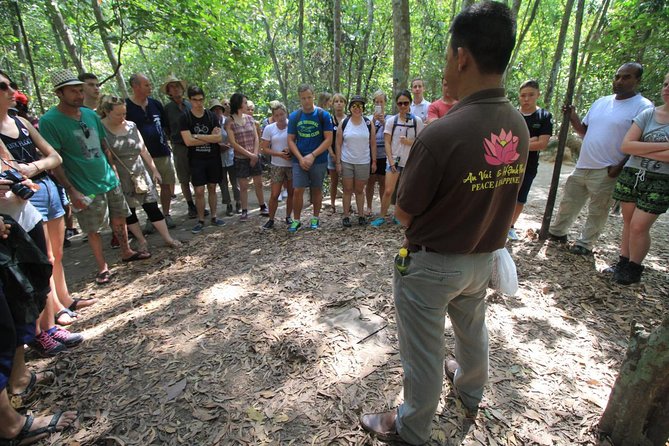
Guiding style can make or break a tour like this, and the best part here is that the guides don’t just point and translate. They build context with real information.
In past groups, guides like Son have been highlighted for being very helpful and for sharing a lot of information about Vietnam. Another guide mentioned is Jimmy #10, who was described as funny while also giving history lesson context that felt more like it was happening in front of you.
That mix—clear facts plus a guide who keeps energy up—helps the tunnel experience land. War history can become dry fast, but a guide who can shift between practical explanation and livelier delivery makes it easier to stay engaged.
Is $35 Good Value for This Half-Day?
Here’s the clean way to judge value: compare what you’re actually getting against the typical “add-ons” that show up in many tours.
For $35, you’re covered for:
- Transport to and from Cu Chi
- Entrance fees
- A guided experience through tunnels and related spaces
- A pre-tunnel intro video and orientation
- A shooting range try-out
- Tea and cassava refreshments
- Mobile ticket convenience
The group size cap (up to 30) and the included pickup reduce the invisible hassle cost, too. If you’re already staying near the central pickup area, that matters because you don’t have to organize a separate ride with extra coordination.
The main trade-off is time. You’re committing about 6 hours including the ride. If you’re trying to squeeze history into a very tight day, it can feel like a lot—but if you want a guided, managed experience, the structure is what you’re paying for.
Who This Tour Fits Best (And Who Should Think Twice)
This is a strong choice if you:
- want a guided, organized visit rather than DIY transport
- like war-history context explained in a straightforward way
- prefer having key parts of the day bundled in one ticket (fees, transport, entry, and more)
- want an active component through the included shooting range try-out
Consider thinking twice if you:
- strongly dislike long drives from Ho Chi Minh City
- get anxious in tight, underground spaces
- prefer history lessons that don’t include a hands-on conflict element
Should You Book Cu Chi Tunnels – Half Day Luxury Tours?
If your goal is to see the Cu Chi Tunnels with less friction and more structure, I’d book it. The pricing is simple for what’s included, and the experience is built to move you through the story in order: orientation first, tunnels second, then the hands-on shooting try-out, with a calmer tea-and-cassava landing at the end.
If you’re deciding between “cheap and confusing” versus “smooth and scheduled,” this one leans toward smooth. The mobile tickets, hotel pickup focus, and included fees make it feel designed for people who don’t want to waste half a day on logistics.
FAQ
How long is the Cu Chi Tunnels tour?
The tour runs for about 6 hours.
How much does the tour cost?
It costs $35.00 per person.
What’s included in the price?
Entrance fees and transport costs are covered, along with the tour experience and refreshments.
Do I get hotel pickup?
Yes, pickup is offered from your inner-city hotel area.
How does mobile ticketing work?
You use a mobile ticket for easy pickup. No paper ticket is needed; you download it to your phone.
Are refreshments provided?
Yes. Tea and cassava are provided after the tour.
Is there anything besides tunnel exploration?
Yes. You can try shooting at a nearby range as part of the experience.
How long do you spend at the tunnels area?
The tunnel stop includes about 4 hours of time.
What’s the group size like?
The tour has a maximum of 30 travelers.
What if I need to cancel?
This experience is non-refundable and cannot be changed for any reason. If you cancel or request an amendment, the amount paid will not be refunded.