REVIEW · HO CHI MINH CITY
Saigon City and Chinatown Exploration with Water Bus Adventure
Book on Viator →Operated by SST TRAVEL · Bookable on Viator
Saigon can feel like a movie in motion—this day tour strings the best scenes together. You’ll start in Cho Lon (Chinatown) and see Thien Hau Pagoda, then head into heavier context at the War Remnants Museum before shifting to French-era sights and a river ride. I like that the route is efficient without feeling rushed, and I also love the mix of street life plus landmark stops.
Two things I especially like: the guide support (my guides Daniel, Lenny, and Mr Lau stood out for clear explanations and practical city tips like what to eat and drink), and the food included for lunch, which keeps the day from turning into a hunt for meals between sights. One drawback to consider: the War Remnants Museum can be emotionally intense, so plan to take breaks and pace yourself when you get there.
In This Review
- Key highlights to look for
- Saigon’s Chinatown and Thien Hau Pagoda before the heat (and the crowds)
- Practical tip
- War Remnants Museum: powerful context you’ll carry all day
- If you’re sensitive to heavy content
- Lunch built into the route: one less headache in Saigon
- Reunification Palace and the story behind South Vietnam’s final era
- French colonial icons: Notre Dame Cathedral and the Old Central Post Office
- Notre Dame Cathedral
- Old Central Post Office
- Saigon River water bus: your quick District 1 to District 2 perspective change
- Photo tip
- Price and logistics: where $45 actually lands for your day
- A couple of “check before you go” considerations
- Who this Saigon day tour suits best
- Should you book this Saigon City and Chinatown tour with water bus?
- FAQ
- What time does the tour start?
- Where is the meeting point?
- How long is the tour?
- Does the tour include the water bus ticket?
- What places do we visit in the morning?
- Is lunch included?
- Which major museums and historic sites are included?
- Are French colonial landmarks part of the day?
- What is included in the ticket price?
- Is there free cancellation?
Key highlights to look for
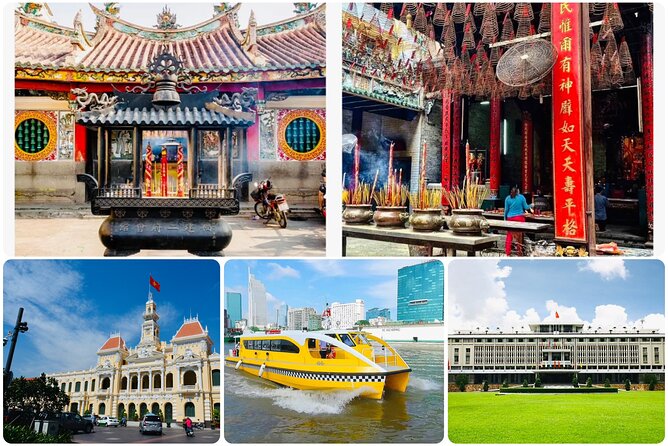
- Thien Hau Pagoda and Cho Lon energy in the morning, with time to actually look, not just pass through
- War Remnants Museum gives real context before you see the landmarks built after the war
- Reunification Palace and French colonial landmarks in the same stretch of central Saigon
- Water bus on the Saigon River for a quick, different-angle look at District 1 to District 2
- Small group size (up to 14) for easier photos, fewer bottlenecks, and more guide attention
Saigon’s Chinatown and Thien Hau Pagoda before the heat (and the crowds)
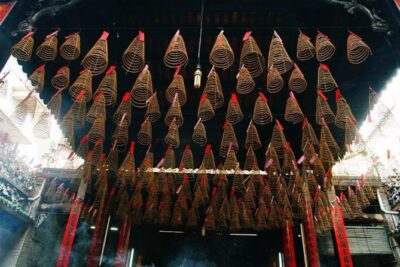
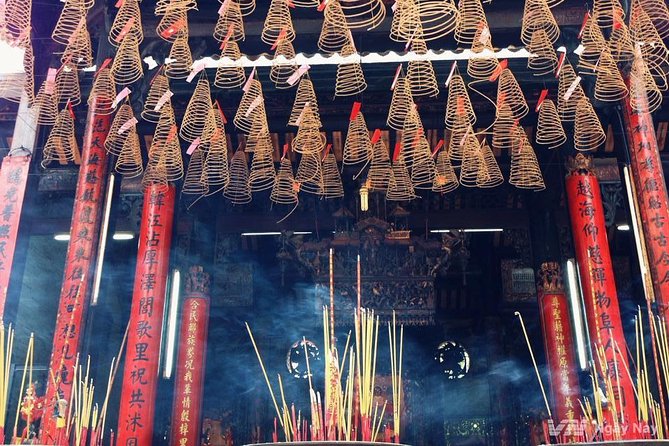
This tour starts in District 1 with pickup offered from the Bùi Viện area, and the morning plan is smart: you get to Cho Lon while the neighborhood still feels easy to navigate. The day begins around Thien Hau Pagoda, a spiritual stop that helps you understand why this part of Saigon feels so different from the main downtown streets.
Thien Hau is more than a photo stop. It’s where you’ll see the everyday rhythm of belief in action—people visiting, pausing, and moving with purpose. Even if you’re not into temples, this stop acts like a “cultural warm-up.” It sets the tone for Cho Lon, where you’re not just sightseeing buildings—you’re watching a working community.
From there, the tour focuses on Chinatown proper, known as Cho Lon. The pace shifts from temple calm to market and street energy as you work your way through the Binh Tay Market area and surrounding streets. I like this approach because Cho Lon is best experienced on foot: shop fronts, food smells, and the flow of locals and families. You’ll get the feeling of a neighborhood built on commerce and everyday life, not staged tourism.
You can also read our reviews of more city tours in Ho Chi Minh City


Practical tip
Wear shoes you’re happy to stand in for most of the morning. The route depends on walking through busy areas around Cho Lon, and you’ll want your feet to stay comfortable.
War Remnants Museum: powerful context you’ll carry all day
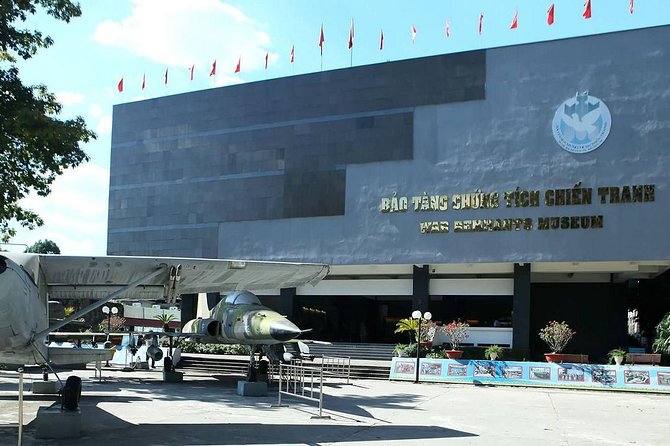
After Chinatown, the tour turns to history in a serious way at the War Remnants Museum. This is the kind of stop that changes how you interpret the rest of the day. Once you see what this museum documents, later landmarks make more sense—not just as architecture, but as evidence of what came next.
I recommend going in with the right expectations: you’re not doing a casual “quick look.” The museum is designed to systematically study, collect, conserve, and display exhibits on war crimes and their consequences. That wording matters. The displays are not vague or abstract; they’re meant to document harm and impact.
A guide helps here, because you’ll get orientation—what you’re looking at and why it matters—without needing to guess. On tours I’ve taken with guides like Daniel and Mr Lau, the best part wasn’t just facts. It was the way they helped you connect the museum themes to the later political sites you’ll visit (especially Reunification Palace).
If you’re sensitive to heavy content
If you know you’ll get overwhelmed, take short breaks. Step outside for a breather and return when you feel ready. This stop is worth your time, but it’s okay to move at your own emotional pace.
Lunch built into the route: one less headache in Saigon
Lunch is included, and that’s not a small detail. Saigon days can stretch quickly, and hunting for food mid-sightseeing often turns into wasted time or expensive meals in tourist pockets. With a Vietnamese-style lunch included, you can focus on the next blocks of the route: Reunification Palace and then the central French-era landmarks.
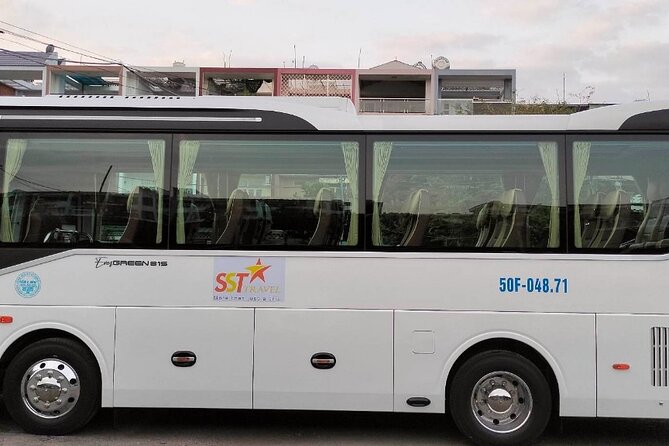
In terms of overall day comfort, I like that the tour includes bottled water and uses an air-conditioned vehicle. That matters in Ho Chi Minh City, where the weather can wear you down faster than you expect. Between the museum (emotionally heavy) and the next big outdoor/central stops, having lunch covered keeps the day from turning into a scramble.


Reunification Palace and the story behind South Vietnam’s final era
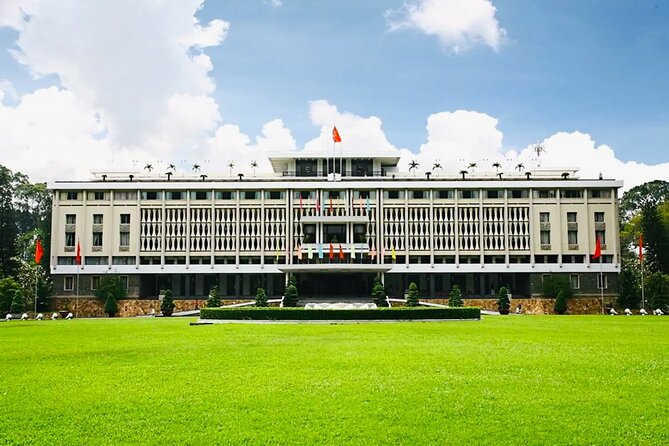
Next comes Reunification Palace, the residence of the President of South Vietnam until the end of the war in April 1975. Even if you’ve read about the war before, visiting this place in person adds weight. It’s the difference between knowing something and seeing how decisions played out inside real rooms.
What I look for at a site like this is how the spaces connect to the moment in history. This palace isn’t presented as a simple monument; it’s part of the lived political story. You can usually feel the shift from public-facing areas to more controlled or formal spaces, and it helps you understand the atmosphere of governance during a turbulent time.
If you care about how a city changes, this is also where you start noticing what Saigon chose to preserve and what it built afterward. Guides I’ve worked with on similar routes—like Larry (Durong) and Travis—tend to add local perspective about how the city looks now and how daily life has shifted over time. That context is helpful after the museum, because you’re moving from documentation to lived transition.
French colonial icons: Notre Dame Cathedral and the Old Central Post Office
After Reunification Palace, the route focuses on impressive French colonial structures around central Saigon. Two of the most memorable are the Notre Dame Cathedral and the Old Central Post Office.
Notre Dame Cathedral
The cathedral is a strong visual anchor. Whether you care about architecture or not, it’s a landmark people recognize from pictures, and seeing it in real scale is worth it. The best way to experience it here is slowly: look at the frontage, then step back and see how it sits in the surrounding streets. It’s a good reminder that Saigon became a layered city with eras stacked on top of each other.
Old Central Post Office
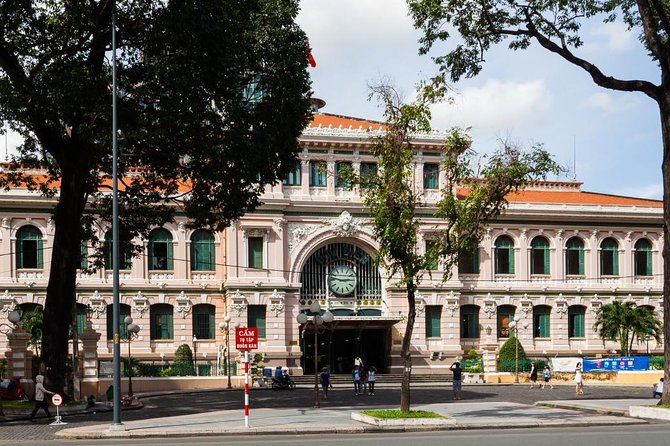
The Old Central Post Office is often the favorite for practical reasons: it’s not only photogenic; it’s also a working-style public space in the middle of the city. It helps you move from “monument time” into “real life time,” because you can observe the building while still feeling connected to the neighborhood’s daily flow.
I’ve found that a good guide makes these stops more than a quick stop for pictures. Names and details matter here, and the guide’s explanation helps you notice design choices, layout cues, and why the building remains a symbol of an old era in a modern city.
Saigon River water bus: your quick District 1 to District 2 perspective change
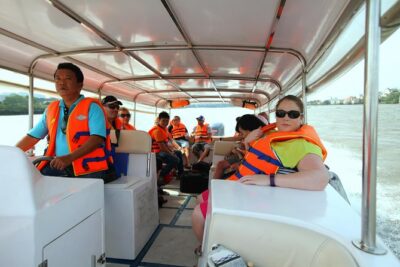
Then comes one of the tour’s smartest twists: a water bus ride on the Saigon River. You’ll reach Bach Dang port, then drive briefly and take the water bus for about 15 minutes.
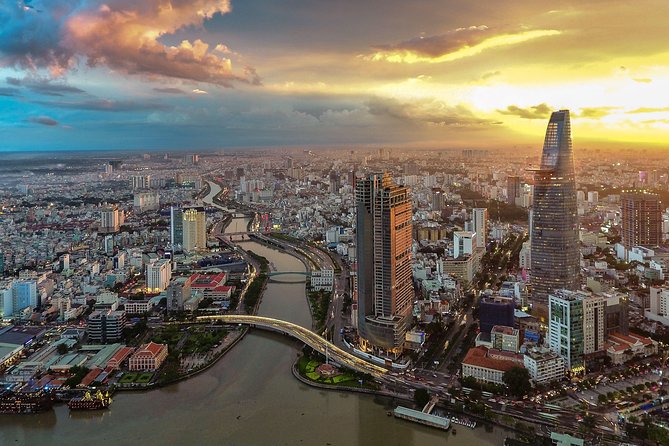
This isn’t a long boat day, and that’s why it works. It’s a short, high-payoff segment that gives you a different angle on the city. From the boat you’ll see major bridge views, including Thu Thiem Bridge and Sai Gon Bridge, and you’ll travel from District 1 to District 2.
I like adding water to a city day because it changes how you understand distance. On land, everything feels close but chaotic. On water, the city opens up—streets, edges, and building lines come into view. It’s a simple change of perspective that makes the whole day feel more complete.
Photo tip
Have your phone camera ready when you’re nearing bridge sightlines. The water bus portion is short, so you’ll want to catch the views without sprinting for the best angle.
Price and logistics: where $45 actually lands for your day
At $45 per person, this tour can feel like good value for what it bundles: English-speaking guide, air-conditioned transport, entrance fees, bottled water, lunch, and the water bus ticket. For one full day covering multiple districts and a mix of temple, museum, palace, cathedral, post office, and river views, the package reduces decision fatigue.
Also, the small group size (up to 14) helps. You spend less time waiting around and more time moving between stops with a guide watching the schedule. During busy periods, it can make the experience calmer than it would be on your own.
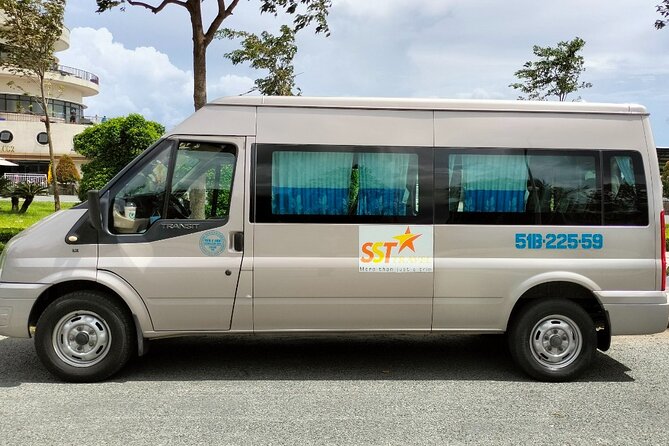
The meeting point is in the Bùi Viện area, and the start time is 8:30am, with the tour ending back at the meeting point. That makes it easier to plan the rest of your day. If you’re staying nearby or you like the idea of finishing where you started, this loop works well.
A couple of “check before you go” considerations
- The tour can have holiday or special occasion surcharges, so your final price may change on those dates.
- The plan is designed around Binh Tay Market, but some date-specific scheduling can affect it (for example, during Jan 23–28 in 2020, Binh Tay Market wasn’t included). For current trips, confirm what’s on your exact day.
Who this Saigon day tour suits best
This one is best for you if you want a structured day that still feels grounded in real neighborhoods. I think it fits especially well if:
- You’re short on time in Ho Chi Minh City but want both street life and major sights
- You want context for what you’re seeing, not just a checklist
- You prefer small-group touring where a guide can answer questions and help with photo moments
It also works nicely for groups of friends or family. The positive comments around guides like Travis and Larry (Durong) highlight a focus on safety and patience, plus support with photos. That’s useful if someone in your group needs a little extra time.
If you’re the type who hates museums or gets overwhelmed by war-related topics, you might want to think twice about the War Remnants Museum portion or plan your day to include breaks.
Should you book this Saigon City and Chinatown tour with water bus?
I’d book it if you want one day that covers Saigon’s big contrasts: Cho Lon’s everyday bustle, Thien Hau Pagoda’s spiritual tone, the museum’s hard context, and the central French-era landmarks—then a quick river ride to reset your brain with new views.
Skip it (or at least mentally adjust) if you mainly want light, casual sightseeing. This route does include emotionally heavy material, and the day follows a full, packed schedule. It’s also not built for people who want to wander completely freely; the value here is the guided flow between standout stops.
If your goal is a practical, guided highlights day that still shows you how the city feels on the ground and on the river, this is a strong choice at $45 with lunch and key tickets included.
FAQ
What time does the tour start?
It starts at 8:30am.
Where is the meeting point?
The meeting point is on Đường Bùi Viện, Phạm Ngũ Lão, Quận 1, Ho Chi Minh City. Pickup is offered.
How long is the tour?
The duration is approximately 8 to 9 hours.
Does the tour include the water bus ticket?
Yes. A water bus ticket is included, and the ride is about 15 minutes on the Saigon River.
What places do we visit in the morning?
The morning focuses on Thien Hau Temple (Pagoda) and Chinatown (Cho Lon), including the Binh Tay Market area.
Is lunch included?
Yes. The tour includes a Vietnamese-style lunch.
Which major museums and historic sites are included?
The tour includes the War Remnants Museum and Reunification Palace.
Are French colonial landmarks part of the day?
Yes. You’ll see Notre Dame Cathedral and the Old Central Post Office.
What is included in the ticket price?
Included items are bottled water, Vietnamese-style lunch, entrance fees, a professional English-speaking guide, an air-conditioned vehicle, and the water bus ticket.
Is there free cancellation?
Yes, you can cancel for a full refund up to 24 hours in advance of the experience start time.