REVIEW · HO CHI MINH CITY
Using Medium Format film camera to discover Saigon
Book on Viator →Operated by Bui Hoang Tu · Bookable on Viator
Saigon through a viewfinder changes everything. This private medium-format film photo walk turns everyday Ho Chi Minh City into something slower and more deliberate, with a real TLR camera and just one roll of black-and-white film. I love the built-in focus it creates: you can’t spray-and-pray, so your choices matter more than the gear. The trade-off is simple: if you want lots of photos fast, analog will feel limiting.
The experience is hosted by Bui Hoang Tu, and it’s built for people who are tired of the usual selfie-and-shop circuit. You’ll start with local coffee culture at a long-running shop, then move through nearby alley street markets while learning how to use the camera and how to talk to people along the way. The “street-smart translator” part is a big deal here, because it changes the quality of what you notice.
One more practical thing: this works best with good weather, and you’ll be walking. Also, since transportation isn’t included, you’ll want to arrive on your own and be ready to end at Chợ Bàn Cờ.
In This Review
- Key highlights to know before you go
- Why medium-format film makes Saigon feel different
- Coffee culture at a 90-year-old shop and the 1968 building stop
- Learning TLR basics while walking alley street markets
- Finding “old” in the middle of the city: hidden apartments and side-streets
- How translation support changes what you notice
- Price, timing, and what you should compare before booking
- Who this tour suits best (and who it doesn’t)
- Should you book this analog Saigon walk?
- FAQ
- How long is the experience?
- How much does it cost?
- What’s included in the tour price?
- Is transportation included?
- Where do I meet the host?
- Where does the tour end?
- Is this a private tour?
- What are the main requirements before booking?
Key highlights to know before you go
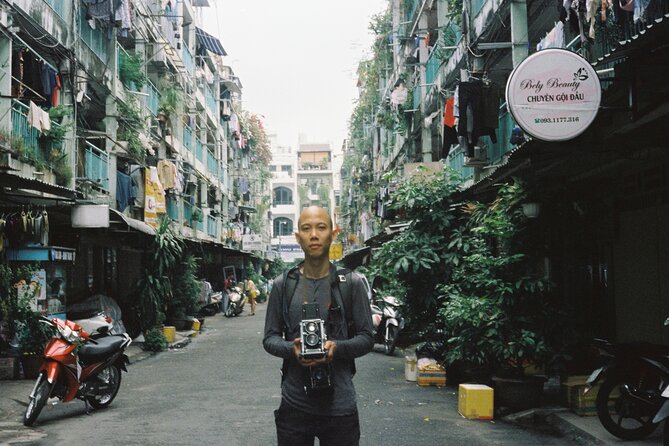
- One-roll discipline: You shoot with a limited supply, so every frame counts.
- TLR camera practice: A hands-on lesson so you actually learn as you go.
- Coffee first, not photos first: You start with a local 90-year-old coffee shop vibe.
- Alley street markets: You’ll work your way through narrow, everyday lanes instead of tourist streets.
- Local connection support: Your host helps with translation so conversations feel natural.
- Ends at Chợ Bàn Cờ: You finish in a real market area, not a dead-end viewpoint.
Why medium-format film makes Saigon feel different
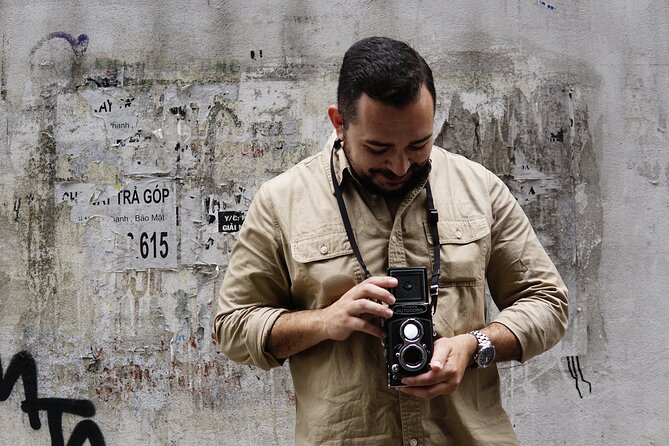
A TLR medium-format camera is a very specific kind of travel tool. It slows you down in a good way. When you’re looking through the viewfinder and you’re thinking about focus and composition, the city stops being background noise and becomes a set of choices you make.
The biggest value here is the “one roll” setup. With only one roll of black-and-white film, you can’t chase every scene. You learn to wait for the right moment: a person mid-step, steam rising from street food, a shadow cutting across a doorway. It’s not just artistic pressure; it’s also practical. You end up watching longer instead of moving through on autopilot.
Bui Hoang Tu’s approach also matters. He gives a short brief on how to use the camera and pairs that instruction with time in the streets. That means you’re not learning buttons at a table and then switching back to phone photos. You practice right away, so your brain connects the technique with what’s happening around you.
The only drawback is the learning curve and the patience factor. Analog photography can be frustrating if you want instant results. You’ll be planning your shot rather than reacting to it instantly, and that’s the whole point. If you’re the type who needs quick wins, plan for a slower pace.
You can also read our reviews of more tours and experiences in Ho Chi Minh City.

Coffee culture at a 90-year-old shop and the 1968 building stop
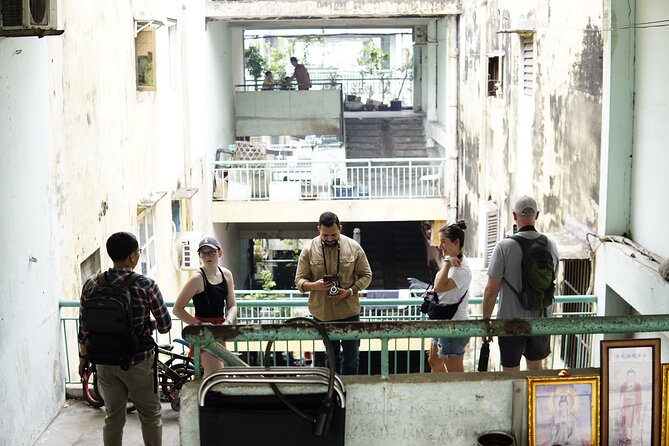
You begin with coffee, not a lecture. That’s one of the smartest parts of this tour because it anchors the whole walk in local daily life. The first stop centers on an old coffee shop that’s been serving for about 90 years, so you’re stepping into a routine people still keep today.
Coffee in Ho Chi Minh City is more than a drink. It’s a social rhythm. In a place with long continuity, you’ll notice how people sit, chat, sip, and look up from their day. Even if you’re not ordering anything exotic, you learn how coffee fits into the neighborhood tempo.
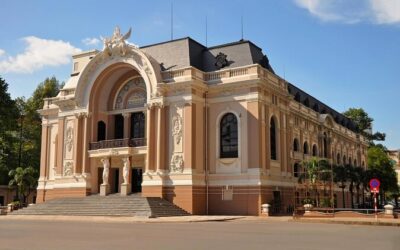
There’s also a short window to see the 1968 building of HCMC. You’re not touring a museum for hours. Instead, you’re getting a quick sense of how the city layers time, architecture, and memories in everyday spaces. It’s a reminder that even a simple walk for photos can carry context, because the street itself is the history.
Practical note: this stop is about an hour. That timing is good because it sets you up before you head into the denser street-market lanes. You’re awake, fueled, and ready to pay attention to details that you might otherwise miss.
Learning TLR basics while walking alley street markets
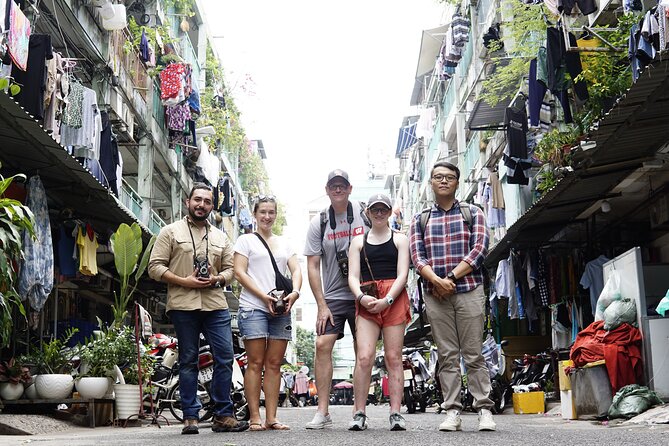
After the coffee stop, the tour turns into action: camera practice plus walking through alley street markets. Instead of big, open streets, you’ll be moving through narrower lanes where daily life happens at human scale. This is exactly the kind of environment where a viewfinder camera feels right, because the best scenes are often close and partially hidden.
Expect a guided lesson first, then practice as you go. A TLR setup can feel old-school at first, but that’s part of the appeal. The simplicity forces you to think about framing and timing. You can still make good photos, but you’ll do it by paying attention, not by relying on software.
The alley markets also give you variety without requiring long transit. You’ll likely encounter small storefronts, street-level activity, and the kind of texture that shows up beautifully in black-and-white film. If you’re used to color-heavy phone photos, black-and-white can be a shock at first. Then it becomes a superpower: contrast, light, and shadows start doing the storytelling.
One consideration: walking through market lanes can mean uneven steps and tight spaces, so comfortable shoes help. And because it’s film, you’ll want to treat your roll carefully while you move.
Finding “old” in the middle of the city: hidden apartments and side-streets
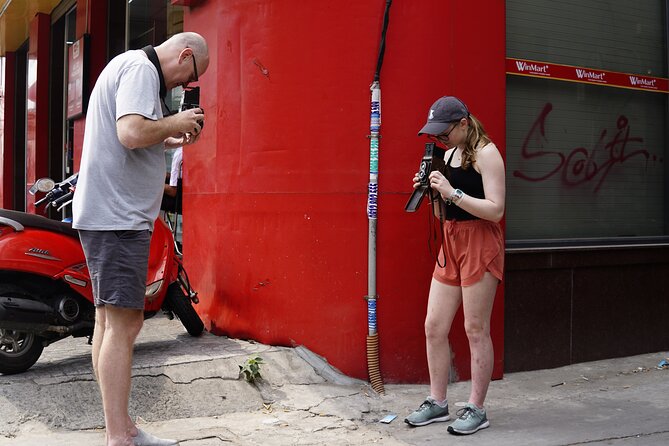
One of the most interesting elements is the way the tour uses side-streets to show you something older and more local than the postcard version of Saigon. You’ll pass through places like an oldest apartment that’s hidden in town. It’s not presented as a dramatic “look at this monument” moment. It’s more like a reminder that everyday architecture carries stories, even when it isn’t marketed.
This is where the camera lesson blends with local connection. When you’re shooting black-and-white medium format, you’re naturally drawn to layers: doorways, stair edges, worn surfaces, and the way light falls across walls. Old apartment spaces and hidden corners give you that kind of visual material.
The practical advantage is that you get to combine two interests at once. If you like photography, you’ll have targets beyond random street moments. If you like local culture, you’ll be moving like a person who lives nearby, not like a bus drop-off tourist.
Just don’t expect every stop to feel like a grand sight. Some of the best moments are quiet: a shared glance, a quick exchange, a simple doorway scene that ends up being your favorite frame of the whole roll.
How translation support changes what you notice
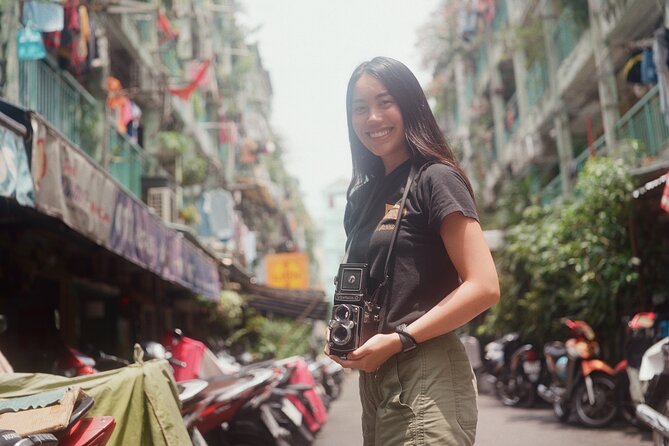
There’s a special value in having your host help you break the ice. In a place like Saigon, small conversations often lead to small insights. That could be as basic as learning how locals talk about their coffee, or how they respond when they see you photographing with a real analog camera.
Bui Hoang Tu acts as a translator and a connector, so you’re not stuck guessing. Even when you don’t speak Vietnamese, you can still communicate intention. You can ask, you can pause, and you can show respect by taking time rather than rushing through.
For photography, this matters. People photograph better when they feel seen as people, not as background. The analog approach can also help here. A film camera signals you’re here to pay attention, not to hide behind a phone screen.
The other benefit is confidence. If you’ve ever felt awkward walking into markets or approaching locals, this kind of guidance gives you a pathway forward. You don’t need perfect language skills to have a human connection.



Price, timing, and what you should compare before booking
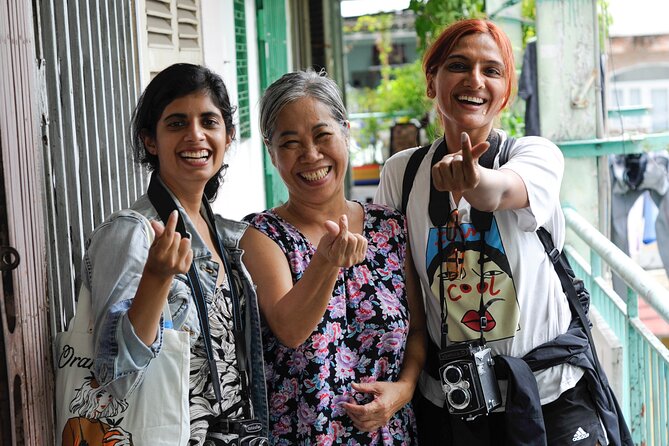
The price is $148.27 per person for roughly 3 to 4 hours. That sounds like more than a basic walking tour, so it’s worth looking at the value carefully.
Here’s what you actually receive:
- Coffee and/or tea
- An analog camera (TLR) and one roll of film
- A guide who provides a brief and helps with translation
- A private experience for your group
What’s not included:
- Private transportation
So you’re paying for more than guiding. You’re paying for equipment access and film, plus the time to use it well. If you’ve ever tried learning medium-format basics on your own, the cost of even one camera rental and film can add up fast. Add coffee, and you’re not just buying a route—you’re buying a whole way of seeing.
Timing works well for a short attention span. You’re not committing to a full day. But it’s long enough to cover the coffee start, the camera learning, and the market wandering. The first stop alone is about an hour, which helps keep the rest of the walk focused.
If you’re deciding between this and a cheaper tour, I’d compare your goals. If you want a social, photo-focused experience with local connection and analog practice, this is strong value. If your main goal is quantity of sights and quick photos, you may feel restrained by the film limit and slower pace.
You’ll meet at 73/8 Hồ Hảo Hớn in District 1 and end at Chợ Bàn Cờ in District 3. That end point matters. Plan to stay in that area afterward, or be ready for your next transit step.
Who this tour suits best (and who it doesn’t)
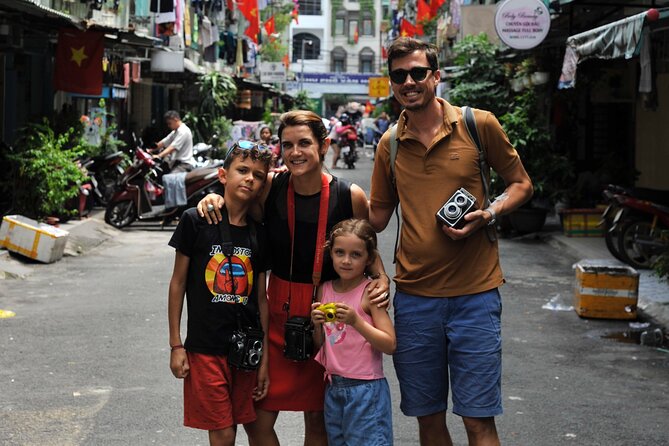
This experience suits you if you like photography but feel tired of only shooting icons. It’s also a great fit if you enjoy coffee culture and street-level food life, and you want a guided way to talk and connect in a more natural manner.
It’s a smart choice for:
- People who want a hands-on analog skill (not just pictures on a phone)
- Travelers who enjoy markets but want help navigating them
- Anyone who likes black-and-white photography for contrast and mood
It may not suit you if:
- You need instant, many-photo results
- You dislike walking or prefer climate-controlled sightseeing
- You aren’t interested in learning a camera system
Also, this is designed for most travelers to participate, and it’s private, so you can ask questions and move at a pace that fits your comfort level.
Should you book this analog Saigon walk?
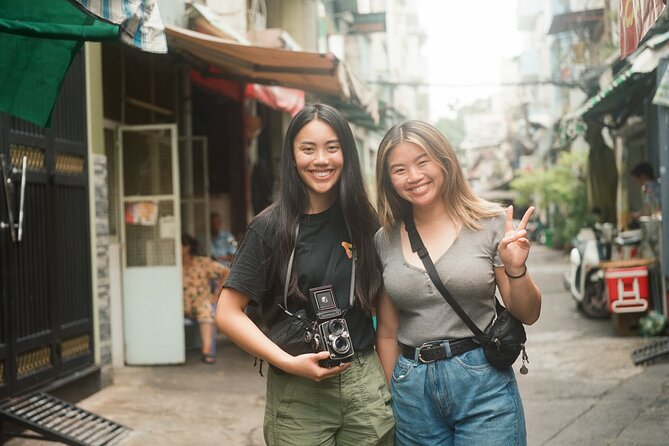
If you’re the kind of traveler who wants to understand a place through details, book it. The one-roll film approach turns photography into a mindful activity, not a checklist. Pair that with a 90-year-old coffee shop start and translation support in alley markets, and you get something rare: a local-feeling experience that still centers on your own creativity.
Before you book, check one thing: weather. The experience requires good weather, and since it’s a walking tour, plan for the realities of being outdoors. And if you’re stubbornly allergic to slow moments, you might want to choose a different style of tour.
But if you want Saigon with texture—light, shadows, conversations, and a camera that makes you think—this one is worth your time.
FAQ
How long is the experience?
It lasts about 3 to 4 hours.
How much does it cost?
The price is $148.27 per person.
What’s included in the tour price?
Coffee and/or tea are included, along with an analog camera and one roll of film.
Is transportation included?
No. Private transportation is not included.
Where do I meet the host?
You start at 73/8 Hồ Hảo Hớn, Phường Cô Giang, Quận 1, Thành phố Hồ Chí Minh, Vietnam.
Where does the tour end?
The tour ends at Chợ Bàn Cờ, Phường 3, Quận 3, Thành phố Hồ Chí Minh, Vietnam.
Is this a private tour?
Yes. It’s a private tour/activity, so only your group participates.
What are the main requirements before booking?
Confirmation is received at booking, the tour is near public transportation, and it requires good weather.