REVIEW · HO CHI MINH CITY
Discover Saigon’s Local Sites and Culture by Motorbike
Book on GetYourGuide →Operated by CONNECT CULTURE CO.,LTD · Bookable on GetYourGuide
Saigon changes fast when you ride it. This motorbike culture tour stitches together old Saigon, Chinese and Vietnamese neighborhood life, and real market scenes, with guides who can handle the traffic like Lucy or Jay. I like that you get local street beats instead of just big landmarks, and I also like the built-in food stops like Vietnamese coffee and a special dish (plus a drink) that help you slow down. The trade-off: you’ll be on a motorbike in close traffic, so it’s not for everyone—pregnancy, wheelchair use, and travelers over 80 are out.
The best part is how the route keeps moving through different “Saigon moods.” You start with spiritual history at the Thich Quang Duc Monument, then you shift gears into everyday District 3 apartment life, District 5 market layers, and finally more open-city views around District 1 after the Saigon River Tunnel. If you’re the type who likes photos, the tour includes them, and if you’re the type who likes context, your English-speaking guide puts the stories behind what you’re seeing.
In This Review
- Key things that make this motorbike tour worth your time
- Price and what you really get for about $16
- Pickup, timing, and how to plan your day without stress
- Getting comfortable on the back of a motorbike
- Stop 1: Thich Quang Duc Monument and the meaning behind the first pause
- District 3 old apartments: seeing daily life, not just the surface
- Coffee and coconut break: a small stop that resets your senses
- Flower market + District 5 Chinatown: the city turns louder and stranger
- Ghost buildings and old structures: when the city tells a complicated story
- Floating market in Saigon: the Mekong feeling without leaving the city
- District 4 and 7: slum areas and the old mafia area (the real contrast)
- Food and local drink: the taste stops that keep it human
- Saigon River Tunnel and District 2: the route turns into city-scale views
- The guides make it: English, careful riding, and real stories
- Who this tour is best for (and who should skip it)
- My booking call: should you choose this motorbike culture tour?
- FAQ
- How long is the tour?
- What does the $16 price include?
- Is pickup always included?
- Do I need to pay more for a private tour?
- Can I upgrade to a car or van?
- Is there an option for female áo dài rider?
- What should I bring?
- What food and drinks are included?
- Are there any rules about alcohol?
- Who should not book this tour?
Key things that make this motorbike tour worth your time
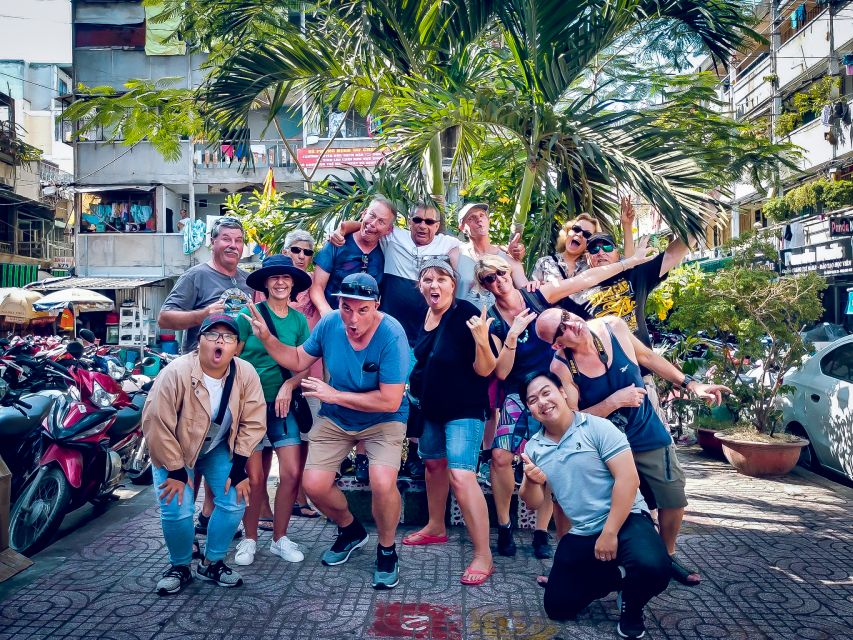
- Thich Quang Duc Monument sets the tone with a major historical anchor before you hop into daily life.
- District 3 apartment visit shows how locals actually live, not just how they pose.
- District 5 market maze includes flower, electronics, pet, and Chinese medicine areas in one route.
- Floating market stop gives you a Mekong-style moment in Saigon.
- District 4 and 7 slum and old mafia area visits add contrast and hard context.
- Saigon River Tunnel + District 1 scenes finish with city scale instead of only backstreets.
Price and what you really get for about $16
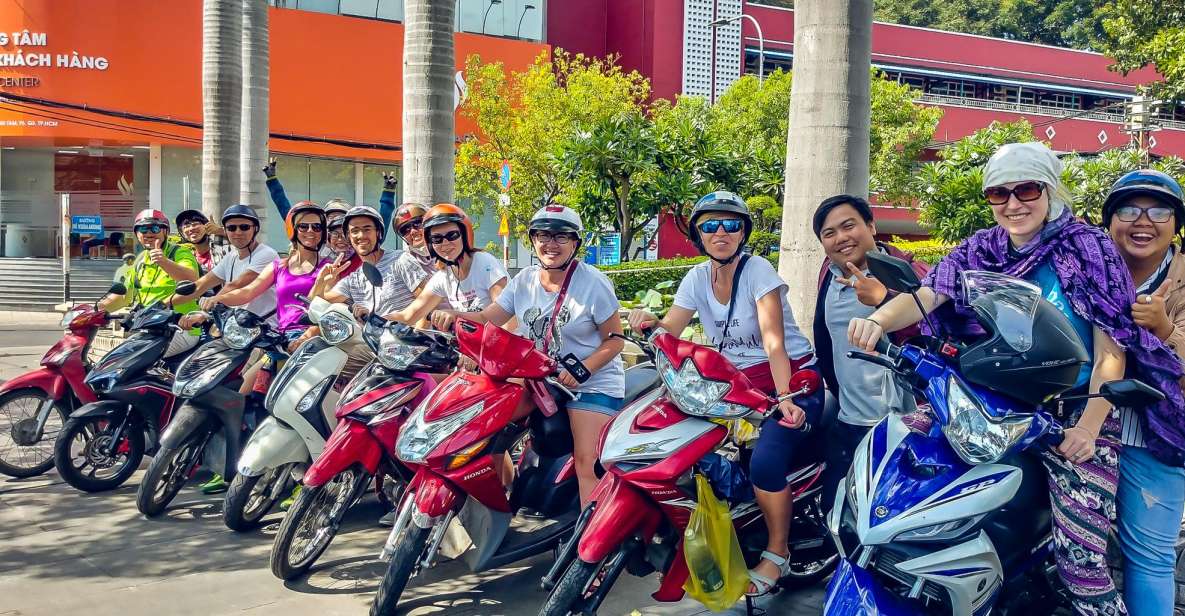
This tour is priced at $16 per person for roughly 2 hours to 210 minutes. That range matters: it tells you this isn’t just a short loop where you barely get moving. You’re paying for transport (motorbikes, helmets, ponchos), an English-speaking guide, and multiple food/drink moments—not just transportation between photos.
Value-wise, I think the smartest part is that the price buys you access: you get to places most people skip because they’d rather not wrestle with navigation, language, or the time drain of getting around. One more practical win: guides bring photos, so you’re not trapped doing selfie gymnastics while you’re trying to enjoy the ride.
You can also read our reviews of more tours and experiences in Ho Chi Minh City.

Pickup, timing, and how to plan your day without stress
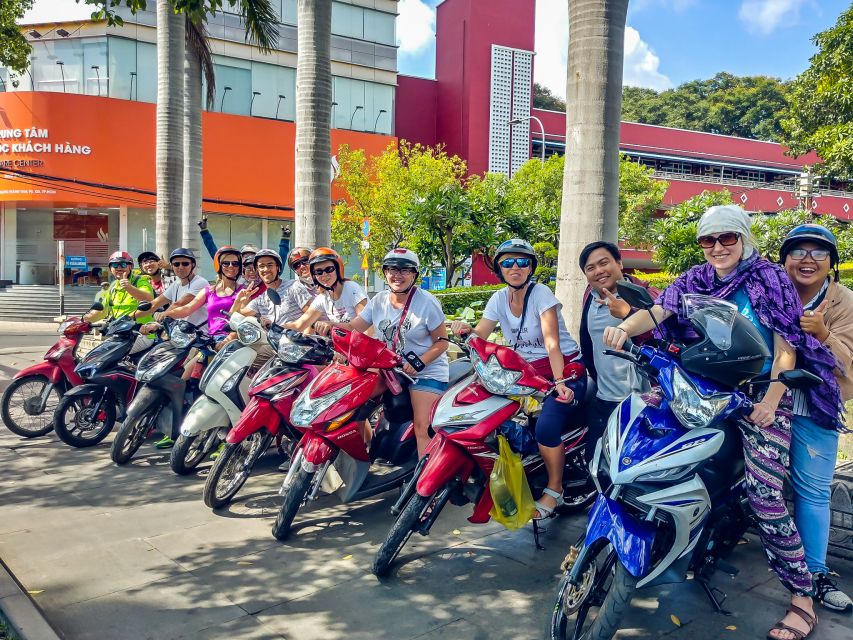
Pickup is included, but it depends where you stay. Hotels in Districts 1, 3, and 4 have free pickup; otherwise, there’s a $5 per person surcharge on the operator side during the day. If you want a simple baseline, the tour also lists a meeting point on Lê Lai in District 1 and references the Saigon Opera House area.
Give yourself a little buffer. The tour asks you to arrive 5 minutes early at your hotel lobby (or the meeting point) so you’re not rushed into the safety gear.
If you’re the kind of planner who hates surprises, the good news is that the tour explicitly includes motorbike gear: helmets, ponchos, and photos. And if you want options for comfort, there’s a car/van backup: a 7-seat car ($50) or 16-seat van ($70), booked at least 24 hours before.
Getting comfortable on the back of a motorbike
This is the kind of tour where your legs and your brain both have jobs. You sit on the bike, but your guide is doing the hard work: choosing lanes, timing turns, and working the flow through narrow alleys and heavy traffic.
What I like here is that the transport quality is a selling point on its own: 93% of transport reviews scored a perfect rating. That lines up with what you’ll feel on the ride—especially because your guide isn’t just steering; they’re also managing your comfort and safety while weaving through tight streets.
Still, I’d be honest about the consideration: you need basic comfort with being on a motorbike. Bring comfortable shoes and comfortable clothes, keep your camera handy, and don’t plan on this being a quiet, contemplative stroll. Saigon is loud on purpose, and the ride is part of the story.
Stop 1: Thich Quang Duc Monument and the meaning behind the first pause
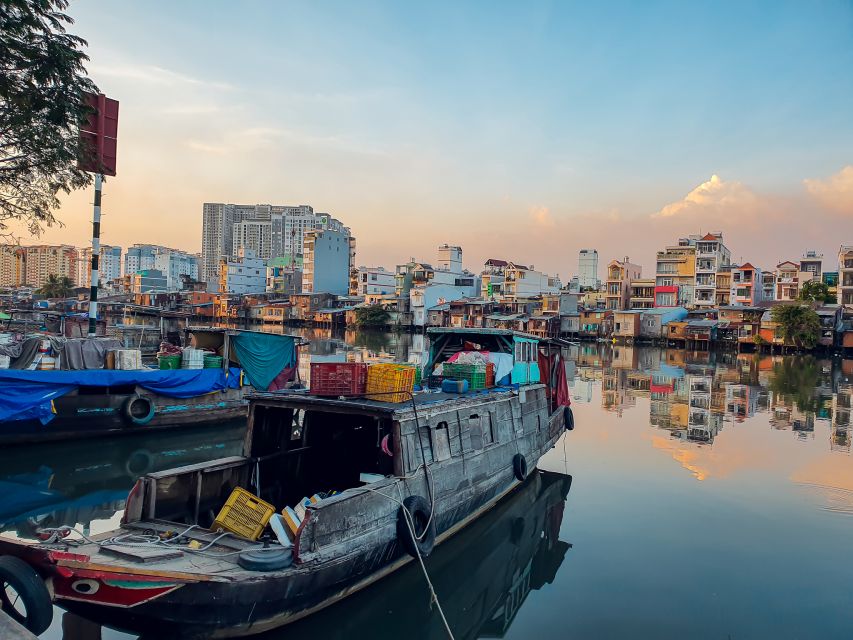
The tour starts at the Thich Quang Duc Monument. That’s a strong opener because it’s not a random landmark; it’s a moment that signals this city has deep spiritual and historical layers.
This first stop is useful even if you’re short on time. It gives you a framework before you jump into markets and neighborhoods, so when you later see temples and everyday life, you’ll understand you’re looking at a whole system—not disconnected sights.
District 3 old apartments: seeing daily life, not just the surface
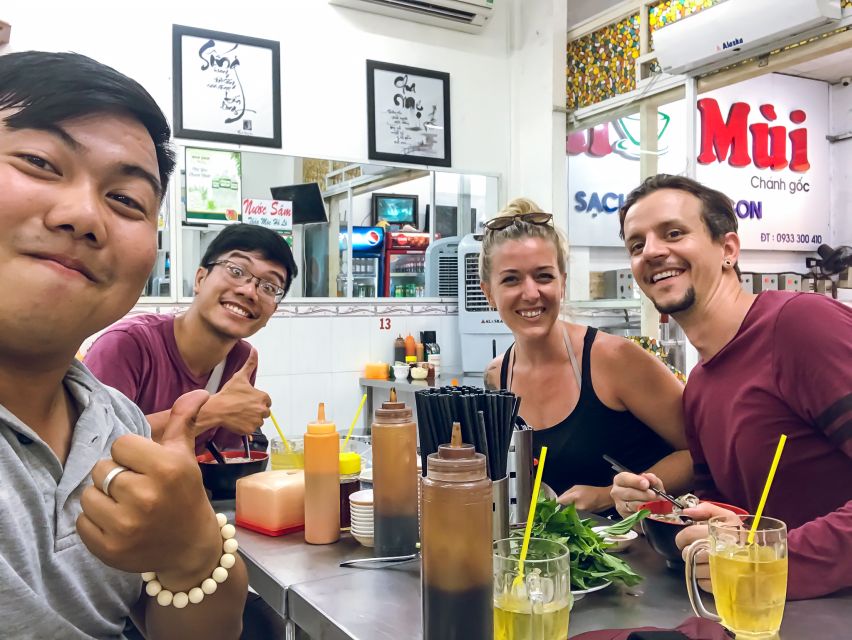
From there, you head into District 3, described as Saigon’s oldest district, and you visit an old apartment used by local people. This kind of stop is valuable because you’re not only looking from outside; you’re seeing how daily routines actually happen in tight, lived-in spaces.
You’ll also get the contrast that makes this tour feel more real. One moment you’re at a monument with cultural weight, and the next you’re watching everyday activity in a residential building—small movements, normal schedules, and the texture of ordinary life.
A practical tip: wear clothes you don’t mind getting slightly warm in. District 3 feels like you’re moving through real neighborhoods, and you’ll be stepping off the bike more than once.



Coffee and coconut break: a small stop that resets your senses
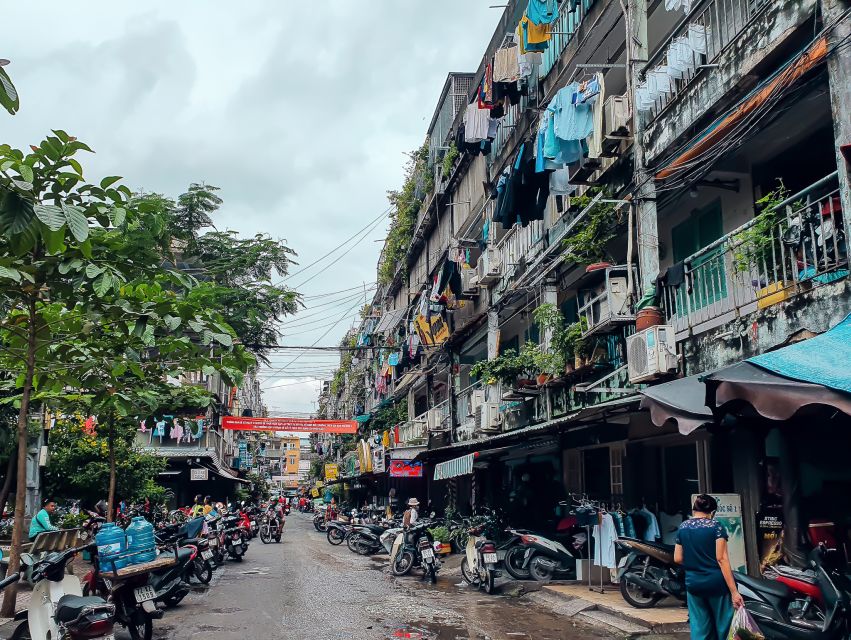
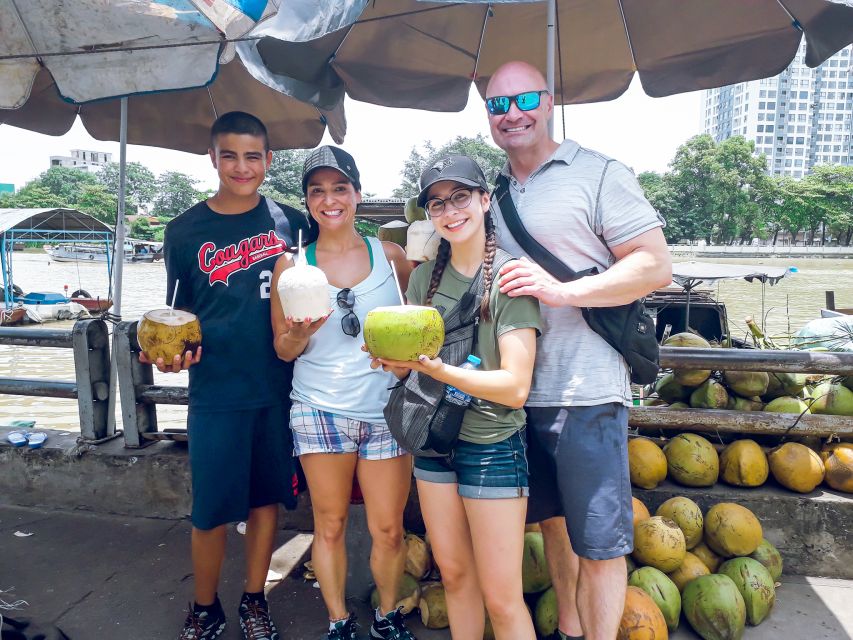
Next up is a local coffee shop where you can try typical Vietnamese coffee or coconut. It’s not just a snack break. It’s a smart way to regain your balance after traffic and to enjoy a flavor that feels like Saigon, not like an airport.
And if you’re a planner, this is the moment you’ll thank yourself for. You’ll walk away less tired, ready for markets, and in a better mood for the route’s more intense neighborhood scenes later.
Flower market + District 5 Chinatown: the city turns louder and stranger
The tour then heads toward the biggest flower market in Saigon. Even if you’re not buying anything, it’s a feast for photos and for your senses. Flowers also work like a visual map: they help you spot the flow of people moving through a local economy.
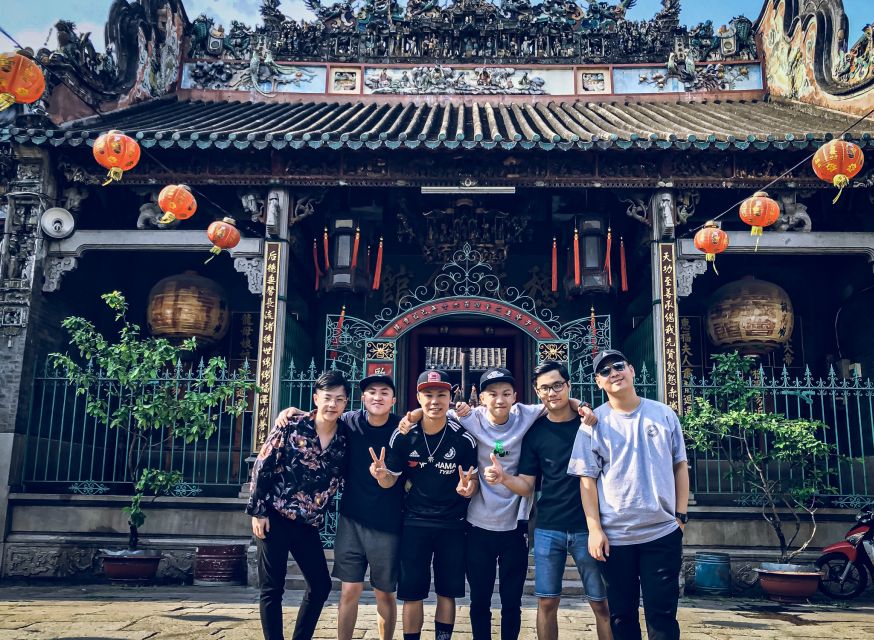
After that you ride into Chinatown in District 5. This area is where the tour’s character really spikes: you visit a chain of market zones and a typical Chinese temple, then you keep circling through street commerce.
The market stops are the kind of specific variety that makes you feel like you’re learning the logic of a city. You may see a motorbike market, a pet market, an electronic market, and a Chinese medicine market, plus the temple that ties together cultural practice and daily life.
One consideration: this part can feel intense if you’re sensitive to close-up street scenes (especially pet and medicine areas). You’ll be moving, looking, and walking in crowds, so keep your pace steady and don’t feel pressured to stay in any one spot longer than you need.
Ghost buildings and old structures: when the city tells a complicated story
One of the more memorable elements is the mention of ghost buildings in District 5. That’s the kind of phrase that hints at abandoned or underused buildings, and it helps you understand Saigon’s uneven changes—new development beside old gaps.
I like this section because it doesn’t pretend the city is only beautiful. Even if you’re here for fun, you’re also learning how neighborhoods evolve, stall, or get repurposed over time.
Floating market in Saigon: the Mekong feeling without leaving the city
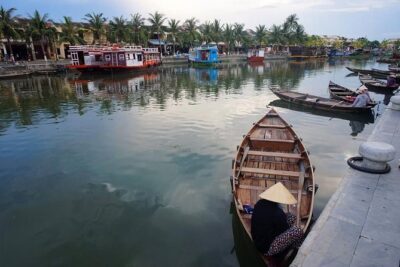
After the market intensity, the tour shifts into a calmer, scenic mode: it leads you to a floating market, described as a small version of the Mekong Delta in Saigon. This is a good reset because it changes your perspective from streets and stalls to water-based life.
If you’re worried about how it fits into a motorbike tour, it works because it breaks the pattern. You’re riding through asphalt and alleyways; then you get a different visual world and a chance to take it slow.
District 4 and 7: slum areas and the old mafia area (the real contrast)
Later the route includes slum areas and an old mafia area in Districts 4 and 7. This is where the tour becomes more than sightseeing. You’re being shown contrasts—poverty alongside daily survival, and history tied to names and reputations people remember.
This isn’t a “comfortable” segment. It can be heavy, and the point is to leave with a fuller picture of how the city has been shaped. If you prefer only upbeat stops, you might feel the weight here. But if you want your trip to mean something, this contrast is one of the most important parts of the whole day.
Food and local drink: the taste stops that keep it human
To keep your energy up, the tour includes a special dish and a local drink. I like that they don’t treat food as optional or generic. These are the moments where you can sit for a bit, watch how meals are served locally, and connect the stories to something you can actually taste.
One extra plus: the tour includes photos, so your meal moment won’t be the only time you remember to capture what you’re eating.
Saigon River Tunnel and District 2: the route turns into city-scale views
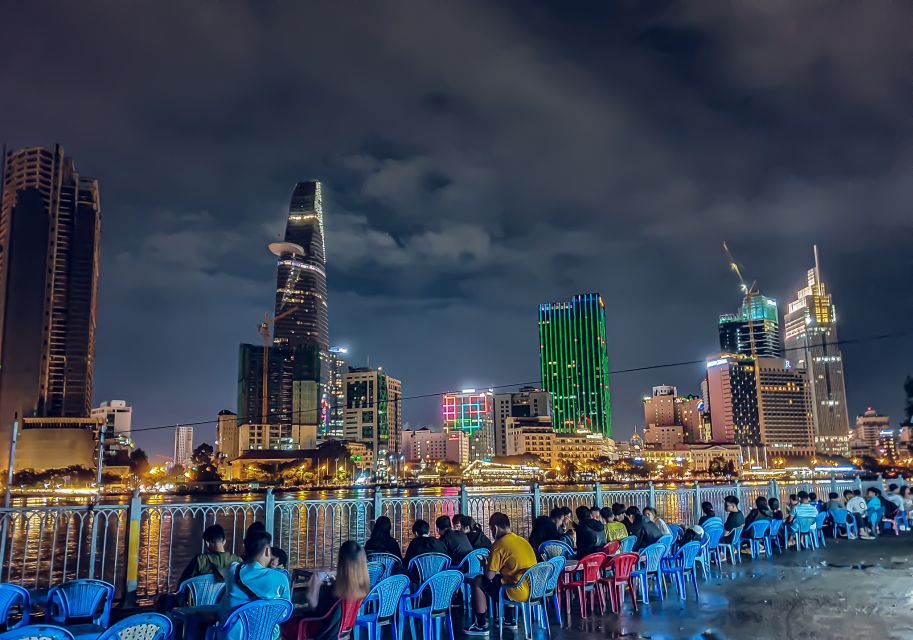
After the heavier neighborhood context, the tour drives through the Saigon River Tunnel in District 2. That kind of transit stop is useful because it changes the way you experience the city—less stop-and-go, more movement, and a different sense of scale.
Then you enjoy spectacular scenes of District 1. This finish is smart. Instead of ending in another dense market zone, you close with the parts of Saigon that help you orient yourself for the rest of your trip.
District 1 is also where the city feels more like the postcards. Seeing it after you’ve learned the rest gives you a sharper sense of what’s different—and what stayed the same.
The guides make it: English, careful riding, and real stories
A tour like this lives or dies on the guide. The experience includes English speaking guides, and names that come up in the guide lineup include Lucy, Jay, Elisa, Rachel, Danny, Bean, Zach, Vinh, and Anh—people noted for English clarity and for staying calm while moving through traffic.
I love the way these guides handle the balance of facts and feelings. You get enough context to understand what you’re seeing, and you also get practical pacing. One recurring theme in the experience is safety plus friendliness: comfortable bikes, careful driving, and guides who keep you aware of what’s coming next.
One practical note: because you’re on the motorbike, your guide’s communication matters. If you’re anxious, tell your guide early. A good guide will help you settle into the rhythm quickly.
Who this tour is best for (and who should skip it)
This tour is best for you if you:
- want a fast way to get your bearings in Saigon
- like local neighborhoods and markets
- are comfortable with a motorbike ride and short walks
- want food stops built into the route
Skip it if you:
- are pregnant, need a wheelchair, or are over 80
- know you don’t handle motorbike traffic comfort well
- want a quiet, low-stimulation tour with minimal street scenes
It’s also not for alcohol or drugs during the tour, which is pretty standard but worth noting.
My booking call: should you choose this motorbike culture tour?
I’d book this tour if you’re the type who wants more than landmark photos. The route gives you a strong mix: spirituality at the Thich Quang Duc Monument, residential reality in District 3, market variety in District 5 Chinatown, a floating-market break, hard contrast in District 4 and 7, and then that District 1 payoff after the Saigon River Tunnel.
It’s also one of the better value ways to see a lot in a half-day window, because the price covers transport gear and multiple stops—plus photos. If your priority is peace and quiet, or if you’re not comfortable with traffic, then look for a slower option. But if you want Saigon as a living city, this is the kind of tour that makes the rest of your trip click.
FAQ
How long is the tour?
It runs for 2 hours to 210 minutes, depending on the starting time and conditions. Check availability to see what times are offered.
What does the $16 price include?
It includes pickup and drop-off, an English-speaking guide, motorbikes, helmets, and ponchos, food & drink, and photos.
Is pickup always included?
Pickup is included, with free pickup for hotels in Districts 1, 3, and 4, or at the meeting point in central District 1. If you stay outside those areas, there can be a $5 per person surcharge added by the operator on the day.
Do I need to pay more for a private tour?
For the private tour option, there is a $5 surcharge for each person, paid as part of the private option.
Can I upgrade to a car or van?
Yes. There are car/van support options: a 7-seat car for $50 or a 16-seat van for $70. These should be booked before 24 hours.
Is there an option for female áo dài rider?
Yes. You can upgrade to a Female Aodai Rider for an extra $10 per person.
What should I bring?
Bring comfortable shoes, comfortable clothes, a camera, and cash.
What food and drinks are included?
Food & drink are included on the program, including stops for typical Vietnamese coffee or coconut and a special dish and local drink later in the tour.
Are there any rules about alcohol?
Alcohol and drugs are not allowed during the tour.
Who should not book this tour?
It’s listed as not suitable for pregnant women, wheelchair users, and people over 80 years.