REVIEW · HO CHI MINH CITY
HCMC: Cu Chi Less-Crowded Ben Duoc Tunnels Half-Day Tour
Book on GetYourGuide →Operated by Joy_Journeys · Bookable on GetYourGuide
Crawling underground changes your sense of time. I like the less-crowded Ben Duoc tunnels and how you get real detail on booby traps and wartime kitchens. The tradeoff: the experience is tight, dark, and physically demanding in warm air.
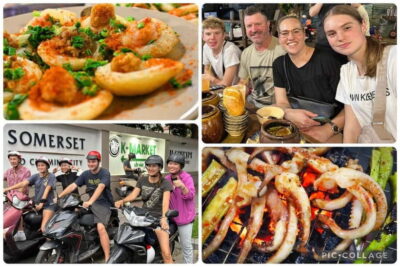
You start with a hotel pickup in Ho Chi Minh City (District 1 or District 4), then ride out toward Cu Chi in an air-conditioned van. Along the way, there’s a handicraft stop that’s a nice break from the long drive, and many days also include local food stops (like tapioca tastings later, and sometimes other simple snacks on the route).
The optional shooting range upgrade is a memorable add-on, but it’s extra cost paid onsite. If you’re hoping this is a calm walk-through with minimal crawling, this may not be your cup of tea.
In This Review
- Key things to know before you go
- Why Ben Duoc Feels Different Than the Main Cu Chi Route
- Hotel Pickup, Van Ride, and the Handicraft Stop
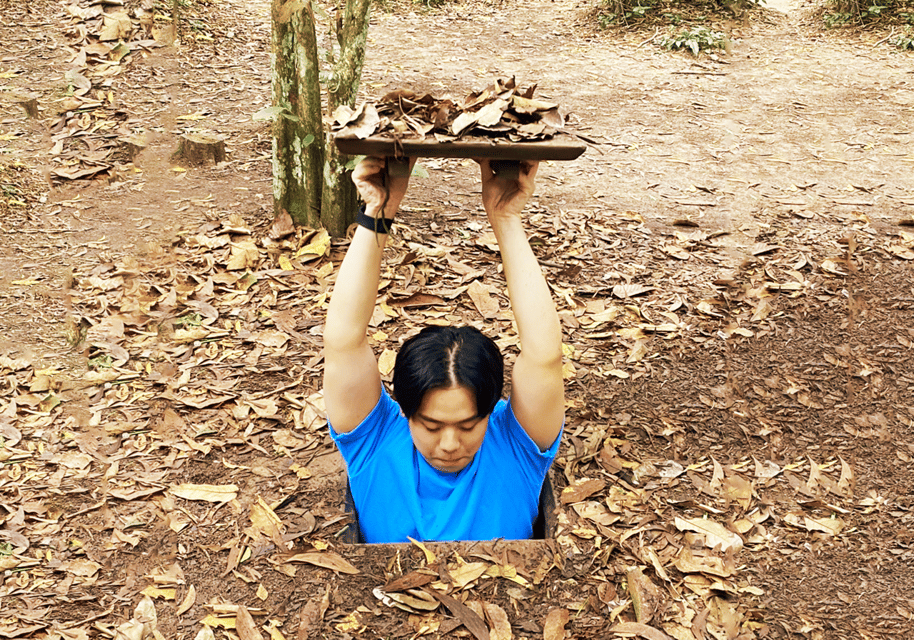
- Secret Entrance Crawls: What You Actually Do in the Tunnels
- Booby Traps, a Rusted Tank, and Stories That Put Context on Everything
- Tapioca Tastings: A Simple Wartime Food Break
- Tan Phu Trung Ward: Propaganda and the Hoang Cam Kitchen Idea
- Optional Gun Shooting: AK47, M16, or M1 for Onsite Fees
- What to Pack for Tight Tunnels and a Long Ride
- Price and Value: Why $31 Can Be a Good Deal Here
- Who This Tour Fits Best (and Who Should Reconsider)
- Should You Book This Less-Crowded Cu Chi Tour?
- FAQ
- How long is the Cu Chi Less-Crowded Ben Duoc tunnel tour?
- Where does hotel pickup happen in Ho Chi Minh City?
- Is the shooting range included?
- What will I do inside the tunnels?
- What should I bring with me?
- What happens if weather is poor or the tour can’t run?
Key things to know before you go
- Ben Duoc vs the main Cu Chi route: fewer crowds, more time to move at a comfortable pace
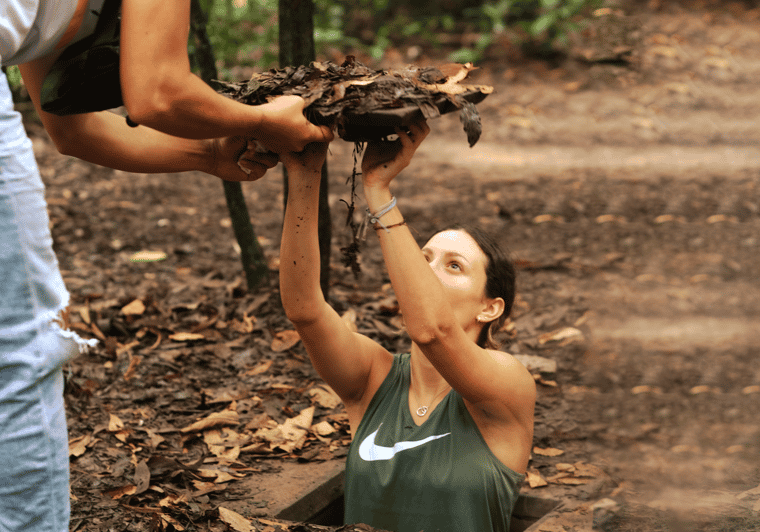
- Secret entrance crawling: narrow, low, and dim passages that make the history feel physical
- Preserved traps and war artifacts: you see how defenses were built into daily movement
- Tapioca tasting: a simple wartime food moment you can actually understand and taste
- Tan Phu Trung Ward stop: propaganda context and the Hoang Cam kitchen idea about hiding smoke
- Optional gun shooting: you can add AK47/M16/M1 for onsite shooting fees
Why Ben Duoc Feels Different Than the Main Cu Chi Route
Cu Chi is famous for a reason, but the version that goes to Ben Duoc is the point of this tour. You’re not just visiting tunnels; you’re visiting a section that tends to feel less crowded and more like a working military system rather than a stage set.
That matters because Cu Chi is claustrophobic by nature. If you’re squeezing through tight spaces with big groups charging behind you, it turns into a rushed endurance test. In this “less-crowded” format, you get more breathing room, better chances to stop where you want, and enough space to process what your guide is explaining.
It also helps that the tour is built around guided learning. You don’t simply hop from one tunnel hole to the next. You’re shown how the system worked—movement, hiding, and defense—so it clicks as a whole instead of a pile of exhibits.
You can also read our reviews of more tours and experiences in Ho Chi Minh City

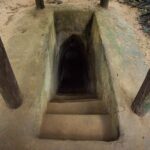

Hotel Pickup, Van Ride, and the Handicraft Stop
This is a full half-day in real time. The total duration runs 390 to 450 minutes, and you’ll spend a meaningful chunk just getting from HCMC out to Cu Chi and back.
Pickup is practical: Joy Journeys collects you from District 1 or District 4 (and some areas in District 3). You wait outside your hotel and look for a guide in a Joy Journeys shirt. You’ll get pickup confirmation 1 day before.
Once you’re on the road, you’ll see countryside life shift by shift—motorbikes, roadside routines, and the overall sense of daily Vietnam changing as you leave the city behind. It’s not a mind-blowing scenic drive, but it sets you up for the fact that Cu Chi isn’t isolated; it was part of a lived-in region.
On the way, you stop at a local handicraft center. This is a good stretch-and-browse break, and it’s also where the tour can add variety depending on the day. Some guides have included stops tied to handicrafts and community projects, plus simple snack moments on the route. Even if you don’t shop, it’s still a useful reset before you start crawling.
Secret Entrance Crawls: What You Actually Do in the Tunnels
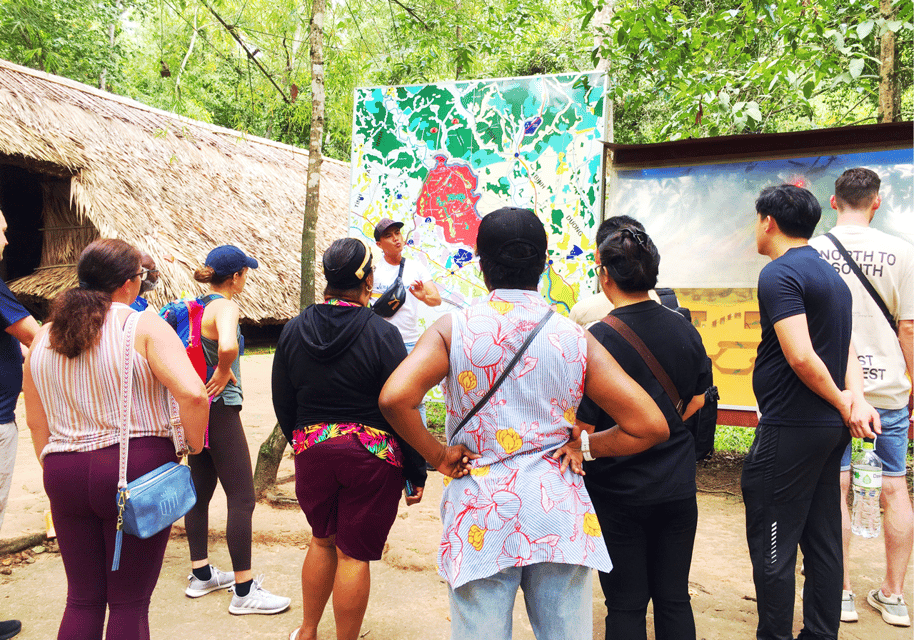
Here’s the headline: you crawl. Not metaphorically. Physically.
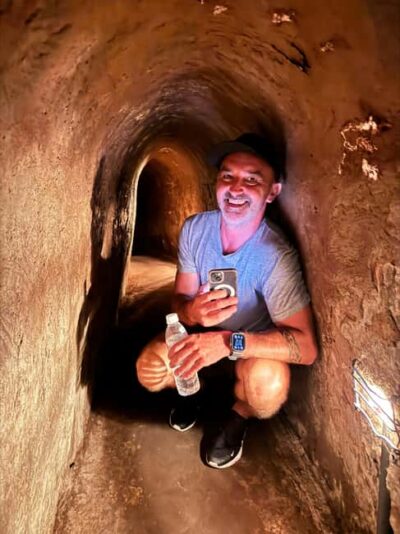
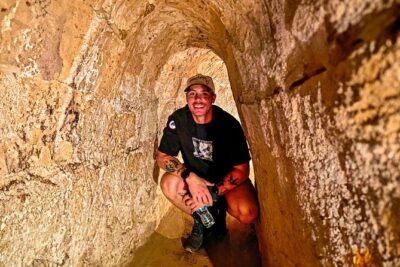
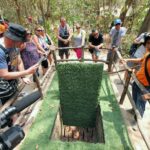
A guide leads you to a secret entrance where you crouch low and move into long, narrow underground passages. The air changes fast once you’re in—cooler ground under you, muffled sounds above, and a quiet pressure that makes the whole thing feel real in your body.
Inside, you’ll explore multiple tunnels and narrow sections designed for defense and survival. Expect low ceilings and tight turns, plus sections where you’re moving at a crawl even if you’re feeling okay. The tunnels are also warm, so breathable clothing helps more than you’d think.
If you’ve got claustrophobia, this is the moment to stop and think seriously. Even people in good shape can find the tunnels intense. Reviews frequently mention how tight it feels and how the physical part is non-trivial, so you should treat this as an active experience, not a light sightseeing detour.
Booby Traps, a Rusted Tank, and Stories That Put Context on Everything
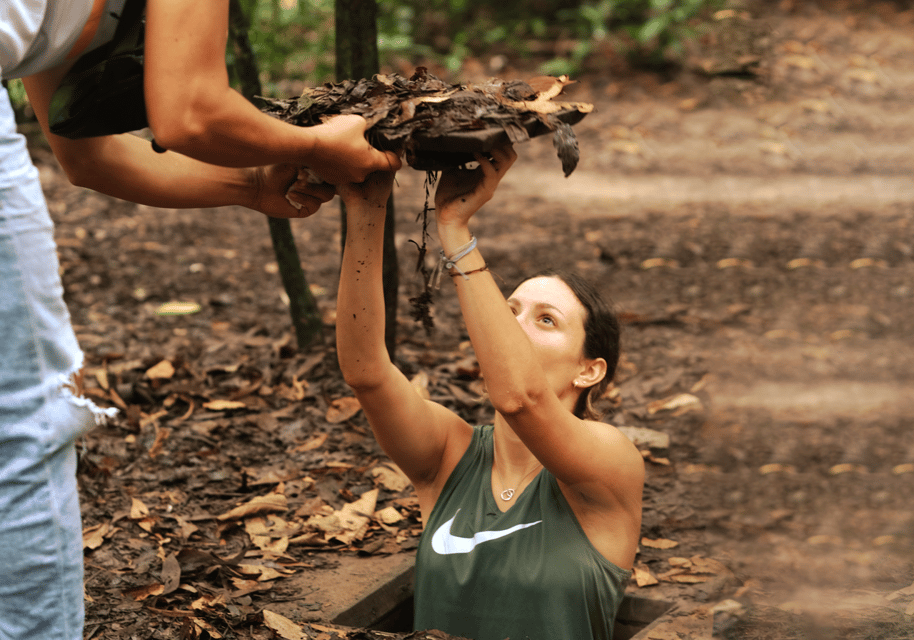
The tour doesn’t shy away from the darker parts of the war. It uses preserved elements to explain why the tunnels were so effective and so dangerous for anyone trying to move through them.
You’ll learn about booby traps—and not in a spooky, jump-scare way. It’s framed as engineering and tactics. Your guide points out how the traps were integrated into the tunnel environment so someone moving through couldn’t simply relax and navigate like a tourist.
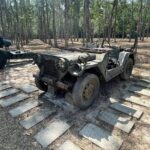
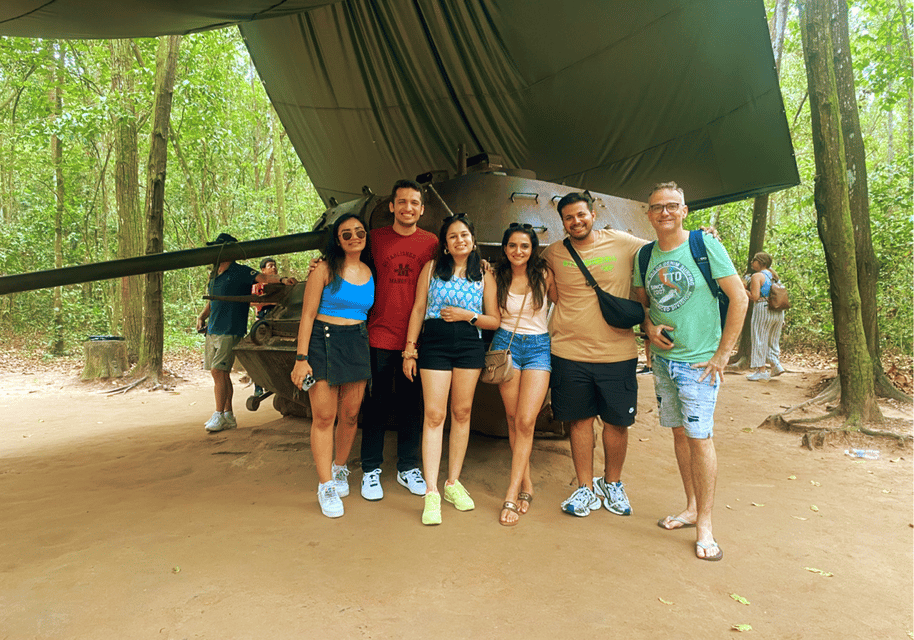
You’ll also stop to touch a rusted hull of a US Army tank. That moment helps because it’s a physical object connected to what happened above ground, even while you’re underground. It’s one of those “the story has weight” stops, and your guide’s narration makes the connection land.
Guides also bring family-level detail into the explanations. Names that come up again and again include Ken, Safa, Kero, Tommy, Huy, Tri, and Xuyen. Each guide has their own style, but the common thread is that the war context is tied to real human perspective, including what life meant before, during, and after conflict.
Tapioca Tastings: A Simple Wartime Food Break

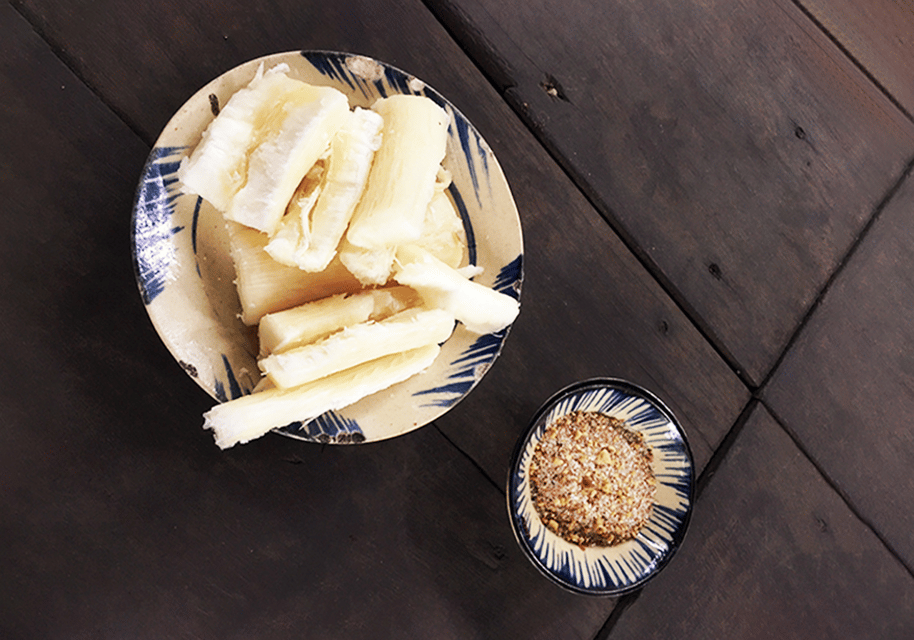
After you come back up, you get a chance to try tapioca. It’s a small tasting—nothing fancy, no elaborate culinary performance—but that’s exactly why it works.
Wartime food tends to be about what’s available, what stores well, and what keeps people going under pressure. Tapioca fits that logic. You taste something plain and filling, then you connect it to the tunnel survival story you just experienced.
One nice thing here is pacing. After crawling and listening for hours, your brain needs a different kind of input. The tapioca moment gives you that without turning the tour into a restaurant stop.




Tan Phu Trung Ward: Propaganda and the Hoang Cam Kitchen Idea
This is a key stop for understanding how the war reached into daily life. You visit Tan Phu Trung Ward, where you learn about wartime propaganda and how information and messaging shaped behavior.
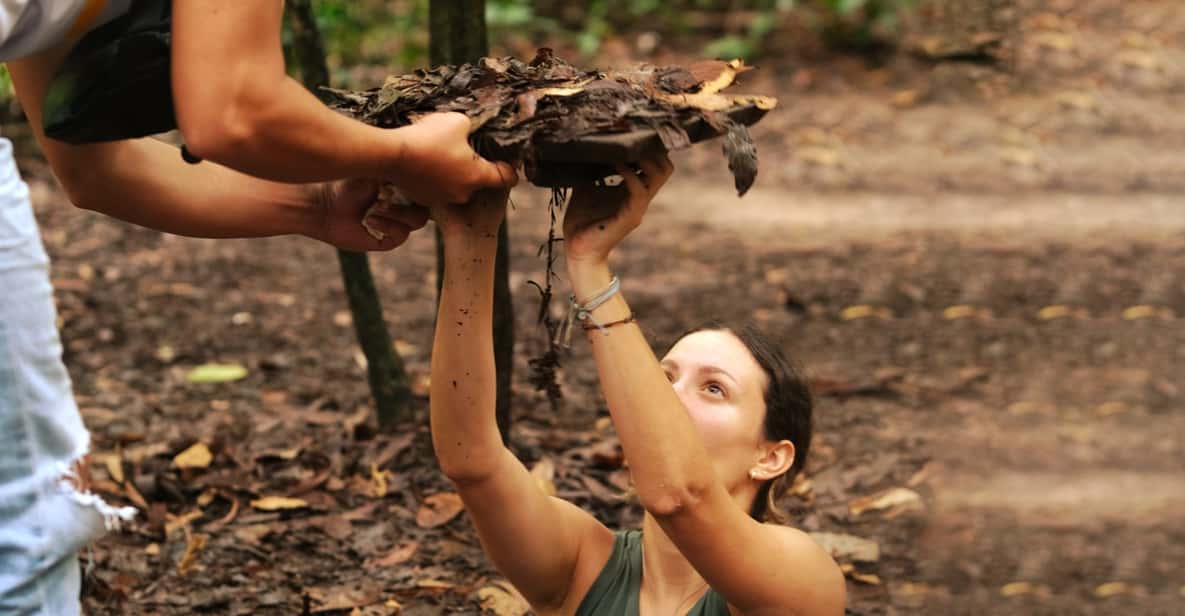
Then you’ll see the underground Hoang Cam kitchen concept. The idea here is practical: cooking smoke can give away position. So the kitchen design helped keep smoke hidden from enemy eyes. It’s not just a story; it’s architecture responding to risk.
This part connects neatly to the tunnel system. When you’ve spent time in underground passages meant to protect movement, the kitchen detail makes the bigger point: survival wasn’t only about hiding in tunnels. It was about solving everyday problems while staying hidden.
Optional Gun Shooting: AK47, M16, or M1 for Onsite Fees
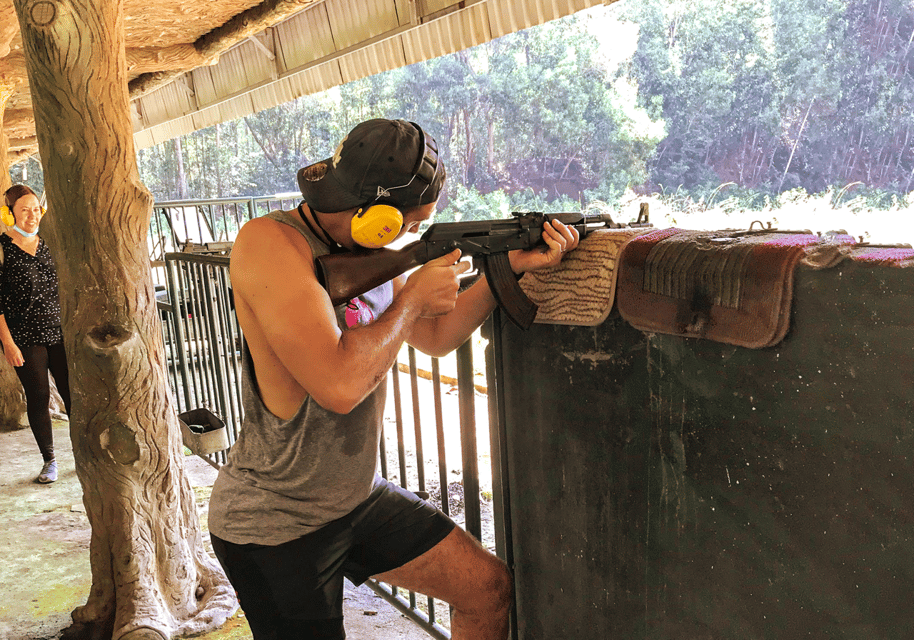
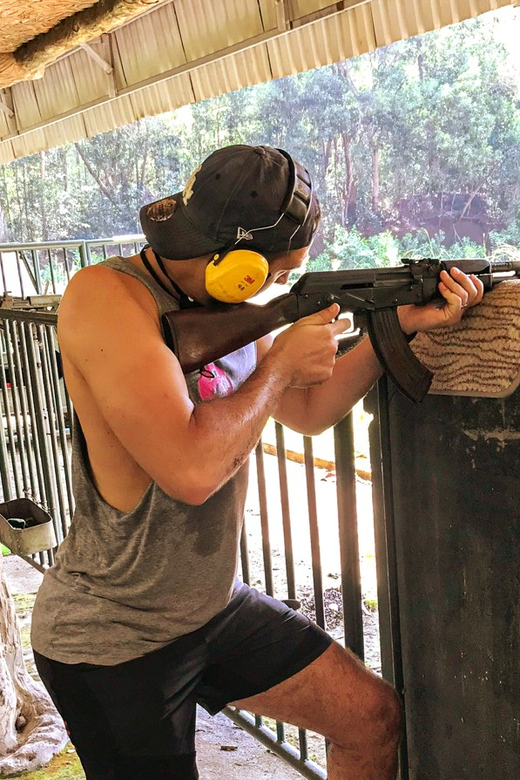
If you want the final thrill, you can upgrade to a shooting experience at the onsite range. The tour notes options like AK47, M16, and M1, with shooting fees paid onsite.
Value-wise, it’s an add-on, not a core component. The base tour already hits the main historical goals: you crawl, you learn, you see preserved traps and remnants, and you taste tapioca. The shooting part is more about personal connection—feeling how heavy and real the hardware is—than about adding new history facts.
A practical note: you should bring cash or a credit card since shooting fees are paid onsite, and you’ll also want whatever the range requires for comfort and safety. If you’re not interested in firearms, skip the range and use that time to linger around the tunnel area at your own pace.
What to Pack for Tight Tunnels and a Long Ride
The tour is much easier when you show up prepared. Here’s what I’d pack based on the tour notes:
- Hat for sun when you’re above ground
- Breathable clothing and shorts since it can get hot during outdoor parts
- Camera if you want photos, though you’ll be in low, dim spaces underground
- Cash and a credit card for onsite options like shooting
- Water and snacks: you’ll get two bottles of water per person, but you’ll still feel better if you plan for your own comfort
- Comfortable footwear with grip, because tunnels can be uneven and muddy
Also, consider your health. Reviews mention that people over 50 or with medical ailments should consider the effort level. Crawling in tight spaces is tiring even when you’re not panicking, and that’s before you count the long drive and the warm air.
Price and Value: Why $31 Can Be a Good Deal Here
At $31 per person, this is priced as an accessible Cu Chi option, especially because it includes several things that add up: the tunnel entrance ticket, hotel pickup and drop-off within District 1 and District 4, an air-conditioned van, a live English guide, and two water bottles per person, plus the tapioca tastings.
The main thing you pay extra for is shooting fees if you choose that upgrade. But if you don’t, the value is strong because your core experience is fully guided and includes the Ben Duoc tunnel portion rather than forcing you into a crowded mainstream route.
The “less-crowded” angle is also the value driver. You’re paying for time and space to understand what you’re seeing. If you’re going to do Cu Chi, that’s the part that tends to separate a good memory from a rushed one.
Who This Tour Fits Best (and Who Should Reconsider)
This tour is a great match if you want:
- A more controlled, less crowded Ben Duoc tunnel experience
- A guided explanation of traps, tactics, and wartime survival design
- A mix of underground crawling plus above-ground context stops (propaganda and the Hoang Cam kitchen)
- The option to add shooting at the end if you want hands-on intensity
You should reconsider if:
- You hate tight spaces or have claustrophobia
- You’re dealing with mobility issues or fatigue-sensitive conditions
- You’re expecting a calm sightseeing walk with minimal exertion
Also, if your priority is the biggest “classic Cu Chi” crowd vibe, this route won’t match that. The point here is quiet time, better pacing, and more guided attention.
Should You Book This Less-Crowded Cu Chi Tour?
Book it if you want Cu Chi to feel like a real system instead of a line you survive. The combination of Ben Duoc’s lower crowd level, the guided crawl with preserved traps, and the Hoang Cam kitchen stop makes the day feel coherent.
Skip it or choose another option if crawling underground sounds like a deal-breaker. This isn’t a gentle museum visit. It’s a physical experience with historical weight.
If you do book, plan your day around the long total duration, wear breathable clothes, and bring a bit of extra patience for a full road trip. Then lean into the guide’s stories. When the tunnels are quiet and you’re moving slowly, the history stops feeling abstract.
FAQ
How long is the Cu Chi Less-Crowded Ben Duoc tunnel tour?
The tour runs about 390 to 450 minutes, so plan for roughly a full half-day outing including driving time.
Where does hotel pickup happen in Ho Chi Minh City?
Hotel pickup is included for District 1 and District 4 (and some areas in District 3). The guide will meet you outside your hotel wearing a Joy Journeys shirt.
Is the shooting range included?
The basic tour includes the tunnel experience and tapioca tastings, but shooting fees are not included. If you upgrade, you pay onsite.
What will I do inside the tunnels?
You’ll follow a guide into the tunnel section at Ben Duoc, including a secret entrance crawl through narrow, dim passages and time spent exploring tunnels with historical explanations.
What should I bring with me?
Bring a hat, camera, breathable clothing (plus shorts), cash and/or a credit card (for onsite extras), and any food/drinks you want. Pack comfortable clothing for tight, dirty conditions.
What happens if weather is poor or the tour can’t run?
This experience requires good weather. If it’s canceled due to weather, you’ll be offered a different date or a full refund. There can also be a minimum traveler requirement, and if that isn’t met you’ll be offered another experience/date or a full refund.