REVIEW · HO CHI MINH CITY
Half Day Ben Duoc Tunnels Tour Ho Chi Minh City
Book on Viator →Operated by The Sun Tourist · Bookable on Viator
Tunnels tell a war story up close. This Ben Duoc-focused day trip takes you from central Ho Chi Minh City to underground rooms, trap systems, and the Ben Duoc Memorial Temple, plus an open-air museum of weapons. I love the small group size (max 12) and the high-energy English guiding I’ve seen from guides like Thang and Mark.
One thing to plan for: the tunnels are tight and dark, and the schedule runs closer to 7 to 8 hours than a true quick half-day.
In This Review
- Key things to know before you go
- From District 1 to the tunnel grounds: a morning with real context
- What you see underground at Ben Duoc: rooms, traps, and survival design
- Quick reality check: physical comfort
- The open-air museum stop: aircraft, tanks, bombs, and weapon history
- Ben Duoc Memorial Temple: stone tablets with tens of thousands of names
- “Liberated zone” reenactment: wartime life staged in everyday scenes
- Guide quality matters: how Thang, Thanh, Minh, Khang, Mark, and James can change the day
- The optional shooting gun range: plan for extra cost (and comfort)
- Price and value: why $29 can be a fair deal
- How long is this “half-day” actually?
- Who should book this Ben Duoc tunnel tour
- Should you book it?
- FAQ
- How much does the Half Day Ben Duoc Tunnels Tour cost?
- What time does the tour start?
- How long does the tour take?
- Where does pickup happen?
- Where is the meeting point address?
- What’s included in the tour price?
- What is not included?
- What group size should I expect?
- Is the tour dependent on weather?
- What is the cancellation window?
Key things to know before you go
- Hotel pickup from District 1 keeps the day easy, with an air-conditioned minivan and bottled water
- Underground rooms you can actually picture: living quarters, working areas, meeting spaces, a medical chamber, and weapon storage
- Ben Duoc’s Hoang Cam cooking technique shows how people cooked while reducing smoke signals
- Hidden exits, ventilation holes, and wartime traps make the tunnel walk feel like problem-solving
- A memorial you won’t forget: names of tens of thousands of martyrs engraved on stone tablets
- Optional gun range cost (not included) is the only big surprise on your budget list
From District 1 to the tunnel grounds: a morning with real context
The tour starts at 8:00 AM, picking you up from central District 1 areas and using an air-conditioned vehicle. You meet at 203 Đề Thám, Phường Phạm Ngũ Lão, Quận 1 and the tour ends back at the same meeting point. That back-to-start setup matters: you’re not hunting for transit after a long day.
The road trip out of the city is not wasted time. Your guide sets the stage with background on the Vietnam War and how tunnels fit into survival and strategy. Expect countryside views and straightforward explanations that help you understand what you’re about to see underground, and why so many rooms and passages were built the way they were.
Also, group size is small (up to 12), which usually means you can actually ask questions instead of shouting over the engine noise. In the guide feedback, names like Thanh, Thang, Minh, Khang, James, and Mark come up again and again—often praised for explaining the story with energy and answering questions in a balanced way.
You can also read our reviews of more city tours in Ho Chi Minh City


What you see underground at Ben Duoc: rooms, traps, and survival design
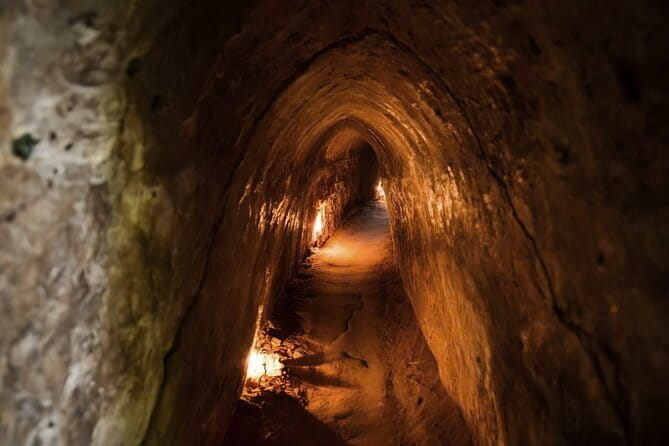
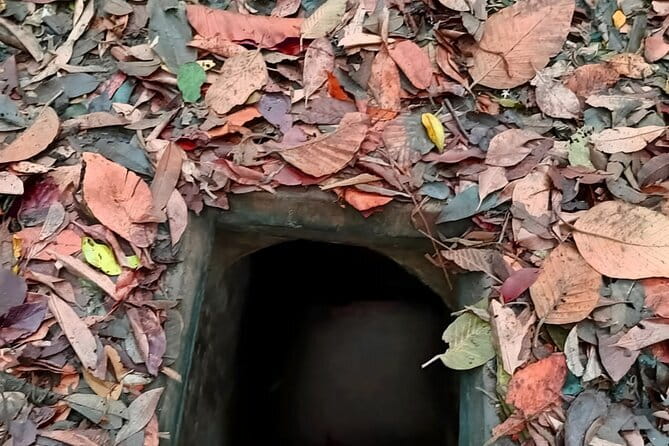
The biggest draw is the tunnel complex itself—multi-level and functional, not just a single narrow crawl. You’ll encounter passageways that feel deliberately tight, along with hidden entrances and exits and underground chambers built for day-to-day operations.
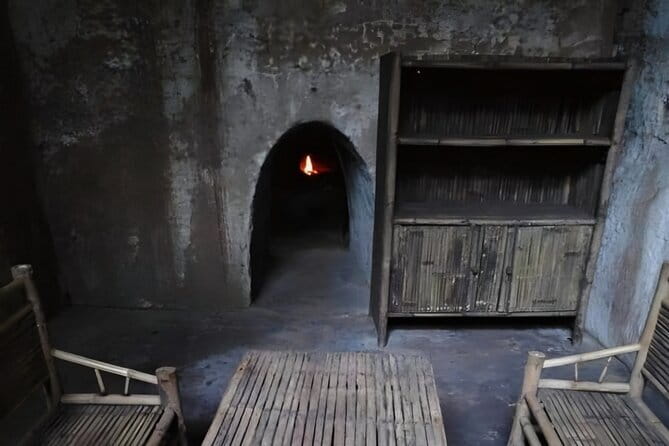
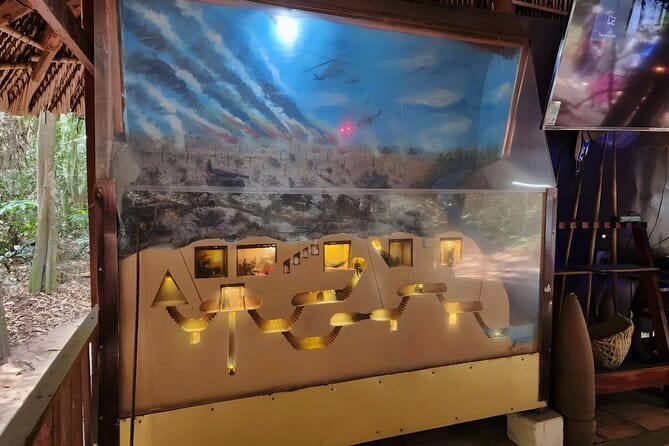
Here’s what makes the tunnel system feel real: it’s shown as a workplace and a home. You can expect to see recreated or explained areas such as:
- living quarters
- working areas
- meeting rooms
- a medical chamber
- weapon storage
- the Hoang Cam kitchen (a smoke-disguising cooking technique)
This is where the tour becomes more than sightseeing. The “rooms” idea gives you a lens for thinking about what people needed to keep doing—eating, meeting, treating injuries, storing tools, and planning—while staying hidden.
And then there’s the safety-by-engineering side. The tour highlights wartime traps, plus ventilation holes that helped people survive underground. Some of what you’ll notice is the logic: how to move without being seen, how to stay supplied, and how to protect key points. You’re not just walking through a hole in the ground—you’re walking through a system designed for pressure.
Quick reality check: physical comfort
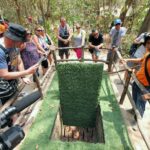
Let’s be honest: tunnel sections can be claustrophobic. You might have to stoop, shuffle, and move slowly in darker spaces. If you’re someone who hates tight rooms, take your time, keep your breath steady, and choose where you pause to look and listen.
The open-air museum stop: aircraft, tanks, bombs, and weapon history
Tunnel time is usually followed by an open-air museum area. This part helps connect the underground world to what was happening above.
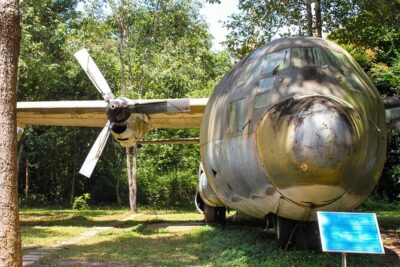
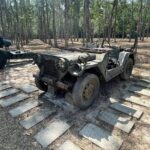
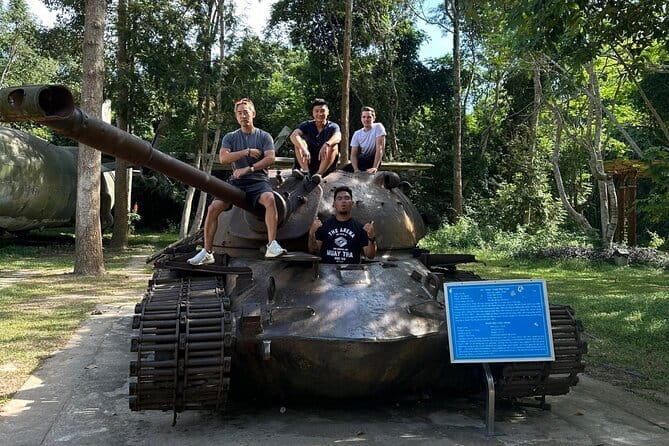
You can expect to see displays such as aircraft, tanks, bombs, and other weapons. The value here is context. Seeing major equipment in the open helps you understand what the tunnels were countering and why ventilation, hidden exits, and camouflage-style planning mattered.
I like this approach because it avoids the “only underground” effect. You get the contrast: the claustrophobic engineering underneath, then the broad, harsh reality of vehicles and weapons outside.
Ben Duoc Memorial Temple: stone tablets with tens of thousands of names
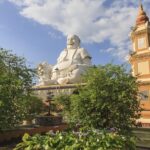
If you want one stop that changes the pace, it’s the Ben Duoc Memorial Temple. This is where the tour shifts from survival design to remembrance.
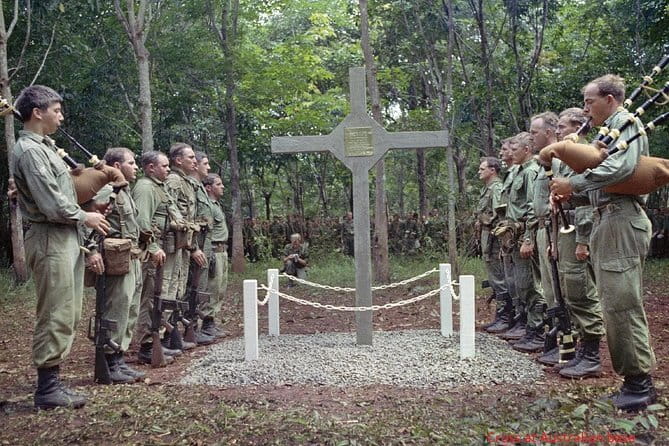
The memorial is described as honoring fallen soldiers, with names of tens of thousands of martyrs engraved on stone tablets. It’s the kind of place where you’ll find yourself slowing down, even if you entered the site expecting a standard guided walk.
This stop also explains why the tunnels matter beyond shock value. The day isn’t only about tactics; it’s about the human cost behind them—people who had to live, work, and hide under extreme conditions.
If you’re traveling with teens, it can be a powerful pairing with other war-focused sites in Ho Chi Minh City, since it gives a “people” anchor to what can otherwise feel like facts and machinery.


“Liberated zone” reenactment: wartime life staged in everyday scenes
Another standout is a reconstructed “liberated zone” that recreates wartime landscapes and daily life. This is not just scenery. It’s meant to show what normal tasks looked like under wartime conditions—where people cooked, interacted, and moved through their community while the danger remained constant.
For many people, this is where the story sticks. You stop thinking in abstract terms and start picturing routines: work, planning, small comforts, and the constant need to stay undetected.
That practical storytelling is exactly why the guide style matters. Strong guides like Thang and Mark are praised for giving clear explanations and handling questions with an even tone rather than turning the day into one-sided theater.
Guide quality matters: how Thang, Thanh, Minh, Khang, Mark, and James can change the day

A tour like this lives or dies on the guide. The good ones don’t just point at walls; they connect features to survival needs and explain what you’re seeing in simple language.
In the feedback, guides are repeatedly described as:
- energetic while explaining
- able to answer questions
- careful and professional in tone
- proud of their country’s history without turning the experience into a lecture
Names that show up include Thanh, Thang, Minh, Khang, Mark, and James. If you care about getting strong English, this is one of the best reasons to pick this operator type of tour rather than a generic bus-and-brochure option.
Also, since the group is limited to around a dozen, it’s easier for your guide to respond to follow-up questions. That makes the tunnels feel less like a checklist and more like a conversation.
The optional shooting gun range: plan for extra cost (and comfort)

One item is clearly not included: shooting gun access, listed at 60,000 VND per bullet. This is separate from the main tunnel and museum experience.
If you’re traveling with someone who wants to try it, you’ll want to budget a bit. If you’re not interested, skip it without guilt—the core value of the tour is the underground system and the memorial.
Also, if you’re sensitive to firearms or weapon demonstrations, consider whether you’d rather spend that time walking at your own pace in other areas.
Price and value: why $29 can be a fair deal
At $29.00 per person, this tour isn’t trying to be the cheapest option in town. But it also includes several things that add up quickly:
- Air-conditioned vehicle
- Entrance fee
- Hotel pickup and drop-off (central District 1)
- Bottled water
- A friendly, super-informative English tour guide
The big cost savings are usually the guide + entrance + transport bundle. You’re not arranging separate tickets, and you’re not spending time figuring out how to reach the sites on your own.
The only common add-on cost is the shooting range (and tipping, which is not included). So if you go in knowing what’s optional, the value holds up.
How long is this “half-day” actually?
Despite the name, the timing looks more like a long half-day. You start at 8:00 AM and the duration is listed at about 7 to 8 hours.
That means you’ll likely want to treat this as a main day activity, not an early morning “quick hit.” Plan to eat before pickup if possible, or be ready for a later lunch after you’re out at the tunnel grounds. Wear layers, because the weather and the indoor underground sections can feel very different.
Who should book this Ben Duoc tunnel tour
You’ll probably love this tour if:
- you want a structured, English-guided war-history day without stress
- you like physical places that explain strategy (not just reading plaques)
- you’re traveling with teens or family members who benefit from a guided story
- you appreciate small-group pacing (max 12)
You might want to think twice if:
- you get anxious in tight spaces or dislike low-light crawling areas
- you want a light, relaxed afternoon with minimal emotion
Should you book it?
Yes, if you want an honest, guided look at how people lived and hid during the Vietnam War, this tour is a strong choice. The combination of tunnel rooms, Hoang Cam cooking, wartime traps and ventilation, plus the Ben Duoc Memorial Temple makes it more complete than a tunnel-only stop.
If you’re choosing between doing it or skipping it, my advice is simple: if you can handle tight spaces for a short stretch, this is one of the most meaningful ways to spend a long morning-to-afternoon in Ho Chi Minh City. Just go in with realistic expectations about the time length and the intensity.
FAQ
How much does the Half Day Ben Duoc Tunnels Tour cost?
The price is listed as $29.00 per person.
What time does the tour start?
The start time is 8:00 AM.
How long does the tour take?
The duration is listed as approximately 7 to 8 hours.
Where does pickup happen?
Pickup is offered from centrally located hotels in Ho Chi Minh City, specifically in the central District 1 area.
Where is the meeting point address?
The meeting point is 203 Đề Thám, Phường Phạm Ngũ Lão, Quận 1, Thành phố Hồ Chí Minh 700000, Vietnam.
What’s included in the tour price?
Included items are an air-conditioned vehicle, an English tour guide, the entrance fee, bottled water, and hotel pickup/drop-off in central District 1. A mobile ticket is also mentioned.
What is not included?
A shooting gun experience is not included (60,000 VND per bullet), and tips are not included.
What group size should I expect?
The tour has a maximum of 12 travelers.
Is the tour dependent on weather?
Yes. The experience requires good weather. If it’s canceled due to poor weather, you’ll be offered a different date or a full refund.
What is the cancellation window?
Free cancellation is available up to 24 hours in advance for a full refund.