REVIEW · HO CHI MINH CITY
City Tour By Motorbike w/ War Museum & Reunification Palace
Book on GetYourGuide →Operated by Saigon Adventure Travel · Bookable on GetYourGuide
One-word warning: Saigon hits hard. This half-day motorbike tour combines French-colonial architecture with the Vietnam War story told through major sights, all timed for a smooth 4-hour circuit. I like the scooter format because it gets you around fast, and I like the included museum palace tickets that would otherwise cost extra. The main consideration: this is war-focused and you’ll need to follow the cover-knees-and-shoulders dress rules for temples and pagodas.
You’ll pass headline attractions like Saigon Notre-Dame Basilica, the Central Post Office, the Opera House area, Ben Thanh Market, and you’ll spend your museum time where the city’s past is impossible to ignore: the War Remnants Museum and Reunification Palace. Plus, you get real-time context from guides who can switch between English and Vietnamese, and who keep the driving practical in heavy traffic—many guides are repeatedly praised for being careful and for clear explanations.
If you want an easy checklist day with heavy emotion mixed in, this tour is built for you. If you’re hoping for a “light and fluffy” sightseeing loop, you might find the war stops a bit intense.
In This Review
- Key highlights I’d plan around
- A 4-hour scooter sprint through Saigon’s French past
- Reunification Palace: where the war’s turning point is set in concrete
- War Remnants Museum: photos, artifacts, and hard context
- Saigon Notre-Dame Basilica and the Central Post Office: French details that still work
- City Hall and the Opera House area: big civic presence in a small time window
- Jade Emperor Pagoda and Nguyen Hue Walking Street: when the city slows just enough
- Ben Thanh Market: a classic finale with a practical payoff
- Price and logistics: does $28 really make sense?
- Who will love this tour most
- A note on guides and the vibe you’ll get
- Should you book this Saigon motorbike city tour?
- FAQ
- How long is the Saigon city tour by motorbike?
- What does the price include?
- Is the War Remnants Museum entrance fee included?
- Is the Reunification Palace ticket included?
- Which languages are available for the guide?
- Do you provide pickup in my hotel area?
- Where is the meeting point if I’m not picked up?
- What should I wear for temples and pagodas?
- What should I bring?
- What are the cancellation and payment options?
Key highlights I’d plan around
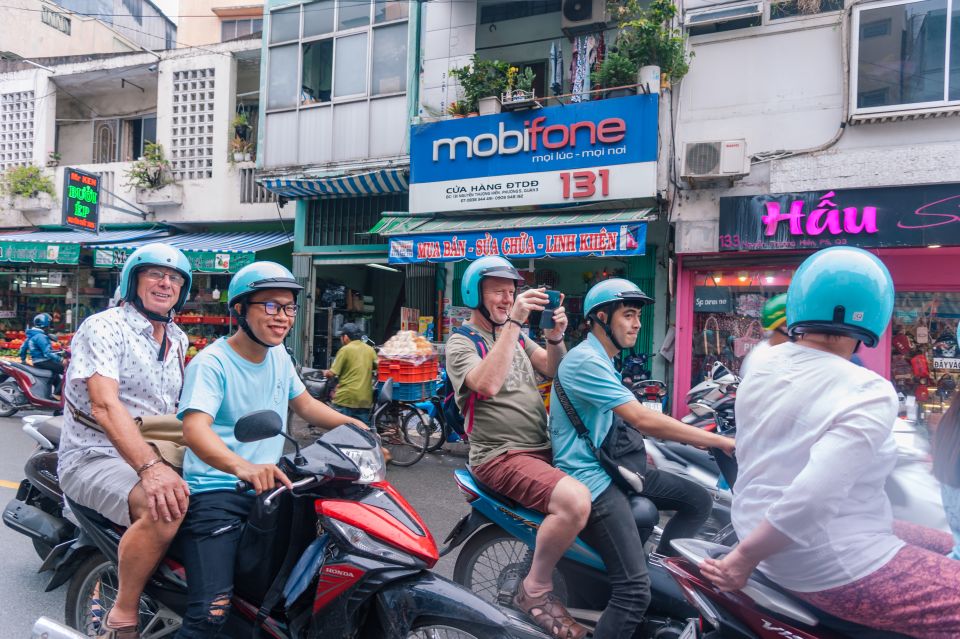
- Scooter + English-speaking guide: fast moving, with explanations you can actually ask questions about
- War Remnants Museum + Reunification Palace included: two big-ticket stops without extra ticket hassle
- French colonial architecture loop: Notre-Dame Basilica, Central Post Office, and the Opera House area
- Ben Thanh Market at the right time: a classic Saigon pause near the end of the tour
- Safety gets high marks: a scooter day works best when drivers are calm and controlled
- Kumquat juice included: a small but pleasant local touch mid-tour
A 4-hour scooter sprint through Saigon’s French past

Saigon (Ho Chi Minh City) is not a place you “slowly admire” for half a day. Traffic, distance, and sheer energy push you toward smarter pacing. That’s exactly why the scooter format works here: you cover a lot of ground without spending your whole day moving between far-flung landmarks.
The tour’s design also makes one big thing easier: you see Saigon in layers. One layer is colonial-era design and big civic buildings—the kind of places where straight lines, arches, and European-style details still shape what the city looks like today. Then the story pivots. You go from beauty and architecture into the Vietnam War era, which changes the mood fast.
A practical note before you go: it’s a scooter day, so wear comfortable shoes and comfortable clothes. And yes, the dress rules matter. For temples and pagodas, you must cover your knees and shoulders, and the tour’s restrictions also say no shorts, short skirts, or sleeveless shirts. If you show up in the wrong outfit, you’ll lose time hunting for a workaround.
You can also read our reviews of more city tours in Ho Chi Minh City



Reunification Palace: where the war’s turning point is set in concrete
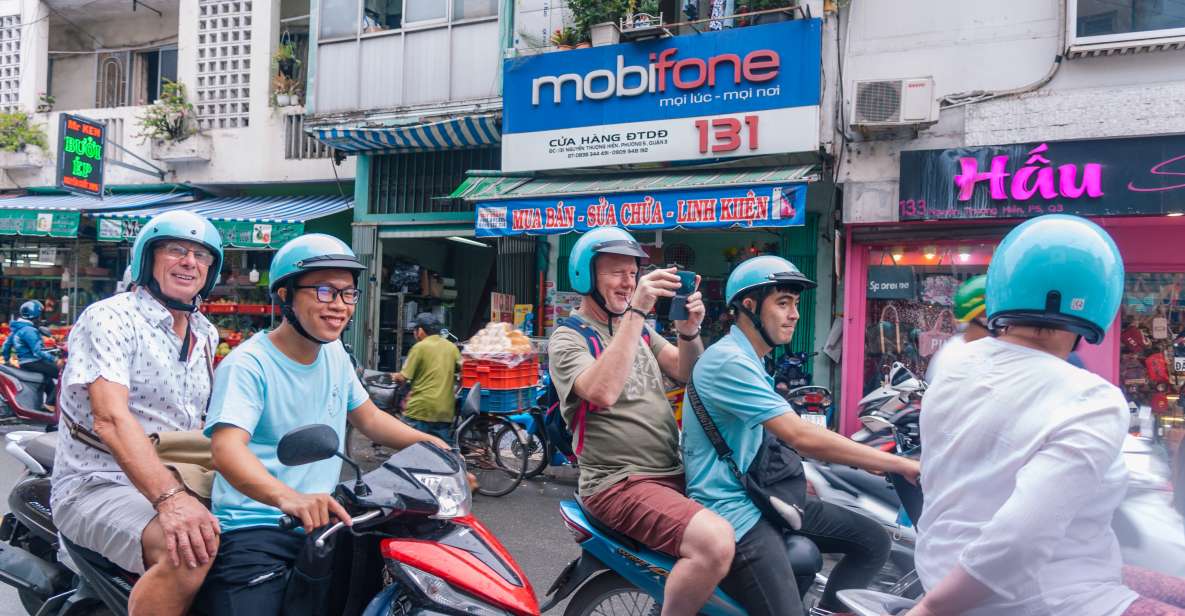
Reunification Palace is the anchor stop in this tour, and it sets expectations from the start. This wasn’t just a nice building; it was the residence of the President of the Republic of Vietnam until 30 April 1975. Even if you only know the broad outlines of the war, the palace gives you a clear physical sense of what leadership space looked like at that moment.
What I like about making this one of your first big “history” stops: your guide can connect the architecture and layout to what happened there and why it mattered. You’ll also have time to look around without feeling rushed, because the tour is designed around the idea that these two major sites (Reunification Palace and War Remnants Museum) deserve real attention.
Value tip: the entrance fee for Reunification Palace is included, so you don’t have to decide at the last second if it’s worth buying a separate ticket.
War Remnants Museum: photos, artifacts, and hard context
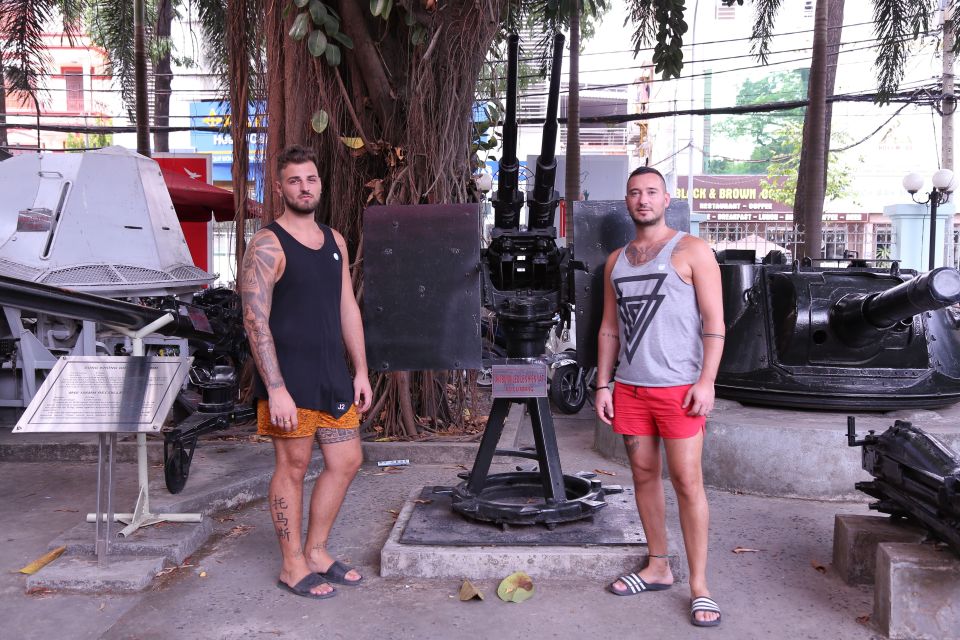
If Reunification Palace gives you the political turning point, the War Remnants Museum gives you the human cost behind it. The museum is built around countless artifacts, photographs, and documented images tied to the second Indochina war. This is not the kind of museum that stays abstract.
Going in, I’d assume you’ll feel a shift in tone—because the experience is designed to show consequences, not just chronology. That’s the part that can be emotionally heavy, especially if you’re sensitive to graphic images or personal stories. If you know you want to manage your energy that day, plan for a slower pace mentally at this stop. It’s okay to take breaks inside and to linger only where you feel ready.
The practical benefit is that you’re not doing it alone. With an English-speaking guide, you can ask questions about what you’re seeing, and you can get local perspective that connects the museum contents to how the city understands that period now.
Value tip: the museum entrance fee is also included, which is a big part of what makes the $28 price feel fair for a half-day.
Saigon Notre-Dame Basilica and the Central Post Office: French details that still work

One reason this tour appeals to people who love architecture is that it doesn’t treat French design like a photo backdrop. You get guided context while you’re actually standing in the details.
- Saigon Notre-Dame Basilica (Cathedral Notre-Dame): built between 1863 and 1880 by French colonists, it originally had a different name tied to the church of Saigon. Seeing it in person helps you understand why this style became so dominant here.
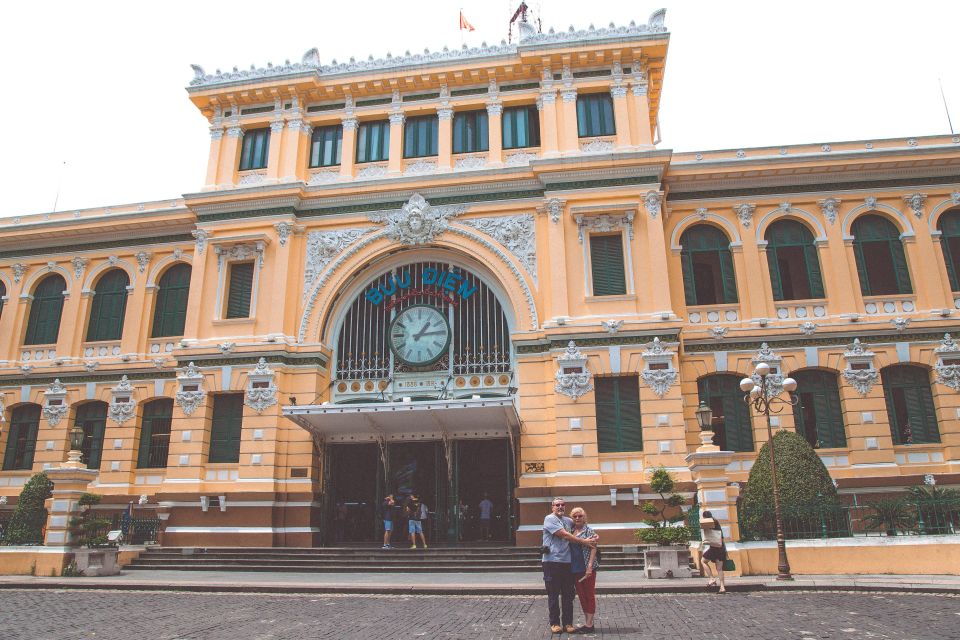
- Saigon Central Post Office: constructed from 1886 to 1891, and designed with classic elements of Gothic, Renaissance, and French colonial styling. It’s the kind of building where the interior layout and craftsmanship reward looking a little longer than you planned.
What I like about pairing these sites in the same half day: they work as a “breather” after the intensity of the palace and museum. You can switch your brain from heavy context to visual details—rooflines, arches, façade symmetry—and it helps the war story land without making the whole day feel like a single long lecture.
City Hall and the Opera House area: big civic presence in a small time window

The tour also includes stops around Ho Chi Minh City People’s Committee and the Opera House area. These aren’t random photo points. They reflect how the city organizes space and how official buildings and cultural buildings sit side-by-side with the rest of everyday life.
Even if you’re not an architecture nerd, this portion helps you answer a basic question: what does the city look like when you zoom out? The Opera House area and civic buildings give you a sense of the formal side of Saigon—then the scooter brings you back into street-level reality.
If you’re a person who likes structure, this segment is satisfying. If you’re a person who hates walking, don’t worry—most of your time here is still guided with the scooter doing the legwork.
You can also read our reviews of more museum experiences in Ho Chi Minh City






Jade Emperor Pagoda and Nguyen Hue Walking Street: when the city slows just enough
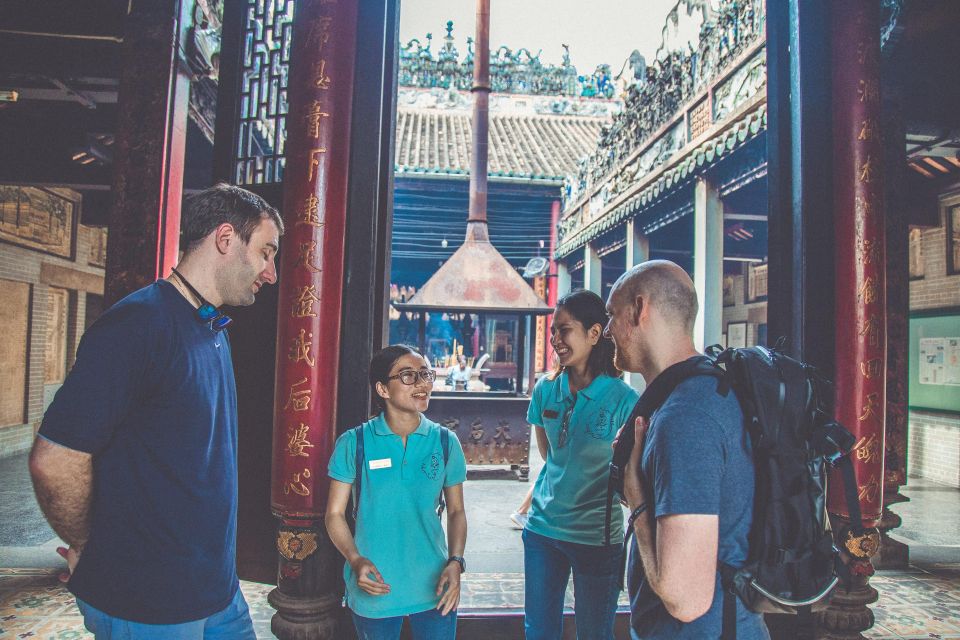
After the war and the French architecture, you’ll get a different kind of Saigon: spiritual and street-level.
- Jade Emperor Pagoda is one of the stops where the dress code really matters. Knees and shoulders covered isn’t just a rule—it’s part of respecting the space.
- Nguyen Hue Walking Street is a contrast stop, giving you a lively sense of modern Saigon rhythm. Think of it as your “reset” after the museums.
I like this pairing because it prevents the day from becoming one-track. War history matters, and French colonial design matters—but so does seeing how faith and everyday city life still shape what Saigon is right now.
Also, if you’re taking photos, this is usually where you can get more variety. You’ll be moving from solemn interiors and grand façades to outdoor public space with people, movement, and color.
Ben Thanh Market: a classic finale with a practical payoff

Your tour ends with Ben Thanh Market, one of the oldest markets in Ho Chi Minh City. It appeared before the French invaded Saigon (the former name of Ho Chi Minh City), and it was built at the beginning of the 17th century for small traders exchanging goods near Ben Nghe River’s bank.
Why this stop makes sense at the end: you’re already oriented in the city by then, and Ben Thanh becomes your “I get it now” moment. It’s not just shopping. It’s an overview of Saigon’s trade history in a place where you can still see that market energy today.
You’ll also get kumquat juice included—small detail, but it’s a nice, refreshing finish after a few hours of moving and thinking.
Price and logistics: does $28 really make sense?
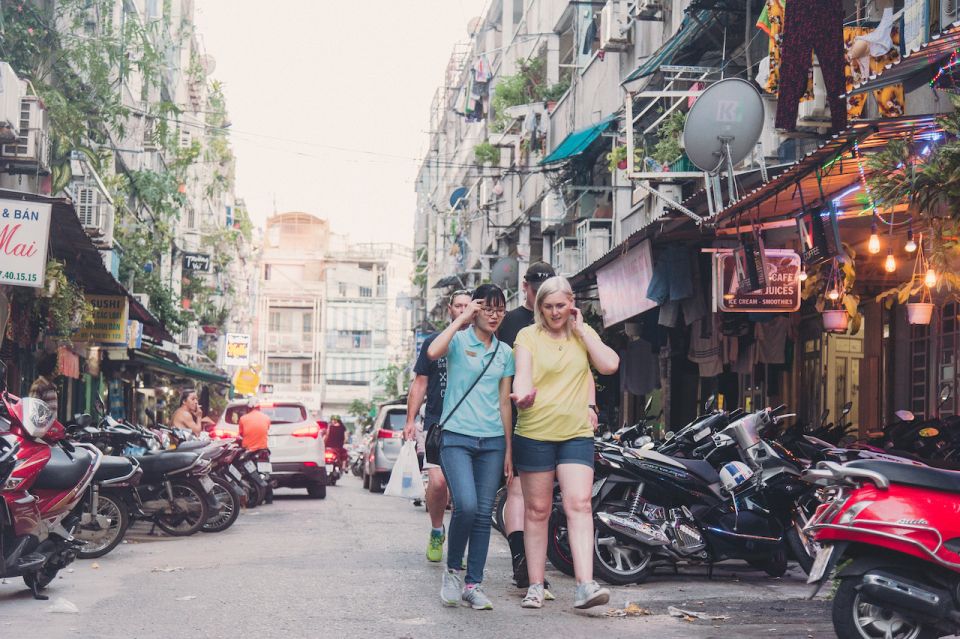
At $28 per person for about 4 hours, this is priced like a solid value, not like a “pay for convenience” scam. Here’s why it works:
- You get an English-speaking tour guide.
- You get a scooter with driver, which is a big part of how you can fit all these stops into one half-day.
- You get entrance fees included for War Remnants Museum and Reunification Palace, two of the biggest paid attractions on the route.
- You get Kumquat juice included.
Where you should be cautious is less about money and more about comfort and fit:
- Scooter comfort: if you’re dealing with mobility issues or you hate tight traffic navigation, you might want to consider a different style of tour.
- Dress code: no shorts, no sleeveless shirts, and coverage for temples and pagodas. Bring a layer that you can put on quickly if needed.
- Pickup areas: pickup is optional only in districts 1 and 3. If you’re elsewhere, there’s an extra charge, or you’ll meet at Cyclo Resto (133 Nguyễn Du, Phường Bến Thành, Quận 1).
On the transport side, the tour’s scooter safety is repeatedly backed up by a high score: 91% of reviewers gave perfect transport scores. That doesn’t remove all risk from traffic, but it does suggest the operators take driving seriously—which matters when you’re riding pillion.
Who will love this tour most
This is a great pick if you want a half day that balances history and architecture without turning into a museum-only grind. It’s especially good for people who:
- have limited time in Saigon and want major sights grouped efficiently
- like asking questions and getting local context
- prefer moving by scooter to save time
It’s a tougher match if you:
- want a carefree, light sightseeing day
- don’t want war-focused content
- cannot follow the clothing requirements for temples and pagodas
A note on guides and the vibe you’ll get
The guide experience seems to be a core strength. Names that have shown up in previous departures include Brandon, Kevin, Johnny, Bean, Tris, Nhi, Zayne, Tony, Long, Richard, Katy, Lux, Phat, Kent, and Katherine. Across these accounts, common themes are clear communication in English, an ability to answer questions, and safe, careful scooter driving.
So, if you’re the type who enjoys a guide who can explain what you’re looking at while you’re on the move, this tour is built around that.
Should you book this Saigon motorbike city tour?
Book it if you want maximum Saigon context in one half day: French colonial landmarks plus the two big Vietnam War anchor stops, with entrance fees handled and scooter driving included in the price. At $28, you’re paying for efficiency and guidance—not just for being taken from A to B.
Skip it (or choose a different format) if war museums feel like too much for your day, if you can’t meet the dress code, or if scooter riding in traffic sounds like stress rather than fun.
If you’re flexible, comfortable in your outfit choices, and open to a history-heavy visit, this is one of the more practical ways to understand Saigon beyond the postcard version.
FAQ
How long is the Saigon city tour by motorbike?
It runs for about 4 hours.
What does the price include?
The tour price includes an English-speaking tour guide, a scooter with driver, entrance fees for the War Museum and Reunification Palace, and kumquat juice.
Is the War Remnants Museum entrance fee included?
Yes. Entrance fees for both the War Remnants Museum and Reunification Palace are included.
Is the Reunification Palace ticket included?
Yes. Reunification Palace entrance is included.
Which languages are available for the guide?
The live tour guide is available in English and Vietnamese.
Do you provide pickup in my hotel area?
Pickup is optional only in district 1 and district 3. If you’re in other districts, there’s an extra charge or you can meet at Cyclo Resto at 133 Nguyễn Du, Phường Bến Thành, Quận 1.
Where is the meeting point if I’m not picked up?
The meeting point is Cyclo Resto, 133 Nguyễn Du, Phường Bến Thành, Quận 1, Thành phố Hồ Chí Minh.
What should I wear for temples and pagodas?
You must cover your knees and shoulders to enter temples and pagodas. Shorts, short skirts, and sleeveless shirts are not allowed.
What should I bring?
Wear comfortable shoes and comfortable clothes.
What are the cancellation and payment options?
Free cancellation is available up to 24 hours in advance for a full refund, and you can reserve and pay later (pay nothing today).