Ben Thanh Market meets a vegetarian cooking lesson. I love that this experience starts with Ben Thanh Market shopping, not a generic classroom. I also like that it focuses on turning vegetables into full-flavor dishes using Vietnamese know-how instead of relying on processed substitutes. One thing to consider: the market visit only happens in the morning session, since fresh stalls close at 12.00pm after Covid-19.
You’ll meet at Ben Thanh Market, get a welcome drink, and hear the Kitchen God story before you cook. The class is led by a professional chef (Quy in one account), and it’s built so you participate in each step, aiming to help you reproduce the results back home. At the end, you sit down for a convivial lunch (or dinner depending on booking time) and receive recipes, a certificate, and a souvenir.
This is a smart pick if you want hands-on technique plus a taste of daily food culture in Ho Chi Minh City. If you’re short on time, the format is only about 3 hours, so come hungry and ready to shop with purpose.
In This Review
- Key things to know before you go
- From Ben Thanh Market to your Vietnamese food mindset
- Choosing ingredients the Vietnamese way at Ben Thanh
- The Kitchen God story: food culture, not fluff
- Chef-led vegetarian cooking where you actually do the work
- Picking your daily menu
- Lunch vs dinner depending on when you book
- The end-of-class feast: tasting, sharing, and learning what works
- What you take home: recipes, certificate, and a souvenir gift
- Price and value: is $48.21 fair for 3 hours in Ho Chi Minh City?
- Who this vegetarian course is best for
- Quick practical tips before you book
- Should you book this Ho Chi Minh City healthy vegetarian cooking course?
- FAQ
- Where does the class start?
- How long is the experience?
- Is lunch included?
- Is there a market visit every session?
- What’s included in the price?
- What’s not included?
- Is this a private tour?
- What is the cancellation policy?
Key things to know before you go
- Ben Thanh Market shopping with guidance: You don’t just browse; you learn what to look for in ingredients, including fruit and the right sections.
- Chef-led, participation-based cooking: You join each step so the techniques actually stick.
- Vietnamese flavors without the meat-substitute crutch: The focus is on making vegetables the star.
- A sit-down feast at the end: Your lunch/dinner is part of the experience, not an afterthought.
- Morning vs afternoon/evening market timing: Market visit is only in the morning session.
- You leave with take-home materials: Manual recipes, a certificate, and a souvenir gift mark the day.
From Ben Thanh Market to your Vietnamese food mindset
Ho Chi Minh City food culture can feel intimidating if you’ve only eaten at restaurants. This course is designed to make it feel simple: learn ingredients first, then build dishes step by step.
I like the way it begins at Ben Thanh Market, because you’re not separating food from context. You get to see how Vietnamese cooks choose produce, what looks fresh, and how different ingredient categories are handled in one place. That early shopping piece matters if you want your home cooking to feel Vietnamese, not just vegetarian in name.
One of the best clues that the class is practical: it’s not about performing big chef tricks. You’re meant to learn basic cooking methods and how they connect to outcomes you can taste and remake later.
You can also read our reviews of more tours and experiences in Ho Chi Minh City.

Choosing ingredients the Vietnamese way at Ben Thanh
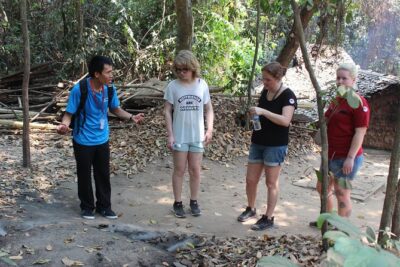
The morning starts at Ben Thanh Market (Ben Thanh, District 1). You’ll head in with the chef and learn the market rhythm: how ingredients are arranged, how vendors think about quality, and how cooks decide what to buy.
In particular, the guidance helps you learn what to look for when selecting fruit and produce. That’s more useful than it sounds. When you go home, the hardest part of vegetarian cooking is often not the recipe—it’s buying ingredients that behave the way the original dish is supposed to.
Also, you’re getting the “why” behind choices, not just instructions. For example, you’ll understand where food vendors supply items and how that connects to selecting the best options. It turns shopping from luck into a repeatable skill.
You’ll also get a welcome drink before the cooking starts. That small touch helps set the tone: you’re settling in, not sprinting straight to the cutting board.
The Kitchen God story: food culture, not fluff
Right after the market and welcome drink, you’ll listen to Kitchen God’s story. This is the kind of cultural framing that makes the cooking feel grounded, not like a filmed food show.
What I like here is that it supports the main point of the day: Vietnamese vegetarian food has roots in everyday kitchen logic—seasonal ingredients, sauces, herbs, and technique. Even if you’re not a history person, this part gives you a reason to pay attention to flavor building instead of just collecting recipes.
Think of it as a mental warm-up. You’re about to learn how Vietnamese cooks balance tastes, and the story helps you see food as something with meaning, not just a meal.
Chef-led vegetarian cooking where you actually do the work
After the cultural start, the class becomes hands-on. You’ll participate in each step, guided by the chef, so you’re not watching everything happen from the sidelines.
The course is designed around vegan and vegetarian cooking, using Asian flavors and Vietnamese cooking techniques. Importantly, it’s not built around weird meat substitutes. The point is to make vegetables feel satisfying on their own—through how they’re prepared and matched with sauces, aromatics, and textures.
You’ll cover basic cooking methods. The advantage of focusing on basics is that those skills translate. At home, you can swap ingredients based on what’s available, but you can still rely on the technique you learned here.
Picking your daily menu
Menus vary day to day, and you’ll be able to choose among different types of courses. That’s a big deal for value. It means you’re not stuck with a single rigid set of dishes you may or may not like.
If you have food preferences—more veggies, lighter flavors, or a certain cooking style—having menu choice gives you a better chance of leaving satisfied, not just “technically educated.”



Lunch vs dinner depending on when you book
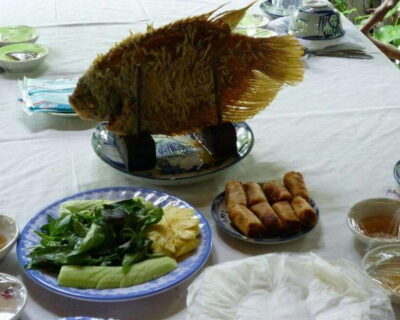
The included meal is lunch or dinner depending on your booking time. Either way, you’ll sit down and feast at the end, rather than eating while standing. For me, that’s a key part of the experience: you get to judge your own food while it’s still fresh and hot, and you taste it as a complete meal.
The end-of-class feast: tasting, sharing, and learning what works
At the end, you’ll feast on the fruits of your labor in a convivial ambiance. This is where the learning becomes obvious.
When you cook the dishes yourself, you can feel which moments matter: timing, balance, and how the flavors come together. Then, when you sit down with others, you can compare notes in a low-pressure way and understand what you’re doing right.
This is also where the class tends to score points with people. A good cooking class doesn’t just teach you how to cook; it makes you enjoy the results with other humans. Here, it’s built to be that kind of shared meal.
What you take home: recipes, certificate, and a souvenir gift
You won’t leave empty-handed. The session includes manual recipes, a certificate, and a souvenir gift. You’ll also receive cooking utensils during the class (so you can focus on learning rather than figuring out what’s available).
This is practical. Many cooking experiences give you a vague idea and a few photos. Here, you’re leaving with written recipes you can follow later, plus a reminder that your effort today wasn’t just for fun—it was for a repeatable skill set.
If you want to keep momentum after returning home, recipes are your bridge. And the certificate plus souvenir makes it feel like a real experience, not a one-off meal.
Price and value: is $48.21 fair for 3 hours in Ho Chi Minh City?
At $48.21 per person for about 3 hours, this class sits in the mid-range for a chef-led, hands-on experience in Ho Chi Minh City. The price starts to make sense when you break down what’s included:
- Market visit (with guidance on ingredients)
- Welcome drink
- Cooking instruction with participation
- Included meal (lunch or dinner)
- Manual recipes, certificate, and souvenir gift
- Cooking utensils during the session
You’re not only paying for the cooking. You’re paying for the whole learning arc: ingredient selection plus technique plus the chance to eat what you made.
And because it’s a private tour/activity with only your group, you generally get a more personal flow. Private format doesn’t automatically mean better food, but it often means fewer people to manage and more chance for questions during the cooking.
One more detail that affects value: this kind of course can save you trial-and-error time back home. If you’ve ever bought the wrong vegetables or fruit and then your dish didn’t taste right, you’ll understand why that shopping knowledge is worth money.
Who this vegetarian course is best for
This is a strong fit if you want:
- Vegetarian or vegan cooking that feels Vietnamese, not Western-health-gimmick flavored
- A focus on vegetables as the main event
- A practical path to recreating meals at home, using recipes and basic methods
- A market-based start that teaches you ingredient selection, not just cooking instructions
It’s also a good option if you’re traveling with a small group and want something that feels authentic and interactive rather than sightseeing-only.
If you’re allergic to the idea of shopping or you hate markets, you’ll need to consider the morning-only market visit. In that case, you might prefer choosing a time that avoids the market portion, since stalls close at 12.00pm.
Quick practical tips before you book
- Pick your session time carefully, because the market visit only runs in the morning.
- Arrive ready to shop with intention. The ingredient guidance works best when you can follow along as you choose.
- Come hungry. The included meal is the payoff for the cooking.
- Since private transportation isn’t included, plan how you’ll get to Ben Thanh Market using public transportation, since it’s noted as near public transit.
Should you book this Ho Chi Minh City healthy vegetarian cooking course?
If you want a cooking class that teaches you how to think like a Vietnamese home cook—starting with ingredient choice at Ben Thanh Market and ending with a meal you made—then yes, this is worth your time. The biggest strength is the combination of market learning + hands-on cooking + recipes you can actually use.
I’d skip it only if you strongly dislike markets or you’re expecting a long, multi-hour deep dive. This is about 3 hours, and it’s tightly focused on getting you cooking and tasting with confidence.
In short: if you want vegetables that feel like a complete Vietnamese meal, this course gives you the map.
FAQ
Where does the class start?
It starts at Ben Thanh Market (Ben Thanh, District 1, Ho Chi Minh City).
How long is the experience?
The cooking course runs for about 3 hours.
Is lunch included?
Yes. The included meal is lunch or dinner depending on your booking time.
Is there a market visit every session?
The market visit is only in the morning session. After Covid-19, fresh food stalls are closed at 12.00pm, so there’s no market visit for afternoon and evening sessions.
What’s included in the price?
It includes the meal (lunch or dinner), a souvenir gift, a certificate, cooking utensils, and the market visit.
What’s not included?
Private transportation is not included.
Is this a private tour?
Yes. It’s a private tour/activity, so only your group participates.
What is the cancellation policy?
You get free cancellation. You can cancel up to 24 hours in advance for a full refund. If you cancel less than 24 hours before the start time, the amount paid isn’t refunded.