Old alleys teach fast lessons. This Ho Chi Minh City Chinatown walking tour takes you through four heritage stops and into everyday street life, with guide Thang bringing the area to life in plain language and real context. I especially like the mix of hidden alleys and recognizable landmarks.
I also like how Thang connects the Chinese community’s story to Vietnam’s broader history and even the politics around it, without turning it into a lecture. The main thing to keep in mind: it’s a tips-only format, and there’s no air-conditioned vehicle or snacks, so plan for a mostly on-foot morning and budget for the suggested tip.
In This Review
- Quick hits
- Chinatown’s Back Streets: Why This Walk Feels Personal
- Price and Logistics: The Real Cost of a $0.71 Booking
- Meeting at Saigon Skydeck (and How the Walk Moves)
- Hao Sy Phuong Alley: A Century-Plus of Chinatown Everyday Life
- Hội Quán Nghĩa An: An Assembly Hall with Old Roots
- Ba Thien Hau Temple: Cantonese Craft in Late 1800s Saigon
- Chợ Lớn Market Area: Where Culture Meets Commerce
- Guide Style: How Thang Makes History Stick
- What You’ll Do After the Tour (So It Lands Better)
- Who This Tour Suits Best (and Who Might Want Something Else)
- Should You Book This Chinatown Free Walking Tour?
- FAQ
- How long is the Ho Chi Minh City Chinatown Hidden Treasures free walking tour?
- Where does the tour start and end?
- What price should I expect to pay?
- Is the guide English speaking?
- Are entrance fees included for the stops?
- Are coffee, tea, or snacks included?
- How large is the group?
Quick hits
- A 3-hour route with four heritage stops so you get context without museum time traps
- Guide Thang’s story-first approach that links Chinatown life to Vietnamese history and politics
- Short, focused time at each place (about 30 minutes each, plus a longer market stop)
- Tips-based value with a suggested extra tip of 15–25 USD per person
- Max 30 people which helps the walk feel personal
- Mobile ticket and return to the start point for easy navigation
Chinatown’s Back Streets: Why This Walk Feels Personal
Ho Chi Minh City’s Chinatown, often called Chợ Lớn, isn’t just one big attraction. It’s a web of narrow lanes, meeting halls, temples, and shops that show how communities lived, organized themselves, and traded for generations. On this tour, you don’t just point at buildings. You learn why they’re there, who built them, and what those choices meant in daily life.
I like that the pacing is built for wandering. Each stop lasts around 30 minutes, so you can look closely, ask questions, and move on before fatigue hits. The route also has that practical “get your bearings” feel, especially if you’re new to Saigon and want a quick sense of where things are.
You can also read our reviews of more walking tours in Ho Chi Minh City



Price and Logistics: The Real Cost of a $0.71 Booking
Yes, the listed price can look unbelievably low. But this is a tips-only walking tour, and the experience explicitly suggests an extra tip of 15–25 USD per person. In other words, your booking amount is more like a small fee to secure a spot, while the guide’s income depends on what you choose to tip.
If you’re trying to compare value fairly, do it like this: you’re paying for a live English-speaking guide, curated routing through specific historic places, and interpretation that helps you actually understand what you’re seeing. For many people, that’s worth tipping well—especially on a tour that lasts about 3 hours and includes multiple stops with free entry.
One more practical detail: there’s no coffee, tea, or snacks included, and there’s no air-conditioned vehicle. Plan on walking and standing outdoors. If you’re the type who likes a break, you might find your guide will suggest or pause for something along the way, but drinks themselves aren’t part of the tour price.
Meeting at Saigon Skydeck (and How the Walk Moves)
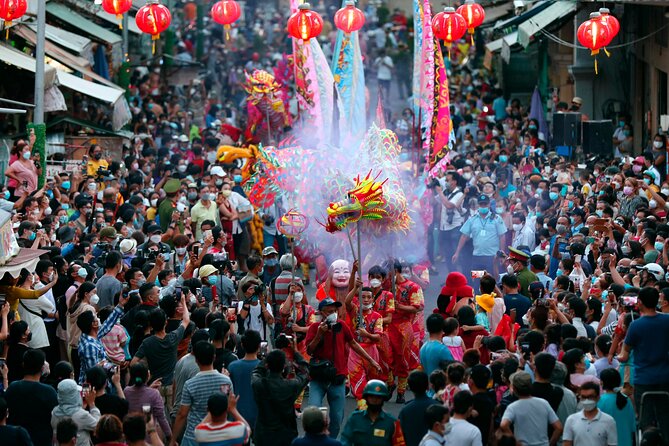
The tour starts at Saigon Skydeck, 36 Hồ Tùng Mậu, in Quận 1 (Bến Nghé). You’ll end back at the same meeting point, which keeps your day simple. It also helps that the start is near public transportation, so you’re not forced into one awkward logistics plan.
Timing matters here because the tour is structured around short stops. It starts at 9:00 am and runs around 3 hours. That early start is useful if you want time afterward for lunch or a second explore session without rushing.
Group size is capped at 30 travelers, which I find to be a sweet spot for a walking tour: big enough to feel lively, small enough that your guide can still keep the discussion moving.
Hao Sy Phuong Alley: A Century-Plus of Chinatown Everyday Life
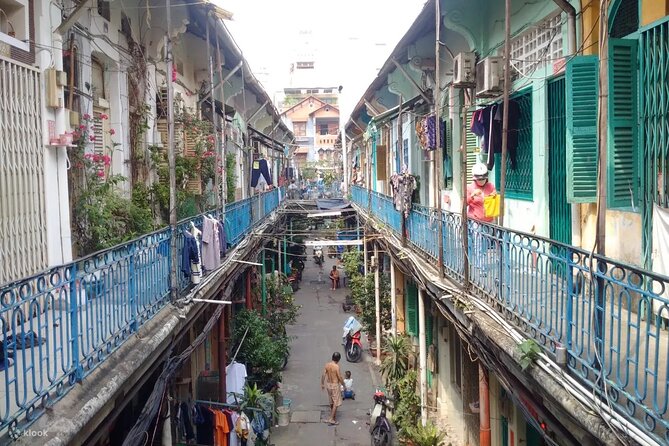
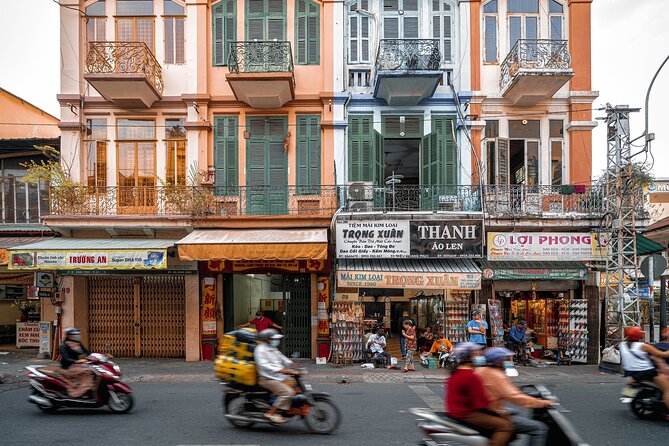
Your first stop is Hao Sy Phuong Alley (Hao Si Phuong), in the heart of Saigon’s Chinatown. This narrow passageway matters because it shows how the community used space. Narrow lanes like this aren’t random. They shape how people move, where shops cluster, and how neighbors share daily routines.
The tour frames this alley as a place with a history spanning over 100 years. The value for you is simple: you’re not just admiring an old street. You’re learning how a community organizes itself over time, then you carry that understanding into the next stops.
A small consideration: because it’s an alley, you’ll be looking at details—signs, building fronts, textures—while staying aware of foot traffic. It’s best if you like close-up city walking rather than wide-open viewpoints.
Hội Quán Nghĩa An: An Assembly Hall with Old Roots
Next you’ll visit Hội Quán Nghĩa An (Nghia An Hoi Quan). This is an assembly hall associated with community organization, not just sightseeing. The tour explains that the structure was constructed before the 19th century, and that it went through multiple reconstructions. The current look is a mix of survival and change—an old form living inside a modern city.
What I like about this stop is that it teaches you how Chinatown communities planned for the long term. Places like this weren’t only decorative. They functioned as gathering points where people could come together for social and cultural life.
If you’re the type who wonders why certain buildings exist beyond religion or commerce, this stop answers that. There’s also something satisfying about watching how an older architectural style remains readable even when the surrounding city has evolved.
Potential drawback: because the stop is about 30 minutes, you’ll get interpretation and context, but you won’t have hours to do independent reading or deep photography. If that’s your style, you may want to revisit the area later.
You can also read our reviews of more city tours in Ho Chi Minh City






Ba Thien Hau Temple: Cantonese Craft in Late 1800s Saigon
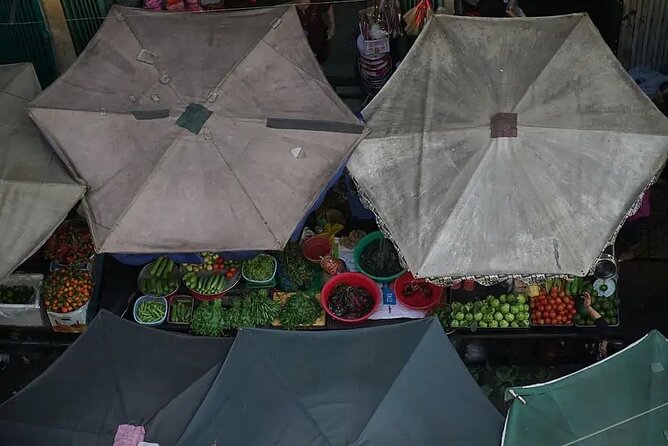
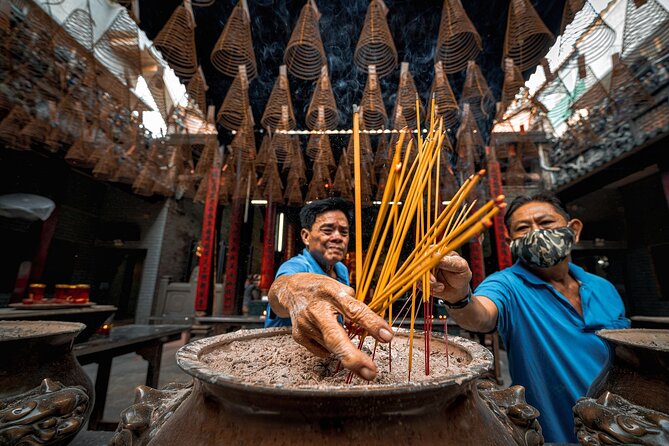
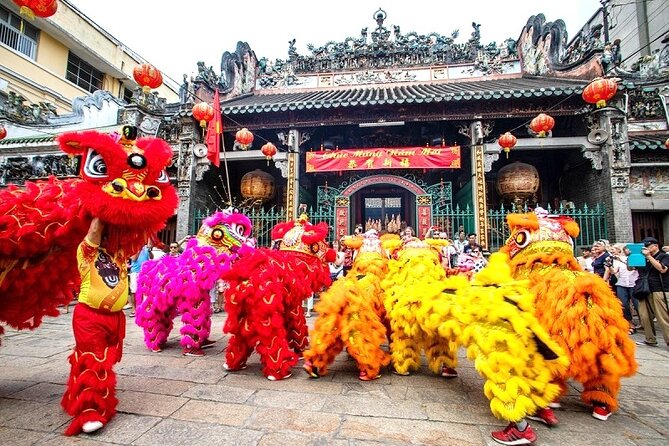
Then comes Ba Thien Hau Temple, a Chinese-style architectural heritage built in the late 19th century by the Cantonese community in Saigon. The guide points out the temple’s yin-yang tiled roof, and that detail is more than decorative. It’s a visual clue that you’re looking at cultural symbolism made physical.
This stop is valuable because it anchors the Chinatown story in a specific community: Cantonese people who brought traditions with them, then built them where they lived. On this tour, you’re not meant to treat the temple like a standalone artifact. You’re meant to understand it as a living marker of identity.
The central location also makes it easy to see the contrast between tradition and the city around it. One minute you’re focused on roof tiles and temple design; the next, you’re walking out into modern streets.
Keep your expectations realistic for a morning walk: you’ll likely stand, look, and listen more than you’ll roam. If you prefer places where you can wander slowly on your own for long stretches, you may want extra time after the tour to return.
Chợ Lớn Market Area: Where Culture Meets Commerce
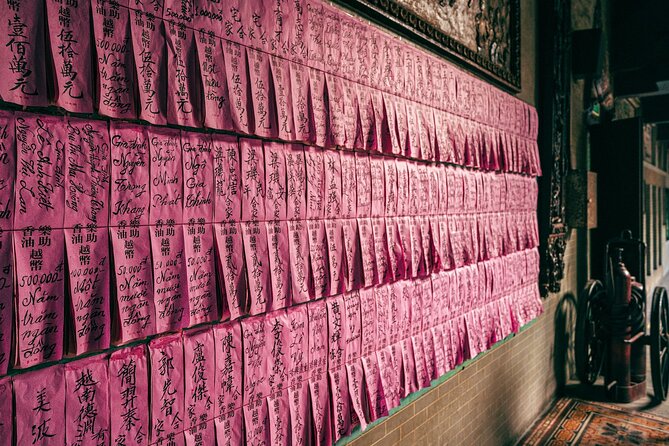
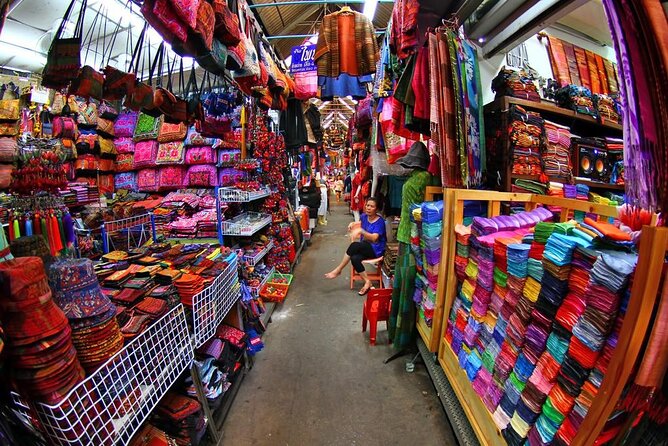
The last big segment is Chợ Lớn, described as a significant commercial center of the Chinese in Ho Chi Minh City. The tour emphasizes that the area still preserves culture, religion, and architecture dating back thousands of years.
This is the stop where the tour shifts from heritage buildings to everyday life. You’re moving through a district where trade is part of the atmosphere. The value here is that you see Chinatown as a functioning neighborhood, not just a set of old stones.
Even if you don’t shop, you’ll learn how the market setting connects to the rest of what you saw earlier: community spaces (like assembly halls and temples) alongside the economic engine that keeps streets active.
One consideration: markets can be crowded and busy by nature, and the tour gives you about 1 hour here. That’s enough time to absorb the vibe and ask questions, but you shouldn’t plan on a leisurely personal shopping session during the tour itself unless you’re okay with staying close to the group.
Guide Style: How Thang Makes History Stick
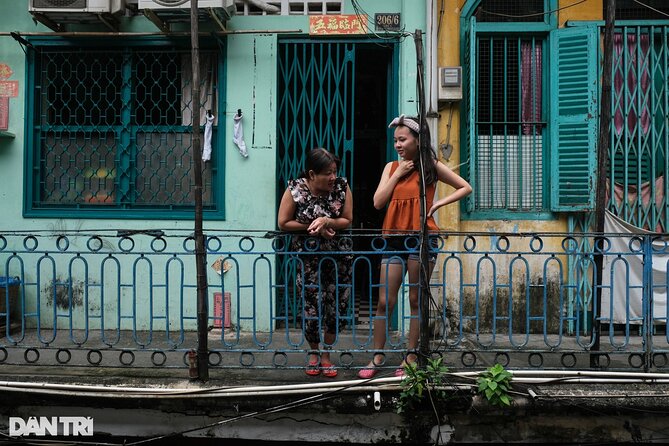
The best part of this experience is the guide’s delivery. The guide—Thang, from Detoured Asia—keeps the storytelling tied to what you’re standing in front of. He explains Vietnamese history and politics alongside the Chinese era context, which helps the Chinatown sites feel connected to the bigger story of the city.
I like that his explanations are easy to follow. The tour is packed with information, but it doesn’t feel like you’re cramming dates. You get a narrative arc: why these places were built, what they signaled, and how those choices show up today.
There’s also a clear “question friendly” vibe. If you pause and ask, you’re not brushed aside. The tour is structured, but it still feels human.
One more detail: some parts may include short transitions by vehicle, and the overall experience keeps things tidy and comfortable. If you’re the kind of person who gets tired from long walks, those short breaks can help you stay engaged for the full 3 hours.
What You’ll Do After the Tour (So It Lands Better)
This tour works best when you treat it like orientation plus interpretation. After you finish at the meeting point, you’ll have three useful outcomes:
- You’ll recognize what you’re looking at when you see Chinese-style architecture in the city.
- You’ll understand why community spaces like assembly halls and temples mattered.
- You’ll feel more confident exploring Chợ Lớn on your own, because the “why” is already explained.
If you have extra time later, you’ll probably enjoy coming back to one stop area and seeing it in a different light—especially the temple and market zone.
Who This Tour Suits Best (and Who Might Want Something Else)
This is a great fit if you want:
- A history-and-streets tour rather than a pure monument checklist
- An English-speaking guide who ties Chinatown to Vietnamese context
- A morning plan that’s about 3 hours and ends where it starts
It may be less ideal if:
- You want a fully comfortable, air-conditioned experience (there’s no such included transport)
- You dislike walking or standing for parts of the route
- You’re not comfortable budgeting for a suggested 15–25 USD tip, since this is tips-based
Should You Book This Chinatown Free Walking Tour?
If your goal is to understand Ho Chi Minh City’s Chinatown beyond the surface, I think this is worth booking. You get a structured route through multiple historic sites, you learn why they exist, and the guide’s style keeps the information clear. The suggested tip range makes it fair to expect quality guiding, and the small-group cap helps it feel personal.
Book it if you like walking, asking questions, and getting a quick sense of how Chợ Lớn fits into Vietnam’s wider story. Skip it (or pair it with a lighter day) if you need lots of comfort breaks or if you strongly prefer tours that include food and air-conditioned transport.
FAQ
How long is the Ho Chi Minh City Chinatown Hidden Treasures free walking tour?
The tour lasts about 3 hours.
Where does the tour start and end?
It starts at Saigon Skydeck, 36 Hồ Tùng Mậu, Bến Nghé, Quận 1, and it ends back at the meeting point.
What price should I expect to pay?
The listed price is $0.71 per person, and the tour is tips-only with a suggested extra tip of 15–25 USD per person.
Is the guide English speaking?
Yes. The tour includes an English speaking guide.
Are entrance fees included for the stops?
The tour lists admission tickets as free for the included sights.
Are coffee, tea, or snacks included?
No. Coffee and/or tea and snacks are not included.
How large is the group?
The tour has a maximum of 30 travelers.