REVIEW · HO CHI MINH CITY
Mekong Delta Nature Cano-Kayak-Cycling & Fishing Private Day Trip
Book on Viator →Operated by Vietnam To Travel · Bookable on Viator
A day on the Mekong Delta can feel like a blur of boats and bus stops, but this one is built around moving slowly and seeing how rural life works—by bike, on canals, and at local tables. I like that it’s aimed at a non-tourist stretch, with the program set up so you’re not doing the usual checklist. I also like the mix of hands-on moments and food, from planting rice and catching fish to making spring rolls and bánh xèo.
One thing to consider: it’s a jam-packed day. You’ll be active (cycling and paddling), and weather matters because the experience requires good conditions—so plan to go with the flow if the schedule shifts.
In This Review
- What Makes This Day Trip Worth Your Time
- Leaving Ho Chi Minh City for Ben Luc and Family Tiny Garden
- The value of this “get out of the city” strategy
- Cycling Rice Fields and Xom Trau Pagoda’s Underground Tunnel
- Rice planting and catching fish: hands-on, not just watching
- What might be tricky
- Spring Rolls, Bánh Xèo, and a Lunch You’ll Actually Taste
- Why this timing works
- Canoe Check-In, Fruit Orchards, and Kayaking the Canals
- A helpful reality check about the Mekong river itself
- Fishing, Sustainability Stories, and What the Guide Adds
- Guides can make or break a day like this
- Price, Private Touring, and How $85 Adds Up
- The trade-off with private
- Weather, Paddling Time, and What to Wear
- A small scheduling reality
- Who This Mekong Delta Trip Fits Best
- Should You Book This Mekong Delta Cano-Kayak-Cycling Day Trip?
- FAQ
- Is this a private tour?
- How long is the trip?
- What time does pickup happen?
- What activities are included in the day?
- Are admissions or tickets included?
- Can most people participate?
- Does weather affect the tour?
- How far in advance do people usually book?
What Makes This Day Trip Worth Your Time
- Ben Luc start with hotel pickup and a guide briefing on Mekong Delta life across multiple provinces.
- Family Tiny Garden setting before the countryside action begins.
- Xom Trau Pagoda + underground tunnel relic, plus practical farm activities like rice planting and catching fish.
- Cooking class included: spring rolls and bánh xèo, then lunch as part of the day.
- Fruit orchard time at the canoe stage, including gardens for lemon, guava, and dragon fruit (plus seasonal fruits like grapefruit and mango).
- Canoe and kayaking on quieter waterways rather than the main Mekong corridor.
Leaving Ho Chi Minh City for Ben Luc and Family Tiny Garden
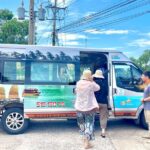
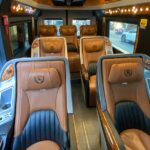
Most Mekong Delta tours start with a long drive and end with a long ride back. This one still begins early, but it feels more like a day out of the city than a transfer with a side quest. Pickup runs roughly from 7:30–8:00am, and on the way your guide shares context on the Mekong Delta—its cultural, historical, and ecological rhythm across the region.
Around 9:00am, you arrive at Family Tiny Garden. The name is playful, but the point is practical: it’s where the day resets away from traffic and into slower country time. The tour description leans into calm, simple living—cool shade, greenery, and a gentler pace—so you’re ready for the active parts that come next.
You can also read our reviews of more cycling tours in Ho Chi Minh City
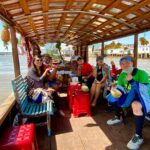

The value of this “get out of the city” strategy
If you only have one day near Ho Chi Minh City, the Mekong Delta can be either rewarding or exhausting. Starting with a countryside base means you spend more of your day doing things instead of waiting in lines or on boats at the wrong time of day.
Cycling Rice Fields and Xom Trau Pagoda’s Underground Tunnel
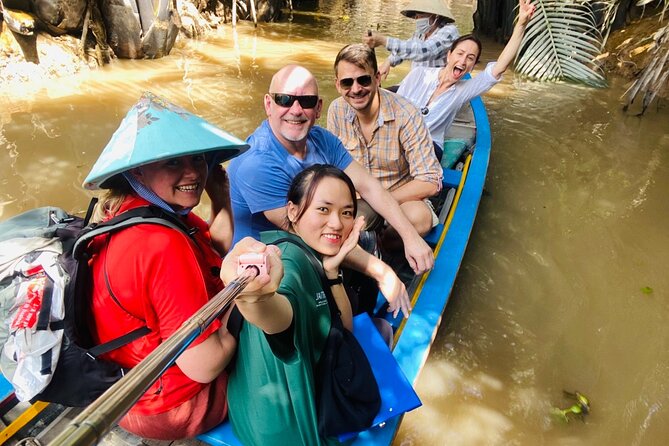
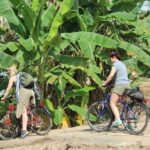
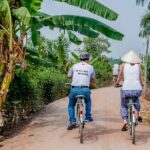
The cycling portion is the backbone of the experience. After Family Tiny Garden, you ride through the countryside where you’ll see rice fields and fruit areas. This isn’t just pretty photos. It’s the fastest way to understand spacing—how homes, fields, and paths connect in a way you simply don’t notice from a car.
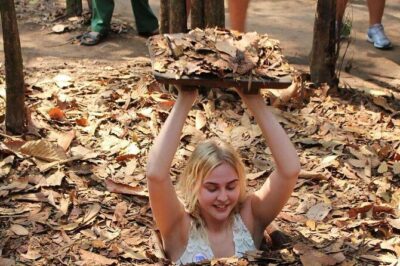
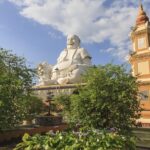
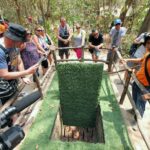
Then comes a standout cultural stop: Xom Trau Pagoda, where there’s an underground tunnel relic. That detail matters, because it turns the visit from a quick stop into a story-based experience. A pagoda visit is often “see and move on.” Here, the tunnel angle gives the site a strong historical hook tied to how locals survived and adapted.
Rice planting and catching fish: hands-on, not just watching
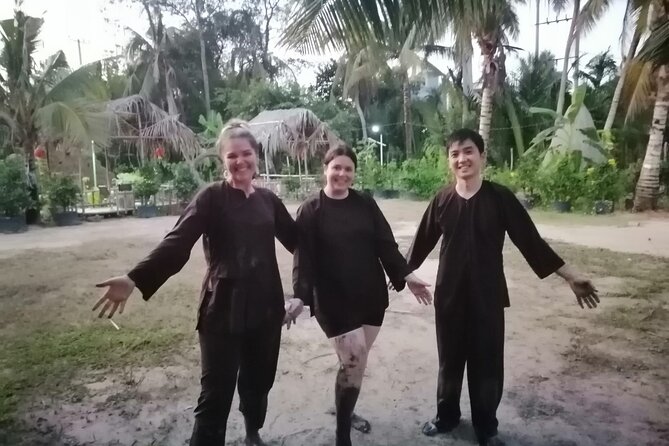
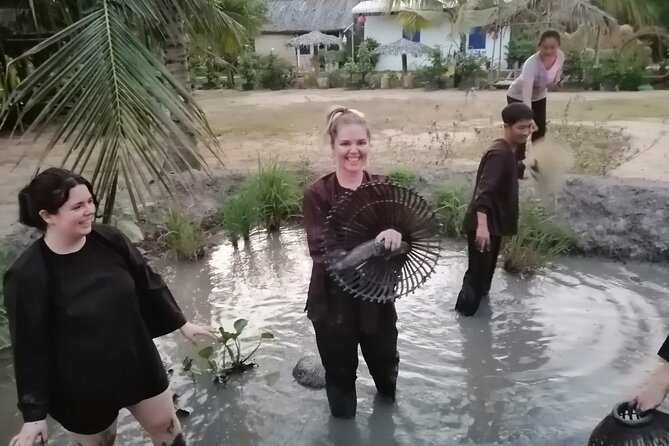
Right after the pagoda visit, you join rice planting and catching fish. This is one of the most praised parts of the day because it gets you off the sidelines. You’re not just walking through a farm—you’re doing a farm task. It’s also a useful reminder that rural work is seasonal and skill-based, not “a farm show.”
What might be tricky
Cycling and farm activities can be uncomfortable if you’re not used to outdoor movement, uneven surfaces, or getting hands-on with tools. The tour notes that most travelers can participate, which helps, but it still isn’t a couch-and-photos kind of day.
You can also read our reviews of more private tours in Ho Chi Minh City
Spring Rolls, Bánh Xèo, and a Lunch You’ll Actually Taste
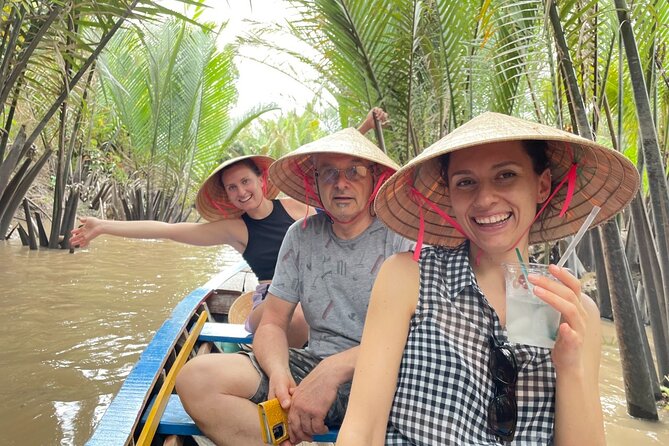
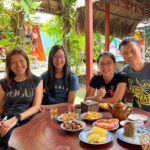
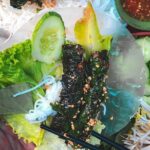
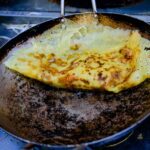
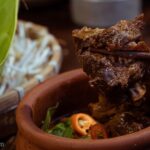
By 11:30am, the day shifts into food mode at a cooking class. You make spring rolls and learn to make bánh xèo, then you eat lunch as part of the session.
This is more than a meal. The best value in cooking classes isn’t fancy ingredients—it’s learning the logic: how flavors balance, how a recipe is built, and what locals consider normal for a real day of eating. You’ll leave understanding the difference between trying bánh xèo at a restaurant and making it when someone shows you the rhythm of the batter and the pan.
Why this timing works
Lunch lands after the cycling and pagoda/farm stops. That sequencing is smart: you’re hungry from actual movement, so you’re not eating politely. You’re eating because you earned it.
Canoe Check-In, Fruit Orchards, and Kayaking the Canals
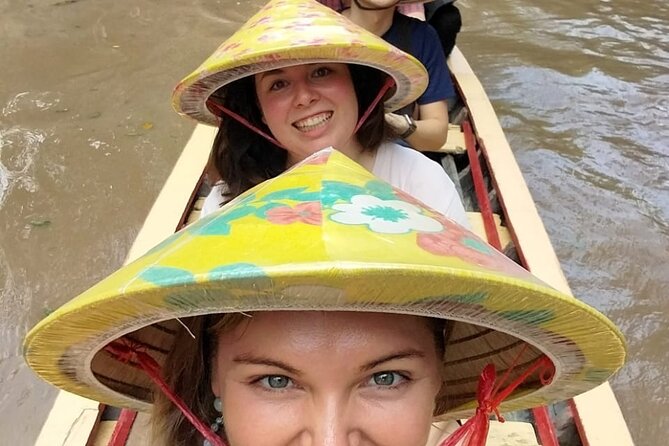
After lunch, you check in at the canoe boat around 2:30pm. This is the transition point—country work gives way to river work. The timing also matters for comfort: your energy returns, and the day moves toward paddling.
At the canoe stage, you visit a fruit orchard. The details list lemon, guava, and dragon fruit gardens. The tour summary also points to specialty fruits like dragon fruit, grapefruit, guava, and mango (seasonal). So what you see depends on what’s growing when you go, but expect fruit-forward stops that feel practical rather than staged.
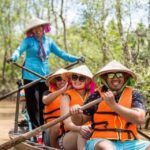
Then, around 3:20pm, you kayak. This is where you get the payoff for the earlier activity: a slower glide through waterways where the city’s noise stays behind you.
A helpful reality check about the Mekong river itself
This route doesn’t aim for the main Mekong river. In plain terms, it’s more about quieter canals and local channels than the big postcard Mekong. If your goal is peaceful paddling and rural scenery, that’s a win. If your goal is seeing the largest Mekong stretches, you may feel like you’re on a regional branch rather than the headline river.
Fishing, Sustainability Stories, and What the Guide Adds
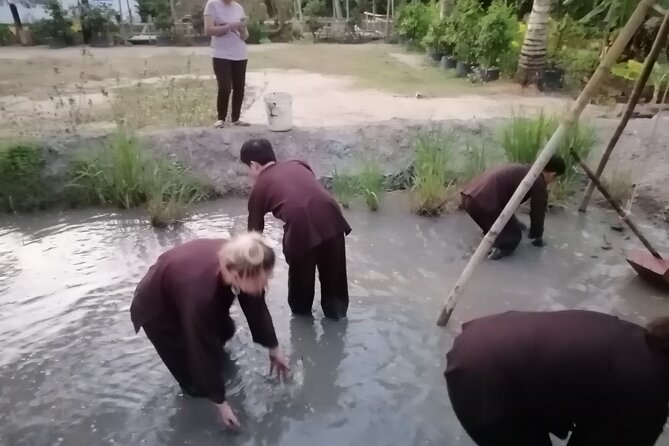
The tour guide doesn’t just point things out; the program includes explanations about how natural fruits are grown and cared for, and how that supports sustainable rural livelihoods. That theme shows up in the tour description, and it’s echoed in how guides are described—people like Chao/Chow appear in multiple accounts for their enthusiasm and care.
In practical terms, this kind of explanation helps you connect activities to meaning:
- Rice planting and catching fish show daily production in action.
- Fruit gardens show how value comes from managing living plants, not just harvesting.
- Cooking ties those ingredients back to how people actually eat.
Guides can make or break a day like this
In the feedback, guide names like Chao/Chow and a Dennis show up with strong remarks about passion and professionalism. That doesn’t guarantee your specific guide will match the exact personality, but it does suggest you’re likely to get someone who explains the “why,” not only the “what.”
Price, Private Touring, and How $85 Adds Up
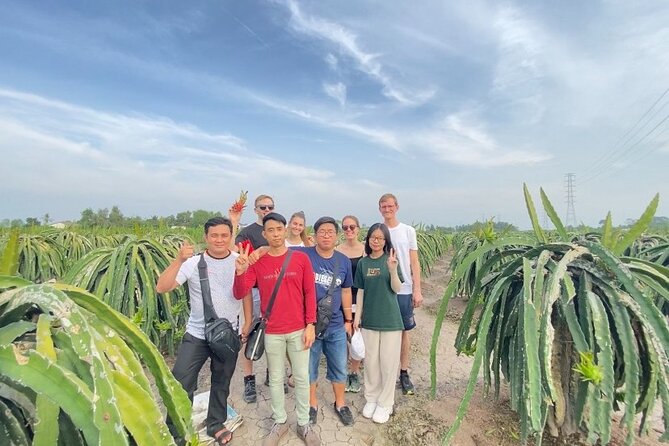
The price is $85 per person for a day running about 8 hours 40 minutes. On paper, that’s not the cheapest Mekong option. In value terms, though, the day includes a lot:
- Hotel pickup
- Cycling and paddling activities
- A cultural stop with the underground tunnel relic
- Rice planting and catching fish
- A cooking class (spring rolls and bánh xèo) plus lunch
- Canoe/kayak time and a fruit orchard visit
Also, the tour is private. The details say only your group participates, which matters if you want a more responsive pace. Private touring can feel worth it when the itinerary is active, because you’re less likely to get stuck waiting for a mixed group.
The trade-off with private
Private also means the day is tailored to your group’s ability to keep moving. If someone in your party struggles with cycling or kayaking, you may spend part of the day negotiating pace rather than blasting forward.
Weather, Paddling Time, and What to Wear
The experience requires good weather. That’s not a throwaway line—kayaking and outdoor activities depend on conditions. If weather isn’t ideal, the tour may be offered a different date or you’ll get a refund.
For your packing list:
- Wear shoes that can handle dirt and wet areas (rice-field roads can get messy).
- Bring light layers for sun and a change item if you’ll get splashed while kayaking.
- Expect to be outdoors for most of the day, starting early in the morning.
A small scheduling reality
The day is structured and full. You can have fun without rushing, but you’re not going to spread this into “slow sightseeing.” It’s an activity day, and that’s the whole point.
Who This Mekong Delta Trip Fits Best
This tour is a strong fit if you want:
- A hands-on countryside day, not just seated sightseeing
- Cycling + paddling for variety
- A cooking class that teaches you more than how to order food
- A private feel so your group isn’t stuck behind other people’s pace
It also seems to work well with families. One account includes kids aged 10 and 14, with praise for how the guide handled everything with care. If you’re traveling with children, the activity mix can be a win—just remember it’s still an active day, so bring patience for slower moments.
If you want a Mekong Delta trip that focuses mainly on comfort and minimal effort, this may feel like too much. But if you like doing, getting muddy (a little), and learning something real, this fits.
Should You Book This Mekong Delta Cano-Kayak-Cycling Day Trip?
I’d book this if your ideal day in Vietnam is rural and active: rice fields by bike, a pagoda stop with a tunnel story, farm tasks like planting rice and catching fish, then cooking your own bánh xèo and finishing with canoe/kayak time and fruit orchards.
I’d think twice if you:
- Prefer mostly resting and easy walking
- Want the main Mekong river itself rather than local canals
- Are sensitive to weather or want a very relaxed pace
For one-day travelers from Ho Chi Minh City, this offers strong value because it compresses a lot of meaningful experiences into a single day. Just go in knowing it’s busy—and embrace that pace. That’s when it turns from a tour into a story you’ll remember.
FAQ
Is this a private tour?
Yes. It’s listed as a private tour/activity, with only your group participating.
How long is the trip?
The duration is about 8 hours 40 minutes.
What time does pickup happen?
Pickup is typically offered from around 7:30–8:00am, with a guide briefing during the drive.
What activities are included in the day?
The experience includes cycling, a pagoda visit (Xom Trau Pagoda), rice planting and catching fish, a cooking class (spring rolls and bánh xèo), and time for canoe boating and kayaking, plus a fruit orchard visit.
Are admissions or tickets included?
The details note Admission Ticket Free.
Can most people participate?
The tour states most travelers can participate, so it isn’t limited only to extreme fitness levels. Still, you should expect active outdoor segments.
Does weather affect the tour?
Yes. The experience requires good weather. If it’s canceled due to poor weather, you’ll be offered a different date or a full refund.
How far in advance do people usually book?
On average, it’s booked about 52 days in advance.