REVIEW · HO CHI MINH CITY
Ho Chi Minh City: Hop-On Hop-Off Bus Tour by Vistra
Book on GetYourGuide →Operated by SAM GLOBAL INVESTMENT CORP · Bookable on GetYourGuide
One hour can set your bearings fast. This open-top, double-decker ride in Saigon focuses on unobstructed views and an onboard audio commentary route through the city’s most recognizable sights.
What I like most is the way the bus turns big, central landmarks into an easy visual timeline. You’ll get passing views of French colonial-era icons like Notre-Dame, the Central Post Office, and the Saigon Opera House, plus street life like markets and temples along wide boulevards.
One key consideration: the audio experience matters. If the onboard commentary doesn’t play as expected for your language, you may feel like you’re just taking a bus loop without context.
In This Review
- Key points before you ride
- Finding the right starting point at Saigon Opera House
- Open-top double-decker views: why this works for first-timers
- French colonial landmarks you’ll notice right away
- Notre-Dame Cathedral area
- Central Post Office
- Saigon Opera House
- Markets, temples, and wide boulevards with trees
- Audio commentary: the main feature to verify
- How the 1-hour timing affects your expectations
- Price and value: what $10 gets you (and what it doesn’t)
- What to bring in Ho Chi Minh City heat and sun
- A practical reality check on comfort and accessibility
- Who should book this bus tour
- Should you book the Ho Chi Minh City hop-on hop-off bus by Vistra?
- FAQ
- How long is the Ho Chi Minh City Hop-On Hop-Off Bus Tour by Vistra?
- How much does the tour cost?
- Where do I redeem my ticket?
- What languages are available for the audio guide?
- What should I bring with me?
- Is the tour wheelchair accessible?
Key points before you ride
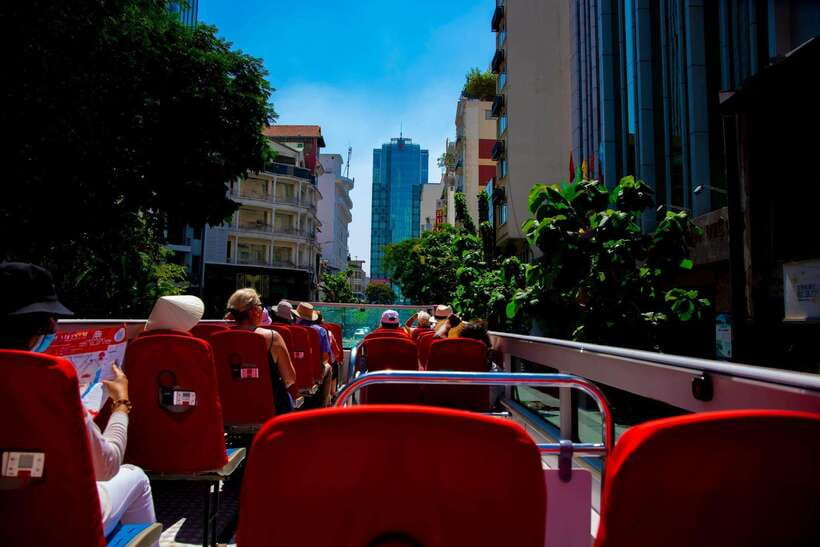
- Open-top, double-decker seating gives you better sightlines than most street-level viewing
- Saigon Opera House kiosk is your practical starting point, and the tour ends back there
- French colonial icons you’ll pass include Notre-Dame, the Central Post Office, and the Opera House
- Audio guide comes in many languages (English, Spanish, German, French, Chinese, Japanese, Korean, Vietnamese, Russian)
- Expect short-and-sweet timing at about 1 hour, so choose your camera moments
- Comfort vs. commentary risk: the bus can be fine even if the audio is spotty
Finding the right starting point at Saigon Opera House
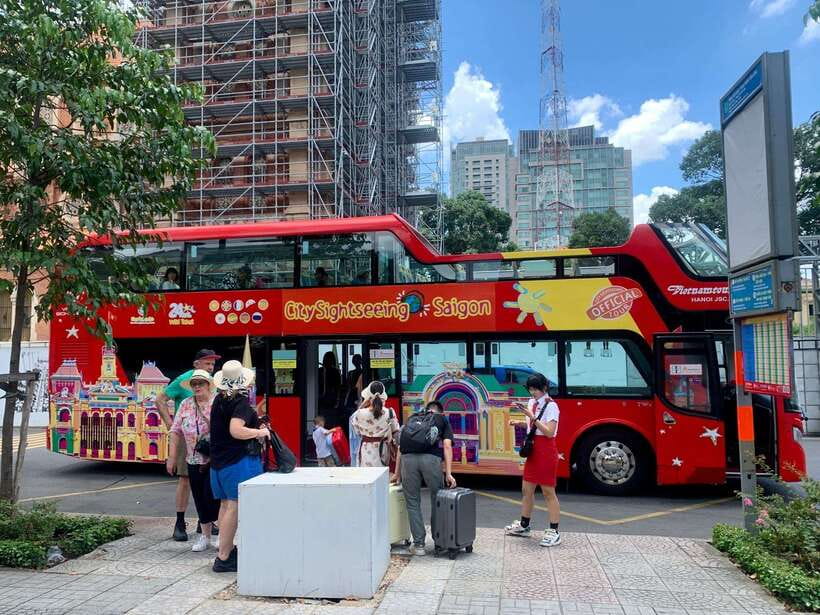
I like that this tour anchors you at a clear, central landmark: you redeem your ticket at a kiosk next to the Saigon Opera House. That matters in Ho Chi Minh City because it’s easy to lose time when you’re figuring out where the “tour thing” actually begins.
Just as important, the ride finishes back at the same meeting point. That removes one big headache: you don’t have to plan a separate return. If you’re doing a day of walking, museums, or street-food stops, a loop that hands you back to a known spot keeps your schedule tidy.
If you’re arriving from somewhere else in the city, plan to arrive a little early. Not because you need long to wait, but because you want a calm moment to get oriented before you climb up to the open-air views.
You can also read our reviews of more city tours in Ho Chi Minh City



Open-top double-decker views: why this works for first-timers
The main reason to pick a bus like this is simple: speed plus visibility. Ho Chi Minh City can feel like sensory overload on foot. From the upper deck of an open-top bus, you can actually see where you are and how different districts connect—big buildings, tree-lined roads, and the rhythm of daily street traffic.
On a clear day, the open top gives you fewer visual barriers than sitting inside. Even when it’s sunny, you’re not stuck with dark windows or reflections. When clouds roll in or the weather turns, you’ll still have the sense of movement and scale that comes from riding above street level.
This is also where the “hop-on” concept (in the practical sense) can help your planning. While the duration is short, the design is meant for quick sightseeing rather than a long, fixed escort-style outing. Treat it like a moving orientation: identify the places you want to walk later, then head out on your own.
French colonial landmarks you’ll notice right away
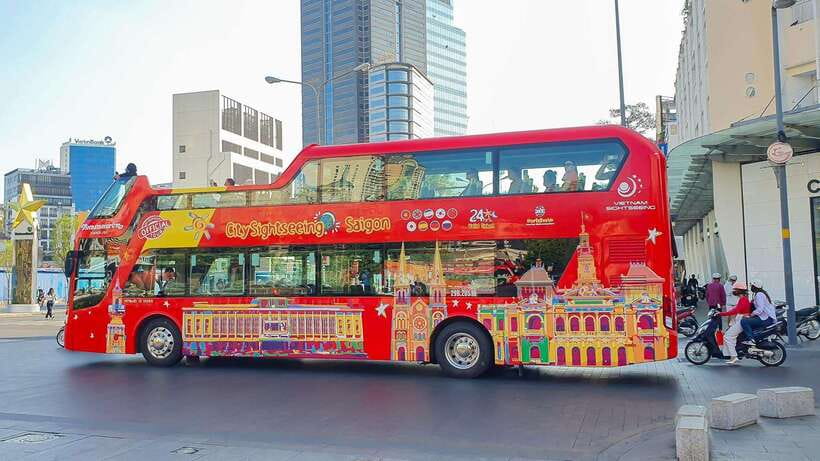
This route is built around Saigon’s most recognizable colonial-era architecture. Even if you only catch partial views from the bus, you’ll still know what you’re looking at.
Notre-Dame Cathedral area
Notre-Dame is the kind of landmark your brain latches onto immediately. From the bus, you’ll get a clear sense of its presence in the urban layout—how it sits alongside roads and other city blocks rather than living in an isolated photo spot.
The practical value here: you’ll be able to place Notre-Dame in your mental map. Later, when you’re walking nearby, you’ll understand why the surrounding streets feel the way they do.
Central Post Office
The Central Post Office is another sight that reads fast from a moving bus. You’ll see it not just as a standalone building, but as part of a larger civic center—an area that feels designed for important public life.
If you’re the type who likes to connect architecture to daily city function, this stop-in-view approach helps. You notice the scale and the street width, which is hard to judge from afar.



Saigon Opera House
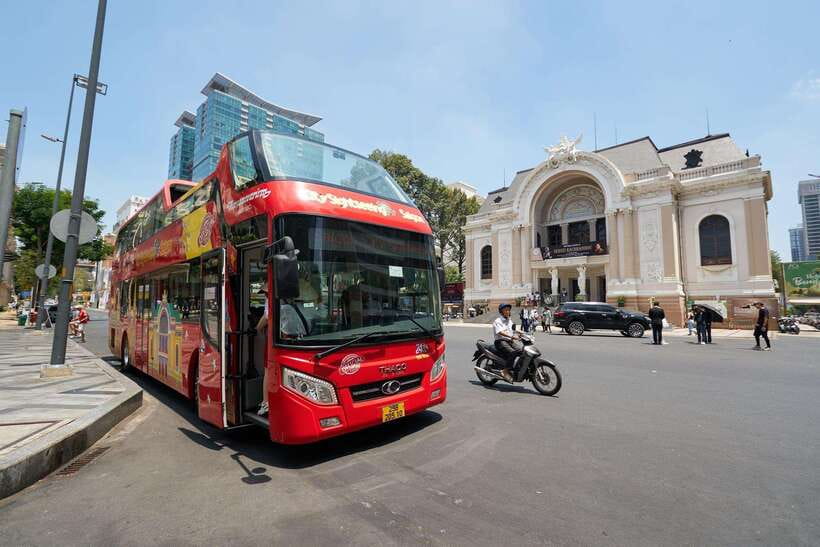
Since the tour starts (and ends) next to the Opera House, you get a double advantage. First, it’s your meeting marker. Second, you see it again as the ride continues, which helps you confirm you’re positioned in the right neighborhood for later exploring.
Even if you don’t go inside, this kind of “re-seeing” is useful. You build familiarity without committing to a longer plan.
Markets, temples, and wide boulevards with trees
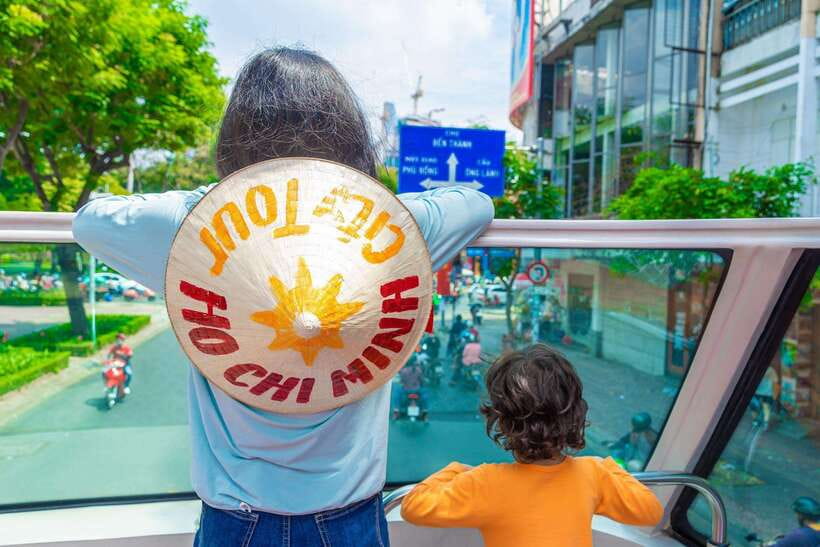
Not every major landmark is a perfect photo from a bus. But the route’s “in-between” scenery is where you feel the city.
You’ll pass lively markets, colorful temples, and broad boulevards lined with trees. That mix matters because it keeps the ride from turning into a list of monuments. Instead, you’re getting a sense of how Saigon’s everyday life threads around the grand buildings.
Here’s how to use this while you ride:
- Take quick photos of the big architectural moments first.
- Then watch for the street scenes—market entrances, storefront activity, temple walls or gates.
- If you’re thinking of where to walk later, note the blocks that look easy to access from the road.
Because the tour is about 1 hour, you won’t have time to obsess over every detail. But you will leave with a better sense of what’s near what.
Audio commentary: the main feature to verify
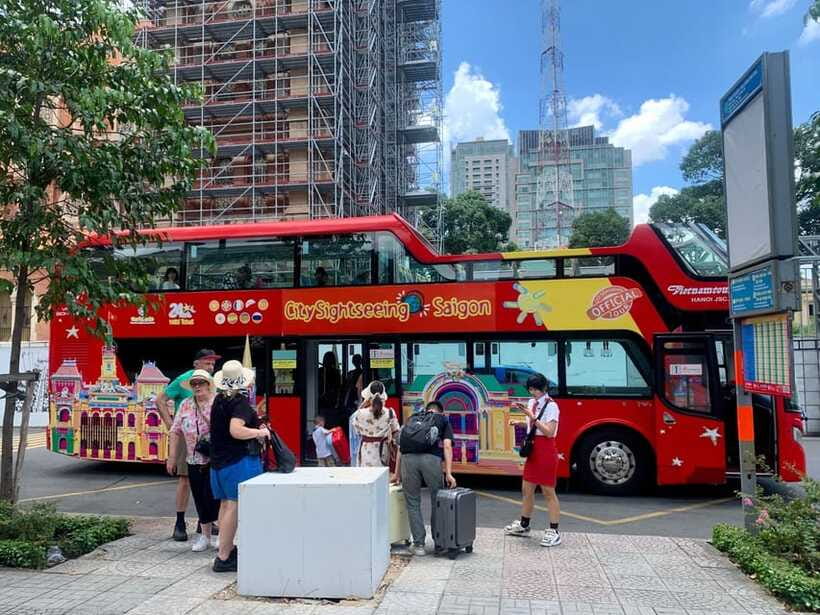
Audio commentary is listed as included, and it’s offered in English, Spanish, German, French, Chinese, Japanese, Korean, Vietnamese, Russian. That’s a real plus for a short orientation ride. Without audio, you might recognize the names but miss the meaning behind what you’re seeing.
That said, the audio part is the make-or-break detail. One downside that has shown up is a case where there was no commentary during the ride. In practical terms, that can change the experience from guided sightseeing to a paid bus ride without context.
So here’s my advice: treat the first few minutes as a check. If the audio isn’t playing for your language, flag it right away so you’re not stuck relying only on your own reading of streets and buildings.
If you’re the type who likes to learn as you go, this is worth prioritizing. If you’re mostly in it for the views and you already know what you’re looking at, you can still enjoy the ride even with weaker audio.
How the 1-hour timing affects your expectations
One hour sounds short because it is short. That’s not a flaw—it’s the point. This style of tour is designed to give you quick structure early in the day, or a low-effort refresher when you’re tired of walking.
But the time limit also means:
- You should plan to take photos quickly when you spot a landmark.
- Don’t expect deep explanations or lots of stops where you can get out and linger.
- Think of it as a moving “greatest hits” scan of central Saigon.
If you’re on a tight schedule, the tight duration can be a win. If you’re hoping for a slow, narrated walk with plenty of time to explore, you might feel rushed.
Price and value: what $10 gets you (and what it doesn’t)
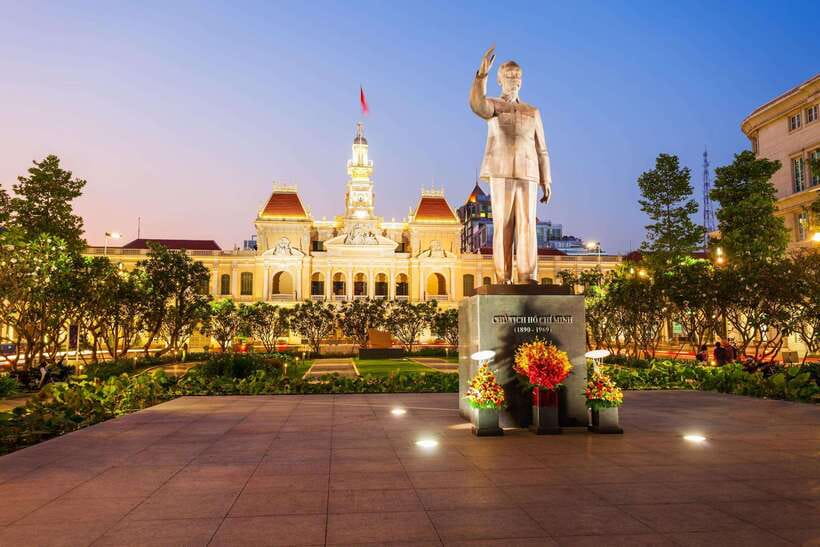
At $10 per person, this tour is priced like an entry-level sightseeing option. That’s important because it frames what you should expect.
For the money, you’re paying for:
- Open-top, double-decker transportation
- Unobstructed city views
- Audio commentary (in multiple languages)
What you’re not paying for includes hotel pickup/drop-off, meals, and personal expenses. So if you’re starting from a hotel far from the Opera House area, factor in how you’ll get there by taxi or rideshare before you decide it’s “cheap.” The $10 fare is only part of your day’s cost.
Also, because the tour is short, value depends on one thing: whether the audio works for your language. If it does, you get more “meaning per minute.” If it doesn’t, you’ll mainly be paying for the bus ride and views.
What to bring in Ho Chi Minh City heat and sun

This is the part people skip—then regret it. The tour is outdoors on an open-top bus, so bring gear that helps you stay comfortable.
Bring:
- Comfortable shoes (even if you mainly ride, you’ll still walk to the kiosk and around the pickup area)
- Hat and sunscreen (sun exposure can be real on upper decks)
- Camera (you’ll want quick shots of colonial facades and street scenes)
- Water to stay hydrated
Also keep your belongings safe. Avoid bringing valuables, and keep your phone and camera secure when the bus is moving and traffic is active.
Weather can vary, so dress in layers if you’re visiting when rain might pop in. A light rain layer can save your day.
A practical reality check on comfort and accessibility

Comfort is part of why open-top rides work. You can see more, and you don’t feel trapped behind glass.
But there are limits. This tour is not suitable for wheelchair users, so if mobility access is a concern, you’ll need a different option.
One other simple rule: no smoking. It’s a straightforward policy, but it matters if you’re sensitive to smoke or strong smells on shared transport.
Who should book this bus tour
This is a good fit if you:
- Want an easy first pass at central Saigon
- Like seeing major landmarks like Notre-Dame and the Central Post Office from a distance before choosing what to visit in depth
- Prefer short plans that don’t take over your whole day
This may not be the best fit if you:
- Plan to rely heavily on audio commentary for learning, and you’d be frustrated if the audio fails for your language
- Want lots of time walking around each site (this ride is timed tight at about 1 hour)
- Need wheelchair-friendly access
If you’re somewhere between those two groups, decide based on your priorities: views and orientation, or guided learning.
Should you book the Ho Chi Minh City hop-on hop-off bus by Vistra?
I’d book it if you want a low-effort, central sightseeing loop starting at the Opera House, especially for the open-top panoramic views and the chance to spot the big French colonial landmarks fast. At $10, the value is strong as long as the audio is working for you.
I’d think twice if onboard commentary is your top requirement. Since there’s evidence of rides where commentary didn’t come through, it’s smart to treat the audio as a “check early” feature, not a guaranteed learning experience.
If you do book, go in with the right mindset: this is about seeing a lot in a short window—then using what you spot to plan your next walk.
FAQ
How long is the Ho Chi Minh City Hop-On Hop-Off Bus Tour by Vistra?
The tour duration is 1 hour. Starting times can vary, so you’ll want to check availability.
How much does the tour cost?
It costs $10 per person.
Where do I redeem my ticket?
You redeem your ticket at the kiosk next to the Saigon Opera House. The tour ends back at the same meeting point.
What languages are available for the audio guide?
The audio guide is available in English, Spanish, German, French, Chinese, Japanese, Korean, Vietnamese, and Russian.
What should I bring with me?
Bring comfortable shoes, a hat, a camera, sunscreen, and water.
Is the tour wheelchair accessible?
No. The activity is not suitable for wheelchair users.