REVIEW · HO CHI MINH CITY
Full-Day Ho Chi Minh City Tour with Colonial Heritage & Chinatown
Book on Viator →Operated by TNK Travel · Bookable on Viator
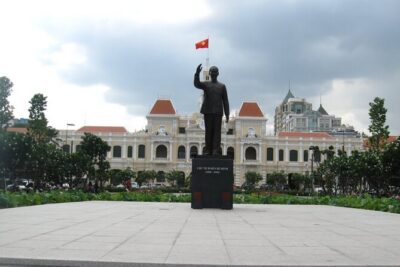
A day that reads Saigon like a book. I like this full-day small-group tour because it hits major colonial-era landmarks and then snaps you back into modern Ho Chi Minh City, with a very practical pace for first-timers. Two stops I especially value are Independence Palace (you see the period rooms tied to 1975) and the War Remnants Museum (you get Vietnam’s own framing of the conflict, not the simplified headlines).
For a lot of people, it’s an efficient way to get oriented without renting a car or stitching together tickets all day. One possible drawback: the schedule includes market and shopping-time stops, and the level of English commentary can vary by guide—so if you’re picky about narration, keep that in mind.
Key points at a glance
- Small group (max 15) with pickup and an air-conditioned vehicle for a smoother day.
- Colonial icons first, including Independence Palace, Notre Dame Cathedral exterior, and the Central Post Office.
- War Remnants Museum gives you the Vietnamese perspective on war impacts and consequences.
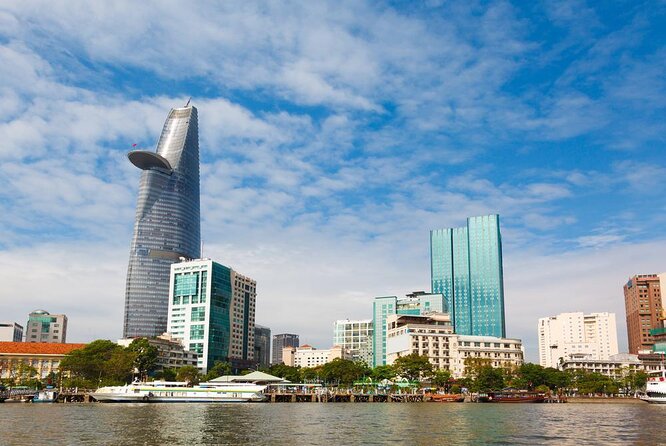
- Bach Dang Quay water-bus ride for skyline photos with Landmark 81 and Bitexco in the frame.
- Cho Lon Chinatown (Chinatown/Cho Lon) includes Thien Hau Pagoda and a strong market visit at Binh Tay Market.
- Lunch + select entry tickets included, so you’re not constantly pulling out your wallet.
In This Review
- Getting Oriented Fast: How This 8–9 Hour Tour Fits Your Day
- Independence Palace: The Rooms That Made 1975 Feel Close
- Notre Dame Cathedral Exterior: French-Lined Streets Without the Museum Feeling
- Central Post Office: Eiffel’s Touch and a Quick Souvenir Hack
- War Remnants Museum: The Heaviest Stop, and Why It Matters
- Lunch at Propaganda Vietnamese Bistro: A Real Meal Break, Not a Token Stop
- Vietnamese Coffee Break With City Views: The Pace Shifts After Lunch
- Bach Dang Quay Water-Bus: Skyline Photos From the Saigon River
- Cho Lon Chinatown: Thien Hau Pagoda and Binh Tay Market Without the Guesswork
- Price and Value: Why $47.50 Can Be a Smart Deal
- Who This Tour Suits Best (And Who Might Want a Different Plan)
- Should You Book This Ho Chi Minh City Tour?
- FAQ
- How long is the tour?
- What time does the tour start, and where does it begin?
- Is pickup included?
- What’s included in the price?
- Is lunch included?
- Can I visit Notre Dame Cathedral’s interior?
- What’s the river portion like?
- What happens if the weather is bad?
- How big is the group?
Getting Oriented Fast: How This 8–9 Hour Tour Fits Your Day
If you’re arriving in Ho Chi Minh City and feel that mild panic of not knowing where things “start,” this tour is built for that moment. You’re picked up in the morning and transported between key areas in an air-conditioned vehicle, which matters when the city heat ramps up fast.
The day runs about 8 to 9 hours and starts at 7:30 am. Ending back at the meeting point means you don’t have to negotiate rides at the end of a long day—bonus points after you’ve already walked enough to earn a second iced coffee.
This is also priced at $47.50 per person, which is the real question mark. The good news: lunch and multiple included entry/activities make it feel like a “bundle,” not a basic bus tour. The not-so-good news: you’ll spend time at places where you can shop, which some people love and others tolerate.
Independence Palace: The Rooms That Made 1975 Feel Close
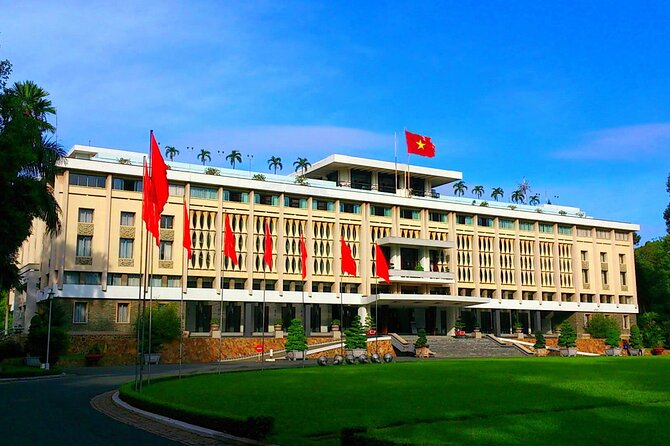
You start with Independence Palace, one of the most compelling history stops in the city. This isn’t just an exterior photo-op. Inside, you can explore the preserved interiors tied to the fall of Saigon in 1975, and you’ll notice the unmistakable 1960s architectural feel in the way the spaces were designed.
What I like about this stop is how it sets a timeline for everything you’ll see later. After this, Notre Dame, the Central Post Office, and the rest of the colonial footprint don’t feel random. They start to look like chapters in the same long story—foreign influence, local adaptation, and then the political turning points.
Practical note: plan for about an hour here, which is usually enough time to move at a steady pace without feeling rushed.
You can also read our reviews of more city tours in Ho Chi Minh City


Notre Dame Cathedral Exterior: French-Lined Streets Without the Museum Feeling
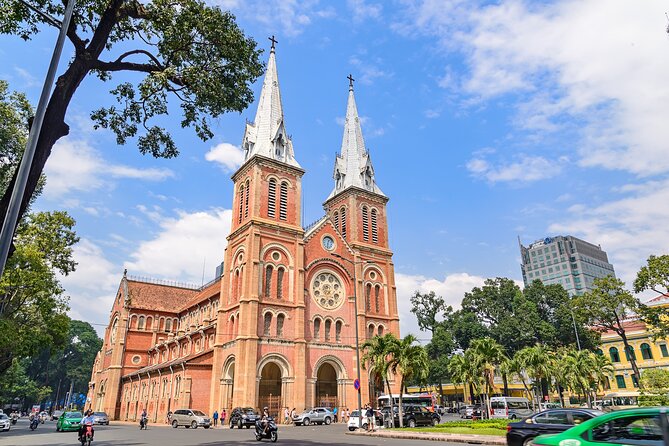
Next comes Saigon Notre Dame Cathedral. The interior access is temporarily unavailable due to renovations, so this stop is mainly about the Neo-Romanesque exterior and the scale of the building.
The construction used French-imported materials, and that shows in the stonework and the grand, European-style proportions. Even without stepping inside, the cathedral works as a visual anchor for the city’s French colonial era—especially since it’s located in the historic core near other landmark buildings.
If you’re the type who hates partial stops, you might find this less satisfying than the palace. But for most first-timers, it still plays an important role in “reading” the streets.
Central Post Office: Eiffel’s Touch and a Quick Souvenir Hack
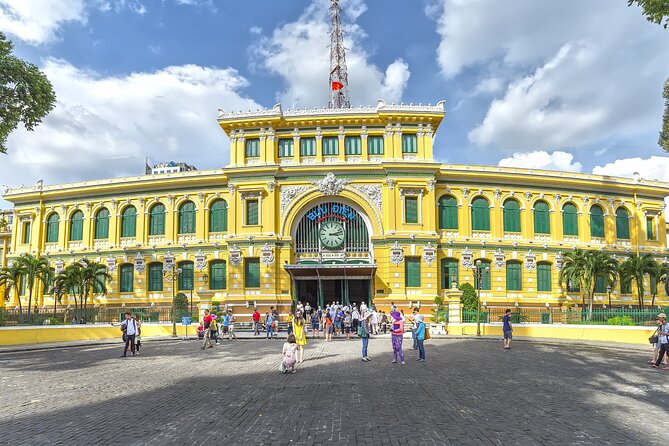
Then you swing by the Central Post Office, a major landmark designed by Gustave Eiffel. Even if you’re not into architecture, the soaring ceilings and detailed design make it feel like a real, functioning landmark—not just a painted backdrop.
This stop is also useful in a very practical way: you get time to explore and snap photos without it turning into a long detour. You’ll also receive complimentary TNK Travel Group postcards, which is a smart, easy souvenir. If you like sending postcards, you’ll appreciate not having to hunt for them later.
A small timing note: you’ll spend around 45 minutes here, which is perfect for a walk-through plus a few photos.
War Remnants Museum: The Heaviest Stop, and Why It Matters
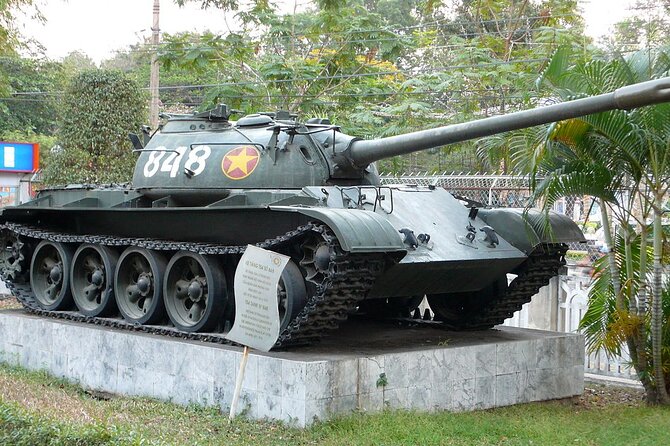
If you do only one “serious” stop in Ho Chi Minh City, make it the War Remnants Museum. This is the place that leaves the strongest impression, because the exhibits don’t shy away from the human cost and environmental damage linked to the Vietnam War.
You’ll see compelling photo displays, military hardware, and installations meant to communicate impact—both on people and on landscapes. I find museums like this valuable because they give context for why modern Vietnam looks the way it does. It’s not about learning dates for dates’ sake; it’s about understanding consequences.
Expect about 45 minutes. That sounds short, but the museum is dense. If you tend to read every placard, you’ll wish you had more time—so don’t feel bad if you spend a little extra attention here and skim a bit elsewhere.
One more thing: the museum’s power is often described in terms of perspective. This is the Vietnamese framing—useful if your news sources back home were mostly Western-shaped.
Lunch at Propaganda Vietnamese Bistro: A Real Meal Break, Not a Token Stop
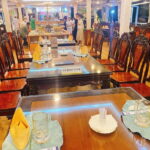
After the museum, you get lunch at Propaganda Vietnamese Bistro. This is not the kind of lunch where you’re handed something bland to keep the tour moving. The meal is positioned as genuine Vietnamese comfort food, and it typically includes a mix of dishes people associate with the country—think pho possibilities, spring rolls, and fruit.
Lunch lasts about 1 hour 30 minutes, giving you time to reset your body after a heavy morning. You’ll also feel less rushed than if you had tried to find food on your own between sites.
If you’re traveling with picky eaters, this meal stop can still work because it’s Vietnamese-focused and guided by your schedule, not random luck.
You can also read our reviews of more historical tours in Ho Chi Minh City





Vietnamese Coffee Break With City Views: The Pace Shifts After Lunch
After lunch comes a Vietnamese coffee stop around 30 minutes. You’ll be able to choose something like cà phê sữa đá (iced coffee with condensed milk) or a black coffee, depending on what you like.
What makes this more than just caffeine is the viewpoint angle. You can look down at street life—especially the constant flow of motorbikes—and you get a sense of how colonial-era shapes and modern development overlap in daily life.
I also like that this part is unhurried. After intense history, this break helps you absorb what you just saw instead of turning the day into nonstop walking and reading.
Bach Dang Quay Water-Bus: Skyline Photos From the Saigon River
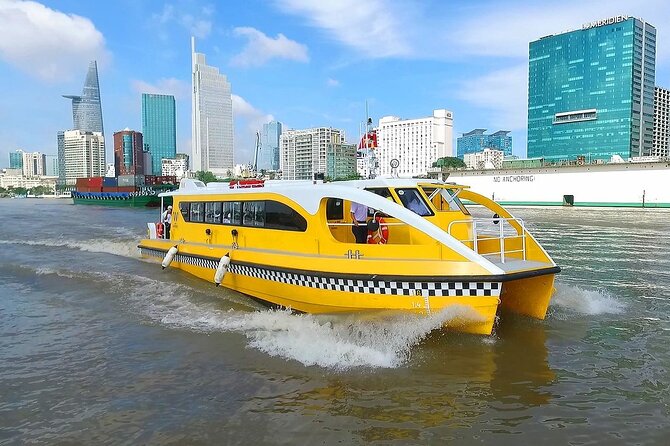
Now for the fun shift: you head to Bach Dang Quay for a water-bus / water taxi ride along the Saigon River. This is one of the tour’s most photo-friendly moments, and it changes the way you see the city.
You’ll pass major modern landmarks such as Landmark 81 and the Bitexco Financial Tower, plus you’ll look toward District 2’s more residential stretch. Seeing this skyline from the river also helps explain why Saigon carries nicknames like the Pearl of the Far East and Paris of Indochina—even if you’re thinking more about angles than romantic branding.
You’ll spend about 30 minutes on the water. That’s long enough to get a few great shots without turning into a whole separate sightseeing day.
If the weather is rough, this is one of the parts that can be affected, since the tour notes good-weather dependency.
Cho Lon Chinatown: Thien Hau Pagoda and Binh Tay Market Without the Guesswork
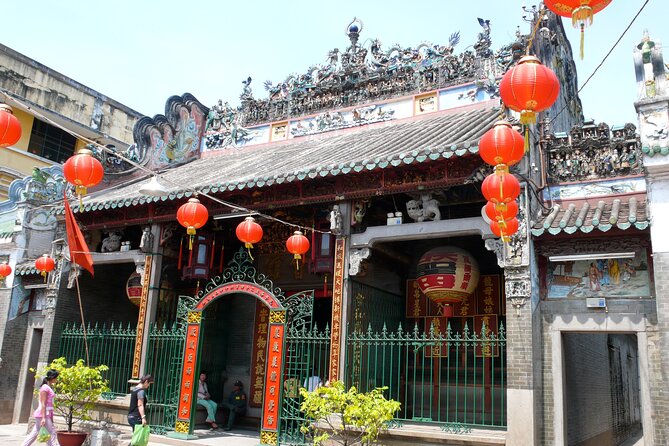
After the river, it’s time for Cho Lon, Saigon’s Chinatown area. You’ll visit Ba Thien Hau Temple, which centers on the sea goddess and includes the Thien Hau Pagoda built in the 19th century.
This stop is a strong cultural contrast to the war museum and the French-influenced buildings earlier in the day. Expect detailed roof designs and ornate scenes (enough to slow you down if you’re a watcher of architecture and religious art). You’ll also see the energy of the neighborhood where Chinese and Vietnamese influences have blended for generations.
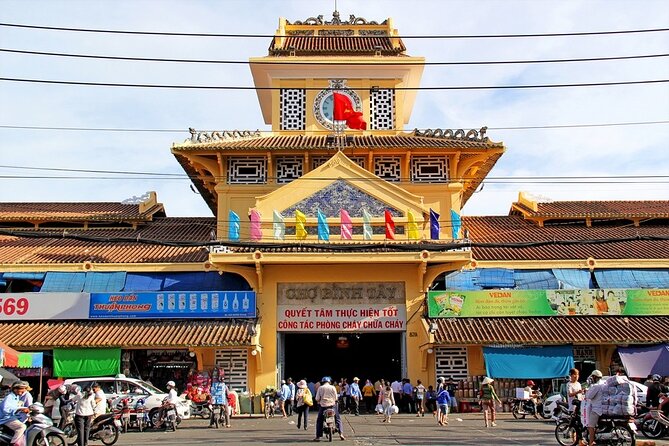
Then you head to Binh Tay Market, with distinctive Chinese architecture completed in 1928. The clock tower and dragon details make it easy to spot. Inside, it’s a sensory visit: textiles, handicrafts, spices, dried goods, and traditional remedies are commonly sold here.
A big practical tip: treat this as a browse-first stop. This is where shopping time shows up in the schedule, and some people love that. If you’re not shopping, you can still enjoy the market as a people-and-street-life experience—just keep your pace steady so you don’t get pulled into too many stalls.
You’ll spend about 30 minutes here, which means you won’t see every section, but you’ll get a feel for the district’s commercial side.
Price and Value: Why $47.50 Can Be a Smart Deal
Let’s talk money in a realistic way. $47.50 might sound like a lot if you compare it to a single ticket, but this tour includes more than just entry to a couple of sites.
You get:
- Air-conditioned transportation
- An English-speaking guide
- Lunch
- All fees and taxes
- Included tickets for major stops like Independence Palace and the War Remnants Museum
- Plus the river water-bus experience
You also benefit from the structure. If you tried to DIY the same day, you’d be arranging ride shares or taxis between distant neighborhoods, then tracking down opening hours and ticket lines. Even if everything goes perfectly, it usually takes longer and costs more than a packaged small-group tour.
So I see the value here for one type of trip: the “first full day in the city” plan. If you already know you want history + colonial architecture + Chinatown + a river view, you’re basically buying time back.
Who This Tour Suits Best (And Who Might Want a Different Plan)
This is a great fit if you:
- Want a high-coverage day with a clear route and limited downtime
- Care about history, especially the Vietnamese side presented at the War Remnants Museum
- Enjoy city photos from water or elevated angles (the Bach Dang Quay ride helps a lot)
- Like mixing colonial sights with living neighborhoods like Cho Lon
It might be less ideal if you:
- Hate any shopping-related stops and want pure sightseeing all day
- Need highly detailed narration all the time (English clarity can depend on the guide)
In a small group capped at 15, you’re not stuck shoulder-to-shoulder. That helps for both comfort and questions.
Should You Book This Ho Chi Minh City Tour?
I’d book it if your goal is to get oriented fast and you want one day that covers palace history, colonial landmarks, war context, and Chinatown—plus a river ride for a different kind of view.
I’d think twice if you only want leisure, or if you’d rather spend extra time in one place (especially the War Remnants Museum) instead of moving through several major stops.
My decision rule: if you want a single, structured day with lunch + major admissions + a river water-bus, this price is fair. If you’re the type who prefers long, slow museum time or deep neighborhood wandering on your own, you might do better splitting your day into two self-guided blocks.
FAQ
How long is the tour?
The tour runs about 8 to 9 hours.
What time does the tour start, and where does it begin?
It starts at 7:30 am. The meeting point is 112 Đ. Trần Hưng Đạo, Phường Phạm Ngũ Lão, Quận 1, Hồ Chí Minh, Vietnam.
Is pickup included?
Yes. Pickup in Ho Chi Minh City is offered, and the tour ends back at the meeting point.
What’s included in the price?
The tour includes an air-conditioned vehicle, an English-speaking guide, lunch, and all fees and taxes. It also includes attraction entrance tickets for certain stops.
Is lunch included?
Yes, lunch is included during the tour.
Can I visit Notre Dame Cathedral’s interior?
The Notre Dame Cathedral interior viewing is temporarily unavailable due to renovations, but the cathedral stop is still part of the tour.
What’s the river portion like?
You’ll take a water-bus/water taxi ride from Bach Dang Quay for about 30 minutes along the Saigon River.
What happens if the weather is bad?
This experience requires good weather. If it’s canceled due to poor weather, you’ll be offered a different date or a full refund.
How big is the group?
The tour has a maximum of 15 travelers.
If you tell me your travel dates and what you care about most (history, food, photos, or markets), I can suggest the best part of the day to prioritize.