REVIEW · HO CHI MINH CITY
Saigon US Army Jeep Tours: History, Culture & Street Food
Book on Viator →Operated by Saigon Foody Tour · Bookable on Viator
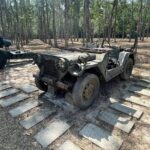
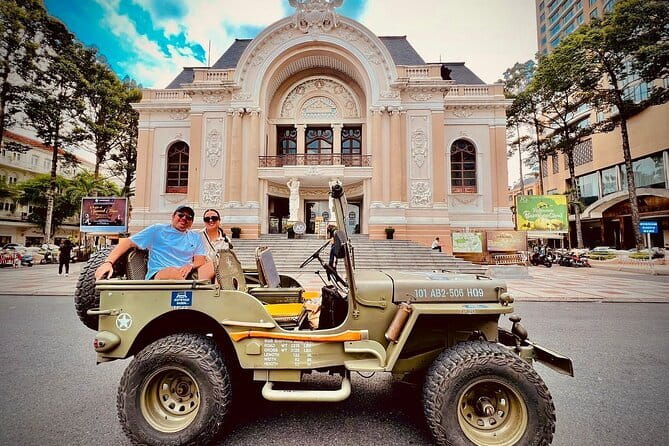
An American jeep makes Saigon feel electric, with a route that strings together reunification, war-era learning, and artisan stops. You spend four hours in an open-air US Army Jeep while your guide helps you make sense of the city’s big layers: French colonial lines, Chinese temple culture, and Vietnam’s modern story.
I love the tight pacing. You hit Independence Palace, the Saigon Central Post Office, the Jade Emperor Pagoda, and the War Remnants Museum without burning time guessing what to do next. I also like the craft and war-side detours, especially the PHUONGNAM Lacquerware stop and the Secret Weapon Cellar, which feel like they belong to the real city, not a brochure.
One consideration: a few highlights are photo stops from the street, not full entries. Add in the fact that starts and pacing can shift (and sometimes a site can be closed), so you’ll want a little flexibility on a packed day.
In This Review
- Key highlights worth planning around
- An American Jeep in Ho Chi Minh City: what you’re really buying
- Independence Palace: where the story starts (and why timing matters)
- Saigon Central Post Office and the French-era museum building
- Jade Emperor Pagoda: calm air in the middle of a big city
- War Remnants Museum: powerful exhibits, planned time, no wandering
- The Secret Weapon Cellar: a small stop with big war-era context
- PHUONGNAM Lacquerware: craft you can actually see and feel
- Saigon’s big street views: photo stops that connect District 1 and beyond
- Cholon temples: Jade Emperor energy continues at Thien Hau Pagoda
- Guide quality and logistics: how to get the best day
- What about street food on this tour?
- Price and value: is $69 a good deal for this route?
- Should you book this US Army Jeep tour?
- FAQ
- How long is the Saigon US Army Jeep Tours experience?
- What does the tour cost?
- Is pickup available?
- What’s included for tickets and food?
- Are the guides English-speaking?
- Can I cancel for a full refund?
Key highlights worth planning around
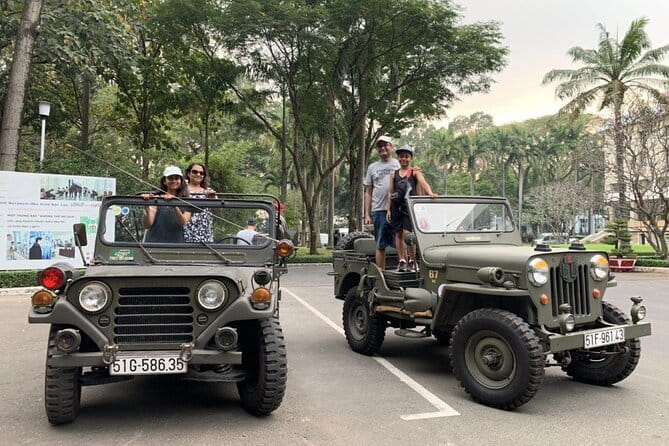
- Open-air jeep rides for big photo angles through District 1 and nearby areas
- Independence Palace + War Remnants Museum back-to-back for a clear Vietnam War-to-reunification storyline
- French colonial hits: Central Post Office and the French-style museum building
- Chinese temple culture at both the Jade Emperor Pagoda and Thien Hau Pagoda in Cholon
- Hands-on craft time at PHUONGNAM Lacquerware, plus a short stop at a war-era Secret Weapon Cellar
- Private group format with a professional guide and cold bottled water included
An American Jeep in Ho Chi Minh City: what you’re really buying
This is the kind of tour that works when you want a lot of Ho Chi Minh City in one day, without micromanaging logistics. For $69 per person and about four hours, you get a private experience in a classic American-style jeep, guided in English, with cold bottled water on board.
The meeting point is at Saigon Port Maritime Service Center in District 4 (5 Đ. Nguyễn Tất Thành). You’ll end back there too, so plan for that if you’re staying far away. If you’re hoping this will replace planning entirely, it does a good job—most stops are timed, and the jeep gets you around faster than a slow walk-first approach.
One big truth: this tour is more about connections than about endless time in one museum. You leave with a city map in your head—French buildings here, war stories there, and temple culture layered throughout.
You can also read our reviews of more food & drink experiences in Ho Chi Minh City

Independence Palace: where the story starts (and why timing matters)
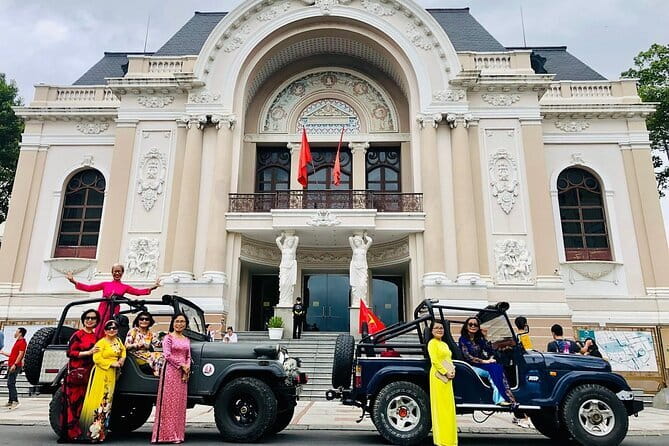
The day starts at Reunification Palace, also called Independence Palace. Plan for about 45 minutes and an included admission ticket. This is a Vietnam-history anchor point, and it sets the tone for everything that follows.
What makes it worth the time on this route is how the palace ties directly into the rest of your day. After you’ve looked around, the War Remnants Museum hits harder, and the war-era sites feel less random. It also gives you something to compare later—how Saigon moved from conflict to a rebuilt national identity.
Practical note: a few schedule changes can happen. In one example, the palace was reported as closed and the plan shifted to a flower market. So if this stop is a top priority, keep an open mind that the operator may swap nearby items to keep the day moving.
Saigon Central Post Office and the French-era museum building

Right after the palace, the route includes the Ho Chi Minh City Museum in a French colonial-style setting. The exact time isn’t listed clearly here, but expect it to be a short, focused stop—enough to get context without turning your day into line-watching.
Then comes the star architecture break: the Saigon Central Post Office. You’ll have about 15 minutes with an admission ticket included. This is where French Gothic meets Saigon’s everyday momentum, and it’s one of the most photogenic stops in District 1.
Here’s the value for you: this isn’t a stop you can always recreate well on your own without a plan. The jeep route keeps you moving, and your guide can point out the patterns to look for—so you’re not just snapping photos, you’re understanding why the building looks the way it does.
Jade Emperor Pagoda: calm air in the middle of a big city
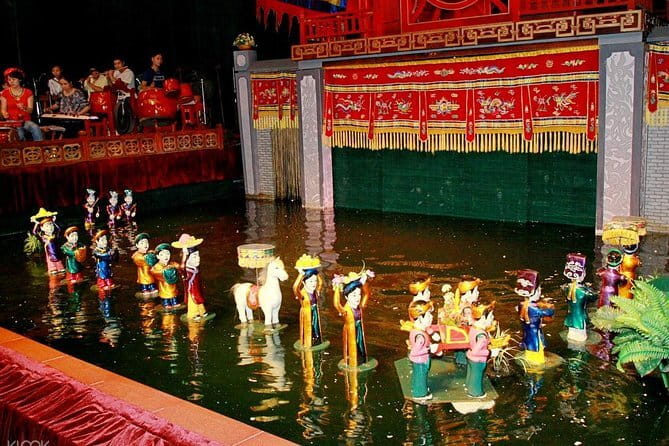
Next up is the Jade Emperor Pagoda (Chua Ngoc Hoang), a Taoist temple built in 1909. You get about 20 minutes and an included entry ticket.
Even if you’re not a temple expert, this stop is useful because it adds a softer layer to the day. The carvings, the spiritual atmosphere, and the sense of ritual are a contrast to the harder museum stops later. It also helps you “read” Cholon and other parts of the city later in the tour, since you’ve already seen one major Taoist site.
For a smooth visit, go in ready to slow down. Ten minutes here feels longer than you expect, and it helps to give yourself time to look carefully at details rather than trying to photograph everything at once.
War Remnants Museum: powerful exhibits, planned time, no wandering
The schedule’s emotional center is the War Remnants Museum, with about 40 minutes and an admission ticket included. This museum is where the tour earns its seriousness. The exhibits cover the Vietnam War era and its impact, and the time you get is structured enough to stay focused without rushing.
Why I think this belongs on a jeep tour: a lot of Ho Chi Minh City history is spread out. Here, you get one concentrated place that makes the rest of the stops make sense. If you skip it, the day can feel like a string of landmarks. If you include it, you connect the dots.
A practical suggestion: wear comfortable shoes and don’t plan a second museum right after. With only four hours total, you’ll want to be mentally ready for what you’ll see.
You can also read our reviews of more tours and experiences in Ho Chi Minh City

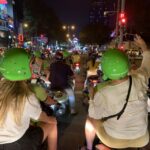



The Secret Weapon Cellar: a small stop with big war-era context

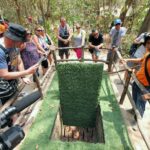
After the museum time, you visit the Hầm Vũ Khí Bí Mật Secret Weapon Cellar of the Saigon Rangers. It’s scheduled for about 20 minutes, with an admission ticket included.
This is the kind of stop that you often miss when you DIY. It’s tucked into a narrow alley in District 3, and from the outside it doesn’t look like what’s inside. That contrast makes it memorable—and it also gives you another angle on wartime history beyond the museum walls.
If you like context and stories, this is a good time to ask your guide questions. The jeep route is fast, so short “question windows” are how you get the most from a condensed day.
PHUONGNAM Lacquerware: craft you can actually see and feel
Then you head to PHUONGNAM Lacquerware, about 30 minutes. The point here isn’t just buying a souvenir. It’s watching the craftsmanship process long enough to understand what makes Vietnamese lacquer work different.
This is where the tour title starts to make sense for culture. You’re shifting from war stories and temple culture to something practical and creative—skills that have survived through decades of change.
If you’re sensitive to shopping pressure, you’ll still get value here because it’s time-based and focused on the craft itself. You can admire finishes, ask what materials or methods are used (your guide can help if you ask), and then decide if you want to buy.
Saigon’s big street views: photo stops that connect District 1 and beyond

The jeep portion matters most on the “drive-by” sights. Your route is designed to link neighborhoods quickly while still giving you stop-and-look moments for photos.
Expect key photo/photo-slowdown moments around major central areas, including Nguyen Hue Street and Dong Khoi Street (historic and central streets), plus modern skyline framing near Bitexco Financial Tower. From the information provided for this tour’s operation, Bitexco is treated as a photo stop from the outside, not a full entry.
Other classic landmark passes include the Rex Hotel, the Saigon People’s Committee building, and Ba Son Bridge (also known as Thu Thiem 2 Bridge). You’ll also pass the site of the Former U.S. Embassy, a historically significant Vietnam War-era reference point.
Here’s the takeaway: these stops help you build a mental map. You see where government and culture sit, where the city modernized, and where the war story still appears in the urban grid.
Cholon temples: Jade Emperor energy continues at Thien Hau Pagoda
You finish with a spiritual stop in Cholon: Ba Thien Hau Temple (Thien Hau Pagoda). It’s scheduled for about 30 minutes with an included admission ticket.
This temple is tied to the Chinese community in Cholon, and the schedule places it near the end of your tour so you leave with a lasting sensory memory rather than rushing out to dinner. Again, it’s less about ticking a box and more about understanding how the city’s faith traditions are physically present in daily life.
If you like cultural contrast, this pairing works well: you see the Jade Emperor Pagoda earlier and then experience Thien Hau Pagoda later, which makes the similarities and differences easier to spot.
Guide quality and logistics: how to get the best day
The biggest difference between an “okay” tour and a great one is your guide’s energy and how clearly they connect stops. In the feedback attached to this experience, names like Luc, Khoa, and Jerry come up for their communication and helpful explanations. That matters because this itinerary is packed enough that you’ll benefit from having someone narrate what you’re seeing in plain terms.
That said, logistics can be a weakness on any tight city route. Some accounts mention a start delay of about an hour, and others mention plan adjustments. Also, there’s at least one complaint connected to tour expectations around entry versus photo stops at the Bitexco area, so it’s worth mentally tagging this: expect street views at some landmarks, not timed interior admissions unless stated for that specific stop.
My practical advice for you: at the start, ask two quick questions—What’s the one thing I should not miss at Independence Palace? And which stop is the most important “story connection” to the War Remnants Museum? A good guide will answer fast, and it will shape how you experience the next three hours.
What about street food on this tour?
The tour name includes street food, but the listed itinerary focuses on history, architecture, temples, and crafts, with a couple of war-era sites. If street food is a deal-maker for you, don’t assume there’s a tasting included just because it’s in the title.
You can still use this trip strategically. For example, you can plan a pre-tour snack or post-tour street-food meal near District 1 after the jeep ride. That way you’re not hunting for food under time pressure during the tour.
If you want street food during the tour, ask the operator before booking what’s included. The safest move is to confirm any actual tasting time rather than guessing.
Price and value: is $69 a good deal for this route?
At $69 per person for about four hours, you’re paying for three things: transportation by jeep, a guide who ties the stops together, and entry fees that are marked included for the major sights on the schedule.
Compare it to the DIY approach. Yes, you can visit places like Independence Palace, the Central Post Office, and War Remnants Museum on your own. But the value here is that someone else handles sequencing, timed entry windows where applicable, and efficient driving between District 1 and surrounding stops.
The value also comes from the “in-between” experiences you’d likely skip: the Secret Weapon Cellar and PHUONGNAM Lacquerware. Those aren’t always on the standard itinerary for visitors with limited time.
The balanced downside: if you prefer long museum time, this tour can feel short on each stop. Also, if you’re expecting every landmark to be entered and not just viewed, you’ll want to adjust expectations to match the photo stop reality for some modern sights.
Should you book this US Army Jeep tour?
Book it if you want a fast, well-sequenced introduction to Ho Chi Minh City that mixes reunification history, war-era learning, temple culture, and a craft stop—without planning a day yourself. It’s a strong pick for first-timers who want to see the city’s major districts and not just one neighborhood.
Pass or reconsider if you mainly want interior access to every landmark and you hate schedule changes. Also, if street food tastings are central to your idea of the perfect tour, confirm what’s actually included before you pay—because the itinerary details here are much more about sites than eating.
If you do book, go in with the right mindset: this is a “see and connect the city” day. Bring comfortable clothes, keep your phone charged for photo stops like Bitexco and the Rex Hotel area, and ask your guide questions early so the story lands while you’re there.
FAQ
How long is the Saigon US Army Jeep Tours experience?
It runs for about 4 hours (approx.).
What does the tour cost?
The price is listed as $69.00 per person.
Is pickup available?
Pickup is offered, but the tour also has a specific meeting point at Saigon Port Maritime Service Center.
What’s included for tickets and food?
Cold bottled water is included. Entrance fees are included for the stops shown, with a note that they may not apply for the group option.
Are the guides English-speaking?
The tour includes a professional English-speaking guide. There is a $50 USD cash surcharge if a non-English speaking guide is needed.
Can I cancel for a full refund?
Yes. Free cancellation is available up to 24 hours in advance for a full refund.