REVIEW · HO CHI MINH CITY
Ho Chi Minh City: 2-Day Bike & Kayak Mekong Delta Tour
Book on GetYourGuide →Operated by VIP MEKONG DELTA TOUR · Bookable on GetYourGuide
Mekong Delta in two packed days. You start from Ho Chi Minh City, ride through fruit orchards and rice fields, then sleep at a real family farm homestay while doing kayak, rowing boats, and hands-on rural activities. The mix of active outdoors plus local food and culture is what makes this trip feel different from the usual day-tour shuffle.
I especially love how much you do with a small group (max 10), which makes the schedule feel full but still human. And I like that the homestay experience at Family Tiny Garden is tied to everyday life—bikes, gardens, fish ponds, cooking, and even karaoke at night.
One thing to consider: it’s a packed itinerary with sun and early starts, plus several water-based moments (kayaking and boats). If you’re sensitive to heat or tired easily, you’ll want to pace yourself and come prepared.
In This Review
- Key moments that make this Mekong Delta tour worth it
- Why this bike-and-kayak Mekong Delta trip feels less touristy than it sounds
- Starting from Ho Chi Minh City: pick-up, timing, and what that early start buys you
- Family Tiny Garden homestay: A/C comfort with farm-life energy
- Day 1: cooking class, Vinh Trang Pagoda, canal boats, honey tea, and coconut candy
- Village biking, orchards, and rice fields
- Cooking class: spring rolls, pancakes, and southern dishes
- Vinh Trang Pagoda and the Tien River boat ride
- Bee farm and coconut candy factory by boat
- Dinner BBQ and karaoke: the social glue of Day 1
- Day 2: sunrise cycling, coffee at a local market, and kayaking the waterway maze
- Kayaking through narrow waterways
- Lunch and return to Ho Chi Minh City
- Meals and cooking: why the food is part of the itinerary, not just included
- Pace and fitness: what to expect from the heat, boats, and repeated activity windows
- Guides and group size: why max 10 changes how the tour feels
- Price and value: is $68 for two days in the delta actually fair?
- Who should book this Mekong Delta bike-and-kayak overnight?
- Should you book this tour or choose a simpler day option?
- FAQ
- What’s included in the tour price?
- Where do you get picked up in Ho Chi Minh City?
- How big is the group?
- What activities do you do during the two days?
- Does the homestay include air conditioning?
- Can the tour accommodate dietary restrictions?
Key moments that make this Mekong Delta tour worth it
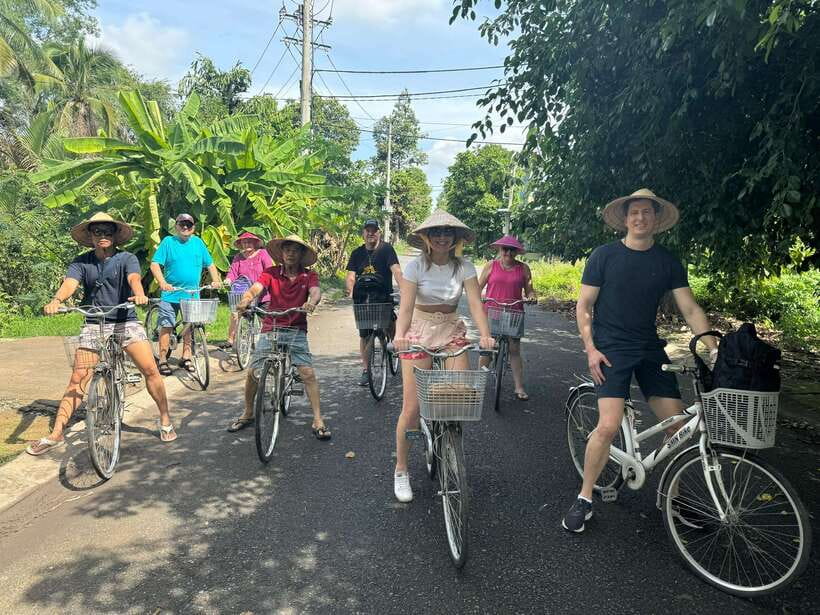
- Small group setup (10 people max) helps you actually talk with the guides and hosts.
- Family Tiny Garden homestay includes A/C rooms and a working micro-farm feel.
- Hands-on farm time like planting rice and trying to catch fish with your hands.
- Kayak through the canal maze for a slower, closer look at daily water life.
- Cooking class + BBQ lunch and dinner so you taste southern Vietnam, not just see it.
- Off-peak timing to avoid crowds is a real quality-of-life upgrade.
Why this bike-and-kayak Mekong Delta trip feels less touristy than it sounds
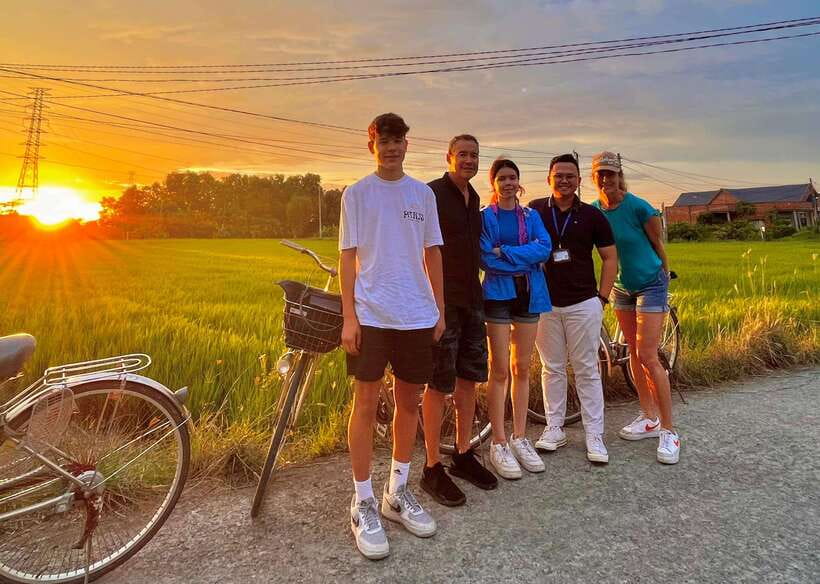
This is a Mekong Delta tour that leans practical. You get out of the city, move on bikes and boats, and keep your day anchored in local rhythms instead of jumping between photo stops.
What helps most is the structure: you do village biking and temple/canal sights on Day 1, then shift into early-morning countryside and waterways on Day 2. The overnight stay is the glue—it gives you time to slow down, eat with the family homestay team, and wake up in the delta instead of rushing back to Ho Chi Minh City the same afternoon.
It’s also a tour where the guides matter. Names that show up again and again in the experience (depending on your departure) include Chow, Milo, Jack, Dennis, and Tin Tin, and the homestay support team is often described with names like Mr. Hugh and Mr. Kenny. Across these, the common thread is friendly explanations and a clear effort to keep the group comfortable.
You can also read our reviews of more cycling tours in Ho Chi Minh City

Starting from Ho Chi Minh City: pick-up, timing, and what that early start buys you
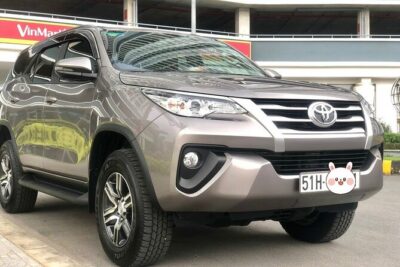
Your day starts with hotel pick-up in Ho Chi Minh City (District 1). You’ll transfer toward Bến Lức–My Tho before the activities begin, then meet the homestay team and get moving.
A key value here is timing. The tour is designed so you’re not stuck in the busiest crowd windows at every stop. Even with a full schedule, that means fewer slowdowns and more actual time doing things—especially for temple/canal moments and the countryside biking.
Bring sun protection seriously. Even if the plan is well organized, you’re biking and sitting in open-air moments in southern Vietnam. If you’ve ever done outdoor cycling in hot weather, you know: sunscreen and a hat aren’t optional.
Family Tiny Garden homestay: A/C comfort with farm-life energy
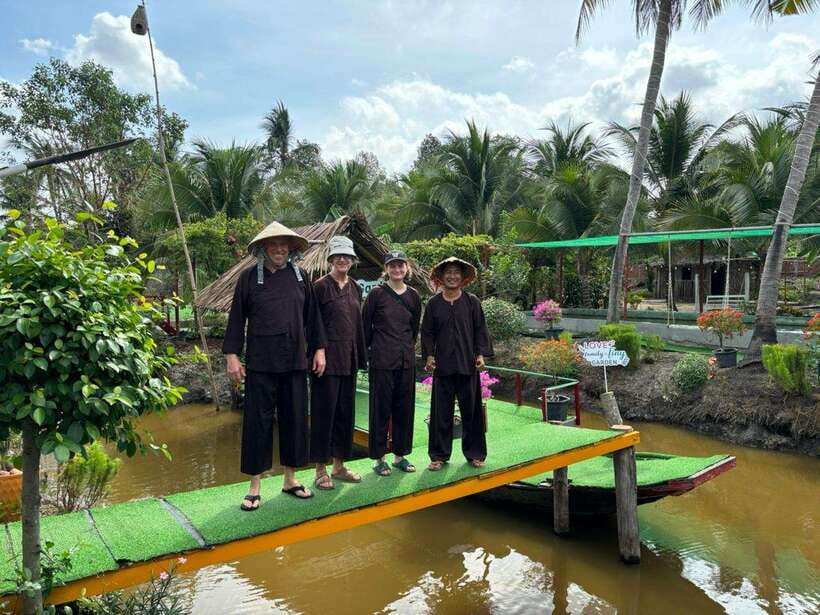
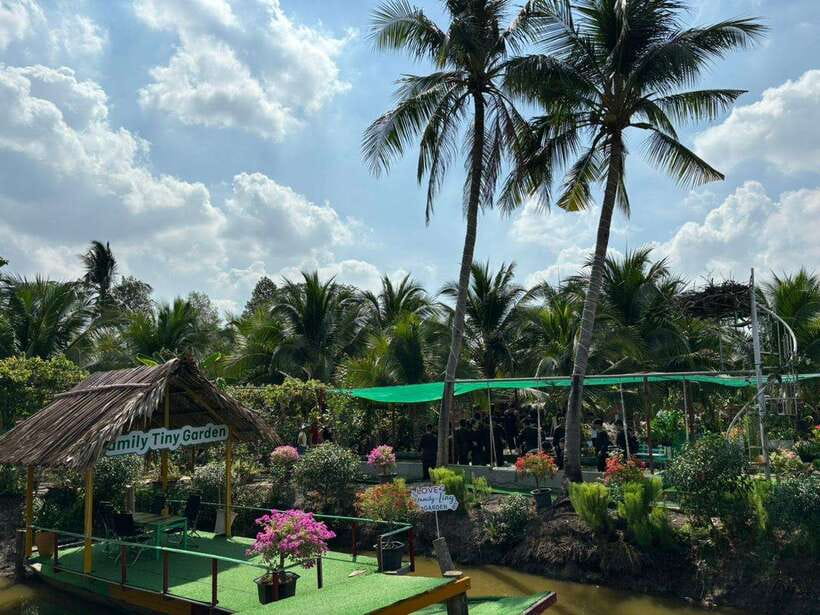
The overnight stay is at Family Tiny Garden, and it’s described as a family-run place with a micro-farm feel. You check in around late morning on Day 1, then the team guides you into village biking and local activities before lunch and the afternoon program.
The biggest practical plus: you get an A/C room for sleep, so you’re not trying to recover in a hot, stuffy space. Reviews also highlight that the homestay is connected to the property’s farming and ponds, so the food tends to feel fresh and direct from their setup.
Evenings are social. You’ll have dinner (BBQ), and karaoke is part of the overnight experience. It might sound like a gimmick, but in practice it’s one of the easiest ways for the group to bond after active days—especially since the hosts are friendly and treat it like a relaxed night, not a performance.
If you come with vegetarian, vegan, or gluten-free needs, the tour says they can accommodate dietary restrictions. That matters here because the schedule includes multiple meals plus a hands-on cooking lesson.
Day 1: cooking class, Vinh Trang Pagoda, canal boats, honey tea, and coconut candy
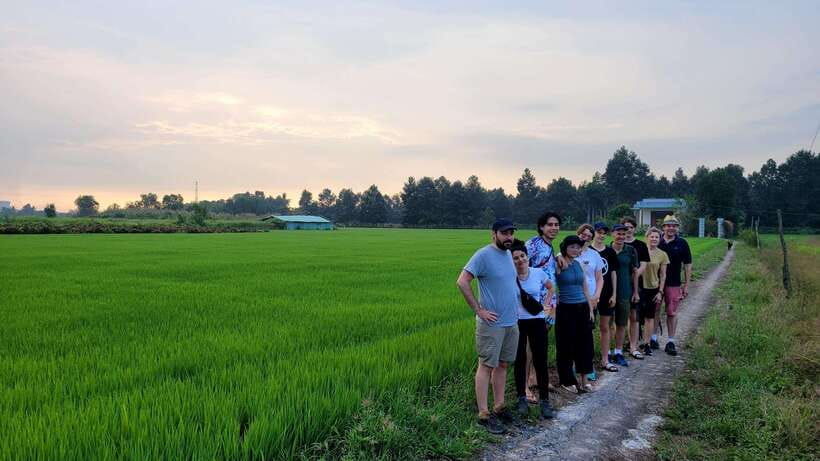
Day 1 is where the tour builds your delta context and sets up the rural “how people live” feeling.
Village biking, orchards, and rice fields
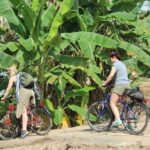
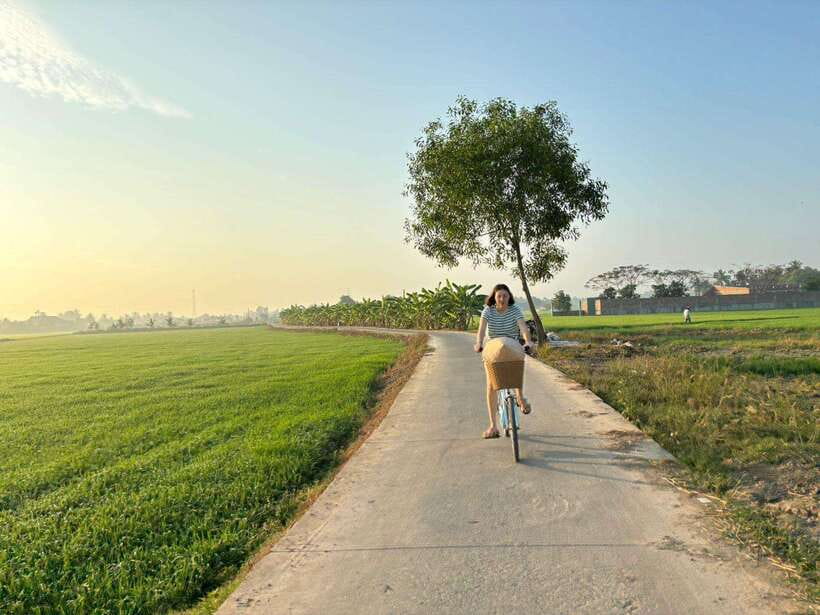
After checking in, you’ll ride through the countryside around the homestay area. This is where you see dragon fruit orchards and the patchwork of rice fields and fruit gardens that define the region. It’s not just scenery—you’re learning what crops people grow and how farm life fits the water-and-soil rhythm here.
The bike time is also a great entry point for first-timers. You don’t need technical cycling skills; what you do need is comfortable shoes and the willingness to go at a local pace.
You can also read our reviews of more city tours in Ho Chi Minh City

Cooking class: spring rolls, pancakes, and southern dishes
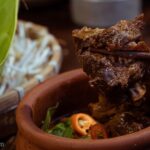
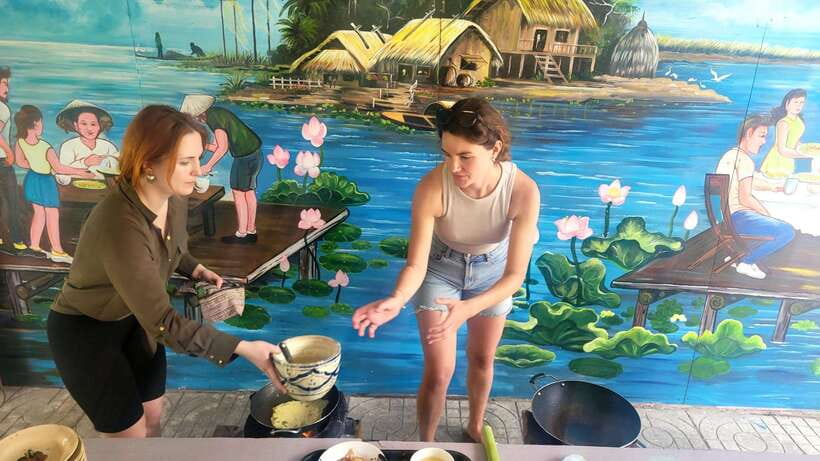
Late morning includes a cooking class, where you learn to make things like spring rolls and pancakes, plus other Vietnamese dishes. The value isn’t only the recipes—it’s that the class gives you a map of flavor and technique used in everyday southern cooking.
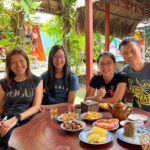
Lunch follows with BBQ Vietnamese food, so you can eat what you worked on. That makes the lesson feel more like participation than watching someone cook.
Vinh Trang Pagoda and the Tien River boat ride
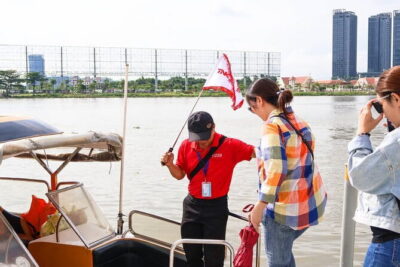
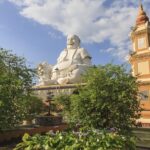
In the early afternoon, the group visits Vinh Trang Pagoda, described as the largest ancient temple in the Mekong Delta. You also get a boat ride on the Tien River, which is where the day shifts from land farming visuals to water-life visuals.
The tour adds cultural texture here too, including traditional folk music (Đàn Ca Tài Tử, UNESCO-recognized as intangible cultural heritage). You’ll also do a hand-rowed canal boat moment (a sampan-style ride), which is slow and close enough to feel the delta air and daily calm.
Bee farm and coconut candy factory by boat
The afternoon keeps stacking local stops. There’s a bee farm with honey tea, then later a boat ride to see the largest coconut candy factory in the Mekong Delta.
These stops matter because they show you small-scale food and craft industries that connect back to the farming you saw earlier. In other words: you don’t just taste; you understand where flavors come from.
Dinner BBQ and karaoke: the social glue of Day 1
After returning to the homestay in the mid-afternoon, you’ll have time before dinner. Then comes BBQ dinner plus karaoke. It’s one of those moments where the tour feels more like a family weekend than a bus-and-schedule checklist.
Day 2: sunrise cycling, coffee at a local market, and kayaking the waterway maze
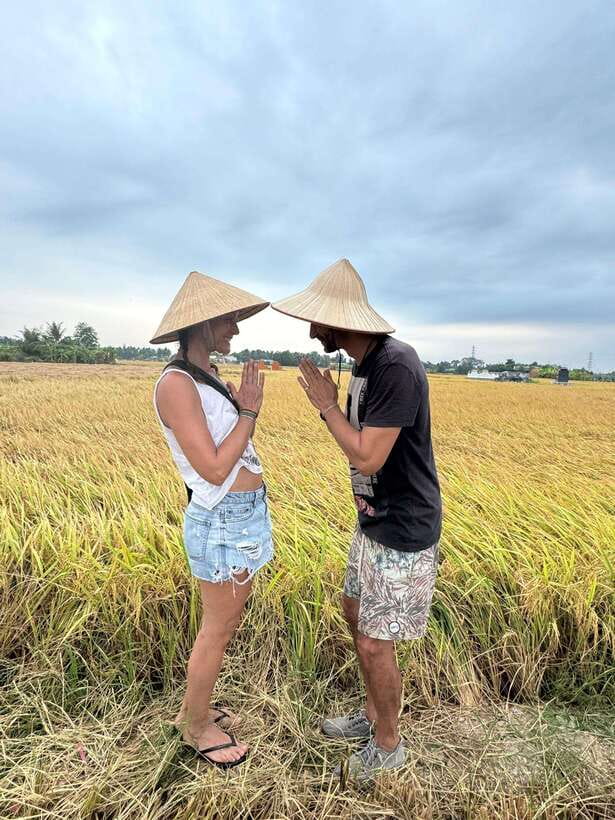
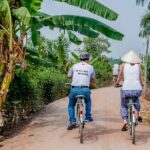
Day 2 starts early. You’ll wake for a sunrise bike ride and watch the rice fields as the day begins. If you like travel that feels like a reset, this is the moment.
After breakfast, the biking continues through countryside views and more orchards, including dragon fruit, grapefruit, oranges, and guava, plus rice fields. You also stop at a local market for coffee, which is a simple but effective way to blend “tour activity” with everyday routine.
Kayaking through narrow waterways
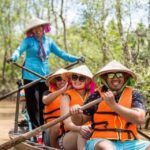
Late morning brings kayaking through a maze of waterways. This is one of the most distinctive experiences in the tour, because it trades broad river views for close canal navigation—where you notice the smaller details: water movement, banks, and how people live next to the channels.
You’ll also take part in delta farm activities like transplanting rice and catching fish. Some of this is learning-by-doing, including hands-on moments described as trying to catch catfish with your hands. Even if you’re not instantly good at it, the experience is the point.
Lunch and return to Ho Chi Minh City
After lunch, you check out and head back to Ho Chi Minh City, arriving around the early afternoon. That timing is a big quality-of-life feature: you don’t lose your entire second day to transit. You’ll still have time in Ho Chi Minh City after you return.
Meals and cooking: why the food is part of the itinerary, not just included
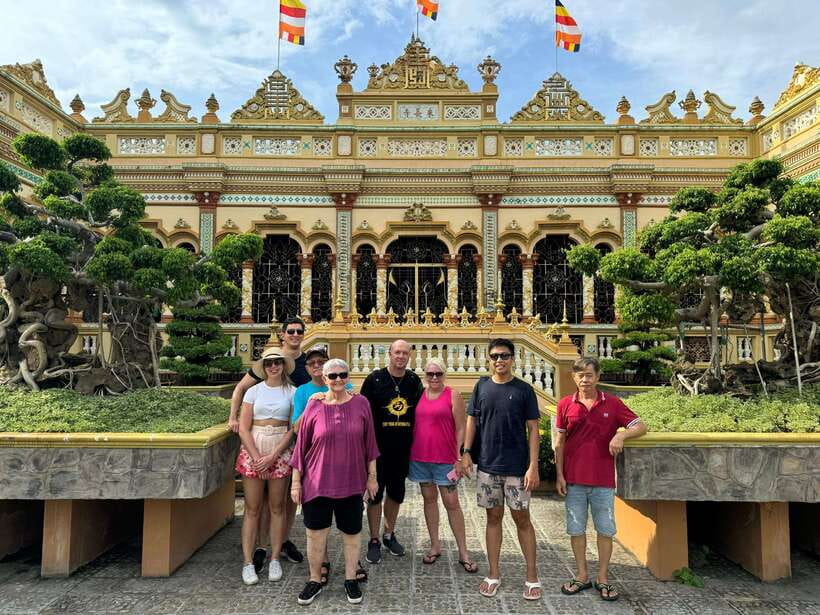
This tour treats food like a core activity.
On Day 1 you start with cooking instruction, then eat BBQ lunch. Later you have dinner at the homestay. On Day 2 you get breakfast with the morning biking, then lunch after kayaking and catching fish.
The best part is that the meals fit the setting. The homestay environment is described as a working micro-farm with gardens and ponds that support their meals, so you’re eating in the place where the ingredients are grown or raised. It’s the difference between a “tour meal” and a “here’s how we eat” meal.
And yes, the cooking class helps you bring the taste home. Even if you don’t master spring rolls on the first try, you’ll remember the flavors and the technique.
Pace and fitness: what to expect from the heat, boats, and repeated activity windows
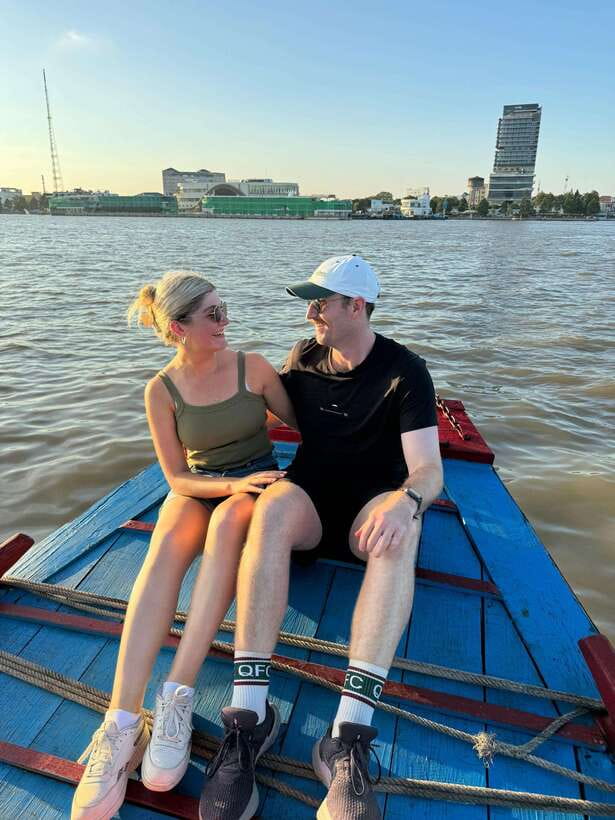
This is not a sit-and-spectate tour. You’re biking, then doing boating, then kayaking, plus farm activities like transplanting rice and fishing attempts.
One review detail that helps you plan: activities are often described as lasting around 60–75 minutes per segment. That’s long enough to matter, but it’s not so long you feel stuck. The schedule is full, yet the day doesn’t always feel rushed—especially when your guide is good at keeping the group together and moving with clarity.
Still, you should plan for:
- Sun exposure and heat during biking and waiting.
- Water-based time (boats and kayaking).
- Comfort needs: shoes for uneven surfaces and reliable grip.
What to bring is straightforward and matches the practical reality: comfortable shoes, sunglasses, sun hat, sunscreen, and comfortable clothes.
If you’re the type who tends to run low on water when it’s hot, I’d bring extra water if possible. There’s no harm in being prepared, and small comfort gaps become big comfort issues in the sun.
Guides and group size: why max 10 changes how the tour feels
A small group matters here because so much of the experience is hands-on. With up to 10 people, the English guide can explain, correct, and translate in real time during cooking, biking, and kayaking moments.
You also get more chances to talk with the homestay team. Names that commonly appear across guide roles include Chow, Milo, Jack, Dennis, and Tin Tin, and homestay hosts are often mentioned as Mr. Hugh and Mr. Kenny. In practical terms, that means you’re likely to get a personal tone: stories, tips, and a better sense of what’s happening beyond the schedule.
It also helps with pacing. When the group is small, the guide can slow down for the person who needs a break and keep the rest from feeling left behind.
Price and value: is $68 for two days in the delta actually fair?
At $68 per person for 2 days, this tour is priced like an active day package that happens to include an overnight.
The value stack is solid:
- Private transport from District 1 pick-up
- Homestay at Family Tiny Garden with A/C
- English guide and entrance fees
- Multiple meals: 1 breakfast, 2 lunches, 1 dinner
- Kayaking, rowing boat time, and bicycle use
- Travel insurance included
You also get cultural elements that you typically pay extra for on separate tours—like Vinh Trang Pagoda and the live traditional music moment. Add in the cooking class and the hands-on rural activities, and the price starts to make sense as a full, structured package rather than random attractions.
Could it feel “expensive” if you only want a single highlight? Sure. But if you want an active, multi-stop Mekong Delta experience where the overnight isn’t just sleeping somewhere, then this price is in the right zone for what you get.
Who should book this Mekong Delta bike-and-kayak overnight?
I’d steer you toward this tour if:
- You want two full days of activity with a real homestay.
- You like hands-on learning (cooking, fishing attempts, planting rice).
- You’d rather avoid the biggest crowds and see the delta at a calmer tempo.
- You’re happy with a schedule that includes early mornings and outdoor time.
You might skip it if:
- You hate heat and early starts.
- You have limited mobility or discomfort with repeated bike time and boats.
- You want a slow, relaxing cruise day only.
The tour also isn’t suitable for people over 95 years, so check your comfort range honestly before booking.
Should you book this tour or choose a simpler day option?
Book it if you want the Mekong Delta to feel like a living place, not a parade of sights. The overnight at Family Tiny Garden is the difference-maker. It turns the trip from a quick sightseeing day into something with rhythm: morning biking, cooking, canal rides, and then the chance to wake up in the delta and do it again.
I’d choose a simpler day tour instead if you’re short on time, want fewer transitions, or prefer mostly seated experiences. Day tours can be fine—this one is better when you want active travel with food and local culture built into the schedule.
If you’re on the fence, this is the tie-breaker: you’ll get both the land side (biking, rice fields, orchards) and the water side (canoes/sampans and kayaking). That mix is the real reason this tour earns such consistently high marks.
FAQ
What’s included in the tour price?
The tour price includes private transport, a homestay at Family Tiny Garden with an A/C room, an English guide, all meals (1 breakfast, 2 lunches, 1 dinner), kayaking, bicycle use, river cruises/boat rides, rowing boat time, entrance fees, taxes, and travel insurance.
Where do you get picked up in Ho Chi Minh City?
Pickup is included from your hotel in District 1 of Ho Chi Minh City.
How big is the group?
This is a small-group tour limited to 10 participants.
What activities do you do during the two days?
You’ll bike through local countryside and orchards, take part in a cooking class, visit a temple and do boat rides, enjoy a bee farm and honey tea, ride a sampan by hand along canals, and on Day 2 you kayak through the waterways. You also try activities like transplanting rice and catching fish.
Does the homestay include air conditioning?
Yes. The homestay room at Family Tiny Garden includes A/C.
Can the tour accommodate dietary restrictions?
Yes. The tour states it can accommodate vegetarian, vegan, gluten-free, and other dietary restrictions. You should indicate your needs when booking.