REVIEW · HO CHI MINH CITY
Ho Chi Minh City Sightseeing & Culture Tour By Scooters
Book on Viator →Operated by 102 Saigonese · Bookable on Viator
Saigon history, served with scooter speed. I love how this route mixes big city icons like Saigon Central Post Office and Independence Palace with time in the street-level web of alleys and older neighborhood blocks. I also like the included Vietnamese coffee break and light fruit juice, so you get something real to taste, not just photos to race through.
A possible drawback: with about four hours and a full lineup of stops, the schedule can feel packed if you want long, unhurried wandering or extra photo time. And because the tour needs good weather, you’ll want to dress for quick changes in Ho Chi Minh City.
In This Review
- Key things to know before you ride
- Why this scooter culture route is a smart way to see Saigon
- Price and logistics: getting value from the $20 experience
- Stop 1: Saigon Central Post Office starts the timeline
- Stop 2: Independence Palace brings the war-era story into focus
- Stop 3: Nguyen Hue Street gives you the city’s everyday energy
- Stop 4: Thich Quang Duc monument and the power of a single story
- Stops 5 and 6: Apartment buildings, old neighborhoods, Ba Thien Hau Temple
- Stop 7: The Secret Weapons Cellar is where the story turns practical
- Stop 8: Bến Bạch Dằng ends with a breather by the water
- The coffee moment: what you should do with it
- Guides and pacing: when the half-day feels right
- How to prep for scooter time in Ho Chi Minh City
- Should you book this scooter sightseeing tour?
- FAQ
- How long is the Ho Chi Minh City sightseeing and culture tour by scooters?
- Where is the meeting point?
- Is hotel pickup and drop-off included?
- What’s included in the tour besides transportation?
- Is this a private tour?
- What ages can participate?
- Do I get a ticket on my phone?
- What is the cancellation policy?
- Does the tour run in bad weather?
Key things to know before you ride
- Private-group scooter culture route with hotel pickup and drop-off
- Icon stops plus neighborhood lanes, including old apartment areas and an alleyway system
- Coffee and light refreshments included to keep the pace comfortable
- Major Vietnam-era memorial moments like the Thich Quang Duc monument and the Secret Weapons Cellar
- Finish by the waterfront at Bến Bạch Dằng for a calmer end to the ride
Why this scooter culture route is a smart way to see Saigon
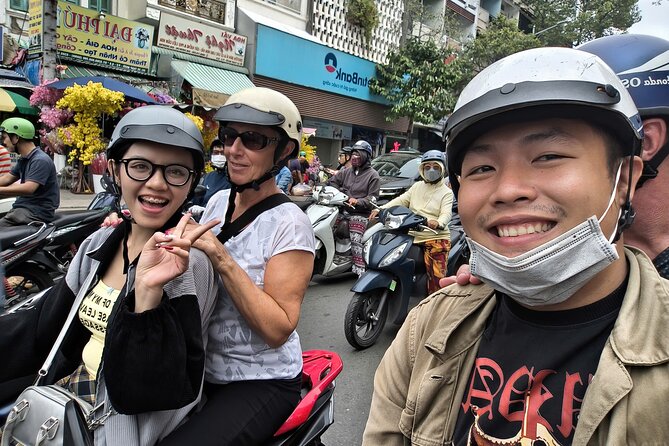
Ho Chi Minh City has a talent for making you feel slightly lost at first. Streets braid into each other, alleys cut between blocks, and landmarks can look close on a map while still taking forever to reach on foot. A scooter-style tour solves that problem fast. You cover ground, but you also get context, because the route isn’t only about big monuments. It’s about how daily life and major historical moments sit side by side.
I especially like the way the tour’s mix of locations helps you build a timeline in your head. You start with landmark architecture tied to the city’s colonial era, then you move to sites linked with independence and war-era events, and later you land in places that show how communities keep living, worshipping, and trading. That pattern makes the city easier to understand in one half-day.
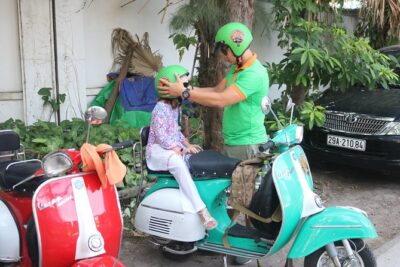
One more practical point: you’re not stuck figuring out transportation on your own. You get picked up, ride with a helmet provided, and you’re back where you started at the Saigon Opera House. For a first visit, it’s one of the most efficient ways to get your bearings.
You can also read our reviews of more city tours in Ho Chi Minh City



Price and logistics: getting value from the $20 experience
This tour is priced at $20 per person, which is a strong deal for a guided half-day that includes multiple stops and more than just transportation. You also get hotel pickup and drop-off, use of a helmet, Vietnamese coffee, and light refreshments (tropical fruit juice). For many visitors, those inclusions matter as much as the sightseeing, because they reduce the friction of planning.
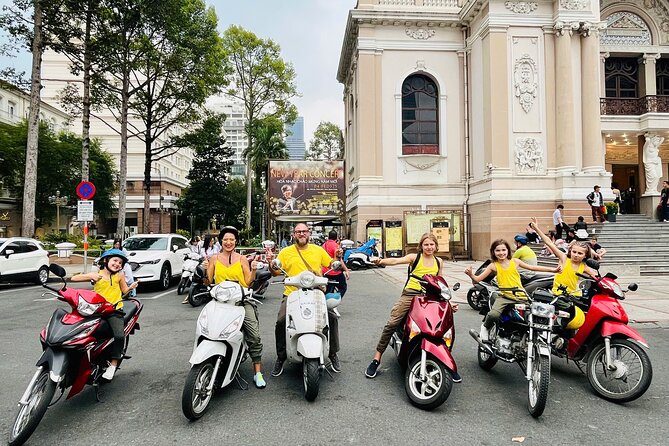
The tour is listed as private, meaning it’s only your group. That’s a big difference from the standard cattle-car group tour. It often means the guide can better match the pace to your needs, like slowing for photos or adjusting when you want to spend a few extra minutes looking at street details.
You’ll also receive a mobile ticket, and confirmation comes at the time of booking. The start point is easy to find: the Saigon Opera House (07 Công trường Lam Sơn, Bến Nghé, Quận 1). You can even treat it as a shortcut to get from the tourist core into neighborhoods where you’d struggle to navigate confidently.
A final logistics note: the tour requires good weather. If rain rolls in, it could change the date or lead to a refund, so check the forecast the day before.
Stop 1: Saigon Central Post Office starts the timeline

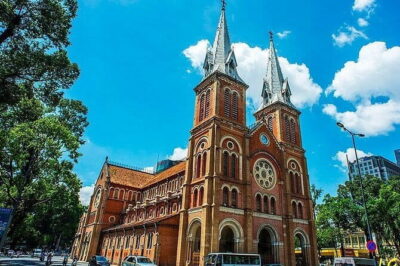
You kick things off at the Saigon Central Post Office. This isn’t just a place to pass by. It’s the kind of building that immediately tells you the city’s “layers” story—how outside influences shaped the look of Saigon, then how Saigon made those spaces its own.
What I like about beginning here is the way it sets a visual baseline. Before you move into political and memorial sites, you get a sense of the city’s architectural style and its earlier role as a connection point for trade and communication. From there, the rest of the tour feels less random.
Practical tip: this is one of those stops where your camera roll can get away from you. Plan for a quick walk inside or around the main public areas, then keep moving. The tour’s value comes from the sequence.
Stop 2: Independence Palace brings the war-era story into focus
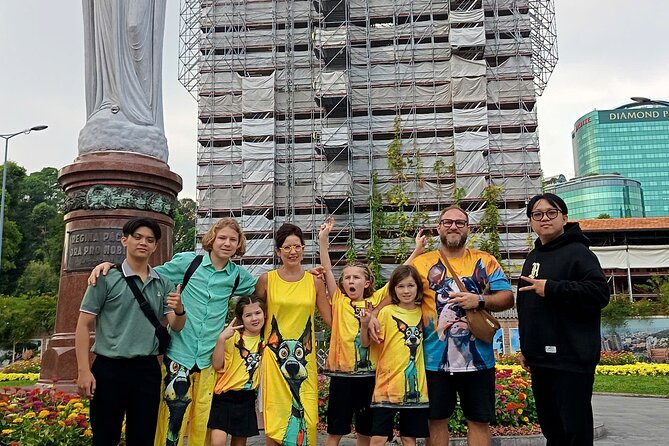
Next up is the Independence Palace. This is one of Ho Chi Minh City’s most important political-history landmarks, and it’s a great bridge from the “old city” look of the post office into the era that many people associate with Saigon’s dramatic twentieth-century changes.
Why it works on a scooter tour: the guide can connect what you’re seeing to the bigger story without you needing to become a historian before you arrive. You get to stand in a place where events unfolded, then you move on while the meaning is still fresh.
If you care about history but hate long museum lectures, you’ll probably find this pace more satisfying than a slow, single-site day. You get the core stops, and you still have time to see the neighborhood streets that show what life looks like outside the monuments.
Stop 3: Nguyen Hue Street gives you the city’s everyday energy

After the heavy historical anchors, you shift to Nguyen Hue Street. This is the kind of place where Saigon feels like a living city rather than a set of attractions. It also helps you reset your senses. You’ve already got the big-story context, so walking a main corridor gives you a sense of where modern crowds, shopping patterns, and city rhythm fit in.
This stop is useful even if you’re not a shopper. You’ll notice how people flow, where streets open up, and how the city organizes itself around key routes. It makes the later alleyway and neighborhood stops feel more readable—like you’re learning the city’s grammar, not just its vocabulary.
You can also read our reviews of more tours and experiences in Ho Chi Minh City





Stop 4: Thich Quang Duc monument and the power of a single story

You then visit the Venerable Thich Quang Duc monument, a site connected to the famous public act of protest associated with the burning monk. This stop matters because it turns history into something you can remember: one person, one moment, one lasting symbol.
What I like here is that memorial stops often fail if they’re treated like photo ops only. A good guide helps you understand why the monument exists where it does and why it still resonates. When that explanation lands, the site stops being a single marker and becomes a checkpoint in your understanding of the era.
Heads-up for your visit: memorial moments usually pull people into a quieter mood. If you’re traveling with kids, keep expectations realistic. This isn’t a theme park-style stop, but it can be meaningful without being heavy if the pacing stays thoughtful.
Stops 5 and 6: Apartment buildings, old neighborhoods, Ba Thien Hau Temple
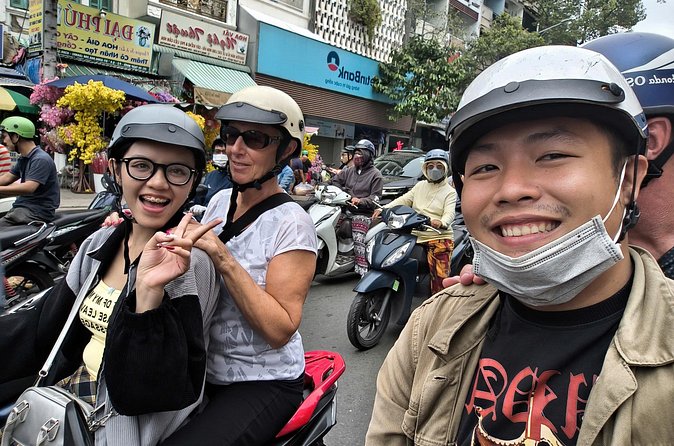
The tour continues with Nguyen Thien Thuat Apartment Buildings and then Ba Thien Hau Temple. Together, these stops show two sides of Saigon life: postwar urban living and the continuing presence of faith and community spaces.
The apartment buildings help you see how cities house people and how neighborhoods evolve over time. They’re not just “architecture”—they’re part of the everyday Saigon story, where residents keep living while the city’s political and economic chapters keep shifting.
Then you move into Ba Thien Hau Temple, a temple tied to community devotion and local religious culture. Even if you’re not deeply religious, temple stops teach you how communities organize their beliefs in a place that still functions as part of daily life.
Also, this is where the tour’s highlight list starts to feel especially relevant: you’re guided through the old apartment area, and you should expect time that connects you to the alleyway system and local textures of the city. The route may also include a wholesale flower market and a local wet market, both called out as highlights. If you’re the type who loves watching how locals actually trade, you’ll likely enjoy these segments because they feel like real city routine.
Stop 7: The Secret Weapons Cellar is where the story turns practical
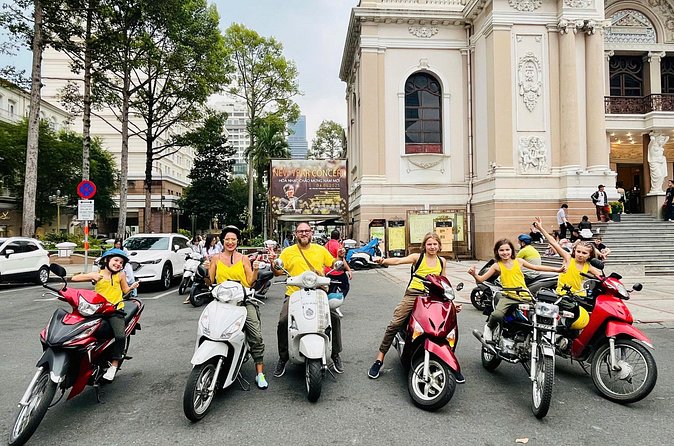
Next comes The Secret Weapons Cellar. This is one of those stops that benefits from having a guide who can make the information understandable without turning it into a textbook. The value here is context: you’re not just seeing an underground space—you’re getting an explanation of what that space represented during the city’s conflict years.
Why it fits this scooter tour: it gives you a “how things worked” perspective. After you’ve absorbed political symbolism at independence sites and memorials, this stop adds a different layer. It’s less about statements and more about hidden logistics.
Practical consideration: underground spaces can feel cooler than the street, but they may also be dim. Wear something comfortable and be ready to slow your pace for a few minutes while you look around and listen.
Stop 8: Bến Bạch Dằng ends with a breather by the water
To finish, you reach Bến Bạch Dằng. Waterfront areas tend to do one important thing after an active tour: they give you space to reset. You get a change in scenery, softer atmosphere, and a chance to process what you learned without rushing to the next stop.
It also keeps the ride from ending abruptly right after a formal site. Instead, you slide out of the history-focused part of the day into a more relaxed setting—useful if you’re heading out for dinner afterward.
You’ll return back to the meeting point at Saigon Opera House, which makes planning the rest of your day easier. No long transfer, no complicated end location.
The coffee moment: what you should do with it
The tour includes Vietnamese coffee plus tropical fruit juice. This isn’t random. Coffee fits the street culture of Saigon because it’s a social pause—something people do even when the day feels fast.
If you want to get more out of this stop, treat the coffee as a mini sensory lesson:
- Notice how it’s served (hot vs. iced) and how sweet it tastes.
- Watch how people order and react to the flavor. You don’t need to copy them, but it helps you understand the local standard.
- Use it to ask your guide what makes this particular coffee special, since the route positions it as part of the experience’s highlight list.
Also, because the tour is about four hours, having an included drink break means you’re less likely to burn out. It keeps the pace enjoyable, especially in heat.
Guides and pacing: when the half-day feels right
A big reason this tour earns strong scores is the guide experience. Several guides have been singled out for being friendly and personable, with clear explanations that connect facts to what you’re seeing on the street. Names that show up include Linh, Win, Ryan, DA, Hanne, Kathy, and Kim.
What that means for your day: you’re less likely to feel like you’re moving through checkpoints with no meaning. Instead, you get a story at each stop that helps you remember what you just saw. Good guides also know when to speed up and when to slow down, which matters on scooter routes.
Still, be realistic: the itinerary includes a lot of key sites in about four hours. That’s great for efficiency, but it can feel “full” if you’re hoping for long stops at every location.
How to prep for scooter time in Ho Chi Minh City
Even when a tour includes helmets, scooter weather and road conditions are your responsibility. Here’s how to make the ride feel easier:
- Wear breathable clothes and comfortable shoes you can keep on without fuss.
- Bring sunglasses and sun protection, since you’ll spend plenty of time outdoors between stops.
- If you’re sensitive to wind or dust, you might want a light mask or scarf.
- Because the tour requires good weather, keep an eye on the forecast so you can pack accordingly.
Also, make sure you have the meeting spot down: the Saigon Opera House area is the starting anchor, and the tour ends back there.
If you’re traveling with kids, the tour lists a minimum age of two years old, and it says most people can participate. For small kids, plan on sitting securely and staying close during transitions.
Should you book this scooter sightseeing tour?
Book it if you want:
- A fast, guided way to cover Saigon’s major landmarks without wrestling with transport
- A route that includes both history stops and street-level neighborhood scenes like alleys, old apartment areas, and market life
- An included break for Vietnamese coffee and fruit juice that makes the half-day feel human
Skip or consider a different plan if you:
- Want a slow-paced day with long museum time at one site
- Need extra time for photography at every location
- Travel during a period of frequent bad weather and can’t flex your schedule
For the right trip style, this is a solid value half-day: you get meaningful stops, a lively scooter route, and built-in refreshment—all starting and ending at one of the easiest landmarks in central Ho Chi Minh City.
FAQ
How long is the Ho Chi Minh City sightseeing and culture tour by scooters?
It runs for about 4 hours.
Where is the meeting point?
The tour meets at Saigon Opera House, located at 07 Công trường Lam Sơn, Bến Nghé, Quận 1, Thành phố Hồ Chí Minh.
Is hotel pickup and drop-off included?
Yes, hotel pickup and drop-off are included.
What’s included in the tour besides transportation?
You get Vietnamese coffee, tropical fruit juice (light refreshments), use of a helmet, and transport by private vehicle.
Is this a private tour?
Yes. It’s listed as private, so only your group will participate.
What ages can participate?
The minimum age is two years old, and it says most travelers can participate.
Do I get a ticket on my phone?
Yes. The tour includes a mobile ticket.
What is the cancellation policy?
You can cancel for a full refund up to 24 hours in advance. If you cancel less than 24 hours before the start time, the amount paid is not refunded.
Does the tour run in bad weather?
The experience requires good weather. If it’s canceled due to poor weather, you’ll be offered a different date or a full refund.