REVIEW · HO CHI MINH CITY
Ho Chi Minh City: Stained Glass Art Workshop in Saigon
Book on GetYourGuide →Operated by VIVA VIETNAM · Bookable on GetYourGuide
Light, color, and quiet creativity. In Ho Chi Minh City, you’ll create stained glass you can take home, while a local artist walks you through the steps and the meaning behind the patterns. I also love that you get both hands-on making and a bit of storytelling about how stained glass fits into Vietnamese architecture and symbolism, so the craft feels more personal than just a souvenir.
There’s one thing to consider: the workshop can lean heavily on you doing the work once the basics are shown. If you need very detailed, step-by-step guidance the whole time, plan to ask questions early and often. On the plus side, it’s a beginner-friendly session in a calm studio setup, and you’re not expected to already know how to handle glass tools.
In This Review
- Key Things You’ll Notice Right Away
- A Peaceful Ho Chi Minh City Studio With Real Hands-On Art
- Choosing Patterns Inspired by Vietnamese Architecture
- Glass Cutting and Shaping: the Basics That Actually Matter
- Assembling Your Ornament, Coaster, or Mini Panel
- The Value of $35: You’re Paying for Tools, Guidance, and a Keepsake
- English Instruction and Support: How to Get the Best Session
- Who Should Book This Class in Saigon?
- Should You Book This Ho Chi Minh City Stained Glass Workshop?
- FAQ
- What is the location of this stained glass workshop?
- How much does the workshop cost?
- How long is the workshop?
- Is the instructor English-speaking?
- What do I make during the workshop?
- What is included in the price?
- What is not included?
- Do I need prior experience?
- Is this workshop suitable for children?
- Is it suitable for people with mobility impairments?
Key Things You’ll Notice Right Away
- You leave with something you made, not just photos
- Pattern choice matters: traditional and modern designs to match your taste
- You learn real craft basics: cutting, shaping, and assembling techniques
- Safety and tool handling are part of the session, not an afterthought
- A relaxed studio pace helps the time feel easy, not rushed
A Peaceful Ho Chi Minh City Studio With Real Hands-On Art
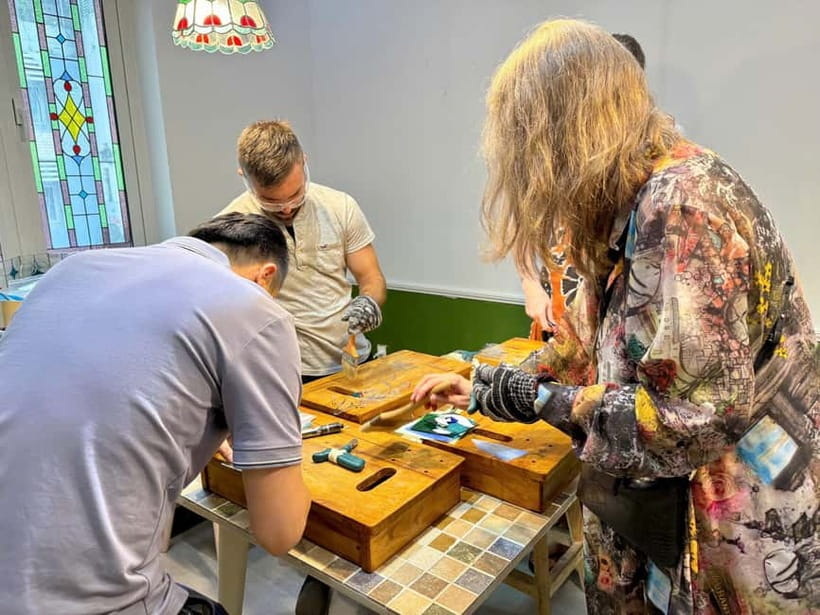
This is a 3–3.5 hour stained glass art workshop in Ho Chi Minh City that feels designed for calm focus. The setup is a peaceful studio environment where you’ll do the work yourself: cut, shape, and assemble glass into an ornament, coaster, or mini panel. You’re not there to watch from the sidelines, and that hands-on format is exactly why this kind of class becomes memorable.
You’ll be with an English-speaking local instructor (and supportive instructors or studio masters, depending on how the session is run). The duration is long enough to learn the basics and finish a piece, but not so long that it turns into a full-day commitment. At $35 per person, the class also sits in a sweet spot for travelers who want a meaningful craft moment without the premium price tag you sometimes see for higher-end workshops.
Who it’s best for: beginners, art lovers, and anyone who likes bringing home something made with their own hands. It’s also a good fit if you want a break from the city’s pace—this one is made for quiet concentration.
You can also read our reviews of more city tours in Ho Chi Minh City



Choosing Patterns Inspired by Vietnamese Architecture
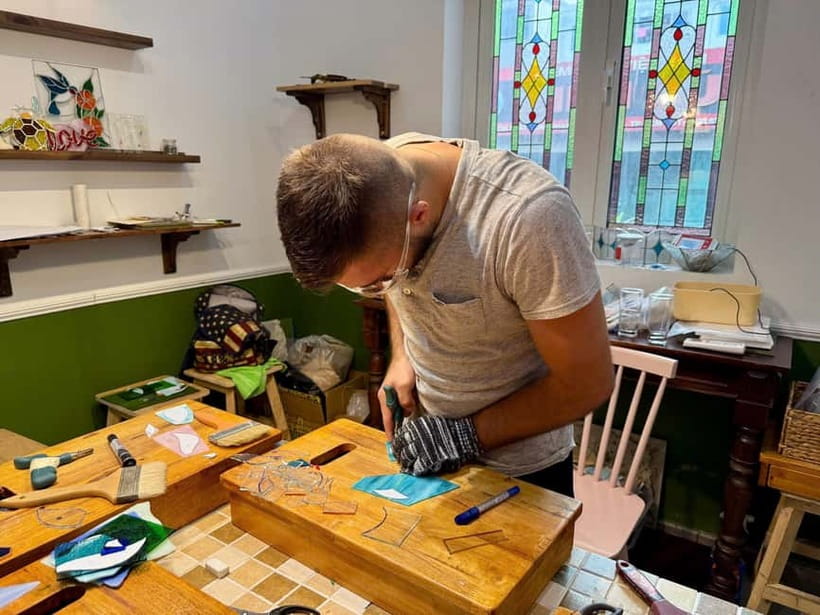
One of the most interesting parts is the mix of making and learning. Before you lock in your final design, you’ll have a range of traditional and modern patterns to choose from, inspired by Vietnamese architecture. That choice is more than decoration. It’s a way to connect your final piece to a visual language you can later recognize when you look at buildings, windows, and ornamentation back home or while traveling around Vietnam.
The workshop also includes stories about stained glass in Vietnam—how it found its place in colonial-era and modern buildings, and what the craft symbolizes as light and color move through a space. Even if you’re not a history person, that context helps. Instead of thinking of stained glass as just pretty color, you start to see it as a technique that turns structure into mood—something you’d notice every day if it were part of your environment.
Tip: pick a pattern you genuinely like seeing in different lighting. Stained glass doesn’t look the same under every condition. If you like bold shapes, modern styles may feel more contemporary. If you want something classic, traditional motifs can be a better match for a keepsake you’ll keep for years.
Glass Cutting and Shaping: the Basics That Actually Matter
This class teaches you the core building blocks of stained glass: glass cutting, shaping, and assembling. Even if you’ve never tried it, you’ll start at the foundation level. The workshop also covers how to safely handle stained glass tools and materials—important, because the tools aren’t toys. You’ll want to follow the instructor’s cues and take safety seriously.
What I like about this part is that it’s practical knowledge you can understand quickly. Once you see how the glass behaves and how the pieces fit conceptually, the rest of the workshop starts to click. You’re not just copying a sample; you’re learning how stained glass becomes an actual object—one shaped piece at a time.
In a good session, you’ll feel guided enough to get comfortable early, then supported when you hit a tricky step (like getting a clean cut line or adjusting a shape so it matches the surrounding pieces). In less ideal sessions, the craft still works—but you might need to work harder for clarity. One booking highlighted that English communication can be difficult and that a large portion of the time can feel self-directed unless you keep signaling you’re finished with each step and need the next instruction. So if you’re the type who wants constant reassurance, it’s smart to be proactive.
Assembling Your Ornament, Coaster, or Mini Panel
After the cutting and shaping comes the part where your design becomes a real stained glass piece. You’ll put the components together to create your finished ornament, coaster, or mini panel—whatever your project choice is for the workshop. This is where the work turns from “skills practice” into a take-home item you’ll actually use.
This is also where the workshop’s relaxed studio pace helps. It’s easier to focus when you’re not being rushed. And it’s satisfying to see your pattern come together as light-colored segments shift from separate pieces into one coherent design.
Practical reality check: stained glass is all about fit. Small adjustments matter. If your pieces are slightly off, the final assembly can look less clean. That’s why you should slow down during assembly and make sure each step is aligned before moving on. If the class pace sometimes leaves you alone, treat that as a cue to re-check alignment before continuing—your finished result depends on those small decisions.
The Value of $35: You’re Paying for Tools, Guidance, and a Keepsake
Let’s talk value, because $35 can mean very different things depending on the type of activity.
Here’s what you get for the price:
- An English-speaking local instructor
- All tools and materials
- Your finished stained glass piece to take home
That’s a big deal. You’re not paying just for an hour or two of instruction. You’re paying for materials and the ability to leave with a tangible artwork. In practical terms, the workshop saves you from buying tools and learning the craft on your own without guidance. You also avoid the usual souvenir problem—cheap, generic items that look fine in a photo but feel forgettable later.
Duration also supports the value. At 210 minutes (about 3 to 3.5 hours), you get enough time to go from blank pattern to finished piece. That’s the difference between a quick craft demo and a real experience where you learn something and complete a product you’ll want to display.
What to budget outside the price: personal expenses and transportation. If you’re coming from central districts, plan a bit of time to get there, because this activity is meant to be calm and studio-based, not something you can hop in and out of quickly.
You can also read our reviews of more tours and experiences in Ho Chi Minh City






English Instruction and Support: How to Get the Best Session
The workshop is advertised with English instruction, and in at least one booking the guidance was described as excellent, with instructors calm and ready to help when needed. That’s what you want to hear—because stained glass is a craft where small misunderstandings can slow you down.
But another booking flagged a different experience: explanations were hard to follow, and the group was left to work largely on their own. The key pattern there wasn’t the craft itself—it was communication and the amount of instructor attention during the steps.
So how do you protect yourself?
- Ask a question early about the first step and confirm you understand the sequence.
- If you finish a step, actively signal you’re ready for the next instruction rather than waiting.
- If English is tricky for you, keep sentences short and focus on one clear question at a time.
- Choose a design that matches your confidence level. If you want something super detailed, give yourself permission to ask for extra help during assembly.
This is one of those workshops where your engagement level affects your outcome. The more you communicate, the more likely you’ll get the smooth guided flow that makes the class shine.
Who Should Book This Class in Saigon?
This workshop is a good match if you:
- are a beginner and want to learn stained glass basics
- like relaxed, creative activities away from crowds
- want a meaningful souvenir you made yourself
- enjoy hands-on art with a cultural storytelling component
It’s less suitable if you:
- need accessibility accommodations, because the activity is not listed as suitable for people with mobility impairments
- are traveling with kids under 12, since it’s not suitable for children under 12
If you’re traveling solo, this can be a great way to meet people without the awkwardness of a formal group tour. If you’re traveling as a couple or small group, you’ll each create your own piece, and that shared craft effort can turn into a fun conversation topic later while you explore the rest of Ho Chi Minh City.
Should You Book This Ho Chi Minh City Stained Glass Workshop?
If you want a hands-on art experience in Ho Chi Minh City with a take-home result, this is an easy yes to consider. The craft focus—cutting, shaping, and assembling—means you’re learning real steps, not just doing a quick craft. The Vietnamese pattern context adds meaning, so your souvenir feels tied to place, not just to a generic “I was here” moment.
My main caution is about instructor communication and how much guidance you may receive during each step. If you like lots of instruction and you’re worried about language clarity, be ready to ask early and stay engaged. If you’re comfortable learning by doing and you can clarify questions quickly, you’ll likely love the calm studio vibe and the satisfaction of finishing a piece in 3–3.5 hours.
FAQ
What is the location of this stained glass workshop?
It takes place in Ho Chi Minh City, Vietnam.
How much does the workshop cost?
The price is $35 per person.
How long is the workshop?
The duration is 210 minutes, which is about 3 to 3.5 hours.
Is the instructor English-speaking?
Yes. The instructor provides instruction in English.
What do I make during the workshop?
You create your own stained glass piece, such as an ornament, coaster, or mini panel.
What is included in the price?
The workshop includes an English-speaking local instructor, all tools and materials, and your finished stained glass piece to take home.
What is not included?
Transportation and personal expenses are not included.
Do I need prior experience?
No prior experience is needed. It is perfect for beginners and art lovers.
Is this workshop suitable for children?
No. It is not suitable for children under 12.
Is it suitable for people with mobility impairments?
No. It is not suitable for people with mobility impairments.