Saigon can feel like a blur of motorbikes and landmarks, but this walk slows it down. The Joy Journeys Saigon Walking Tour is built around small-group conversation with energetic university students, not a lecture. You get a guided path through the city’s biggest symbols and then the human stories that sit behind them.
I especially love that the tour mixes major sights with personal, everyday context. Two practical wins stand out: Vietnamese coffee (ca phe sua da) is included, and several key stops come with free admission.
One possible drawback: it’s still a steady walking tour for about 3 hours 15 minutes, so if you’re heat-sensitive or you hate long city walks, plan accordingly and bring water and sunscreen.
In This Review
- Key points worth knowing before you go
- Why this Saigon walk feels different from a standard “sites only” tour
- The full 3 hours 15 minutes route, stop by stop
- Notre-Dame Cathedral Basilica of Saigon (Stop 1)
- Saigon Central Post Office (Stop 2)
- Vincom Center and The Last Helicopter sculpture (Stop 3)
- Independence Palace, also known as the Reunification Palace (Stop 4)
- The Venerable Thich Quang Duc Monument (Stop 5)
- The Secret Weapons Cellar (Stop 6)
- What you’re really paying for at $14 per person
- Coffee breaks and heat management: practical tips that actually help
- The guide style: what you should ask to get more out of the walk
- Is this Saigon walking tour for you?
- Should you book the Joy Journeys Saigon Walking Tour?
- FAQ
- How long is the Saigon Walking Tour?
- How big are the groups?
- What’s included in the price?
- Are entrance fees included for the sights?
- Where does the tour start and end?
- What happens if the weather is poor?
Key points worth knowing before you go
- Max 6-person feel, with a wider cap noted: the tour is described as maximum 6 travelers, while the activity info lists up to 20 travelers.
- Student guides with real Q&A energy: you’re encouraged to ask questions and talk casually, not just listen.
- Coffee is part of the deal: you’ll get bottled water plus a cup of Vietnamese coffee or tea.
- War memory is handled with a guided stop: the Secret Weapons Cellar is included and lasts about 45 minutes.
- A strong lineup of landmark stops: Notre-Dame Cathedral, Central Post Office, Independence Palace, plus the Thich Quang Duc Monument.
- Memorial art shows up on the route: you’ll see the Last Helicopter sculpture at Vincom Center.
Why this Saigon walk feels different from a standard “sites only” tour
Most Saigon tours do the same thing: point, explain dates, move on. This one starts with a different premise. Joy Journeys pairs you with young university students who are passionate about Saigon and Vietnam. They’re soon-to-be professional guides, and it shows in how they talk to you like people, not like a classroom.
That change matters. When your guide is a local student, you tend to get answers that sound like life here—what something means now, how people talk about it, and what questions you should ask next. It’s also why the tour works well for first-timers who want orientation, but it still feels meaningful for people who already know the headlines.
On top of that, you’re not stuck in a huge group. The experience is promoted as a maximum of 6 travelers, which usually means more back-and-forth time. The activity info also lists a higher maximum of 20, so group size can vary by departure, but the intent is still small and personal.
You’ll also notice how practical it is for a walking tour. You get bottled water, and you’re covered for all fees and taxes. Then you get a cup of Vietnamese coffee or tea along the way. That sounds simple, but on a city walk in Ho Chi Minh City, it’s the difference between “nice tour” and “I can actually enjoy it.”
And yes, the guide effect can be real. In past departures, guides like Lucy, Lily, Tyson, and Andrea have been highlighted for being kind, friendly, and focused on making the experience feel personal.
You can also read our reviews of more walking tours in Ho Chi Minh City



The full 3 hours 15 minutes route, stop by stop
This route stays mostly in the central area of District 1, with time carved out for each landmark. Expect a guided pace, photo breaks, and chances to ask questions as you go.
Here’s what the stops are, and what to pay attention to.
Notre-Dame Cathedral Basilica of Saigon (Stop 1)
You start at the Notre-Dame Cathedral Basilica of Saigon, a Catholic cathedral in the city’s center. Built in the late 19th century, it’s commonly known by its shorter name, and it’s one of the most recognizable French colonial-era structures in Ho Chi Minh City.
Why it’s a strong opener: it gives you an immediate visual anchor. Even if you don’t know the details yet, you’ll understand the “layering” idea of Saigon—how different periods shaped what you see today.
Practical note: the admission ticket for this stop is listed as free, so you can focus on the architecture and the stories rather than waiting around for tickets.
Saigon Central Post Office (Stop 2)
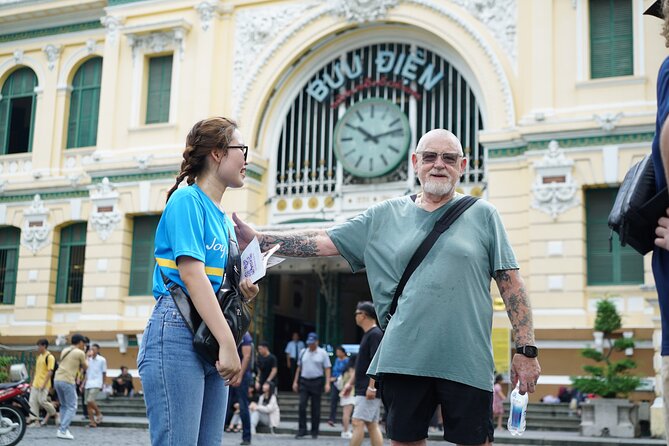
A short time later, you’re at the Saigon Central Post Office, also described as a historic building built in the late 19th century during the French colonial period.
This is one of those stops where the guide’s storytelling really helps. The building isn’t just impressive to look at—it’s a snapshot of how communication and public services were organized when the city was under colonial administration.
Again, admission here is listed as free. That’s a real value point because you’re not paying separately to see major central sights.
Vincom Center and The Last Helicopter sculpture (Stop 3)
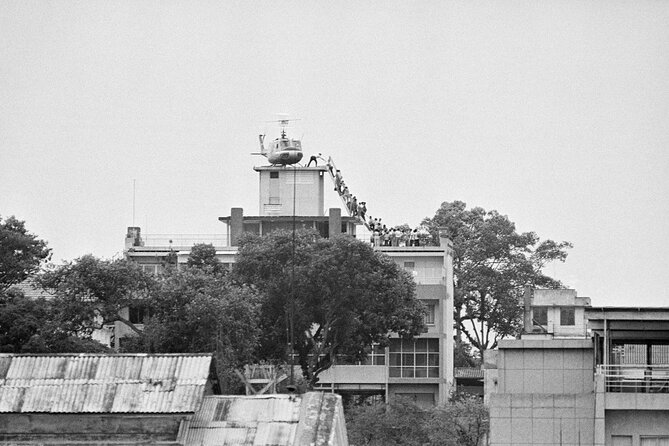
Then the tour shifts tone a bit with a memorial sculpture at Vincom Center. The stop highlights The Last Helicopter, a sculpture commemorating the end of the Vietnam War. It depicts a Huey helicopter, shown as it takes off.
What to watch for: don’t just treat it as a war prop. A guide can help you read why this kind of object gets placed in a public space—how people interpret the end of conflict now, and how memory stays visible in ordinary city life.
This stop is shorter (about 20 minutes), so it’s a “pause and absorb” moment more than a deep museum visit.




Independence Palace, also known as the Reunification Palace (Stop 4)
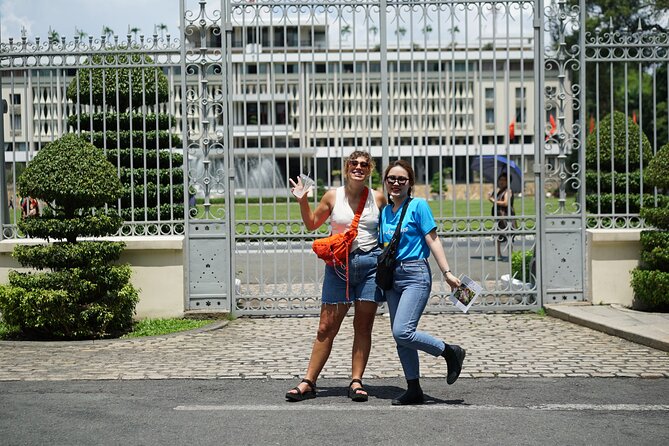
Next up is the Independence Palace—also known as the Reunification Palace. Built in the 1960s, it’s described as the home and workplace of the President of South Viet Nam.
This stop is a big one because it connects architecture with political power. You’re walking around a site that was designed for decision-making, not comfort. If your guide brings the human angle, you’ll likely come away understanding why this place matters beyond dates.
In many walks, palace stops can feel like a set piece. Here, the student-guide format can help you slow down and ask questions about what you’re looking at and how that period is talked about now.
The Venerable Thich Quang Duc Monument (Stop 5)
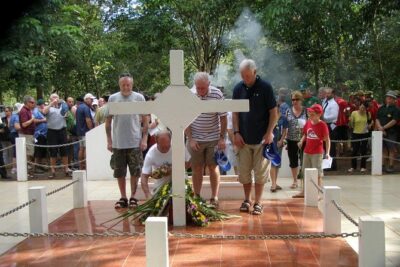
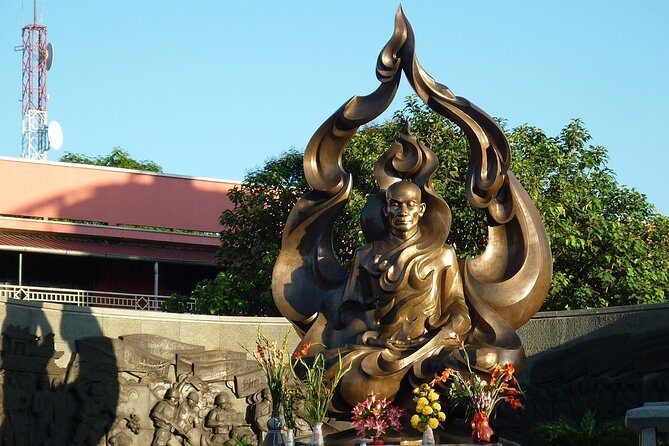
After the palace, the tour goes to the Venerable Thich Quang Duc Monument, a statue commemorating Thich Quang Duc’s self-immolation in 1963 to protest discrimination.
This stop can feel heavier than the earlier colonial-era sites. The value here isn’t entertainment—it’s context and acknowledgement. You may want to take a minute, look closely, and let your guide’s explanation land without rushing.
A considerate tip: if you’re going into the tour on a tough schedule or you’re in a headspace where emotions run high easily, keep that in mind for this portion of the route.
The Secret Weapons Cellar (Stop 6)
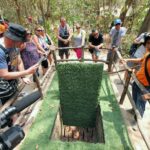
You finish at the Secret Weapons Cellar. This is the stop that many people remember. The description explains it was originally built by the Viet Cong during the Vietnam War and used as a base for guerrilla warfare and for transporting supplies and weapons without being detected.
This one lasts about 45 minutes and the admission is included. In a walking tour, that length signals it’s not just a quick photo stop. It’s a guided, longer look at how underground spaces were used during conflict.
Why it’s worth the time: it shifts the story from “official buildings and monuments” to what people needed to survive and function away from view. If your guide is good at tying details to big-picture meaning, this is where the tour’s conversation style really pays off.
And if you want a practical takeaway: this is where you’ll likely appreciate having water earlier, since you’re still on your feet and moving.
What you’re really paying for at $14 per person

At $14, this tour sits in the budget-friendly zone for central Saigon walking. The price matters less when you compare what’s actually included.
You get:
- Bottled water
- All fees and taxes
- Coffee or tea (Vietnamese coffee, ca phe sua da)
- The included stop ticket for the Secret Weapons Cellar
Plus, two big central architecture stops have free admission listed (the cathedral and the central post office).
So you’re paying mostly for guide time, direction, and context. That’s where the student-guide format becomes the value driver. A walking route with landmark photos is easy to do on your own. The difference here is the explanation style and the conversational atmosphere—plus the fact that you’re encouraged to ask questions.
Also, the tour notes group discounts and a mobile ticket. Even if you’re not traveling in a large group, a mobile ticket tends to reduce hassle on the day.
Coffee breaks and heat management: practical tips that actually help
One recurring theme with walking tours in Ho Chi Minh City is simple: it can get hot fast. In past experiences, the timing of a morning walk has been mentioned as a smart way to beat the heat.
So here’s how I’d plan for it:
- Wear comfortable walking shoes you trust on pavement and busy streets.
- Bring sun protection, because you’ll be outside between major indoor stops.
- Drink the bottled water you’re given and pace yourself during the longer segments, especially around the cellar stop.
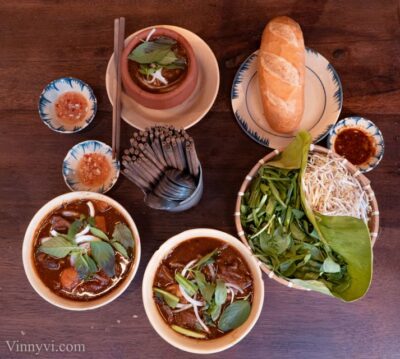
Also, the included Vietnamese coffee is not a random add-on. It’s a real break point. You’ll get a cup of ca phe sua da or tea, which can help you reset before the next set of sights.
If you’re doing other District 1 activities the same day, you’ll probably be glad you didn’t book something that requires 100% energy right after.
The guide style: what you should ask to get more out of the walk
Because this tour is designed around students talking to you, you’ll get the most if you treat it like a conversation.
Here are question types that fit what this route is trying to do:
- Ask what a stop means today, not just what happened there.
- Ask what locals notice first when they see that building or monument.
- Ask for one practical recommendation the guide would make for a short next-day plan.
Guides from prior departures—Lucy, Lily, Tyson, and Andrea—have been praised for kindness, friendliness, and taking care that the group understood the material. That usually means they’re receptive to questions, not just presentations.
If your group is small (and sometimes it can be just a couple of people), you may get extra attention and a more personal pace. That’s one of the main reasons I like the small-group setup.
Is this Saigon walking tour for you?
This is a good match if you:
- Want a structured route through District 1 landmarks
- Like asking questions and getting local perspective
- Prefer a smaller group feel over a crowded bus vibe
- Want a budget-friendly tour that includes water and Vietnamese coffee
It’s also a strong choice for visitors who want meaningful context, not just photo points—especially because the route includes the war-related sites like the Independence Palace and the Secret Weapons Cellar.
It may be less ideal if you:
- Need a very relaxed stroll with minimal walking
- Dislike heavier historical themes, since the route includes a monument connected to Thich Quang Duc’s 1963 self-immolation and a war-era underground cellar
Should you book the Joy Journeys Saigon Walking Tour?
If your goal is to get oriented in central Saigon and leave with clearer context, I’d book it. The biggest strengths are the small-group feel, the inclusion of ca phe sua da, and the fact that the tour uses conversation to connect landmarks with real human stories.
The main thing to plan for is the walking time (about 3 hours 15 minutes) and the more serious stops. If you’re okay with that, this is a high-value way to experience Ho Chi Minh City with guides who genuinely care about explaining what you’re seeing.
FAQ
How long is the Saigon Walking Tour?
The tour runs for about 3 hours and 15 minutes.
How big are the groups?
The tour is described as having a maximum of 6 travelers in the group, and the activity information also lists a maximum of 20 travelers.
What’s included in the price?
The price includes bottled water, all fees and taxes, and a coffee or tea cup of Vietnamese coffee (ca phe sua da).
Are entrance fees included for the sights?
For the cathedral and the central post office, admission is listed as free. The Secret Weapons Cellar stop includes the admission ticket.
Where does the tour start and end?
The tour starts at Joy Journeys, 30A Hồ Hảo Hớn Street, District 1, Ho Chi Minh City, and it ends back at the meeting point.
What happens if the weather is poor?
This experience requires good weather. If it’s canceled due to poor weather, you’ll be offered a different date or a full refund.