Saigon’s back alleys teach you fast. This Xom Cai walk is where you actually see daily life, with narrow alleys and apartment stairways, plus a real snack stop featuring Ha Cao. The main catch is simple: you’re walking on tight streets for about three hours, so comfy shoes matter.
What I like most is the way the guide turns ordinary places into stories. You’ll step inside a working residential building, then shift gears to Hoa Binh Market for the kind of shopping locals do every day. If you’re expecting big sights every five minutes, this one is more about routine than monuments.
A final bonus: you end at Van Phat Pagoda, a calm pocket of spirituality that feels far from the noise outside. And if the weather goes sideways, your guide may help you adjust on the move, as some guides have done in heavy rain.
In This Review
- Key things to know before you go
- Starting at the Nhà hát Thành phố Hồ Chí Minh (and why it’s a good cue)
- The apartment-block walk: seeing how Saigon lives, not just how it looks
- Ha Cao at a family-run stop: a snack, plus the food story behind it
- Hoa Binh Market: the real rhythm of shopping in Saigon
- Van Phat Pagoda: a quiet reset away from the busiest streets
- Timing and pacing: what 3 hours feels like in real life
- Price and value: is $30 for three hours actually fair?
- Practical tips that make the tour easier (and more enjoyable)
- Guides and atmosphere: why this tour feels personal
- Should you book the Xom Cai Hidden Local Life Walking Tour?
- FAQ
- How long is the Ho Chi Minh City Xom Cai walking tour?
- What language is the guide speaking?
- What is included in the price?
- Where does the tour start?
- Is transportation to and from the meeting point included?
- Is a private group available?
Key things to know before you go

- Xom Cai is a residential neighborhood, so you’ll see real apartment life, not staged street scenes
- Ha Cao snack tasting connects food to local Chinese heritage in a way that actually makes sense
- Hoa Binh Market gives you a full sensory look at what people buy for meals and daily needs
- Van Phat Pagoda is a quiet stop that balances the street noise and makes the tour feel complete
- English-speaking guides are part of what makes the tour easy to follow and enjoyable
Starting at the Nhà hát Thành phố Hồ Chí Minh (and why it’s a good cue)
The tour begins at Nhà hát Thành phố Hồ Chí Minh, the City Theatre. It’s a practical meeting spot because it’s easy to find and it gives you a sense of scale: you’re starting in a more public, central area, then heading into smaller streets where life tightens up.
From there, you move into the neighborhood on foot. That shift is part of the value. You don’t just arrive at a landmark—you get your bearings, then watch how daily routines change block by block. I like that the first part includes a short photo stop and a walk, so you can settle in before things get more intimate and side-street specific.
You can also read our reviews of more walking tours in Ho Chi Minh City



The apartment-block walk: seeing how Saigon lives, not just how it looks
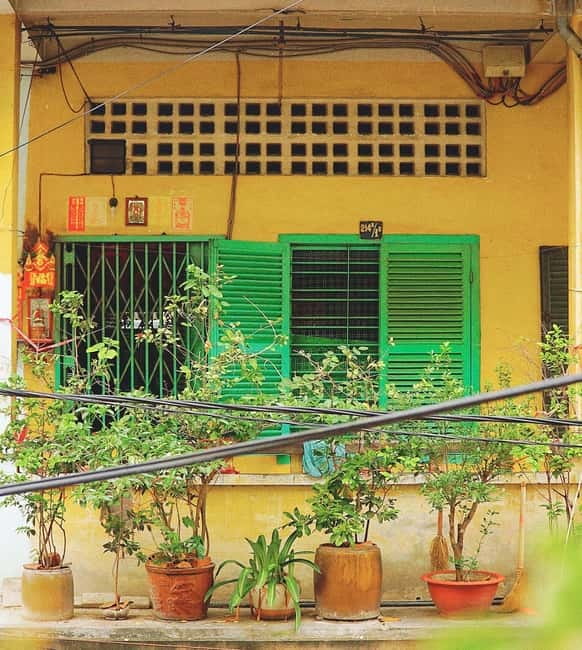
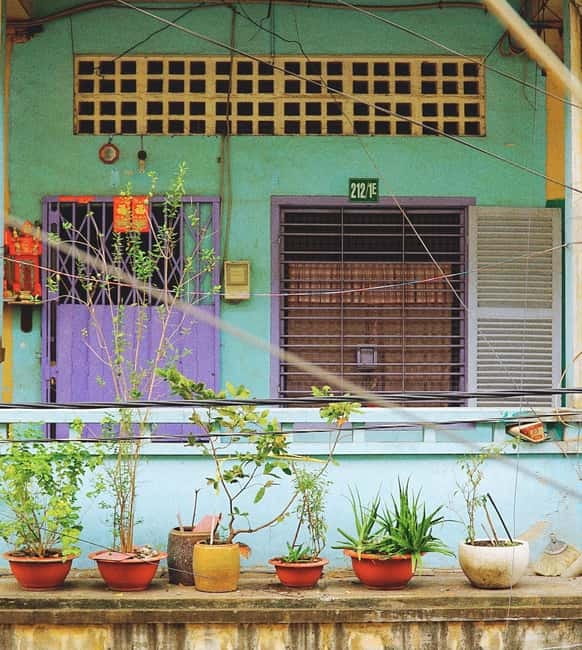
One of the best parts of this tour is how it uses narrow lanes and shared spaces to show how a city works at ground level. You’ll walk through narrow alleys and traditional apartment blocks, and your guide explains what’s happening around you: shared routines, how generations live side by side, and how everyday life fits into the urban layout.
This is where the tour becomes more than sightseeing. You start noticing things you’d miss on your own, like how people use corridors, stairways, and courtyards as extensions of their homes. Instead of treating the city as a backdrop, you learn how it functions as a home base for real families.
Is there a drawback? Yes: these lanes and building interiors can feel tight. If you’re claustrophobic, have mobility limits, or dislike close quarters, you should think twice. Also, because it’s a walking tour, your pace will follow the group. That’s great for immersion, but not for anyone who wants to roam independently.
Ha Cao at a family-run stop: a snack, plus the food story behind it
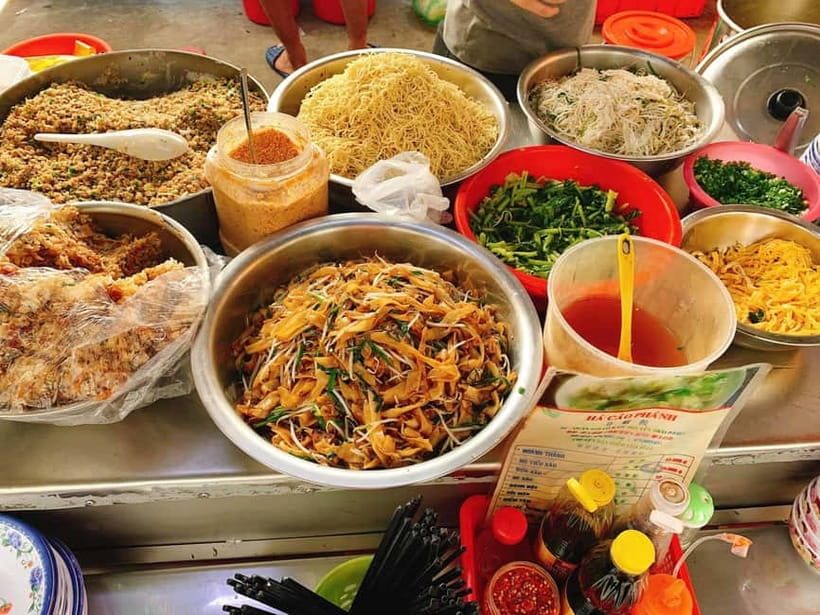
At some point you’ll slow down at a local café-style stop for Ha Cao, Chinese-style dumplings that are especially beloved in this area. This snack matters because it’s not just a taste test. Your guide explains why Chinese heritage shows up in Saigon food culture and why simple dumplings remain so popular.
You’ll also get a sense of how these small, family-run places fit into the neighborhood rhythm. These aren’t polished, high-volume “tourist dumpling spots.” They’re where locals go because the food is familiar and the process is part of everyday life—served fast, eaten casually, and discussed like normal comfort food.
In one version of the tour, the guide picked someone up on a scooter and took them to the Chinese part of town before the walk. Even if your route differs a bit, that highlights the bigger point: food here is a map. Dumplings lead you toward history you can taste, not just read.
Hoa Binh Market: the real rhythm of shopping in Saigon
Then you shift to Hoa Binh Market, one of Saigon’s most authentic local markets. This is the moment the tour starts feeling truly “on the ground.” You’ll pass stalls where locals shop for fresh food, household goods, and street snacks.
I like market stops for one simple reason: they’re efficient. In a short walk, you absorb the texture of a neighborhood—how people move, what they buy, and what’s important enough to be routine. You’ll get the sights, sounds, and rhythms of a market that doesn’t care if you’re there for photos.
A key value here is guidance. Markets can be chaotic if you don’t know what to pay attention to. Your local guide helps you read the scene, so you don’t just see stalls—you understand what you’re looking at. If you’re a foodie, you’ll appreciate that this isn’t only about eating. It’s about the full supply chain of daily life.
Van Phat Pagoda: a quiet reset away from the busiest streets

After the noise and motion of the market and streets, you end at Van Phat Pagoda. This is a peaceful Buddhist temple that sits away from tourist crowds, which is exactly why it works as an ending.
You’ll learn how spirituality remains part of everyday life in the city, and you’ll experience a sharp contrast: outside, you have traffic, people, and shopping. Inside the temple space, the mood changes.
For me, the best tours create a feeling of rhythm—action, then calm, then reflection. This stop gives you that. You’re not just collecting highlights; you’re getting a sense of balance in the city itself.
And if you’re wondering whether it’s worth it versus another market bite: yes. It changes the emotional tone of the tour. Markets teach you what people do for daily needs; temples help you understand why daily life still has room for belief and practice.
You can also read our reviews of more city tours in Ho Chi Minh City






Timing and pacing: what 3 hours feels like in real life
This tour is about 3 hours, and that length is intentional. Long enough to reach multiple types of places—apartment blocks, a snack stop, a market, and a temple—but short enough that you’re not exhausted before you get to the quieter ending.
The pacing is walking-first, then “stop and experience” rather than rapid-fire checklists. You’ll spend time on a photo stop and walk early on, then more focused time during the local café/snack moment, and a sustained period moving through the market.
Also, the tour is structured for an English-speaking group with a live guide. That helps a lot because you’ll have context while you’re actually looking at things, not after you’ve already moved on.
Who is it best for?
- People who like local neighborhoods more than monuments
- Food lovers who want the story behind a snack
- Anyone who enjoys walking and doesn’t mind tight streets
- Small groups or private groups who want a calmer, personalized pace
Who should adjust expectations?
- If your ideal tour is major tourist landmarks every step, this may feel slower and more “daily-life” focused.
Price and value: is $30 for three hours actually fair?
The tour costs $30 per person for 3 hours, with a local guide, walking, and snack tasting included. That price looks especially reasonable once you think about what’s bundled: you’re not paying only for a guide to walk you somewhere. You’re paying for interpretation—explaining daily routines in residential buildings, connecting Ha Cao to food heritage, and helping you navigate Hoa Binh Market with meaning.
You should also consider what’s not included: transportation to and from the meeting point and any meals beyond the snack tastings. If you’re staying far from the start, factor that into your total day cost.
Still, for a focused, guided neighborhood experience with food and temple access, $30 feels like solid value. In cities like Ho Chi Minh City, a private taxi or a string of short attractions can add up fast. This is a low-friction way to spend a half day learning how the city breathes.
Practical tips that make the tour easier (and more enjoyable)
Before you go, set yourself up for comfort. This walking tour includes narrow alleys, and it’s easier if you’re prepared rather than hoping you’ll be fine in whatever shoes you wore that morning.
Here’s what I’d do:
- Wear comfortable shoes with good grip
- Bring a hat and sunscreen for sun exposure
- Expect tight paths and plan to move at a human walking pace
- If it’s raining, be flexible. One guide (Henry) has helped in heavy rain by arranging taxis to keep the experience going.
One more small but important thing: if you want photos, bring a phone or camera with battery saved. You’ll likely want pictures, but the “real value” moments are the ones you experience rather than just shoot. Try to look first, then photograph.
Guides and atmosphere: why this tour feels personal
This experience is operated by VIVA VIETNAM, and the tone of the tour depends heavily on the guide. In a few different guide-led experiences, names like Vi, Henry, and Cole came up—each described as welcoming, professional, and thoughtful.
What you’re really buying is conversation quality. A good guide makes you feel like you’re walking with someone who cares about explaining the neighborhood—not just someone who recites facts. The best part is how stories and travel talk can happen naturally during snack breaks and walks.
When a guide can keep the mood friendly even in rain, it tells you something: the experience is designed to work as a human outing, not a rigid script.
Should you book the Xom Cai Hidden Local Life Walking Tour?
Book it if you want a Ho Chi Minh City experience that focuses on daily life—apartment stairways, local food routines, market shopping, and a calm temple ending. It’s a smart choice if you like getting oriented by how people actually live, not just by how big the buildings are.
Skip it (or choose a different style of tour) if:
- you dislike walking on narrow streets
- you need major landmarks at every stop
- you’re looking for long restaurant meals rather than snack tastings and short local visits
If you’re on the fence, here’s my simple test: do you enjoy seeing neighborhoods from street level, asking questions, and tasting local food in its normal setting? If yes, this is a very good use of a half day.
FAQ
How long is the Ho Chi Minh City Xom Cai walking tour?
The tour lasts 3 hours.
What language is the guide speaking?
The live tour guide speaks English.
What is included in the price?
It includes a local guide, a walking tour, and a tasting of local snacks.
Where does the tour start?
The tour starts at Nhà hát Thành phố Hồ Chí Minh (City Theatre).
Is transportation to and from the meeting point included?
No. Transportation to and from the meeting point is not included.
Is a private group available?
Yes, private group options are available.