REVIEW · HO CHI MINH CITY
The 10 Tastings of Ho Chi Minh City With Locals: Private Street Food Tour
Book on Viator →Operated by Withlocals · Bookable on Viator
Street food in Saigon beats a checklist. This private 10-tasting food walk is one of the easiest ways to learn what locals actually order, and I love how much variety you get without committing to full meals. Two big wins: the local host makes the food make sense fast, and the mix of classic Saigon dishes plus regional bites keeps things interesting. The main drawback to plan around is the walking—especially if you pick a hotter part of the day.
For around 3 hours, you’ll bounce between markets and landmark areas, trying items like steamed flour cakes with dried shrimp, nuoc mam pha–dipped dumplings, banh mi, sugar cane juice, papaya salad with beef jerky, bánh xèo, and chè. It’s also flexible: you can tailor the tastings to your tastes, and there are vegetarian alternatives if you need them.
In This Review
- Key things that make this Saigon tour worth it
- Why a private 10-tasting format works in Ho Chi Minh City
- Price and value: what you’re paying for
- Timing and heat: how to make the walking work for you
- Ben Thanh Market: steamed cakes, dumplings, and that French-era vibe
- The steamed rice-flour cakes (the first wow factor)
- Hue-style snack: tapioca dumplings in nuoc mam pha
- How Ben Thanh fits into the story
- Mariamman Hindu Temple: a pause that adds meaning
- Tao Dan Park and the banh mi moment
- Independence Palace area: cooling sugar cane juice
- Turtle Lake: the local escape for heat and a quick snack
- Saigon Square 3: papaya salad with beef jerky crunch
- Chợ Tan Định: bánh xèo and the sizzle story
- Tan Dinh Market finale: Saigon beer, chè, and a pink church moment
- Saigon beer
- Chè dessert and a coffee/tea suggestion
- Tan Dinh Church: the pink photo stop
- What your local host actually brings to the table
- Vegetarian alternatives: how well does this work if you skip meat?
- Who should book this Saigon street food tour
- Should you book this 10 Tastings of Ho Chi Minh City tour?
- FAQ
- What does the tour include?
- How long is the tour?
- How many tastings do you get?
- Is the tour private or group-based?
- Where does the tour start and end?
- Is hotel pickup included?
- Are admissions included for markets and landmarks?
- Are there vegetarian options?
- How do I receive my ticket?
- Can I cancel for a full refund?
Key things that make this Saigon tour worth it
- 10 tastings in a focused route that mixes markets with famous sights, so you get flavor and context in one go
- Local-host guidance that helps you order, eat, and understand what you’re tasting (with diet alternatives available)
- A mix of Saigon classics and regional specialties, not just the same few street-food staples
- Colonial-era flavors showing up in surprising places like banh mi and market snacks
- Hot-day friendly breaks, including cooling sugar cane juice and shady spots near landmarks
Why a private 10-tasting format works in Ho Chi Minh City
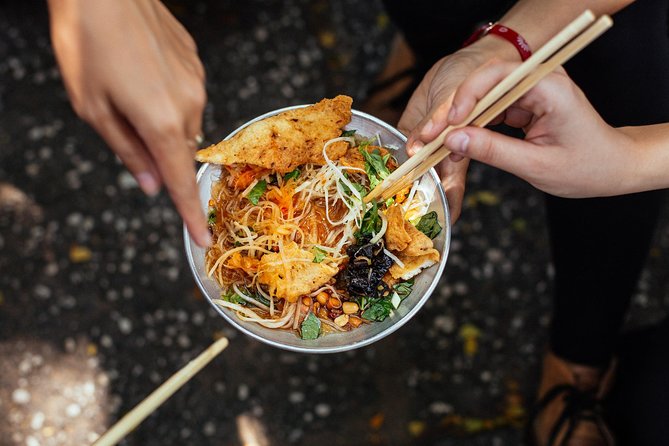
Ho Chi Minh City street food can feel like information overload. Lots of stalls, lots of smells, and a menu that might not match what you think you’re ordering. This format solves that with a simple structure: a guide leads, you taste, and you learn what matters.
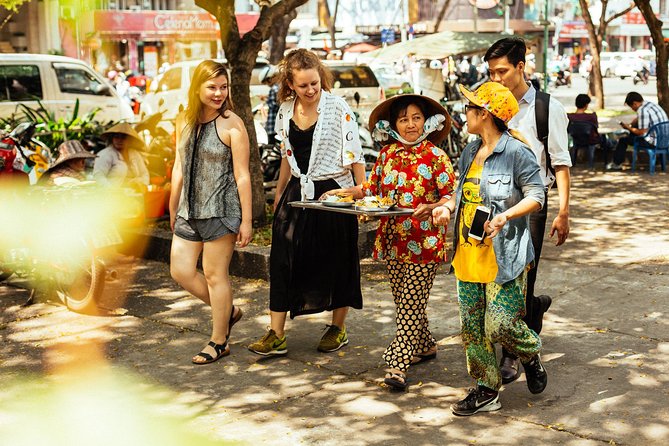
Because it’s private, the experience stays practical. You’re not squeezed into a big group schedule or stuck waiting while someone in front figures out what to do. You can go at your pace and ask questions as you go. If you’re a first-timer, it’s a fast way to understand the city’s food logic. If you’re returning, it helps you find the “order-this” items that are harder to track down solo.
The tastings also hit a nice sweet spot: you get enough quantity to feel like you ate your way through Saigon, but not so much that you spend the last half of the tour too full to enjoy it.
You can also read our reviews of more food & drink experiences in Ho Chi Minh City

Price and value: what you’re paying for
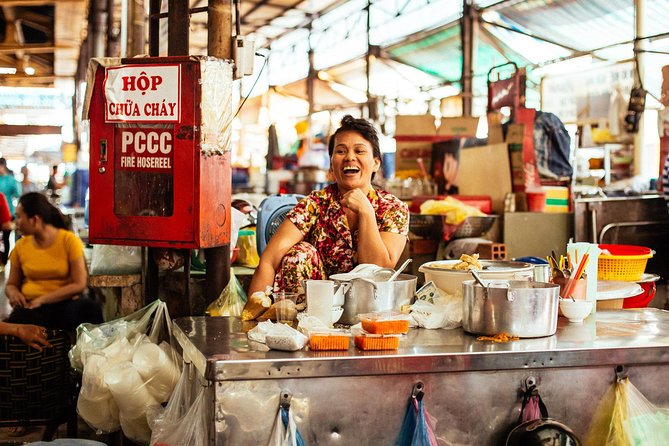
At $91.53 per person for about 3 hours, you’re paying for two things: curated tasting selection and a private local guide. Street food on your own can be cheap, but DIY doesn’t usually include the “why this is special” explanations or the confidence to order confidently when Vietnamese isn’t your first language.
Here’s what makes the value feel real:
- 10 food and drink tastings are included, so you’re not constantly wondering what will cost extra.
- Vegetarian alternatives are available, which matters because many street-food tours assume meat.
- Several stops are free admission (the market and landmark stops don’t require paid entry), so most of what you’re paying goes straight into the food portion.
One thing to keep in mind: extra food and extra drinks aren’t included. The tour gives you enough tasting food to count as your meal plan for the day, but if you keep snacking after the tour ends, you’ll pay for that yourself.
Timing and heat: how to make the walking work for you
This tour is set up like a walking food crawl through market lanes and nearby landmark areas. That’s part of the charm, but it’s also the reason heat can get intense.
The route includes a mix of shorter stops (often around 5 to 10 minutes) and longer tasting moments (around 15 minutes in a couple places). Practically, that means you’ll be standing outdoors for some time, then moving quickly between spots. If you’re sensitive to heat, I’d plan for this:
- Dress in light layers and wear shoes you don’t mind getting a little dusty.
- Bring water, even though there are drink tastings during the tour.
- If you can choose between morning and afternoon, pick the time of day that’s most comfortable for you.
This is the one “possible drawback” to acknowledge: if you hate walking in hot weather, you’ll feel it more than you would on a tour that’s mostly seated.
Ben Thanh Market: steamed cakes, dumplings, and that French-era vibe
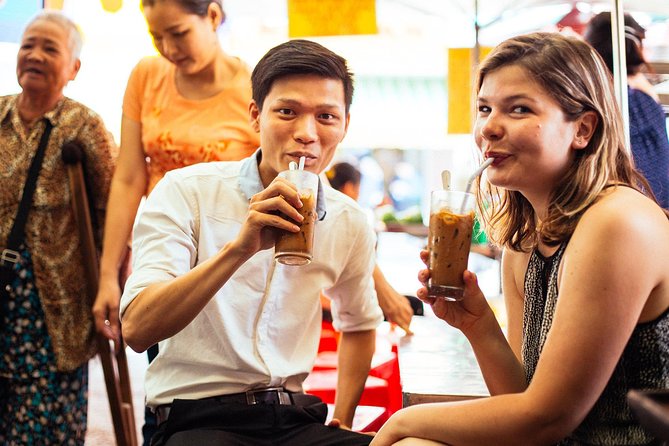
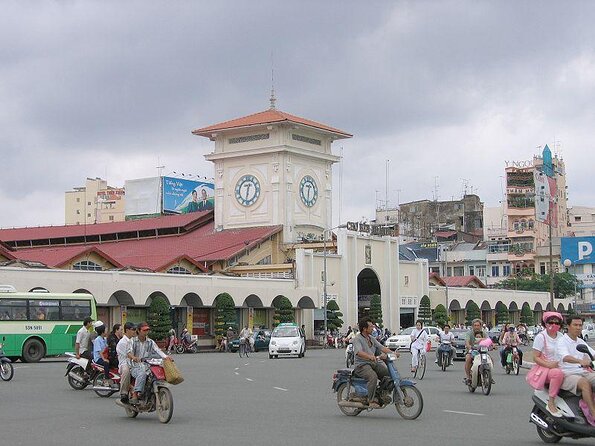
Your tour starts at Đường Lê Lai in District 1, then moves into Ben Thanh Market. Ben Thanh is one of those places where you can get lost fast. Having a guide here is the difference between randomly picking snacks and actually tasting the right things.
The steamed rice-flour cakes (the first wow factor)
Early on, you’ll try a bite of steamed flour rice cakes with dried shrimp. The English translation given is “water fern cakes.” What matters on the ground is texture and flavor. These are not just a filler snack; they’re delicate and savory, and the shrimp flavor gives them a deeper, umami-heavy base.
Tip: when you taste something like this, slow down. These are the kinds of dishes where the point is the balance—soft cake plus salty shrimp plus whatever dipping sauce you get.
You can also read our reviews of more tours and experiences in Ho Chi Minh City



Hue-style snack: tapioca dumplings in nuoc mam pha
Next comes a more distinctly flavored bite: shrimp and pork tapioca dumplings dipped in nuoc mam pha. This sauce is a mix of fish sauce, vinegar, shrimp stock, sugar, water, and fresh chiles.
This is one of the best moments on the tour for understanding Vietnamese flavor design. It’s not just salty. It has sweet, sour, savory, and chili heat moving together. If you like sauces, you’ll like this stop.
How Ben Thanh fits into the story
Ben Thanh is also described as having a French background. You don’t need to be a history fan to appreciate it—what shows up in food is the way French culinary influence lingers in later Vietnamese staples. That leads directly to what you eat next at the park and beyond.
Mariamman Hindu Temple: a pause that adds meaning
After the market, you visit Mariamman Hindu Temple, tied to the Hindu goddess Mariamman. The temple was built in the early 20th century by the Tamil community.
Why this matters on a food tour: it’s a reminder that the city isn’t only about one culture layer. Saigon is layered by many communities, and temples like this are a visible snapshot of that. The stop is short, so don’t expect a long sit-down. Instead, it’s a quick context break between snack phases.
Tao Dan Park and the banh mi moment
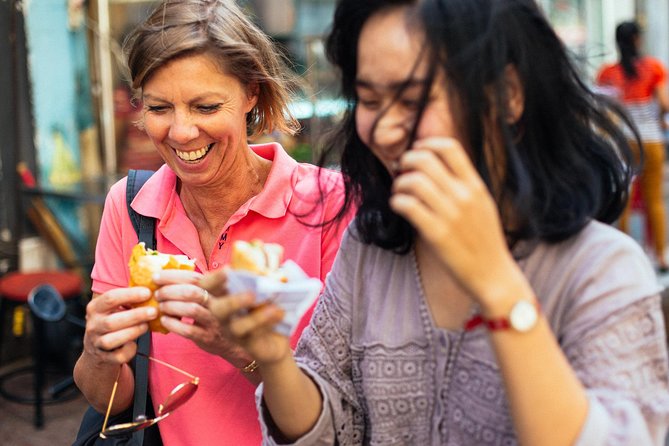
Near Tao Dan Park, you’ll get a classic tasting: banh mi. This is the one that most people recognize, but what makes it worth tasting on a guided route is how you get the right combination and the right order of bites.
You’ll learn why banh mi is often linked to Vietnam’s colonial past: it uses a crunchy French baguette with fillings like pork, pate, and a changing set of fresh vegetables. On the street, the difference between a good banh mi and a great one is how well the bread stays crisp and how the filling layers work together.
This is also a good time to slow down and notice balance. The baguette brings snap. The pate brings depth. The vegetables bring brightness. If you’re prone to ordering the easiest thing on a menu, a guide helps you choose the version that hits all those notes.
Independence Palace area: cooling sugar cane juice
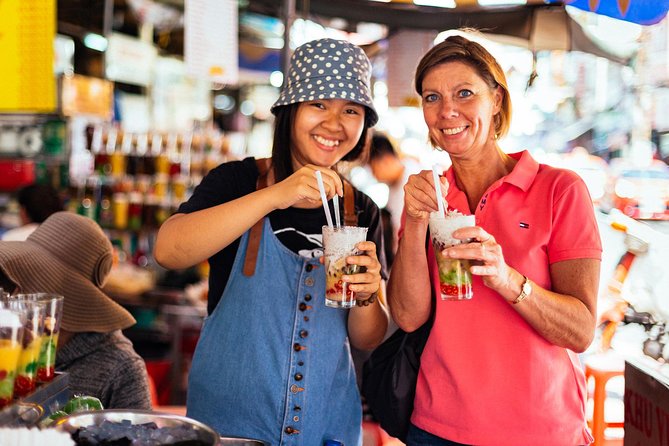
Near Independence Palace (also known as the Reunification Palace area), you stop at a street vendor for fresh sugar cane juice.
This tasting is simple, but it’s a smart move in a walking itinerary. Sugar cane juice cools you down and recharges you for the next set of outdoor stops. It also adds variety—so the tour isn’t only about fried and savory foods.
If you’re someone who likes drinks that feel like a real food item, not just hydration, this is the one you’ll remember.
Turtle Lake: the local escape for heat and a quick snack
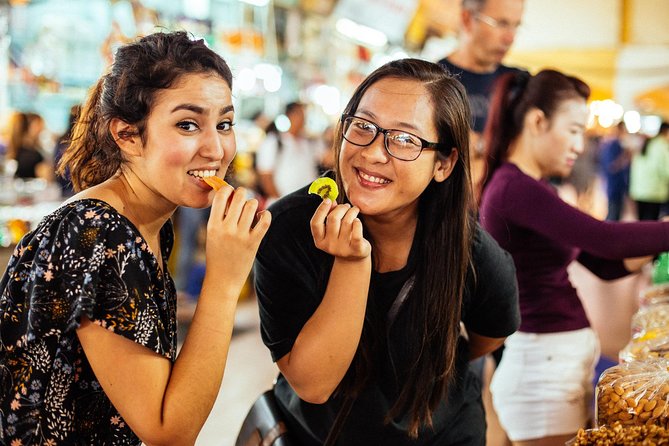
You then head to Turtle Lake. This is described as a historic place where local life mixes with culture, and it’s also a go-to spot for younger Saigonese to escape the heat and grab a snack.
The stop itself is brief, but it’s a useful change of pace. Instead of only eating inside market lanes, you get a glimpse of how people actually use public space in the city. When you return from a walk into the comfort of shade, you understand why food in Saigon is part of daily life, not just a tourist activity.
Saigon Square 3: papaya salad with beef jerky crunch
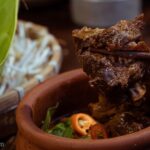
Next up: Saigon Square 3. Here you’ll try a salad that blends sweet and spicy in one plate—young papaya with a sour-sweet spicy sauce, topped with roasted peanuts, Vietnamese basil, shrimp cracker, and beef jerky.
This is the tasting that turns a basic salad into a full-on flavor event. The papaya brings crunch. The sauce brings that sweet-sour-spice edge. The peanuts and shrimp cracker add texture. The beef jerky adds a smoky-salty chew that makes the whole thing feel more complete than a typical side dish.
If you love contrast in food—sweet against sour, crunchy against chewy—this is a must-pay-attention stop.
Chợ Tan Định: bánh xèo and the sizzle story
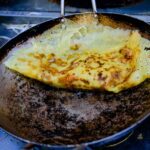
Later in the tour you reach Chợ Tan Dinh (Tan Dinh Market). This is where you get bánh xèo, a pancake named after the loud sizzling sound it makes when the batter hits the hot skillet.
The “sizzle” name is more than a fun fact. It points to the technique and the sound that comes with fresh cooking. When you taste bánh xèo, you’re tasting crispy edges plus soft interior flavors, usually balanced with savory components and whatever herbs and dipping sauce the vendor pairs it with.
This stop is about the food itself, but it’s also about learning how street cooking works in real time—how fast it moves, how fresh it is, and why you shouldn’t treat it like a casual takeout item.
Tan Dinh Market finale: Saigon beer, chè, and a pink church moment
In the Tan Dinh area, the tour keeps the energy going with both drink and dessert.
Saigon beer
You’ll sip a local Saigon beer brewed in Vietnam and produced by traditional fermentation methods. If you like beer with a food meal, this is a smart pairing. It’s also a nice reset after the heat and savory bites.
Chè dessert and a coffee/tea suggestion
For something sweet, you’ll try chè, described as a dessert made with kidney beans, jelly, and coconut cream. Then there’s an option to grab Vietnamese coffee or tea as your host shares more food recommendations.
Chè is the kind of dessert that feels like a bowl of comfort, not a tiny sweet trinket. It’s the perfect ending because it cools you down and balances out all the salty and spicy flavors from earlier.
Tan Dinh Church: the pink photo stop
Finally, you visit Tan Dinh Church, the famous pink church. This is brief, but it gives you a clean visual memory to pair with the food you just ate.
What your local host actually brings to the table
The standout value here is how the guide helps you connect dots. You’re not only tasting; you’re learning what to look for and what to notice.
One example: Vietnamese food isn’t just about flavor. It’s about sauce logic. The dumplings dipped in nuoc mam pha are a great case study in how Vietnamese cuisine builds layers. Another is the papaya salad, where sauce and toppings are doing different jobs at the same time.
Also, guides bring practical language help. When you’re told what an item is and what it’s supposed to taste like, you can make better choices on your next meals too.
If you’re lucky with your guide, you’ll get even more color. One host name that comes up is Spring, known for clear English and strong cultural food explanations. That kind of communication quality matters because it changes the tour from eat-and-go into a real learning experience.
Vegetarian alternatives: how well does this work if you skip meat?
The tour includes vegetarian alternatives, and it also notes that alternatives are offered for those with dietary restrictions. That’s a big deal on street-food tours, where meat can show up in sauces and toppings even when the main item looks plant-based.
In practical terms: don’t assume you’ll get a vegetarian version of every dish without asking. But the tour does provide alternatives, so you have a chance to keep the tasting count meaningful.
If you have strict restrictions, tell your guide at the start so they can adjust what you eat.
Who should book this Saigon street food tour
This is a strong match if:
- You want 10 tastings in one tidy 3-hour window.
- You like markets, street vendors, and a guided route through recognizable areas like Ben Thanh and Independence Palace.
- You want a local’s food context, not just a list of what to eat.
It may not be your best pick if:
- You dislike walking in heat and need minimal outdoor time.
- You already feel confident ordering street food solo and want a self-guided plan.
- You’re only interested in one cuisine style and aren’t open to mixing regional snacks, colonial-era flavors, and desserts.
Should you book this 10 Tastings of Ho Chi Minh City tour?
If you’re in Ho Chi Minh City for a short time and you want the fastest path to understanding Saigon food, this tour is a good bet. The price makes sense because you’re not just buying food—you’re buying a private guide to steer you through Ben Thanh Market, show you why the sauces and textures work, and keep the tasting flow manageable.
Book it if you can handle a few outdoor walks and you want structure. Skip it if heat and walking are deal-breakers for you. If you do book, your best move is choosing the departure time that’s most comfortable for your body, then showing up ready to taste slowly and ask questions.
FAQ
What does the tour include?
The tour includes a private local guide, 10 food and drink tastings, and vegetarian alternatives.
How long is the tour?
It lasts about 3 hours.
How many tastings do you get?
You’ll get 10 tastings during the tour.
Is the tour private or group-based?
It’s private. Only you and your local guide participate.
Where does the tour start and end?
It starts at Đường Lê Lai, Bến Thành, Quận 1, Hồ Chí Minh, Vietnam and ends back at the meeting point.
Is hotel pickup included?
No. Hotel pickup and drop-off are not included.
Are admissions included for markets and landmarks?
The listed stops show free admission for the areas visited during the tour.
Are there vegetarian options?
Yes. Vegetarian alternatives are included, and alternatives are offered for dietary restrictions.
How do I receive my ticket?
The tour uses a mobile ticket.
Can I cancel for a full refund?
Yes. You can cancel for a full refund if you cancel up to 24 hours in advance of the experience’s start time.