REVIEW · HO CHI MINH CITY
Saigon City Sights & War Remnant Museum on Scooter
Book on Viator →Operated by Vietnam Exploring Tour · Bookable on Viator
Saigon history rolls past your handlebars. This scooter tour strings together spiritual sites and hard history in a way bus tours usually can’t manage, with stops like the Jade Emperor Pagoda and the War Remnants Museum.
What I like most is the pacing and storytelling, and I also appreciate how you end with real food instead of just photos. A good heads-up: the war-focused museum content can be emotionally heavy, and scooter time on busy streets isn’t for everyone.
I especially liked how the ride feels personal, not scripted. Guides such as Vy and Kieran came across as friendly and sharp on details, and I found that questions get answered, even if you’re new to scooters. The other big win for me was the food: you get an included meal, often ending with Bún Bò Huế, and one review even praised how the tour works for vegetarians.
One possible drawback to consider is that the schedule packs in several short stops (often 20–30 minutes). If you hate rushing, or if you know you’ll feel uneasy riding a scooter, you may want to balance expectations and bring extra patience for city traffic.
In This Review
- Key things I’d pay attention to
- Scooter Touring in Ho Chi Minh City: what you’re signing up for
- War Remnants Museum: the part that changes how you read Saigon
- Jade Emperor Pagoda and Thích Quảng Đức: spirituality with a story behind it
- Nguyen Thien Thuat apartment buildings: watching Saigon live
- Ho Thị Kỷ flower market and traditional medicine street: commerce you can smell
- Chinatown area stops: Phố Tau and Chợ Lớn for food-and-faith geography
- Tunnels and resistance exhibits: connecting the dots after the museum
- The included meal and Bún Bò Huế: where the tour gets to breathe
- Price and what $22 really buys you
- Who should book this and who should skip it
- Should you book this Saigon scooter sights and war museum tour?
- FAQ
- How much does the scooter tour cost?
- How long is the experience?
- Is hotel pickup and drop-off included?
- Are scooters and safety gear provided?
- Do I need to pay for the War Remnants Museum?
- What food is included?
- Are tickets mobile?
- Is the tour private?
- What’s the cancellation policy?
- Does the tour require certain weather?
Key things I’d pay attention to
- Safety and confidence on scooters: You get a helmet and raincoat, and guides drive in a way that helps first-timers feel steadier.
- War Remnants Museum, with context: You’re not just walking rooms; you’re learning what the exhibits are trying to prove and remember.
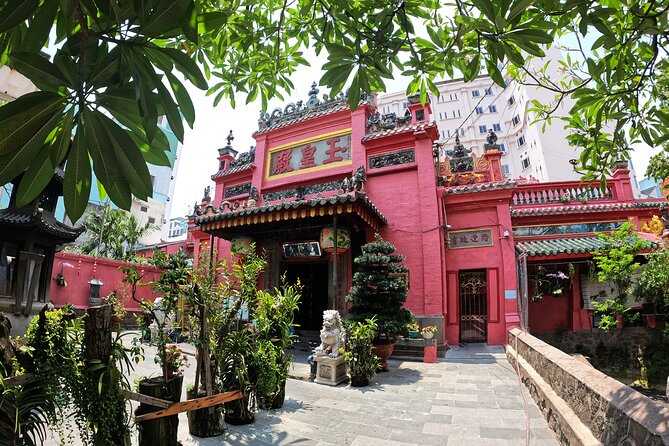
- Pagodas and memorials aren’t just scenic: The Jade Emperor Pagoda and the Thích Quảng Đức monument are treated with care and explanation.
- Local markets and street life: Ho Thị Kỷ flower market and Chinatown-area streets show how Saigon actually trades every day.
- A food payoff at the end: The included meal is a chance to slow down and taste Saigon, not just collect stamps.
- Free time is limited: Most stops are quick, so come with curiosity, not a need to linger.
Scooter Touring in Ho Chi Minh City: what you’re signing up for
If you’re picturing a quiet sightseeing walk, switch that idea. You’ll be on a scooter with pickup and drop-off, plus a guide and the gear you need for the ride. The tour provides a scooter, helmet, and raincoat, and it runs about 4 hours.
This is a practical way to see a lot of Saigon without burning hours in traffic gridlock on foot. The trade-off is that you’re moving with the city rhythm. You don’t control the turns, and you’ll need to stay relaxed and follow your guide’s lead. In one review, someone said it was their first time on a scooter and they were nervous, but the guide drove like a pro.
So here’s the consideration: if you get motion-sick easily, or you’re uncomfortable with helmets and close traffic, this may feel stressful. Also, the experience requires good weather, so if conditions aren’t right, you might be offered a different date or a refund.
You can also read our reviews of more city tours in Ho Chi Minh City



War Remnants Museum: the part that changes how you read Saigon
The tour includes admission to the War Remnants Museum, with about 30 minutes at the site. This isn’t a “look and leave” stop. The museum focuses on evidence and consequences of the war of aggression against Vietnam.
What I like about pairing this with scooter city stops is that the history doesn’t sit in a sealed-off building. You’re learning how the past presses into neighborhoods, faith spaces, and public memory. That matters because Saigon is a layered city: you’ll see people living their lives right alongside reminders of what happened.
The drawback is emotional weight. Even when you’re prepared, the exhibits can land hard. I’d treat this part like a priority, not a checkbox. If you’re sensitive to graphic or politically intense content, plan for slower breathing and give yourself time to decompress after.
Jade Emperor Pagoda and Thích Quảng Đức: spirituality with a story behind it

Before you reach the museum, you’ll visit Chùa Ngọc Hoàng (Jade Emperor Pagoda), with free admission and about 30 minutes there. The tour also stops at the Thích Quảng Đức Monument, where you’ll get about 20 minutes and free entry.
Here’s what makes these stops meaningful rather than just photogenic: you’re not only seeing ornate religious space. You’re getting the background that helps the scenes make sense. The Thích Quảng Đức story, tied to a monk’s act of self-immolation as protest against religious persecution, is the kind of moment that reshapes how you understand faith under pressure.
I’d suggest you go in with respect for the atmosphere. Keep your voice low, be mindful where you stand or walk, and ask your guide what you should notice first. If you’re the type who likes learning the “why” behind what you see, these two stops are a strong match.
Nguyen Thien Thuat apartment buildings: watching Saigon live
One of the more fascinating stops is Nguyễn Thiện Thuật Apartment Buildings, with about 20 minutes. It’s described as a bustling street area in District 3, known for its lively atmosphere and diverse culinary scene.
This isn’t a monument or a museum. It’s people, daily routines, and the way Saigon’s streets keep functioning. The value here is perspective. Instead of treating Vietnam as a set of attractions, you start noticing how neighborhoods are built for life—markets, casual food, movement, and neighbors crossing paths without fanfare.
The consideration: because it’s an active area, it may feel crowded or noisy. Keep your expectations realistic. Think “short orientation to real street life” rather than “deep neighborhood study.”
Ho Thị Kỷ flower market and traditional medicine street: commerce you can smell
Saigon runs on markets, and this tour gives you a look at two very different sides of trade.
First is the Ho Thị Kỷ Flower Market (Chợ Hoa Ho Thị Kỷ) in District 10, with about 30 minutes and free admission. Second, the tour also includes the traditional medicine street of Hải Thượng Lãn Ông. Even without getting too technical, you can feel how these places work: goods arrive, people bargain, and knowledge moves through conversations, not just signage.
Why I like this combo: flowers and medicine both tell you something about culture. Flowers show seasonal rhythms and ceremony. Medicine street life reflects how people treat health with local practices.
Quick practical note: these markets can be busy, and sidewalks may not be wide. If you’re sensitive to strong smells or crowded conditions, be ready for that reality and keep an easy pace.
You can also read our reviews of more museum experiences in Ho Chi Minh City






Chinatown area stops: Phố Tau and Chợ Lớn for food-and-faith geography
You’ll spend time in Saigon’s Chinatown, including Phố Tau Sai Gon (Chợ Lớn, Quận 5) and Chợ Lớn proper. Each of these stops is about 30 minutes, and the tour keeps admission free for the city-area stops listed.
The idea isn’t only to show you streets that look different from District 1 or the main tourist routes. It’s to help you understand how communities layer over each other—Chinese and Vietnamese influences show up in the neighborhood layout, and you’ll see religious sites like temples and clan houses mentioned as part of the area’s identity.
If you like walking into a district and letting it teach you its own logic, this portion works well. It’s also a good chance to observe how Saigon’s cultural mix still shows up in everyday life.
The drawback again comes down to time: you’ll get a taste, not an all-day immersion. Still, the scooter format makes it easier to cover ground without getting lost.
Tunnels and resistance exhibits: connecting the dots after the museum
One stop focuses on underground tunnels and includes exhibits about the history of Vietnamese resistance, including stories of bravery and sacrifice. It’s about 30 minutes, and admission is listed as free for this part of the schedule.
This is a smart bridge. The War Remnants Museum provides the big-picture explanation and evidence. The tunnels stop adds the physical reality of survival and strategy—how resistance used the city’s geography when above-ground options were too dangerous.
If you’re curious how Saigon’s built environment became part of wartime survival, you’ll likely enjoy this connection. If you’re easily overwhelmed, you may want to pause between stops, grab water, and reset your head before continuing.
The included meal and Bún Bò Huế: where the tour gets to breathe

This is a street-food style tour built around a guided meal. It includes one meal and a drink, and it’s described as a breakfast-and-streetfood combination within the tour format.
The standout is that the experience often ends with an authentic bowl of Bún Bò Huế. That matters because Huế-style beef noodle soup carries flavor and technique you won’t get from a random convenience meal. You also get a chance to sit down after motion and crowds.
A big plus from the reviews: the tour can accommodate dietary needs. One review specifically called it great for vegetarians, and the guide team was praised for being helpful. If you have allergies, the booking note asks you to tell the operator, so you should do that upfront.
Also, bring realistic expectations. This is not a fine-dining tasting menu. It’s meant to taste like real Saigon.
Price and what $22 really buys you
At $22 per person, the value comes from the package deal. You’re not only paying for the sights. You’re paying for pickup and drop-off, a scooter with an English-speaking guide, helmet and raincoat, a meal and drink, plus War Remnants Museum admission included.
It’s also booked far ahead on average, around 56 days, which usually means the company’s schedule fills up. If you know your dates, this is one of those experiences where booking early helps you avoid “maybe we can fit you in” stress.
The best way to judge value here is to think in totals: transport + guide + meal + one paid admission. If you were doing this on your own, you’d likely pay multiple separate costs and spend more time figuring out routes.
Who should book this and who should skip it
You’ll probably love this tour if you want Saigon’s story told through a mix of faith, neighborhood life, markets, and war remembrance, and you’re comfortable riding a scooter with a guide.
It’s a strong pick for first-time visitors who want structure but don’t want a giant bus group. Reviews repeatedly mention guides like Vy, Ethan, and Kieran for energy, friendly explanations, and safe, confident driving. Families also seem to do well, with at least one review mentioning kids riding along.
Skip it (or rethink it) if:
- you can’t handle scooter riding or tight city traffic
- you’re not okay with emotionally heavy content at the War Remnants Museum
- you strongly prefer long time at fewer places
Should you book this Saigon scooter sights and war museum tour?
My take: yes, if you want Saigon in context, not in boxes. The smart combination of pagodas, Chinatown streets, markets, tunnels, and the War Remnants Museum gives you a storyline you can actually carry in your head after the ride ends. And the included meal means the tour doesn’t stop at facts.
Book it when you can commit to the idea that some stops are short and that the museum part is serious. If that fits your travel style, you’re likely to find this one memorable for both its sights and its street-level feel.
FAQ
How much does the scooter tour cost?
It costs $22.00 per person.
How long is the experience?
Plan for about 4 hours.
Is hotel pickup and drop-off included?
Yes. Hotel pickup and drop-off are included.
Are scooters and safety gear provided?
Yes. The tour includes a scooter, helmet, and raincoat.
Do I need to pay for the War Remnants Museum?
War Remnants Museum admission is included in the tour.
What food is included?
You get one meal and a drink included, and the tour is described as ending with Bún Bò Huế.
Are tickets mobile?
Yes, the tour uses a mobile ticket.
Is the tour private?
It’s private in the sense that only your group participates.
What’s the cancellation policy?
You can cancel for a full refund up to 24 hours before the experience starts. Less than 24 hours before means no refund.
Does the tour require certain weather?
Yes. It requires good weather; if canceled due to poor weather, you’ll be offered a different date or a full refund.