REVIEW · HO CHI MINH CITY
Bean to bar Chocolate Workshop in Ho Chi Minh City
Book on Viator →Operated by Ban Cacao - Vietnamese chocolate maker · Bookable on Viator
Chocolate can start in the pod.
This bean-to-bar workshop turns the whole process into something you can see and do, from cacao pods to a finished chocolate bar. I especially like how it’s taught as a Vietnam-focused craft at Ban Cacao, using local cacao ingredients and explaining the steps like a real workshop, not a slideshow.
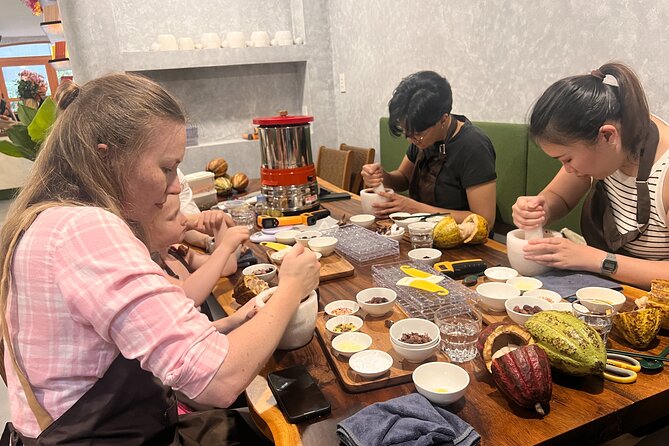
You also get the best kind of participation: hands-on work. You’ll husk your own cacao beans and grind cacao paste the traditional way with a granite mortar, then shape and decorate your own bar with the tools and materials used in real chocolate making.
One thing to consider is the effort level. The grinding part can feel tiring, especially for younger kids, so it’s a better fit for families who are okay with a bit of manual work over a 2-hour session.
In This Review
- Key things I’d plan around before you go
- Where bean-to-bar meets Saigon hands-on craft
- The cacao pod stage: tasting comes before chocolate
- Husking your own cacao beans (and why it’s the real work)
- Grinding cacao paste the traditional way with granite
- From cacao paste to your chocolate bar (molding and finishing)
- What’s the drink, and when do you get it?
- Price and value: is $32 fair for this much hands-on work?
- Small group energy and the 2-hour pace
- Who should book this chocolate workshop in Ho Chi Minh City?
- Practical tips to get more from the workshop
- Should you book Ban Cacao’s bean-to-bar workshop?
- FAQ
- How long is the bean-to-bar chocolate workshop?
- What does the class include?
- Where does the workshop start?
- How much does it cost?
- Is there a maximum group size?
- What tools and materials are used?
- Do you get to take chocolate home?
- Is there a drink included?
- Is it suitable for children?
- What’s the cancellation policy?
Key things I’d plan around before you go
- Pod-to-bar instruction in plain language focused on cacao and chocolate making in Vietnam
- Fresh cacao pod tasting so you experience raw cacao before it becomes chocolate
- Traditional grinding on a granite mortar (hands-on, slower, and very real)
- You mold and decorate your own bar and take it home with wrapping paper
- Small group size with a maximum of 10 people for a more personal pace
- Hot or iced chocolate drink included, plus a workshop flow that doesn’t feel rushed
Where bean-to-bar meets Saigon hands-on craft
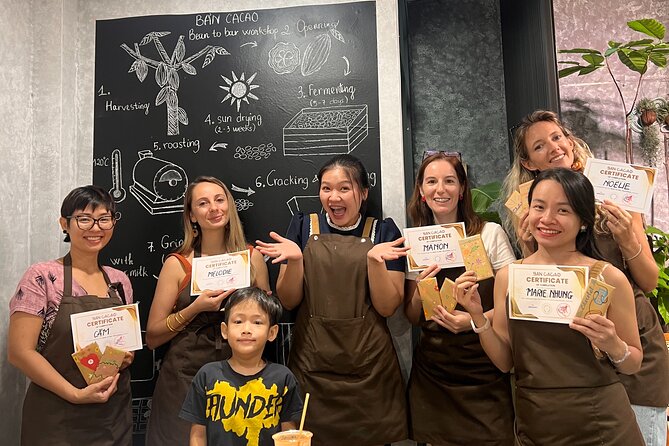
If you like experiences that teach by doing, this Ban Cacao workshop is hard to beat. It’s held at the store of Ban Cacao, a Vietnamese chocolate maker making chocolate from local cacao. You’re not just watching chocolate magic happen—you’re going step-by-step through turning cacao into chocolate.
The session runs about 2 hours, and the format stays practical. You’ll move through multiple stages: tasting, husking, grinding into cacao paste, and finally making a chocolate bar that you decorate and wrap to take home. With a small group (up to 10 people), it’s easier to keep the energy up and get help when you need it.
Location-wise, it’s in District 1, starting at 89/14 Hàm Nghi. It’s also near public transportation, which matters in Ho Chi Minh City when you don’t want to gamble on timing.
You can also read our reviews of more city tours in Ho Chi Minh City



The cacao pod stage: tasting comes before chocolate
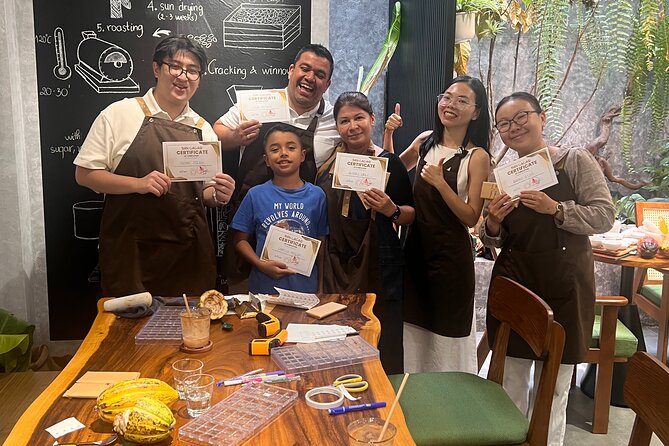
The workshop starts by grounding you in cacao itself. You’ll get an explanation of the pods-to-bars process and the history of cacao in Vietnam, including how Vietnamese chocolate making uses local ingredients. It’s not just “cacao to chocolate,” either—the goal is to help you understand the logic behind each step.
Then comes the part I think most people remember: tasting the fresh cacao pods. That early taste matters because it sets expectations. Once you’ve tasted cacao at the pod stage, everything after feels more connected. It’s easier to appreciate why the beans need husking, why paste texture matters, and why chocolate flavor develops through processing rather than existing already in the pod.
Husking your own cacao beans (and why it’s the real work)
One of the most satisfying parts is that you husk your own cacao beans. This is where the workshop becomes more than instructional—this is the “hands are part of learning” stage. The beans are inside the cacao fruit, and husking is the first step that turns a raw ingredient into something usable for making paste and ultimately chocolate.
Why this stage is valuable: it shows you what chocolate makers deal with before anything goes into a mold. It’s easy to think of chocolate as a finished product behind glass. Husking pulls you back to where flavor starts and where preparation begins.
Practical note: husking takes time and focus. It’s not hard, but it’s hands-on. If you’re bringing kids, this is where their patience gets tested first—especially for children used to quick games rather than slow craft work.
Grinding cacao paste the traditional way with granite
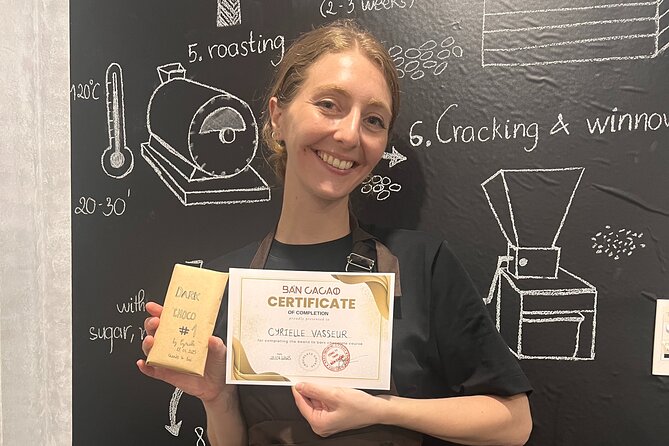
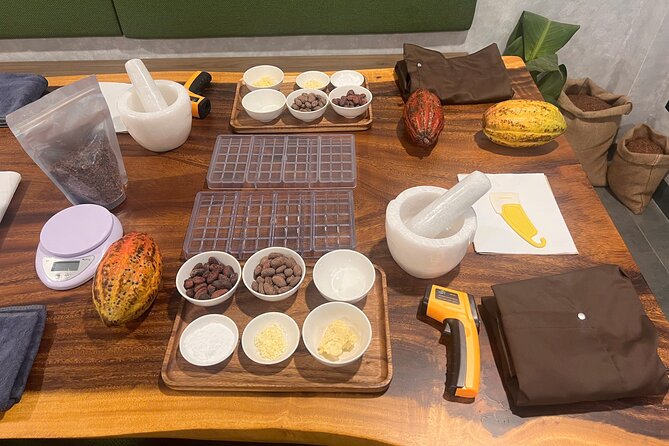
Next you’ll make cacao paste using a traditional style granite stone mortar. The workshop includes the tools you need—like the granite mortar and a thermometer—and you’ll also use a scale as part of the chocolate making process.
This stage is worth the price all by itself if you like food craft. You see the texture change as you grind. You understand that chocolate making isn’t only about ingredients—it’s also about physical processing: breaking things down, changing texture, and getting the paste to a working consistency.
Also, you’ll likely feel the pace. Because grinding is slower than modern machinery, the workshop naturally stretches into real craft time. That’s part of the charm, but it’s also why younger kids may find it tiring. A small amount of effort is built into the experience, and that’s exactly what makes it memorable.
From cacao paste to your chocolate bar (molding and finishing)
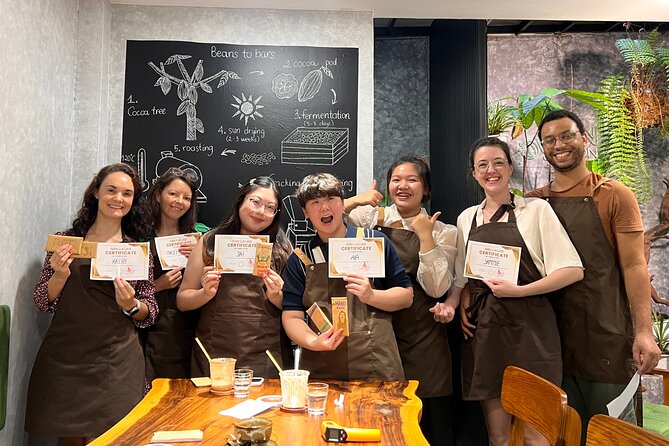
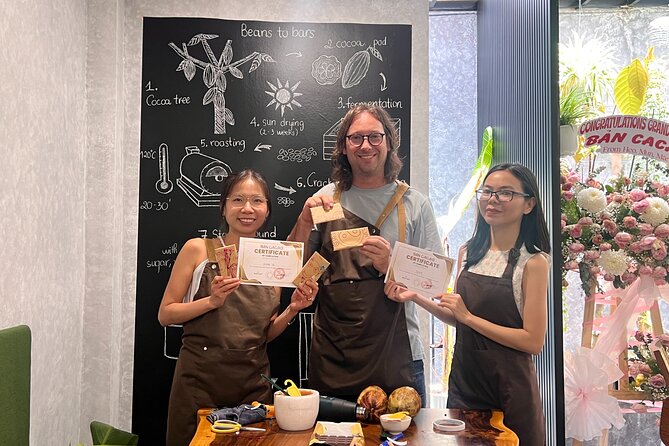
After cacao paste, the session moves into shaping your chocolate. You’ll make your own chocolate bar from the first step to the final bar, and you’ll use tools like a chocolate mold, plus wrapping paper so you can take your creation home.
There’s a satisfying logic to the workflow: once you’ve made paste, you understand what you’re molding. And when you decorate the bar, it feels earned. You’re not simply choosing from a display—you’re making something and personalizing the final look.
In fact, the “decorating the wrapper” part is one of the best practical souvenirs. The experience includes taking your decorated chocolate and wrapper home, which turns the workshop output into something more fun than a plain snack.
And yes—some classes end with more than one bar to take home, so you might want to plan for sharing if your group has strong opinions about tasting.
You can also read our reviews of more drinking tours in Ho Chi Minh City




What’s the drink, and when do you get it?
The class includes tastings and a drink. In the format described, you get to try fresh cacao pods, and you’re also served a drink each—either hot or iced chocolate, which fits the workshop mood nicely.
Timing-wise, the drink helps break up the “hands to materials” rhythm. You do raw ingredient tasting and physical work, and then you get a chocolate drink that connects what you’re learning to what you’re enjoying. It’s the kind of pairing that makes the session feel complete, not just educational.
Price and value: is $32 fair for this much hands-on work?
At $32 per person, this workshop feels like a reasonable value for what you actually do. You’re paying for a structured 2-hour experience that includes:
- Step-by-step instruction on cacao and chocolate making in Vietnam
- Tasting fresh cacao pods
- Husking cacao beans
- Grinding paste with a granite mortar
- Making and molding a finished chocolate bar
- Decorating and wrapping your bar to take home
- A drink (hot or iced chocolate)
What makes it feel like good value is the “from start to finish” nature. A lot of food tours teach, but don’t let you touch every stage. Here, your hands are involved in multiple steps, and you leave with the result.
Also, the small group size (max 10) helps keep the experience personal. When you’re paying for a hands-on class, crowding is the enemy. This setup doesn’t pretend to be a production line.
If you’re trying to pick one “food craft” activity in District 1 that isn’t just tasting samples, this is a strong contender.
Small group energy and the 2-hour pace
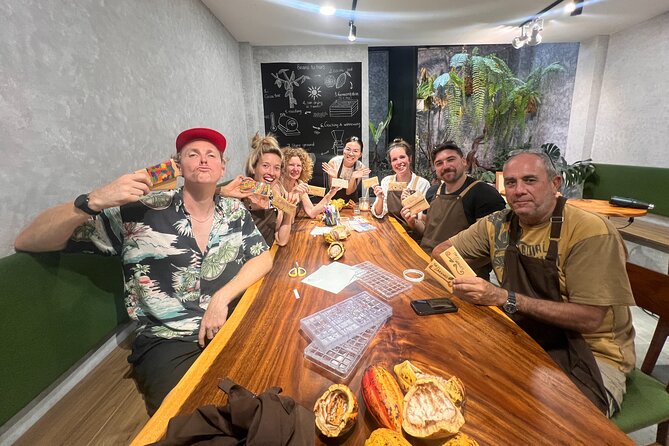
This is scheduled as a 2-hour workshop with a maximum of 10 travelers, which keeps things manageable. In a group that size, it’s easier for instructors to guide you through husking, grinding, and molding without the class feeling like you’re on a conveyor belt.
Still, the pace is physical at points. Grinding takes time. Husking takes attention. If you want a fully relaxed sitting experience, this one might feel more like a mini craft session than a cooking show.
For families, there’s a useful guideline from past participants: it’s best for kids over 8, since the grinding can be tiring. If your child is patient with tactile tasks (and likes food experiments), they’ll likely enjoy it more than a child who gets frustrated by slow prep work.
Who should book this chocolate workshop in Ho Chi Minh City?
This works especially well if you fit one of these profiles:
- You want a break from typical sightseeing and prefer food craftsmanship
- You like learning how ingredients change through real steps
- You’re traveling with someone who enjoys hands-on activities, not just tastings
- You want a small-group workshop in District 1 with a clear start and finish back at the meeting point
It’s less ideal if you dislike manual food work or you’re looking for a passive, purely observational experience.
If you’re a chocolate person, you’ll probably leave with a deeper appreciation of why chocolate tastes the way it does—not just that it tastes good.
Practical tips to get more from the workshop
A few things can help you enjoy it more from the first moment:
- Wear clothes you don’t mind getting a little messy. Cacao work can be touch-prone, especially during paste and bean prep.
- Bring water or plan to slow down after. Even though it’s only 2 hours, husking and grinding can feel like a workout for your hands.
- If you’re traveling with kids, set expectations: this is learning through effort, not just decoration.
- Think about how you’ll carry your chocolate. The experience provides wrapping paper, but you’ll still want to keep it protected on the way back.
Should you book Ban Cacao’s bean-to-bar workshop?
Yes, I’d book it if you want something different in Saigon that’s genuinely hands-on. For $32, you get a full process experience: tasting cacao pods, husking beans, grinding paste with a granite mortar, making and molding a bar, and decorating it for the trip home.
Skip it only if you want a fully hands-off activity, or if you’re bringing younger kids who won’t handle the grinding effort well. If that’s not you, this is one of those practical, memorable food experiences that changes how you look at chocolate long after the wrapper is gone.
FAQ
How long is the bean-to-bar chocolate workshop?
The workshop runs for about 2 hours.
What does the class include?
It includes an explanation of the pods-to-bars process and cacao history in Vietnam, tasting fresh cacao pods, husking cacao beans, making cacao paste with a granite stone mortar, making a chocolate bar, and decorating it with wrapping paper to take home.
Where does the workshop start?
It starts at 89/14 Hàm Nghi, Phường Nguyễn Thái Bình, Quận 1, Thành phố Hồ Chí Minh, Vietnam, and ends back at the meeting point.
How much does it cost?
The price is $32.00 per person.
Is there a maximum group size?
Yes, the workshop has a maximum of 10 travelers.
What tools and materials are used?
Materials include fresh cacao fruits, cacao beans, cacao nibs, cacao butter, and cane sugar. Tools mentioned include a granite mortar, thermometer, scale, chocolate mold, and wrapping paper.
Do you get to take chocolate home?
Yes. You make your own chocolate bar and decorate it, then take it home with you in wrapping paper. Some classes finish with two bars to bring home.
Is there a drink included?
Yes. Each participant gets a hot or iced chocolate drink as part of the class.
Is it suitable for children?
It’s recommended for families and children over 8, since the grinding part can be quite tiring.
What’s the cancellation policy?
You can cancel for free up to 24 hours in advance for a full refund.