REVIEW · HO CHI MINH CITY
Mekong Delta 4 Days Cycling Trip-Off the Beaten Track
Book on Viator →Operated by Mr Biker Saigon · Bookable on Viator
The Mekong by bike is flat, local, and full of surprises. I love how this trip mixes village riding with short boat rides and hands-on stops with artisans, so you see the river economy instead of just passing through. It also has the kind of support that keeps the days fun, not stressful.
I also like the way the route is paced for the Mekong: daily snacks and full meals help you keep energy up, and you get an English-speaking guide plus truck and mechanic support for a small group of five cyclists. For bike choice, you can even add an e-MTB for an extra per-day fee, which makes the trip more flexible if you’re not feeling 100% on the hills that never really show up here.
One consideration: the trip is built for moderate fitness, and with early starts and long riding blocks, you’ll want to come prepared for heat, humidity, and long days even if the terrain stays easy.
In This Review
- Quick hits: what makes this Mekong Delta trip special
- Day 1: Getting from Ho Chi Minh City to My Tho and the An Binh island start
- What I think you’ll enjoy on this first day
- A small reality check for day one
- Day 2: Homestay breakfast, a boat section, and a coconut-focused Mekong stop
- Why this day is valuable
- What to watch for
- Day 3: Tra Vinh’s Khmer communities, Pond Ba Om lotus (seasonal), and Can Tho countryside rides
- The afternoon shift: cycling through countryside to Can Tho
- The best way to think about day three
- One practical consideration
- Day 4: Cai Rang floating market by boat, then Phong Dien cycling and a quick artisan stop
- How to make the floating market moment work for you
- Ending with countryside instead of a hard city return
- Bikes, support, and how the trip stays comfortable even when you’re not hardcore
- Who this fits best
- Price and value: what $738 per person buys you (and what it doesn’t)
- Is it good value?
- The service standard: why reliability matters more than you think
- How to plan your body and kit for the Mekong heat
- Should you book this Mekong Delta cycling trip?
- FAQ
- What time does the tour start?
- Where is the tour located and where does it begin?
- How long is the Mekong Delta cycling trip?
- Is the terrain flat?
- Can I ride an e-MTB instead of a regular bike?
- What’s included in the price?
- What if there’s bad weather?
Quick hits: what makes this Mekong Delta trip special
- Homestay breakfast and goodbyes that feel real, not staged
- Boats between bike sections, so you’re actually moving with the river
- Artisan stops that connect crops and crafts to daily life
- Small-group support (truck + mechanic) that keeps your bike day smooth
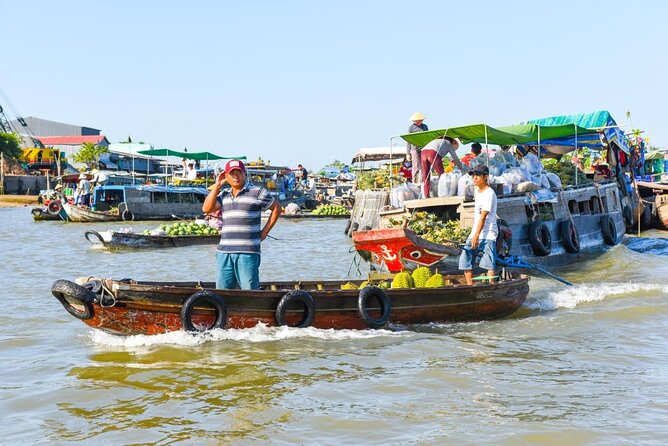
- Cai Rang floating market by boat, then continue cycling into countryside
- e-MTB option if you want extra help (for an additional daily surcharge)
Day 1: Getting from Ho Chi Minh City to My Tho and the An Binh island start
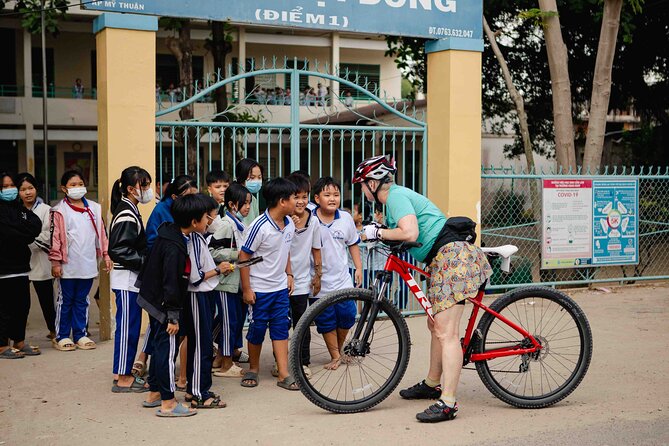
This is not a “meet at a random corner” kind of tour. You’re picked up from downtown Ho Chi Minh City, then transferred to My Tho to start cycling around 7:30 am. That matters because it gets you out of the city rhythm early, when traffic is calmer and the day feels fresh instead of rushed.
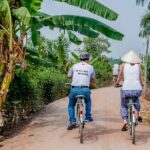
Once you arrive, there’s a final safety briefing and a bike check with your cycling guide. I like that upfront step because it sets expectations: the guide is guiding, not just walking near you, and the group gets aligned on how the day will work. From there, you start your ride out of My Tho and toward An Binh Island, with the feeling that you’re moving through working farmland and river neighborhoods rather than sightseeing bubbles.
You can also read our reviews of more cycling tours in Ho Chi Minh City

What I think you’ll enjoy on this first day
Even on day one, the “off the beaten track” promise shows up in the rhythm. You’re not only cycling; you’re getting the logistics right too—transfer, briefing, ride start, and then the sense that the Mekong is a place people live and work in, not a theme park. If you’re the type who likes seeing how the river shapes daily life, this is a strong entry point.
A small reality check for day one
Because you’re transferring from Ho Chi Minh City and then riding, it’s not the day to “take it easy” with a long lie-in back home. If you’re sensitive to travel mornings, bring your best breakfast appetite and plan to hydrate early.
Day 2: Homestay breakfast, a boat section, and a coconut-focused Mekong stop
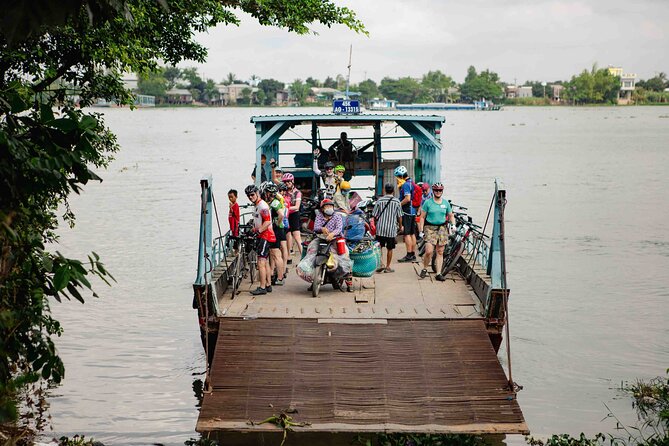
Day two starts with the kind of morning you remember later: you say goodbye to the host family after breakfast at the homestay. The Mekong Delta is known for agriculture, and this part of the day helps you feel that you’re traveling through communities tied to the land and water.
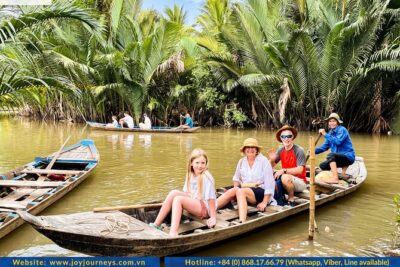
After that, there’s a short boat trip, which breaks up the bike time and gives your legs a chance to reset. Boats are part of the Mekong’s daily movement, so it doesn’t feel like an extra “tour” step. It feels like how the region functions.
Then your driver meets up with you for the next stage, including a stop described around coconut (the itinerary text points to a famous coco stop). Even without getting too technical, that’s exactly the kind of Mekong detail that makes a cycling trip more meaningful than a straight bus ride: you connect what you see on the roadside farms to what gets processed and sold.
Why this day is valuable
This is the day where “local” shifts from a marketing word into something practical. You move from homestay life to river transport to a crop-and-craft type stop, and the overall picture becomes clearer: the Mekong feeds people, and it also feeds work—farm work, craft work, and river commerce.
You can also read our reviews of more tours and experiences in Ho Chi Minh City


What to watch for
Day two is listed at about eight hours, so it’s not just a quick taste. If you’re booking as a first-time rider, plan to take breaks when your guide suggests them and don’t try to ride every moment at full attention. Let the scenery and the river movement do some of the work for you.
Day 3: Tra Vinh’s Khmer communities, Pond Ba Om lotus (seasonal), and Can Tho countryside rides
Day three turns the dial toward culture. You travel into Tra Vinh, an area with many Khmer residents—one of Vietnam’s 54 ethnic minority groups. That matters because the Mekong Delta isn’t only one uniform Vietnamese rural look; it’s a patchwork of communities shaped by the waterway.
You take a short ride to Pond Ba Om to see lotus flowers, which the itinerary flags as seasonal. If you’re traveling during lotus season, this becomes one of those quiet “slow down and pay attention” moments. If you’re outside the peak time, you’ll still have the benefit of visiting a place locals recognize for seasonal beauty, but the floral show may not be as dramatic.
The afternoon shift: cycling through countryside to Can Tho
Later, the day includes Can Tho. You cycle as much as you wish through peaceful countryside paths, then you have lunch in the Cau Ke district. After lunch, there’s a short transfer to get you away from the busiest roads, which is a smart way to keep riding enjoyable instead of chaotic.
The best way to think about day three
This is a “both worlds” day: culture in the morning, then riding that gives you space to breathe in the afternoon. If you’re the kind of traveler who likes variety—faces, land use, and riding conditions—you’ll likely feel like the trip is hitting its stride.
One practical consideration
Lotus at Pond Ba Om is seasonal, so manage expectations. In Southeast Asia, the plants and weather follow their own schedule. This is still a good stop, but the flower timing is outside your control.
Day 4: Cai Rang floating market by boat, then Phong Dien cycling and a quick artisan stop
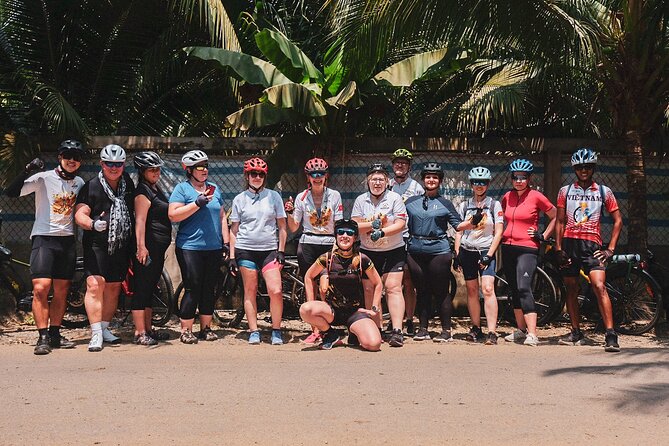
The last day starts with early breakfast, then a boat trip to the Cai Rang floating market. This is one of those experiences that changes how you understand the region. You don’t just see the market as a static photo place—you see it as a working flow of river life, supported by boats and the daily rhythm of trade.
After the market, you cycle toward Phong Dien. There’s also a note that if time permits, you’ll stop at a local artisans spot. Even when the stop is brief, it adds a final layer that ties the whole trip together: agriculture feeds production, production feeds craft, and craft feeds income for families.
How to make the floating market moment work for you
Start with food in your stomach and camera batteries ready, because it’s an early day. Also, remember you’re sharing space with people working. Keep movements smooth and respectful, and you’ll get more genuine interactions from the experience.
Ending with countryside instead of a hard city return
Many tours end by dumping you back into the traffic of a major city. Here, the ride-to-market structure makes the day feel like a natural conclusion. You get a river “anchor” early, then close with cycling and local stops.
Bikes, support, and how the trip stays comfortable even when you’re not hardcore
The big win is the support setup. This trip includes use of a bicycle, and it runs with a supporting truck and mechanic for group of 5 cyclists. That means you’re not stuck if something goes wrong. It also lets your guide keep the riding pace human—steady, not punishing.
You can also choose an e-MTB for 10 USD per bike per day. If you’re curious about riding but nervous about your energy level, that option is a safety valve. And if you prefer a gravel-style ride, the reviews highlight that gravel bikes with bags can be set up with transfers handled smoothly, which suggests the operator is used to getting people comfortable with their gear.
Who this fits best
This is ideal if you want an easy-to-moderate physical challenge on a very rideable surface. The Mekong Delta is described as flat, which is why it’s a great place to explore by bike without constantly calculating steep climbs.
It also seems to work for mixed fitness levels. In one review, a family with kids around 13 and 9 was able to join with ease, which signals that the guide and support model isn’t only for seasoned riders.
Price and value: what $738 per person buys you (and what it doesn’t)

At $738 per person for a roughly 4-day program, you’re paying for more than a bicycle and a route. Your cost includes private transportation, an English-speaking cycling guide, accommodation in a twin-share room, and meals: 3 breakfasts, 4 lunches, and 2 dinners, plus daily snacks.
That’s the real value math. A lot of Vietnam bike plans start cheap and then hit you with rentals, guide fees, separate transfers, and food stops. Here, the schedule is designed around you not needing to constantly solve logistics. You’ll also have pickup offered and mobile ticket included, which reduces the “where do we go now” stress.
Two items not included matter for planning:
- Insurance is not included.
- A single accommodation surcharge of 70 USD per person applies if you’re not sharing a twin room.
Also note you’re not choosing between strangers. This is a private tour/activity, so only your group participates.
Is it good value?
For me, yes, if you want a ride that’s supported, paced, and culturally connected. If you’re the type who wants to self-guide every minute and pick your own homestay, this price may feel heavy. But if you want smooth execution with local contact points, it reads as a fair trade.
The service standard: why reliability matters more than you think
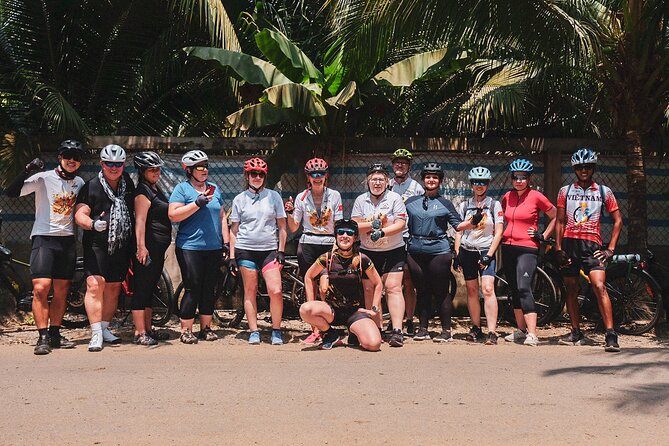
The strongest compliments in the feedback aren’t about dramatic claims. They’re about the stuff that keeps a bike trip from turning into a headache: on-time schedules, reliable bike quality, and flexible service.
One review specifically calls out seamless gravel bike rentals with bags setup and transfer services, describing everything as very reliable with a high-quality pick-up and drop-off experience. Another highlights that the operator is independent (not part of a big corporate setup), and that personalization comes through—exactly what you’d want on an “off the beaten track” route.
Guides also get praised for adapting to the group. One guide named Minh is mentioned as fantastic for tailoring to group needs. Another review mentions Thuan and a driver who looked after the group incredibly well. And there’s also a note about Thai being the key person behind the team and trip experience. These names matter because they point to a stable human network, not just a rotating checklist.
How to plan your body and kit for the Mekong heat
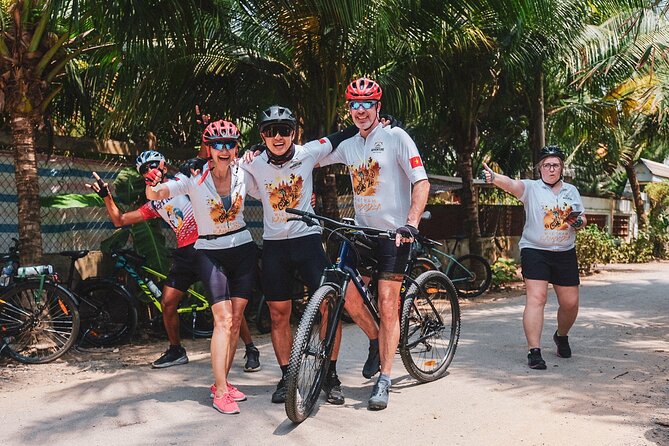
Because this trip starts early and runs full days, treat it like a hot-weather cycling week. Even if the Mekong Delta is flat, the humidity can still make you feel like you’re “working.”
A few practical moves that help:
- Pack a light rain layer in case conditions change, since outdoor time is constant.
- Wear sun protection and plan to hydrate early, not only after you feel thirsty.
- Bring a small dry bag for phone and essentials, especially because you’ll have boat segments and cycling days.
- If you’re doing the e-MTB add-on, decide ahead of time whether you want it for the full days or just when you feel your energy dropping.
One more useful point: the tour notes it requires good weather. So build your trip window with some flexibility, or plan a backup date if you can.
Should you book this Mekong Delta cycling trip?
I’d book it if you want a bike trip that gives you more than roads and views. You get homestay life, river transport, artisan stops, and a culturally specific day in Tra Vinh plus the big river anchor of Cai Rang floating market. The support system (truck and mechanic) and the small group size help you stay relaxed.
Skip it if:
- You want a self-guided “no schedule at all” vacation.
- You’re not comfortable with early mornings and multi-hour riding days, even on flat terrain.
- You prefer to pay for minimal services and piece everything together yourself.
If you’re choosing between a basic Mekong tour and a real cycling day with local connections, this one is built to be practical: you show up, the team runs the machine, and you spend your energy on riding, people, and the river.
FAQ
What time does the tour start?
The start time is listed as 7:30 am.
Where is the tour located and where does it begin?
The experience is based in Ho Chi Minh City, Vietnam, with pick-up from downtown HCMC and a transfer to My Tho to start cycling.
How long is the Mekong Delta cycling trip?
It runs for about 4 days.
Is the terrain flat?
Yes. The Mekong Delta is described as having flat terrain, which makes it ideal for bike lovers.
Can I ride an e-MTB instead of a regular bike?
Yes. An e-MTB is available with a surcharge of 10 USD per bike per day.
What’s included in the price?
Included items are bicycle use, private transportation, twin-share accommodation, an English-speaking cycling guide, daily snacks, support truck and mechanic for the group, and meals (3 breakfasts, 4 lunches, 2 dinners).
What if there’s bad weather?
The tour requires good weather. If it’s canceled due to poor weather, you’ll be offered a different date or a full refund.