REVIEW · HO CHI MINH CITY
Ho Chi Minh: Historical City Scooter Tour
Book on GetYourGuide →Operated by AN Tours Vietnam · Bookable on GetYourGuide
Saigon in four hours, no waiting around. This private scooter tour strings together the big-name sights and quieter local stops across multiple districts, so you get a tourist-and-local mix without changing plans all day. I also like that it’s private, meaning your guide can pace the ride and tailor the flow to what you want to see.
The main consideration is physical comfort. Scooter travel in traffic can be intense, and it’s not suitable for people with back problems, mobility impairments, or heart issues.
In This Review
- Key Highlights You’ll Feel Right Away
- Why This Saigon Scooter Tour Works So Well in 4 Hours
- From the Notre-Dame Cathedral Look-Alike to the Post Office That Lives On
- War Remnants Museum and the Thich Quang Duc Monument: Meaning, Not Just Dates
- The Oldest Apartment, Daily Life After War, and Saigon’s Flower Market That Never Sleeps
- Coffee in a 75-Year-Old Shop and Chinatown’s Temples, Markets, and Thien Hau
- Price and Value: What $49 Gets You (and What to Watch For)
- How to Prep for Scooter Comfort: Helmet, Raincoat, and Shoe Choices
- Who Should Book This Tour, and Who Should Skip It
- Should You Book the Ho Chi Minh City Historical Scooter Tour?
- FAQ
- How long is the Ho Chi Minh historical city scooter tour?
- What time is hotel pickup?
- Is this a private tour?
- What’s included in the price?
- What should I bring?
- Who is it not suitable for?
- Is free cancellation available?
- Can I pay later?
Key Highlights You’ll Feel Right Away
- Private driver with fluent English keeps the story clear and the ride smooth
- Four hours with two pickup options (8:00AM or 1:00PM) makes planning easier
- French-built cathedral to handwritten letters sets up Saigon’s layers fast
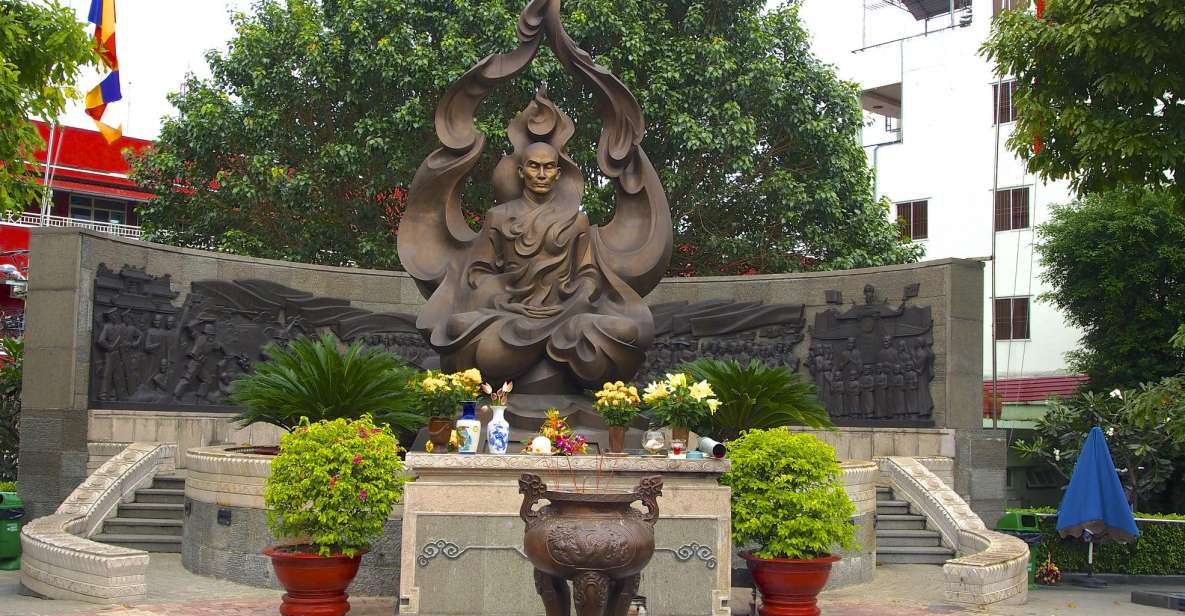
- War Remnants Museum and the Thich Quang Duc monument give context beyond the headlines
- Flower market + coffee + Chinatown temples pack in local routines, not just monuments
Why This Saigon Scooter Tour Works So Well in 4 Hours
Ho Chi Minh City has a way of eating your time. Traffic slows you down, distances add up, and walking-only sightseeing can feel like a grind. This tour cuts the decision fatigue by bundling famous sights and neighborhood life into one controlled ride, so you can get your bearings fast and still end the day with a sense of what daily life is like.
The format is also practical. You’re picked up at your hotel lobby and then guided by a local driver who knows how to handle city streets. Reviews highlight guides such as Halsey, Henry and Hannah, Son and Sunny, and Midori, plus a helpful add-on guide named Thong—so you’ll likely be with someone who can explain more than just where to stand for a photo.
The private setup matters. When you’re not stuck in a larger group, you can slow down at a place that grabs you and speed past what doesn’t. Many people also like the flexibility near the end, when you can choose where you want to go next based on what you enjoyed most.
You can also read our reviews of more city tours in Ho Chi Minh City



From the Notre-Dame Cathedral Look-Alike to the Post Office That Lives On

You start at one of Saigon’s most recognizable landmarks: a cathedral modeled on the famous French influence, built using materials from France. It’s the kind of stop that works even if you’re not a church person, because the details and the setting help you understand how much outside influence shaped early colonial-era architecture.
Next comes the post office, where you’re not just looking at a building—you’re meeting a symbol of old-school communication. You’ll be introduced to a 90-year-old man described as the last hand-written letter-writer in Vietnam. That moment can be surprisingly moving if you pause and listen. It turns a quick stop into a human story about how communication and everyday routines have changed over time.
From there, the tour pivots from architecture to atmosphere. You’ll head toward the War Remnants Museum, but before you arrive, you’re basically warmed up: you’ve seen how the city was shaped, then you’re about to see what it lived through.
War Remnants Museum and the Thich Quang Duc Monument: Meaning, Not Just Dates

The War Remnants Museum is heavy. You should expect stories that don’t shy away from what war does to a country and its people. This stop is valuable because the museum doesn’t let you keep things abstract. It adds texture—names, consequences, and the human cost—so the history you’ve heard elsewhere becomes specific.
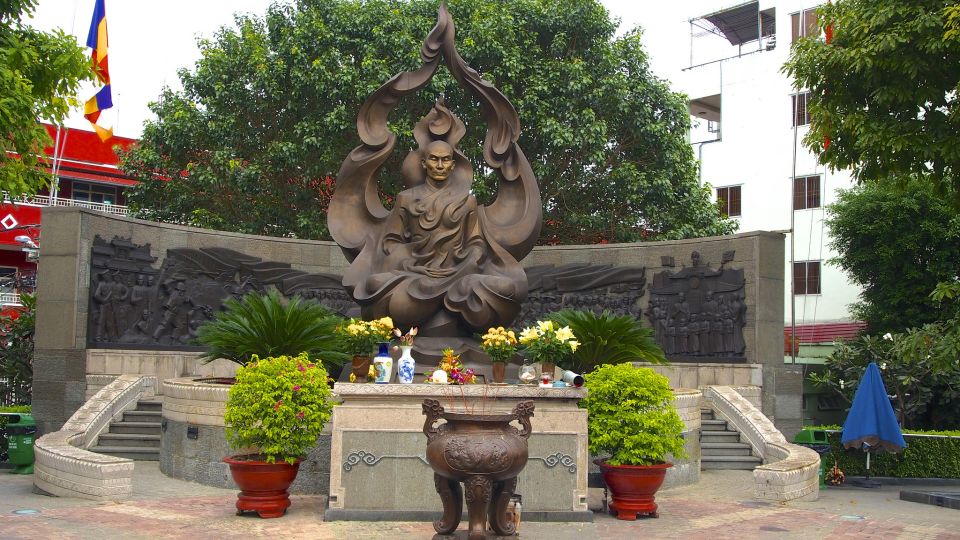
Right after that comes a monument honoring Thich Quang Duc, the monk associated with a 1963 self-immolation protest. This isn’t presented as a simple headline. You get the significance of the act and the political tension behind it, which helps you understand why memorials like this matter in Vietnam’s public memory.
If you want a smooth visit, keep expectations clear. This is not the kind of museum you rush through. Give yourself time to absorb and then mentally reset before the tour keeps moving.
One more practical note: since the tour continues right after these emotional stops, it helps if you pace your energy. Wear comfortable shoes and keep water handy if your guide allows breaks.
The Oldest Apartment, Daily Life After War, and Saigon’s Flower Market That Never Sleeps
A lot of tours in Saigon only show the shiny side. This one includes something more lived-in: an encounter with the oldest apartment in Ho Chi Minh City, described as being built from the war. The big value here is perspective. You’re not just looking at a building; you’re hearing about how people lived, adapted, and made spaces work.
This stop can hit differently depending on how you travel. If you like culture through daily life—how neighborhoods function, how people manage tight spaces—this is one of the most rewarding parts. It’s also a good contrast to the museum and monument stops, because instead of focusing only on events, it points toward survival and routine.
Then you shift into a sensory, colorful swing: the biggest flower market in the city. It’s started in 1980 and is open almost 24 hours, so it feels like a living system rather than a daytime-only photo spot. Flowers come from Da Lat each morning (Da Lat is often called the Paris of Vietnam), which means the market isn’t just selling arrangements—it’s processing fresh supply and moving through real work.
If you arrive and the place is busy, that’s normal. The market is a nonstop hub where vendors, customers, and transport all overlap. Bring sunglasses and a little patience. This is one of those stops where walking a bit slowly lets you notice the scale.
Coffee in a 75-Year-Old Shop and Chinatown’s Temples, Markets, and Thien Hau
After the flowers, the tour turns to something that feels like a local reset: Vietnamese coffee. You’ll visit a coffee shop that’s described as 75 years old, using a method of making coffee only three coffee shops in Vietnam are known for. Even if you’re not a coffee historian, it helps you taste the city through a technique that stays consistent.
This kind of stop is a great balance after museum-level intensity. It’s also a reminder that Vietnam’s identity isn’t only shaped by conflict and memorials. People have craft, habit, and comfort, often built around simple rituals like coffee.
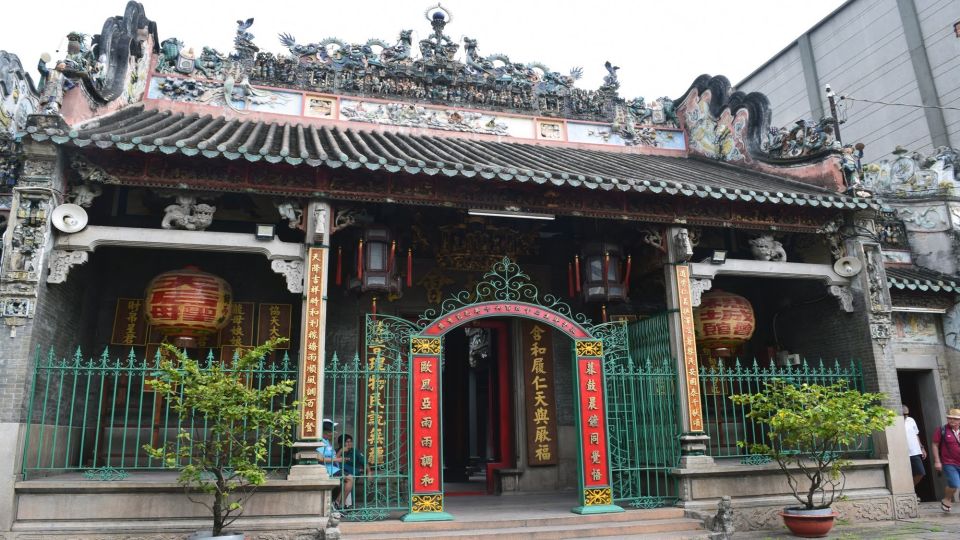
Then the day ends in Chinatown, where you’ll see a 300-year-old temple described as breathtaking. The area has around 1.5 million Chinese-Vietnamese residents across generations, and that shows in the shopfront life and market energy. Expect to encounter market scenes such as a motorbike market and a bird market, then look toward the special 300-year-old Thien Hau temple.
If you’re trying to understand Saigon’s mix of communities, this is one of the strongest closing acts. It gives you a different kind of history—community continuity rather than just political events. And it helps that you can often walk around at your own pace near the end of the tour, when energy levels are different than earlier in the day.
You can also read our reviews of more historical tours in Ho Chi Minh City






Price and Value: What $49 Gets You (and What to Watch For)
At $49 per person for a 4-hour private scooter tour, you’re paying for more than transport. You’re paying for efficient route planning, entrance tickets, a good helmet and raincoat, and a private driver/guide with English ability. In a city where crossing districts can take time, that efficiency is real value.
The tour also reduces decision-making. Instead of spending your day choosing between museums, markets, and neighborhoods, you get a pre-built order that moves from architecture to memory to neighborhood life to street culture.
Is it worth it? For most first-time visitors who want to sample multiple sides of Ho Chi Minh City, yes. It’s especially strong if you like variety and you want to return to a later stop with better context. For example, after seeing the memorial sites, you might understand later sights differently. After the flower market and Chinatown, you’ll know what neighborhoods feel like when they’re in motion.
The tradeoff is that it’s still a scooter tour. You’ll be riding in traffic, and you need to be comfortable with that style of sightseeing. If you dislike scooters, or if you have mobility limitations, this won’t feel fun.
How to Prep for Scooter Comfort: Helmet, Raincoat, and Shoe Choices
This tour includes a good quality helmet and raincoat. That’s helpful in Vietnam’s quick weather changes. Still, you should bring your own sunglasses and sunscreen, and plan to wear comfortable shoes. The stops include outdoor walking at several points, especially around markets.
Vietnam traffic can be visually chaotic even when you’re with a skilled driver. You’ll want to relax your shoulders and keep your balance steady. Reviews repeatedly mention feeling safe with guides and drivers like Son and Sunny, and guides such as Midori who maneuvered through heavy traffic well. If that sounds like your biggest worry, it’s the right sort of tour to reduce fear because you’re not navigating on your own.
Also, know the basic timing. Pickup is either 8:00AM or 1:00PM, and the total ride time is listed as 4 hours. Build in some buffer for hotel lobby waiting, and don’t schedule a hard-to-miss appointment immediately afterward.
Finally, consider your health. It’s not suitable for people with back problems, mobility impairments, wheelchair use, or heart problems. If any of those apply, it’s better to pick a different style of tour.
Who Should Book This Tour, and Who Should Skip It
This is for you if you’re:
- a first-time visitor who wants the city’s main stories and a few local routines in one go
- comfortable riding a scooter in city traffic
- excited by history with context, especially the parts tied to war memory and public protest
It’s not for you if you’re:
- sensitive to scooter rides or you have back/heart issues
- limited in mobility or you need wheelchair-friendly access
- looking for a slow, purely walking experience with minimal traffic exposure
If you do book it, the best move is to treat it like a route-and-rapport day. Let the guide’s explanations set the stage, then use the end of the tour to choose where you’ll spend more time next.
Should You Book the Ho Chi Minh City Historical Scooter Tour?

Book it if you want an efficient, story-driven way to see Ho Chi Minh City without doing five separate activities. The mix of landmark stops, war-era memory sites, neighborhood life, a flower market that moves like clockwork, coffee in an old shop, and Chinatown temples makes this feel like a full city sampler in a short window.
Skip it if scooters won’t work for your body. Also skip it if you prefer a quiet, low-motion day. In that case, you’d probably enjoy a slower walking or private car tour instead.
If you’re flexible and ready for a 4-hour ride with a real local guide, this is one of the best ways to get oriented and still be surprised.
FAQ
How long is the Ho Chi Minh historical city scooter tour?
The tour duration is 4 hours.
What time is hotel pickup?
Pickup is either at 8:00AM or at 1:00PM.
Is this a private tour?
Yes, it’s described as a private tour with your own driver/guide.
What’s included in the price?
The tour includes all listed attractions, a helmet and raincoat, a private driver with fluent English, and entrance tickets.
What should I bring?
Wear comfortable shoes, and bring sunglasses and sunscreen.
Who is it not suitable for?
It’s not suitable for people with back problems, mobility impairments, heart problems, or wheelchair users.
Is free cancellation available?
Yes. You can cancel up to 24 hours in advance for a full refund.
Can I pay later?
Yes. You can reserve now and pay later.