REVIEW · HO CHI MINH CITY
City Sightseeing Saigon Bus Tour
Book on Viator →Operated by City Sightseeing Ltd - USA and Middle East · Bookable on Viator
Saigon changes fast; this bus keeps up. The open-top deck gives you quick, scenic city angles, and the hop-on hop-off setup lets you jump off for a landmark, then catch the next bus without a rigid schedule.
My favorite part is the mix of major sights packed into a short ride window, plus the handy free extras like Wi‑Fi and a guidebook. One thing to watch: getting started can feel confusing, and the audio commentary is hit-or-miss depending on your mood and language.
In This Review
- Key Things to Know Before You Ride
- Open-Top Freedom: Why This Hop-On Hop-Off Works in Saigon
- Price and Value: When $21 Makes Sense (and When It Doesn’t)
- Red Route: Saigon Opera House to Central Landmarks (9am–4pm)
- Saigon Opera House (Stop 1) and Nguyen Hue Street (Stop 2)
- Nha Rong Wharf (Stop 3)
- Tran Hung Dao Statue (Stop 4) and the Ho Chi Minh Campaign Museum (Stop 5)
- War Remnants Museum (Stop 6)
- Pham Ngu Lao / Beer Street (Stop 7) and Ben Thanh Market (Stop 8)
- Independent Palace (Stop 9) and Notre Dame Cathedral / Central Post Office (Stop 10)
- Blue Route: A Different Saigon Mood from Pham Ngu Lao to Pagodas and Markets
- Pham Ngu Lao / Beer Street (Blue Stop 1)
- Ben Thanh Market (Blue Stop 2) and War Remnants Museum (Blue Stop 3)
- Ho Thi Ky Flower Market (Blue Stop 4)
- Phuoc An society’s premises (Blue Stop 5) and Ong Bon Pagoda (Blue Stop 6)
- Binh Tay Market (Blue Stop 7)
- Thien Hau Pagoda (Blue Stop 8) and Van Phat Pagoda (Blue Stop 9)
- The Real Trick: How Line Switching Works (and Why It’s Easy to Miss)
- Stop-by-Stop Walkthrough: What to Expect at Each Named Place
- Saigon Opera House (Red Stop 1)
- Nguyen Hue Street (Red Stop 2)
- Nha Rong Wharf (Red Stop 3)
- Tran Hung Dao Statue (Red Stop 4)
- Ho Chi Minh Campaign Museum / Museum of Vietnamese History (Red Stop 5)
- War Remnants Museum (Red Stop 6 / Blue Stop 3)
- Pham Ngu Lao Street / Beer Street (Red Stop 7 / Blue Stop 1)
- Ben Thanh Market (Red Stop 8 / Blue Stop 2)
- Independent Palace (Red Stop 9)
- Saigon Notre Dame Cathedral / Central Post Office (Red Stop 10)
- Ho Thi Ky Flower Market (Blue Stop 4)
- Phuoc An society’s premises (Blue Stop 5)
- Ong Bon Pagoda (Blue Stop 6)
- Binh Tay Market (Blue Stop 7)
- Thien Hau Pagoda (Blue Stop 8)
- Van Phat Pagoda (Blue Stop 9)
- Audio Guide, Wi‑Fi, and the Guidebook You’ll Actually Use
- Practical Tips: Seats, Weather, and Finding the Right Bus
- Who This Tour Is Best For (and Who Might Skip It)
- Should You Book This Saigon Bus Tour?
- FAQ
- What’s included in the City Sightseeing Saigon bus tour ticket?
- Is hotel pickup or drop-off included?
- How long is the Red Route and how often do buses run?
- How long is the Blue Route and how often do buses run?
- Where does the Red Route start?
- Where does the Blue Route start?
- Can I use a mobile ticket voucher?
- Are attraction entry tickets included?
- FAQ
- How long are the Red and Blue routes operating each day?
- Can I use the voucher on a different day?
Key Things to Know Before You Ride
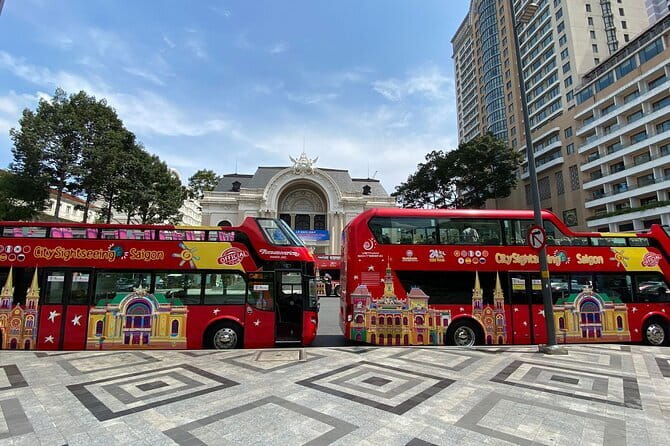
- Two routes, one ticket style: You can use the Red and Blue lines to shape your day without committing to one long loop.
- Frequent buses on the Red Route: About every 30 minutes, with a 75-minute loop time.
- Longer gaps on the Blue Route: About every 45 minutes, with an 80-minute loop time—plan a bit more.
- Switch points matter: You’re advised to switch lines at specific stops where the routes line up differently than you might expect.
- Weather check for upstairs seats: Upstairs is great for views, but you’ll feel Saigon’s changing weather more.
- Start-point clarity saves time: The ticket exchange and bus stops have specific locations—double-check before you wander.
Open-Top Freedom: Why This Hop-On Hop-Off Works in Saigon
This is the kind of tour that fits real travel days. You don’t have to wake up at a precise time and follow someone else’s pace. You pick your stops, ride when it’s convenient, and pause when something catches your eye. That flexibility matters in Ho Chi Minh City, where traffic and heat can turn a tight itinerary into a slog.
I like that you get to see a lot fast, from big, well-known anchors to neighborhood-level scenes. The open-top experience also helps you understand the city visually—you can recognize streets and districts later when you walk on your own.
The only drawback is that the experience depends on you reading the signage and locating the right pickup/exchange point. If you arrive and feel uncertain, it’s easy to waste 20 minutes just figuring out where to start.
You can also read our reviews of more city tours in Ho Chi Minh City



Price and Value: When $21 Makes Sense (and When It Doesn’t)
At $21 per person, this tour is a solid value if you plan to use it like a tool, not just a ride. The included items—free Wi‑Fi and a guidebook—help even if you don’t hop off at every stop. And the big payoff is that you’re visiting multiple key landmarks without paying for separate taxis or guessing routes in fast-moving traffic.
Where value gets tricky is if you only want one quick photo stop. If you’ll barely use hop-on hop-off freedom, a $21 ticket can feel a bit steep compared with buying time for a couple of short walks. This tour shines when you plan at least several stops, especially around clusters like the central sights and the museum/market areas.
Also, there are both 1-day and 2-day tickets. If you’re staying more than a day and you’d like a slower second loop, the 2-day option can stretch your money further—especially if rain or heat changes your plans on day one.
Red Route: Saigon Opera House to Central Landmarks (9am–4pm)
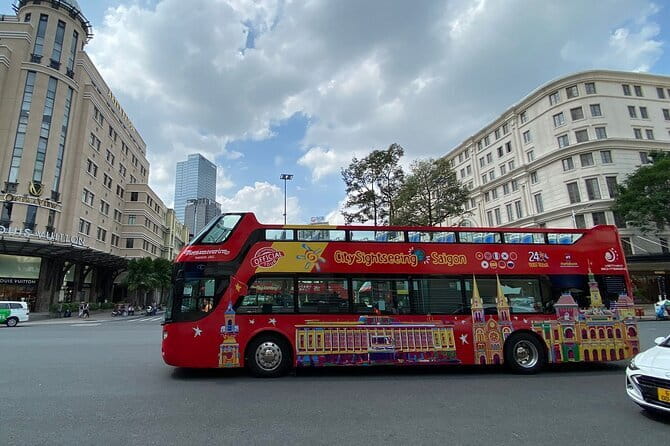
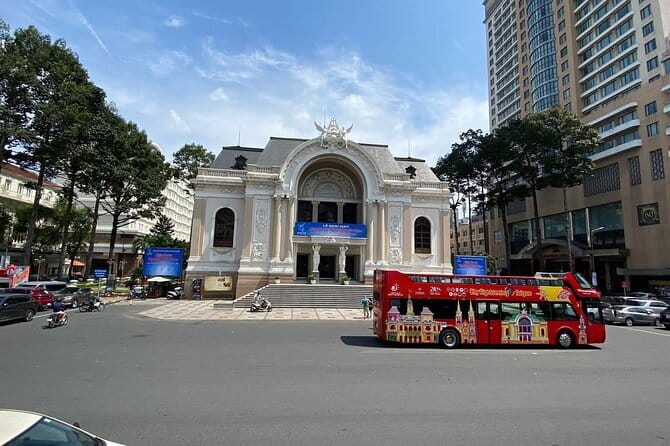
The Red Route is the one to choose if you want a classic sweep through central big sights. It starts at the Saigon Opera House (Stop 1) and runs from 9:00am to 4:00pm. The loop takes about 75 minutes, and buses run about every 30 minutes.
A practical detail that matters: the ticket exchange counter is located on the side of the Saigon Opera House, facing the Continental Hotel. If you’re looking for the exact “where do I go first?” answer, this is it.
Saigon Opera House (Stop 1) and Nguyen Hue Street (Stop 2)
Expect your first stretch of skyline and broad city views. Nguyen Hue Street is a key corridor on this route, and it’s a good early stop because it helps you orient fast—where you are, which direction your day might unfold, and how the main sights relate to each other.
Nha Rong Wharf (Stop 3)
This is your river area moment. I like using stops like this as a reset break: ride past, hop off briefly, stretch, then re-board. Even a short visit gives you context for where the city’s energy shifts.



Tran Hung Dao Statue (Stop 4) and the Ho Chi Minh Campaign Museum (Stop 5)
This stretch feels more “institutional,” and it’s a nice setup for your museum block later. If you’re trying to beat the busiest times, hopping off here for a short look can work well before the larger museum stop.
Stop 5 is labeled as the Ho Chi Minh Campaign Museum / Museum of Vietnamese History. Plan time for at least a decent walk around the grounds and exhibits, since this stop is a natural anchor.
War Remnants Museum (Stop 6)
War Remnants Museum is one of the most important stops on the whole tour. You’ll likely want more than a quick glance. I recommend using the hop-on hop-off rhythm here: arrive when you’re ready to focus, then take your time. This is also a good stop to decide whether you’ll return to the Red line or switch to the Blue line for markets and pagodas.
Pham Ngu Lao / Beer Street (Stop 7) and Ben Thanh Market (Stop 8)
After the museum, the tour shifts gears. Pham Ngu Lao—known on the route as Beer Street / Phạm Ngũ Lão Street—is a useful stop for atmosphere and people-watching. Then you roll right into Ben Thanh Market (Stop 8), which is a natural choice for browsing and quick shopping time.
If you’re sensitive to crowds, you may want to visit these stops earlier or later in the day. The tour’s bus frequency makes it easy to adjust without “losing” your day.
Independent Palace (Stop 9) and Notre Dame Cathedral / Central Post Office (Stop 10)
Stop 9, Independent Palace, is a strong “big landmark” closer. From there you reach the end-zone: Saigon Notre Dame Cathedral / Central Post Office (Stop 10). This is where the city’s postcard look shows up.
If your energy is limited, you can treat this final cluster as a photo-and-walk zone. If you have more time, hop off and linger, then use the frequency to end your loop without rushing.
Blue Route: A Different Saigon Mood from Pham Ngu Lao to Pagodas and Markets
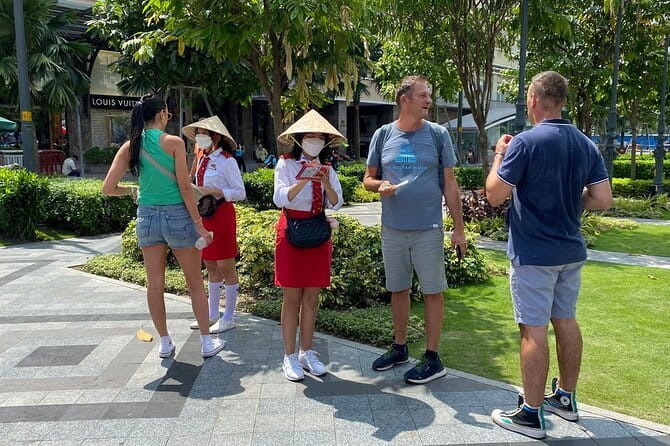
The Blue Route starts at 187 Pham Ngu Lao Street with the bus stop located in front of the Liberty Hotel. First departure is 9:00am, and the last departure from the starting point is 3:45pm. The loop takes about 80 minutes, with buses running roughly every 45 minutes.
Compared to the Red Route, the Blue Route gives you more of a neighborhood travel feel. It’s a good choice if you want markets, flower stops, and pagodas mixed into your sightseeing.
Pham Ngu Lao / Beer Street (Blue Stop 1)
If you’re already in the Pham Ngu Lao area, this start makes the Blue Route easy to plug into your day. It’s also a convenient “hub” if you’re changing plans.
Ben Thanh Market (Blue Stop 2) and War Remnants Museum (Blue Stop 3)
These repeats are useful. They let you connect without backtracking. If the museum timing didn’t work out earlier, or you want one more pass at a central area, the Blue Route helps you re-thread your plan.
Ho Thi Ky Flower Market (Blue Stop 4)
This is your color-and-smell break from the bigger sightseeing blocks. Flower markets are a great way to slow down and feel local rhythms, and it’s also a nice spot to take photos without a strict “must see” checklist.
Phuoc An society’s premises (Blue Stop 5) and Ong Bon Pagoda (Blue Stop 6)
These stops lean into religious/cultural spaces. If you’re visiting for the atmosphere and the walk-through experience, this route does that well. Keep it respectful, dress appropriately, and remember this is not a “ride past at speed” stop.
Binh Tay Market (Blue Stop 7)
Binh Tay Market gives you another browsing option. I like market stops because they reward wandering: you can look, pause, and step back without needing to follow a timed tour schedule.
Thien Hau Pagoda (Blue Stop 8) and Van Phat Pagoda (Blue Stop 9)
Pagodas close out the Blue Route with a quieter mood. If your day is running hot and loud, a temple stop can reset you without needing to switch neighborhoods.
The Real Trick: How Line Switching Works (and Why It’s Easy to Miss)

You’ll likely want to switch lines at some point. The company guidance says you should switch lines at Stops 6, 7 and 8 on the Red Route, which correspond to Stops 1, 2 and 3 on the Blue Route.
That mapping can feel counterintuitive at first. Here’s the simple way to think about it: you’re not just following route colors—you’re using overlap points to hop between two different sightseeing styles.
Also watch for bus color confusion. One practical annoyance: different routes can look similar from a distance, so I recommend treating the route name and stop instructions as the final word—not your eyes.
Stop-by-Stop Walkthrough: What to Expect at Each Named Place
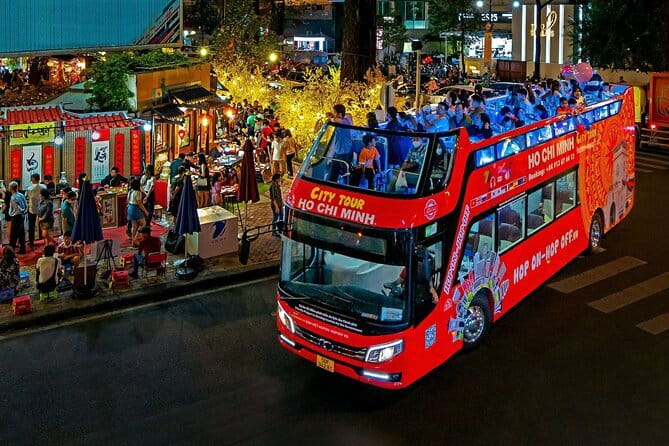
Here’s how I’d plan your time at each stop, based on what these locations are set up to do for your day—anchor sights first, then add walking time where it fits.
Saigon Opera House (Red Stop 1)
Your starting landmark and a natural “orientation” stop. If you’re starting off-bus for a minute, this is where you can double-check you’re in the right exchange spot. It also frames your day because it’s one of the clearer “you’re here” points.
Nguyen Hue Street (Red Stop 2)
Great for seeing the city’s main artery feel. I use this as a quick visual compass: it helps me decide whether I want a museum-heavy plan next or a market-heavy plan.
Nha Rong Wharf (Red Stop 3)
A good breath-of-air stop. If you want a quick walk before committing to an indoor attraction, this is a fine early pause.
Tran Hung Dao Statue (Red Stop 4)
A transition point between scenic views and the museum cluster. I treat these mid-route stops like “stretch legs” breaks—hop on again and keep going.
Ho Chi Minh Campaign Museum / Museum of Vietnamese History (Red Stop 5)
This is one of your major focus stops. If you plan to get value from this tour, spend real time here or at the War Remnants Museum (the other big anchor).
One consideration: museum time can take longer than you expect. The hop-on hop-off structure helps, but your best strategy is to avoid trying to cram two big museum blocks back-to-back.
War Remnants Museum (Red Stop 6 / Blue Stop 3)
If you’re picking a “must” stop, this is it. Plan for a thoughtful visit rather than a quick pass. This stop also sets you up well for switching toward markets and pagodas, or staying on the Red loop for the central sights.
Pham Ngu Lao Street / Beer Street (Red Stop 7 / Blue Stop 1)
A contrast stop: after museum weight, this is lively and street-level. If you want to shop, snack, or just walk, this is your ready-to-move zone.
A tip: keep your time flexible here. It’s easy to lose an hour when you’re enjoying the street energy and people-watching.
Ben Thanh Market (Red Stop 8 / Blue Stop 2)
A classic market anchor. It works well as an early evening stop too, if your day runs long. Since the tour buses keep cycling, you don’t need to treat the market like a timed appointment.
Independent Palace (Red Stop 9)
This stop is a strong “landmark finish” for the Red Route. Even if you don’t go inside for long, the location is meaningful as a boundary between central sights.
Saigon Notre Dame Cathedral / Central Post Office (Red Stop 10)
Your wrap-up sight. This is the kind of place you’ll want to linger around—photos, quick walks, and a calm moment before you call it a day.
Ho Thi Ky Flower Market (Blue Stop 4)
Use this as your color break. It’s a good place for slow browsing before you move into more structured places like pagodas.
Phuoc An society’s premises (Blue Stop 5)
A cultural stop with a slower, more local feel. If it’s open for viewing when you arrive, treat it like a short walk-through. If it’s not, you’ll still get something out of re-positioning your day.
Ong Bon Pagoda (Blue Stop 6)
A stop for spiritual atmosphere and quiet time. Keep expectations realistic: sometimes you’ll want a quick look and sometimes you’ll want longer. Either way, the bus timing gives you flexibility.
Binh Tay Market (Blue Stop 7)
Another browse-friendly stop. Markets are ideal when you want to move at your own pace. If you’re shopping, take breaks and double-check what you really want before committing.
Thien Hau Pagoda (Blue Stop 8)
A gentle shift again, from market energy to calm. This is where you can slow down before ending your Blue Route loop.
Van Phat Pagoda (Blue Stop 9)
A fitting close. If you’re running out of steam, use this as your final “one more photo” moment, then let the bus bring you back toward your next plan.
Audio Guide, Wi‑Fi, and the Guidebook You’ll Actually Use
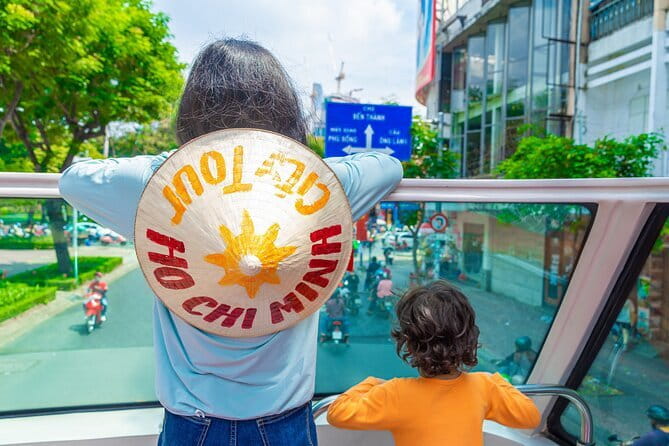
The audio guide is offered in several languages, and that’s a big help when you don’t know the city well yet. Still, I’d treat it like background information rather than a must-follow lecture. The pacing can feel a little uneven, so if your brain is tired, don’t feel guilty about tuning it out.
What I do love is that the tour includes a free guidebook with maps, recommendations, timetables, and coupons. Even if you only skim it on day one, it can help you decide what to do on your own after you get your bearings.
And yes: there’s free Wi‑Fi. In practice, that means you can look up directions, check museum hours on your own, or find your next walking route without burning mobile data.
Practical Tips: Seats, Weather, and Finding the Right Bus

Here’s how to make this tour smoother.
First: choose your seat based on weather. The upstairs option is fun for views, but you’re exposed to changing conditions. If it turns hot or rainy, the inside seating (air-conditioned) is a smarter move.
Second: confirm your starting point before you arrive. For the Red Route, go to the ticket exchange counter on the side of the Saigon Opera House facing the Continental Hotel. For the Blue Route, look for the bus stop in front of the Liberty Hotel at 187 Pham Ngu Lao Street.
Third: if you booked through a third-party, expect a small moment of confusion. The fix is simple: ask staff at the correct starting/exchange area, and use the local guidance instead of trying to “figure it out” alone.
Fourth: use the interactive map from the transport company website to locate stops. It saves time and reduces wandering—especially when street signage and bus stops don’t feel intuitive at first.
Finally: the bus route color system may not be the most reliable cue. Instead, go by route name and stop instructions.
Who This Tour Is Best For (and Who Might Skip It)
This tour is best if you want a practical overview with the freedom to adjust your pace. It’s ideal for first-time visitors who want to see major landmarks in a short window without hiring multiple taxis.
It also works well if you like mixing “ride and walk.” You can hop off at bigger anchors like War Remnants Museum or Ben Thanh Market, then re-board to cover more ground.
You might consider skipping—or at least choosing a more selective day plan—if you hate uncertainty. This isn’t a guided walking tour where everything is choreographed. You’ll do more of the navigation yourself, which is great when you’re engaged, but annoying if you prefer strict structure.
Should You Book This Saigon Bus Tour?
Yes, I’d book it if your goal is to get your bearings fast and hit the core sights without over-planning. The value at $21 is strongest when you plan multiple stops and use the hop-on hop-off rhythm, especially around the War Remnants Museum and the central landmark cluster near the opera area and Ben Thanh.
If you’re more of a deep-planner type who wants one tight, long day at a single museum, this might not feel worth it. But if you want flexibility—and the chance to adjust on the fly when the weather shifts or you discover you want more time somewhere—this is a good tool for a first Saigon visit.
FAQ
What’s included in the City Sightseeing Saigon bus tour ticket?
Your ticket includes the hop-on hop-off bus tour (1-day or 2-day option), access to two routes, stops near major sights, free Wi‑Fi, and a free guidebook with maps, recommendations, timetables, and coupons.
Is hotel pickup or drop-off included?
No. Hotel pick-up and drop-off are not included.
How long is the Red Route and how often do buses run?
The Red Route tour duration is about 75 minutes, and buses run approximately every 30 minutes.
How long is the Blue Route and how often do buses run?
The Blue Route tour duration is about 80 minutes, and buses run approximately every 45 minutes.
Where does the Red Route start?
The Red Route starts at Stop 1: Saigon Opera House. The ticket exchange counter is located on the side of the Saigon Opera House facing the Continental Hotel.
Where does the Blue Route start?
The Blue Route starts at 187 Pham Ngu Lao Street, with the bus stop located in front of the Liberty Hotel.
Can I use a mobile ticket voucher?
Yes. Both mobile and printed paper vouchers are accepted.
Are attraction entry tickets included?
No. Entry to attractions is not included.
FAQ
How long are the Red and Blue routes operating each day?
Red Route first departure is 9:00am and last departure is 4:00pm. Blue Route first departure is 9:00am and last departure is 3:45pm.
Can I use the voucher on a different day?
Yes. Vouchers can be used any day within 12 months of the travel date selected at check-out.