REVIEW · HO CHI MINH CITY
Hands-on Discovery of Vietnamese Coffee & Culture
Book on GetYourGuide →Operated by Lacàph Coffee Experiences · Bookable on GetYourGuide
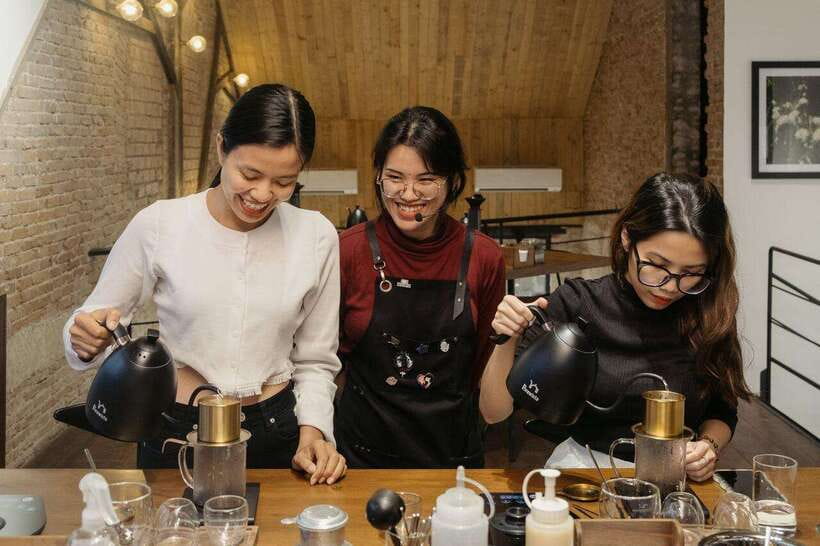
Coffee here is hands-on, not just tasting. In 150 minutes, you brew two Lacàph blends using Vietnamese beans with a classic phin filter and a microfilter setup.
I also like the show-and-smell roasting moment, where you hear the crackle as Lacàph demonstrates a small batch of the Phin Blend. Guides like Vi and Giao keep things organized and fun, but one drawback to consider is that this isn’t for wheelchair users, and the meeting spot involves stairs.
In This Review
- Key points I’d bank on
- Hands-on Vietnamese coffee: what the 150 minutes feels like
- Your two cups: filter coffee and phin brewing you can copy at home
- 1) Filter coffee: Lacàph Filter Blend + bánh đậu xanh
- 2) Phin coffee: Lacàph Microfilter Phin Brewer + Lacàph Phin Blend
- A modern snack twist: cocoa coated cashews
- The crackle test: small-batch roasting in real time
- Sweet pairings that make Vietnamese coffee click
- The culture component: stories across Hà Nội, Đà Lạt, and Chợ Lớn
- Where Lacàph meets you in District 1 (and how to not miss it)
- Price and value: why $30 is more than a coffee tasting
- Who this workshop suits best (and who should skip)
- Should you book this Lacàph coffee experience?
- FAQ
- How long is the Vietnamese coffee experience in Hồ Chí Minh City?
- How much does it cost?
- What coffee and food are included during the workshop?
- Is there a roasting demonstration?
- Is there any cultural content beyond coffee brewing?
- Where do I meet the group?
- What languages are spoken during the experience?
- Is it wheelchair accessible, and are pets allowed?
Key points I’d bank on

- Two practical brews using Vietnamese coffee beans, with simple methods you can repeat at home
- Roasting demo with the crackling sound plus an aromatic, real-time smell check
- Food pairings that match each coffee style, including bánh đậu xanh and cocoa cashews
- Mini-documentary culture time featuring stories across Hà Nội, Đà Lạt, and Chợ Lớn (Sài Gòn)
- English and Vietnamese instruction, so you can ask questions without guessing
Hands-on Vietnamese coffee: what the 150 minutes feels like
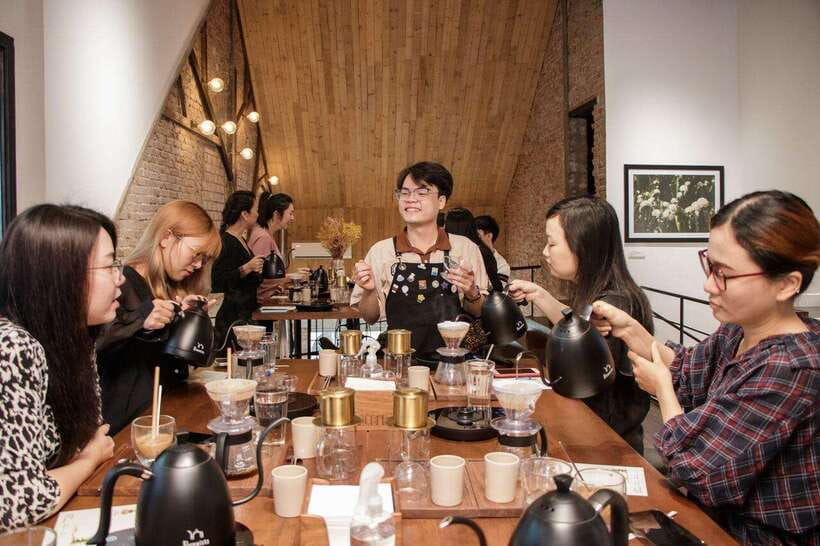
This is a coffee workshop built around doing, not just watching. The flow is timed and clear, so you’re not stuck waiting or standing around while the group drifts. You start with a multi-sensory coffee experiment that sets your brain up for what to notice later, like aroma, texture, and how taste changes as coffee moves from heat to cup.
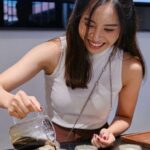
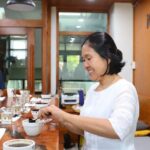
Then the session turns practical: you brew. You’ll work with two Lacàph blends and make coffee using equipment that matches what Vietnamese cafés actually use. The guide-led pacing is the kind that helps beginners move fast, without feeling rushed.
You should also come in “uncaffeinated,” if you can. Not because it’s strict, but because you’ll get more out of the tasting portion when your senses aren’t already saturated.
You can also read our reviews of more tours and experiences in Ho Chi Minh City

Your two cups: filter coffee and phin brewing you can copy at home

The best part for me is that you don’t leave with only opinions about coffee. You leave with steps you can repeat.
1) Filter coffee: Lacàph Filter Blend + bánh đậu xanh
First up is Lacàph Filter Blend, served with bánh đậu xanh (mung bean cake). This pairing matters because Vietnamese coffee flavor can feel bold and slightly different from what people expect from drip coffee. The cake helps balance the experience, so you can pick up sweetness and roasted notes without everything tasting one-dimensional.
You also learn what “filter-style” means in practice. It’s not just taste; it’s extraction and aroma. When you see how the brew changes, you start understanding why Vietnamese cafés serve coffee that tastes strong but not necessarily harsh.
2) Phin coffee: Lacàph Microfilter Phin Brewer + Lacàph Phin Blend
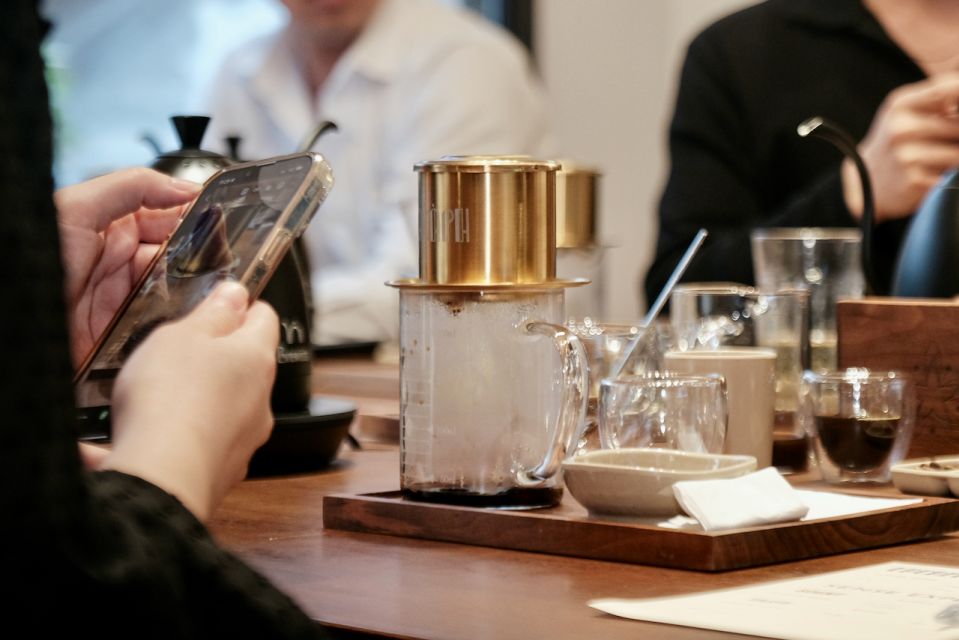
Next, you switch to a phin setup: Lacàph Microfilter Phin Brewer with Lacàph Phin Blend. This is where Vietnamese coffee has its signature identity. The phin’s slow drip affects body and concentration, and you can actually notice the difference while it brews.
The guide doesn’t treat this like a black box. You’ll use simple methods designed for you to recreate later at home. If you’ve ever bought phin brewers but felt you were just “winging it,” this part is the antidote. You’ll understand what to pay attention to: how long it takes, what the coffee looks like as it drips, and how the final cup should feel on the palate.
A modern snack twist: cocoa coated cashews
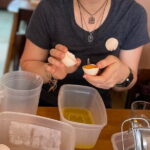
For the phin portion, you also get a contemporary pairing: cocoa coated cashews. It’s an interesting match because it mirrors coffee’s chocolatey roast tones while adding a crunch and fat that rounds out bitterness. Even if you’re not a big snack person, this pairing helps you read the coffee better.
You can also read our reviews of more tours and experiences in Ho Chi Minh City



The crackle test: small-batch roasting in real time
If you like your learning to include your nose, this is the moment. You watch a small batch roast of Lacàph Phin Blend, and you get a sensory guide through what happens as beans change.
The highlight is the crackling sound of the roast. It’s not just “cool to hear.” That sound is a timing clue you can use when you’re trying to understand roast levels in general. Then you smell the change as the batch progresses. Coffee aroma is information. Once you’ve linked smell to roasting stage, it becomes easier to buy coffee with confidence later.
This roasting demo is also a good lesson in scale. “Small batch” matters because it keeps the experience human and understandable. You’re not standing in front of a massive machine with no context; you’re learning how roast profiles influence what ends up in your cup.
Sweet pairings that make Vietnamese coffee click
Coffee culture is easier to grasp when you taste the food alongside it. Here, your snacks aren’t afterthoughts.
- Bánh đậu xanh (mung bean cake) pairs with the filter coffee so you can notice sweetness and roasted depth without fighting harsh bitterness.
- Cocoa coated cashews pair with the phin coffee, adding a chocolate note and texture that helps you “read” the coffee like a flavor map.
I like this approach because it keeps the workshop balanced. Some coffee classes are all bitterness and technique. This one uses food to translate the science into something you’d actually want to order in a café.
The culture component: stories across Hà Nội, Đà Lạt, and Chợ Lớn
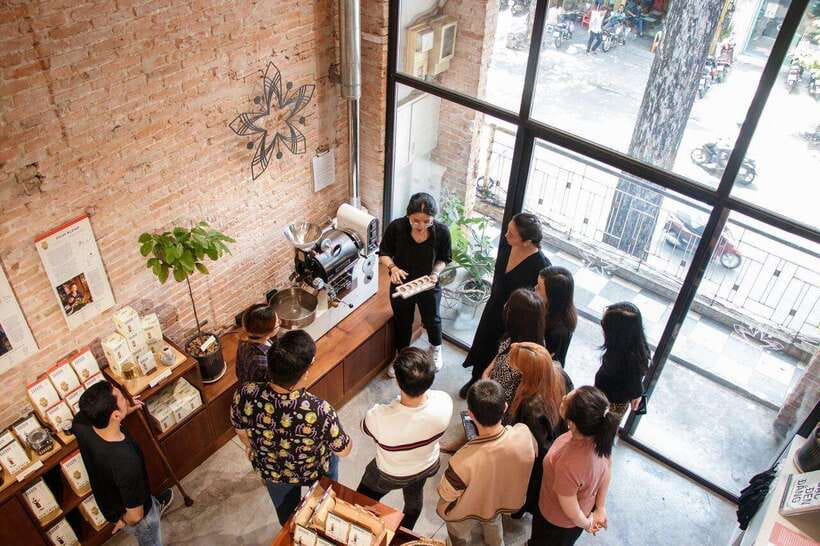
You don’t just brew coffee; you also get context for where it comes from and why it matters in Việt Nam. The workshop includes an in-house mini-documentary series, built from visual stories that connect farming and everyday life to the cup in front of you.
The places highlighted include Hà Nội, Đà Lạt, and Chợ Lớn in Sài Gòn. That geographic spread helps you see coffee as more than one region’s product. Different parts of Việt Nam have different environments and trade routes, and those differences show up in how people talk about coffee and how it becomes part of local routine.
This section is also where guides like Vi and Giao shine. Their job isn’t to lecture. It’s to give you the emotional reason behind what you’re tasting. When you finish the videos, the coffee stops being a “flavor experiment” and becomes part of a living culture with farmers, neighborhoods, and personal stories behind it.
Where Lacàph meets you in District 1 (and how to not miss it)
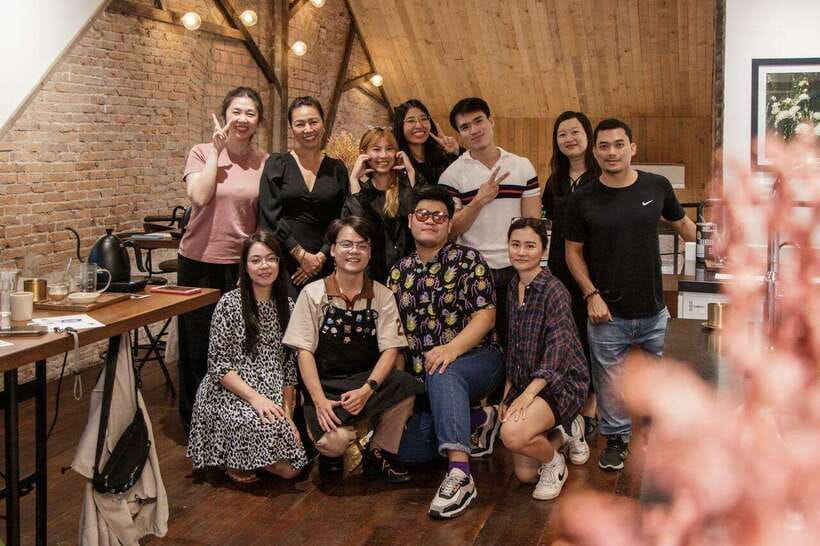
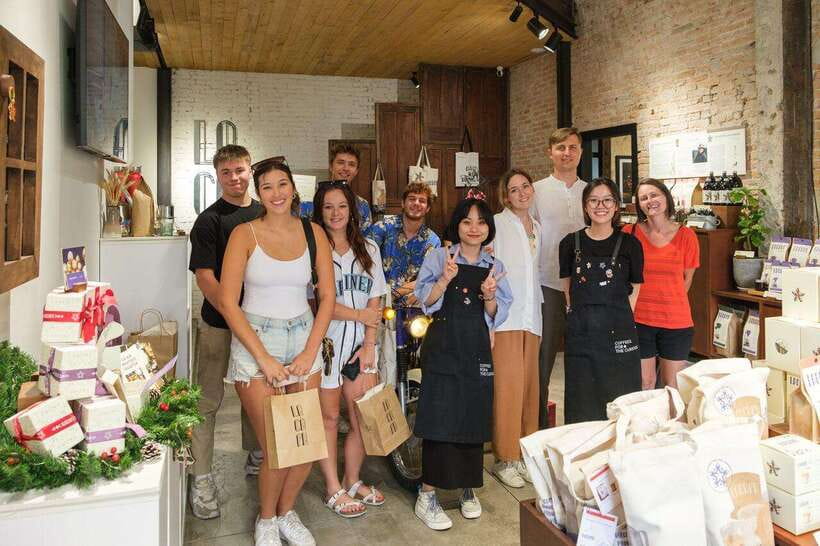
Meeting point is at Lacàph on the upper floor of a charming old building. Head to 220 Nguyễn Công Trứ, Nguyễn Thái Bình Ward, District 1.
When you arrive, look for the little sign just in front of a purple iron door. Step through, climb the stairs, then when you reach the top, take a sharp left. It’s quirky in the best way, but it can be easy to walk past if you’re rushing, so give yourself a few extra minutes.
Because this is upstairs and not wheelchair-suitable, plan your route accordingly. If you have limited mobility, treat this as a hard constraint rather than a “maybe.”
Price and value: why $30 is more than a coffee tasting
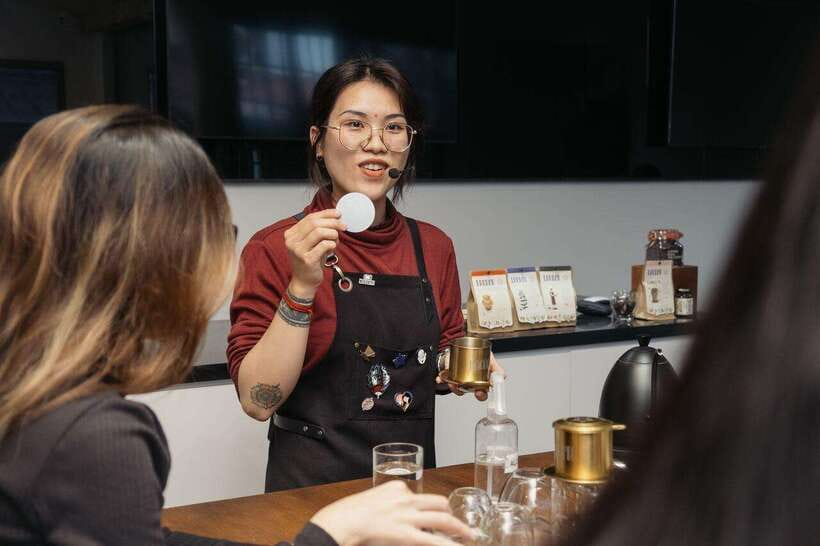
At $30 per person for about 150 minutes, the value comes from how much is included and how active you are.
Here’s what’s built into that price:
- You brew two Vietnamese coffee blends
- You get coffee plus food pairings, including bánh đậu xanh and cocoa coated cashews
- You witness a roasting demo with a small batch of the Phin Blend
- You watch a mini-documentary series that adds cultural context
- You have an instructor in English and Vietnamese to guide your process
A typical coffee tasting can be passive: a few sips and some general commentary. This workshop is different because you get a repeatable skill. The moment you can brew your own phin coffee in a consistent way, the class becomes a tool, not just an experience.
Also, the pacing matters. Several people have pointed out that the session feels organized and scheduled without being stiff, which is exactly what you want when you’re trying to learn brewing steps in a group setting.
Who this workshop suits best (and who should skip)
This is ideal if you:
- Like hands-on food and drink experiences
- Want to understand Vietnamese coffee beyond taste alone
- Enjoy learning through sensory cues like aroma, sound, and texture
- Are a beginner who wants clear steps for brewing at home
It may be less ideal if you:
- Need wheelchair accessibility (this one isn’t suitable for wheelchair users)
- Travel with pets (pets aren’t allowed)
- Are very sensitive to caffeine, since the session includes multiple coffee styles and tasting
If you’re short on time in Hồ Chí Minh City but still want something authentic that isn’t just another photo stop, this fits well. It’s a real skill-building session tied to Vietnamese identity.
Should you book this Lacàph coffee experience?

If you want more than a sip, book it. The combination of hands-on brewing, a roasting demo, and the story-driven culture segment makes this feel like a complete coffee lesson. The best payoff is that you’ll leave with practical brewing habits you can actually repeat, not just memories of how a cup tasted.
Skip it only if stairs or mobility is a hard issue for you, or if you’re unlikely to want coffee tastings at all. If that’s not your situation, this workshop is one of the most straightforward ways to learn Vietnamese coffee in District 1 without guesswork.
FAQ
How long is the Vietnamese coffee experience in Hồ Chí Minh City?
The experience lasts 150 minutes.
How much does it cost?
It costs $30 per person.
What coffee and food are included during the workshop?
You’ll brew and taste coffee made with Lacàph blends, including Lacàph Filter Blend paired with bánh đậu xanh (mung bean cake). You’ll also have Phin coffee made with Lacàph Microfilter Phin Brewer and Lacàph Phin Blend, plus cocoa coated cashews.
Is there a roasting demonstration?
Yes. You’ll see a small batch roasting demo of Lacàph Phin Blend, including the crackling sound of roasting and an aromatic experience.
Is there any cultural content beyond coffee brewing?
Yes. You’ll watch an in-house mini-documentary series with stories connected to Vietnamese coffee, including scenes from Hà Nội, Đà Lạt, and Chợ Lớn in Sài Gòn.
Where do I meet the group?
Meet at Lacàph, located at 220 Nguyễn Công Trứ, Nguyễn Thái Bình Ward, District 1. Look for a sign in front of a purple iron door, then go up the stairs and take a sharp left at the top.
What languages are spoken during the experience?
The instructor offers English and Vietnamese.
Is it wheelchair accessible, and are pets allowed?
No. It’s not suitable for wheelchair users, and pets are not allowed.