REVIEW · HO CHI MINH CITY
Mekong Delta 2 Days: Floating Markets & Cultural Exploration
Book on GetYourGuide →Operated by MILLENIUM TRAVEL CO.,LTD · Bookable on GetYourGuide
Two days in the Mekong feels like a week. You get canal paddling in small waterways and a garden lunch you help cook, plus village stops that explain how daily life works here. The tradeoff: it is a full, early-start schedule with lots of sun and time on the road.
I like that the experience is guided in English and stays practical. On tours with guides like Lilly and Peter (and also Yudi, when assigned), the explanations stay grounded in real routines, not just facts. One thing to keep in mind: meals can be hit or miss, so go in expecting simple local dishes rather than a gourmet buffet.
Even the overnight makes sense. After a day of boats, bikes, and village walking, you sleep in Can Tho, then start again with an early boat trip to the Bassac River and the Cai Rang floating market.
In This Review
- Key highlights you will feel immediately
- Two Days, Two Rivers: What This Trip Really Is
- Morning Start in Ho Chi Minh City: Meeting Point and Pickup Reality
- Ho Chi Minh City to Cai Be: The First Shift in How People Live
- Cai Be Canals and Orchard Country: Why the Boat Ride Feels Personal
- Village Stops That Make the Delta Make Sense
- Ancient house visit: Ba Kiệt’s home base
- Coconut fudges and crispy rice popcorn
- Folk music and fruit sampling
- Lunch in a Garden: Cooking With Locals, Not Just Eating Food
- Cycling Through Orchards: The Best Way to Feel the Scale
- Boat Back to Cai Be, Then On to Can Tho for the Night
- Can Tho Breakfast and the Bassac River Boat Ride
- Cai Rang Floating Market: Trading You Can See Up Close
- Noodle Factory Walk and Munir Ansay Pagoda (Khmer Temple)
- Fruit Plantation by Boat: Seasonal Tastes Finish the Day
- Price and Value: Is $112 Fair for Two Days?
- Common Tradeoffs You Should Plan For
- Who This Mekong Delta 2-Day Tour Suits Best
- Should You Book This Mekong Delta 2 Days?
- FAQ
- Where is the meeting point in Ho Chi Minh City?
- Can I get pickup from my hotel?
- What does the tour price include?
- What meals are provided during the 2 days?
- What should I bring for the trip?
- What should I wear for the Khmer pagoda visit?
- Is the tour suitable for people with limited mobility or heart problems?
- Are pets and oversize luggage allowed?
- How flexible is cancellation and payment?
Key highlights you will feel immediately
- Small-canal canoe time in Cai Be: you look around at close range, not from a big tourist boat
- Family food stops and workshop visits: coconut treats and crispy snacks show how locals eat and sell
- Ba Kiệt’s ancient house in the village: history you can walk through, tied to everyday life
- Can Tho as a base for Day Two: one night makes the program less rushed than doing it all in one stretch
- Cai Rang floating market plus Khmer pagoda: river commerce and regional religion in one loop
Two Days, Two Rivers: What This Trip Really Is
This Mekong Delta 2-day tour is built around a simple idea: if you want to understand this region, you need to see how people move goods and how they live between water and fruit orchards. You do that by splitting the route between Cai Be (upper stretches and orchard country) and Can Tho with the Bassac River (lower delta trading zones).
You are not just watching scenery. You are getting hands-on contact with the place: sampan or boat rides on the canals, cycling through orchards, a cooking-focused lunch in a garden, and a market visit where trade actually happens on the water.
At $112 per person for 2 days, the value is in the combination. You are paying for transport between cities, a guide, entrance fees, boat time, one hotel night, and meals (1 breakfast and 2 lunches). It is the kind of package that works best when you want structure and less decision-making.
You can also read our reviews of more tours and experiences in Ho Chi Minh City


Morning Start in Ho Chi Minh City: Meeting Point and Pickup Reality
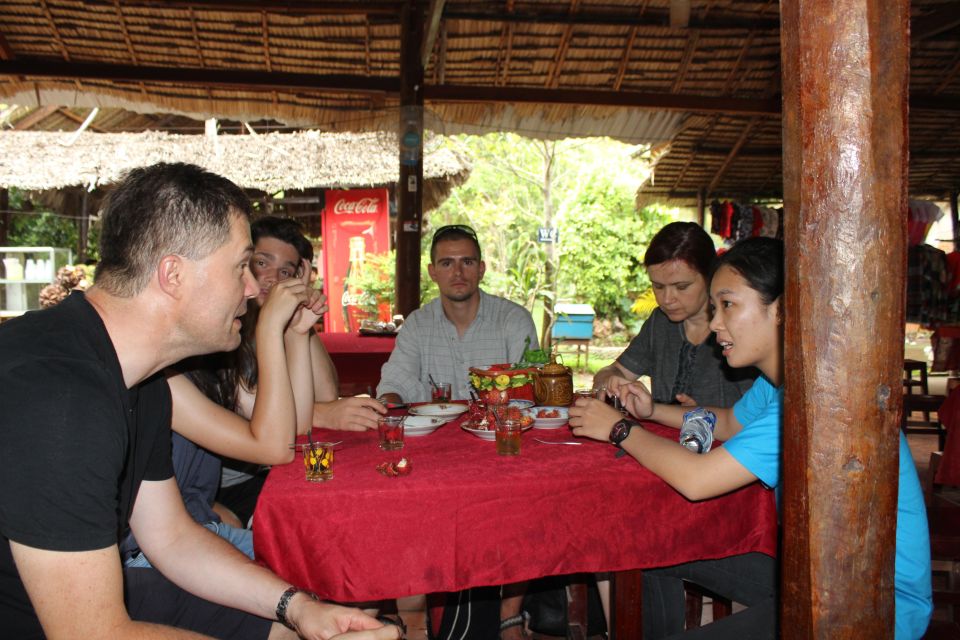
The day begins early. If you are not using optional pickup, you meet at 112 Tran Hung Dao Street, Ben Thanh Ward, District 1, Ho Chi Minh City at 07:30. Arrive at least 10 minutes early so you do not get left with the group.
If you do choose the pickup option, it is designed for people staying in central District 1 hotels. The designated pick-up/drop-off areas include Ben Thanh Ward, Cau Ong Lanh Ward, and part of Saigon Ward. The operator specifically notes that pickup is not included from some other streets/areas (including Nguyen Binh Khiem Street, Nguyen Huu Canh Street, and Tan Dinh Ward).
Why this matters: the Mekong schedule is built around boat and market timing. If you miss the meeting window, the rest of the day still runs.
Ho Chi Minh City to Cai Be: The First Shift in How People Live
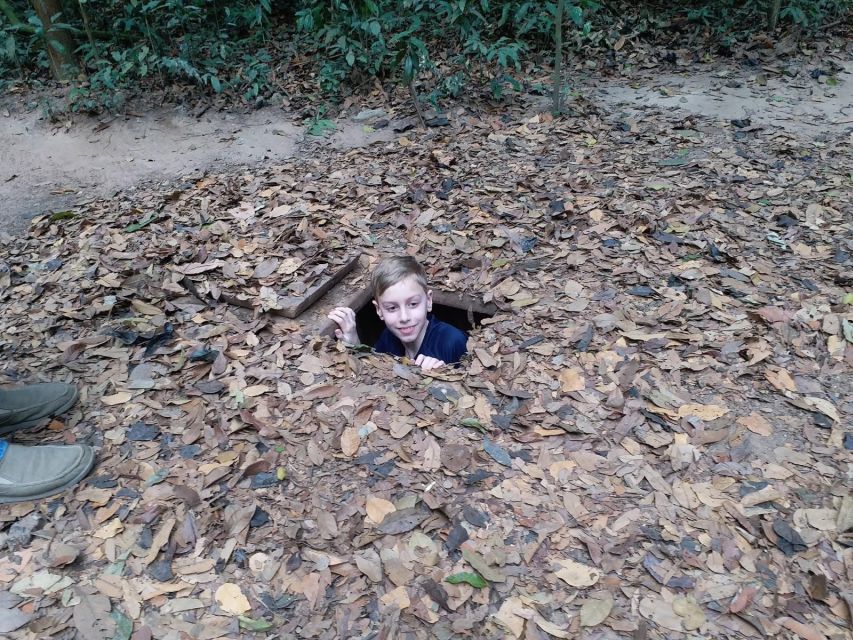
Your Day 1 route moves from the city into delta life, with the main destination being Cai Be. After pickup and the drive, you arrive and start learning the trade background right away.
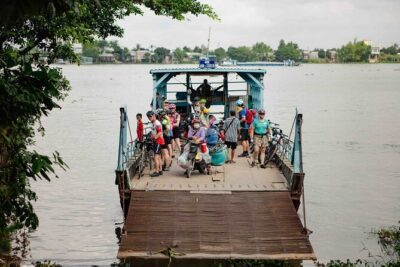
You get a boat ride to a remaining site of an older wholesale floating market on the Tien River. The point is not nostalgia. Your guide connects the change over time—how modern road transport and newer farming techniques reduced the need for some traditional water-based wholesale activity. You also get a sense of why orchards dominate here: this is the delta’s fruit-growing engine.
I find it helpful when guides explain the why behind the scenery. When you understand that fruit orchards and water transport were tightly linked, canals and gardens stop looking random.
Cai Be Canals and Orchard Country: Why the Boat Ride Feels Personal
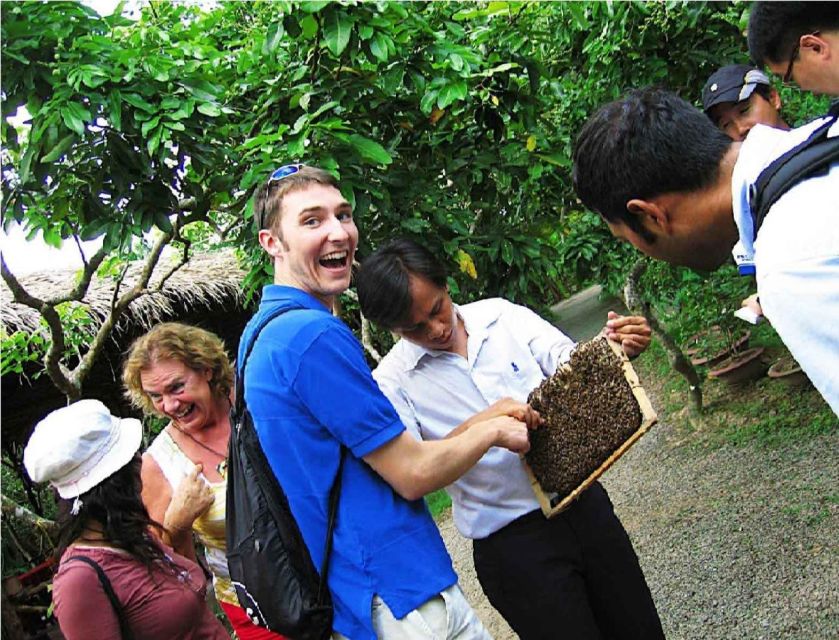
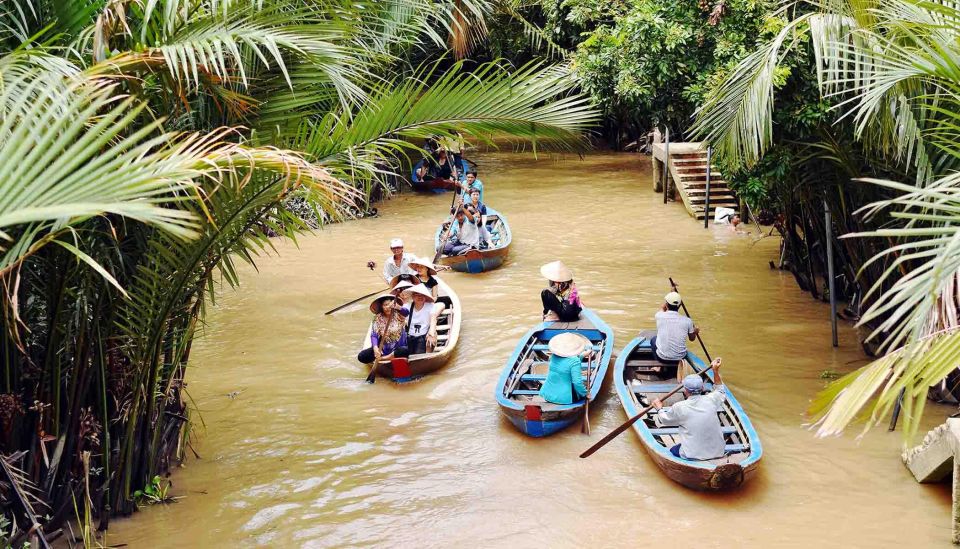
The Cai Be portion gives you close-up water time. Instead of only seeing the delta from shore, you paddle or ride through small canals. You get to look around at the way households and gardens sit beside the waterways.
This is one of the best parts of the itinerary because it slows everything down. You can watch daily routines, spot boats used for local movement, and understand how narrow waterways shape everything from transport to where people build and plant.
You will also spend time on or near Tan Phong Island, with a focus on nature and quiet moments after the busier village stops.
Practical note: this is very much sun-and-heat travel. Wear the comfortable shoes you packed, keep your sunglasses on, and use a sun hat. The program asks for those items for a reason.
Village Stops That Make the Delta Make Sense
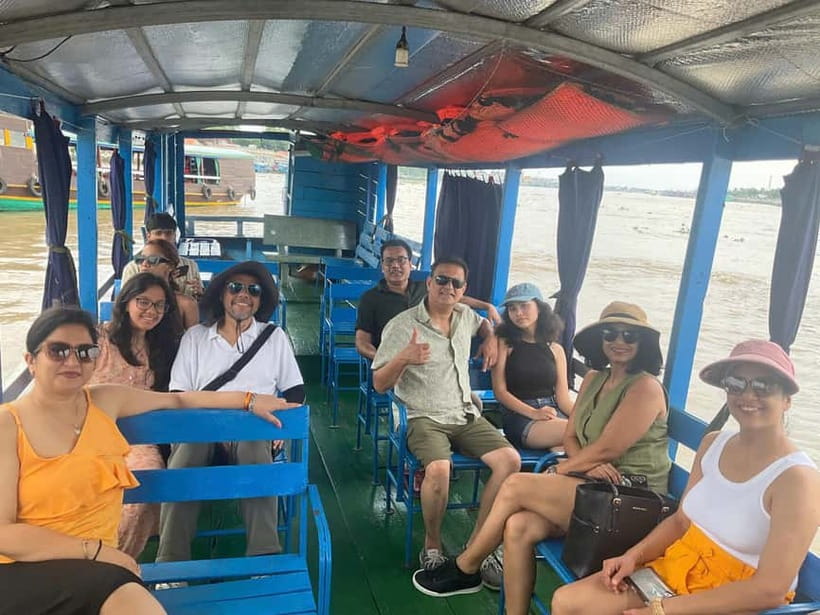
After the river time, the trip shifts into village exploration and small businesses—where you see how culture turns into daily work.




Ancient house visit: Ba Kiệt’s home base
You visit Ba Kiệt’s ancient house and learn about village life around it. This stop works because it is not just a photo stop. The idea is to show how people lived, how families organized themselves, and how local identity remains tied to the place even as trade changes.
Coconut fudges and crispy rice popcorn
You also stop at a small family workshop where locals make coconut fudge and crispy rice popcorn. These are the kind of items you could easily ignore if you only cared about big sights. But here, they act like a window into the local economy—what gets made, what gets sold, and how food travels with village commerce.
Folk music and fruit sampling
You taste fresh fruit and hear slow rhythms of Southern Vietnamese folk music—music shaped by Mekong delta life. Even if you do not understand every lyric, you feel the intent: this is culture that grew from river routines, farming seasons, and community gatherings.
Lunch in a Garden: Cooking With Locals, Not Just Eating Food
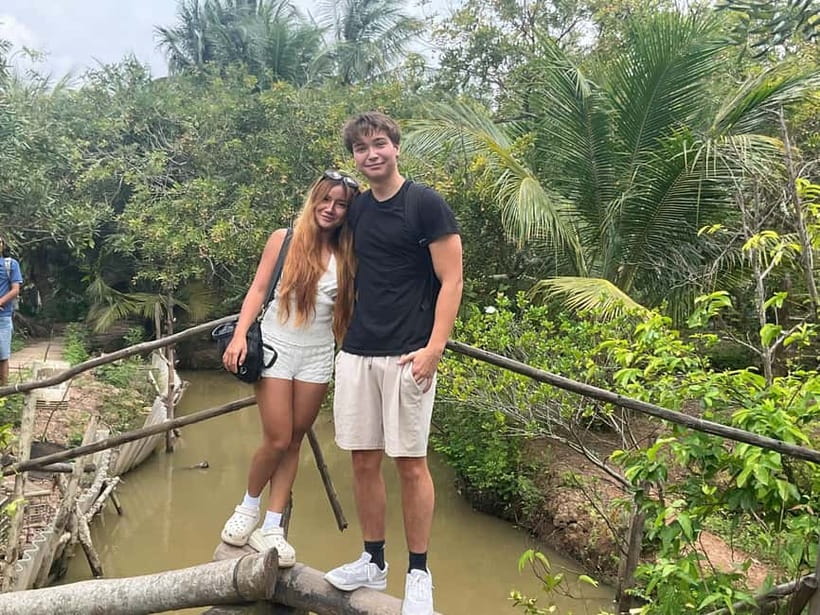
Lunch on Day 1 is one of the reasons I like this route. You eat luscious food, but it is also structured as a learning moment. The meal is cooked by the group you are with and served in the heart of a local garden.
This changes the experience in a simple way. Instead of arriving at a restaurant and leaving quickly, you get to understand flavors and ingredients in context. You also spend time with locals while the cooking is happening.
If you are picky about food, temper expectations. One part of the experience is that it is local and straightforward. Still, when the day’s earlier stops are hands-on, even a basic meal feels like part of the journey.
Cycling Through Orchards: The Best Way to Feel the Scale
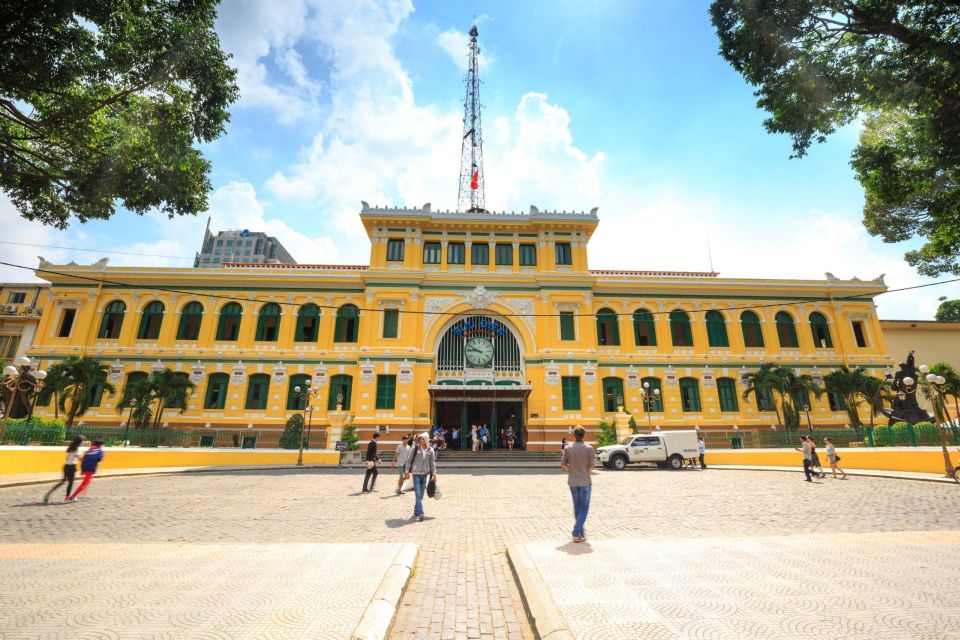
After lunch, you cycle on village paths through orchards. This section helps you grasp how large the growing area is—and how fruit production shapes the delta’s geography.
Cycling also changes your pace. On a boat you are moving with the water. On a bike you control the speed. You can look at tree lines, irrigation-style planting patterns (as visible locally), and the way homes sit close enough to gardens that the borders feel casual.
You also meet islanders to hear more about daily life in the Mekong Delta. The more time you spend doing this, the less the delta feels like a generic travel postcard.
Boat Back to Cai Be, Then On to Can Tho for the Night
Toward the end of Day 1, you take a boat ride back to Cai Be and then switch to the bus for the trip to Can Tho City. You overnight in Can Tho, which is the heart of the Mekong Delta for many visitors because it is a practical base for markets and the next day’s river routes.
This overnight is not just for sleeping. It helps you reset. You go into Day 2 with less exhaustion than if you tried to run the program straight through with no break.
Hotel rooms are booked for you in a twin/double shared setup. If you have strong preferences about bed configuration or room type, it is smart to confirm those details before you go.
Can Tho Breakfast and the Bassac River Boat Ride
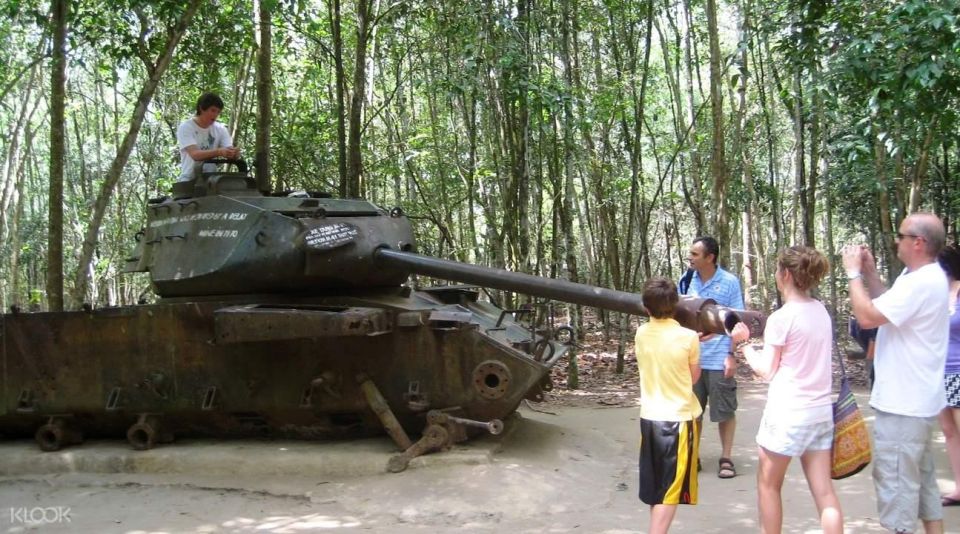
Day 2 starts with breakfast at the hotel. Then you go back onto the water, exploring tributaries of the Lower Mekong River (Bassac River).
This portion sets up the floating market visit. You are not walking into Cai Rang blind. You’ve already seen how waterways function as the main streets of commerce.
The boat time also acts like a filter. You can see what kind of boats and activity matter most for trade at this stage of the delta.
Cai Rang Floating Market: Trading You Can See Up Close
Cai Rang Floating Market is the star market stop of Day 2. The program focuses on it as the most active floating market in the region. You will see the daily rhythm of buying and selling on the water.
One reality check: the market experience depends on timing and what is running that morning. If you expected a sea of boats in every frame, you might feel slightly disappointed when there are fewer boats than your imagination. Still, the overall value is the combination: the market plus the river approach plus the next cultural stops.
When I recommend this stop, I tell people to go with curiosity, not a checklist of how many boats you hope to see. Look for how goods move, how people work, and how quickly the action changes.
Noodle Factory Walk and Munir Ansay Pagoda (Khmer Temple)
After the market, you do a walking tour of a local noodle factory. This is a good mid-morning stop because it shifts you away from the water without turning the day into a museum visit. You see food production as an active process.
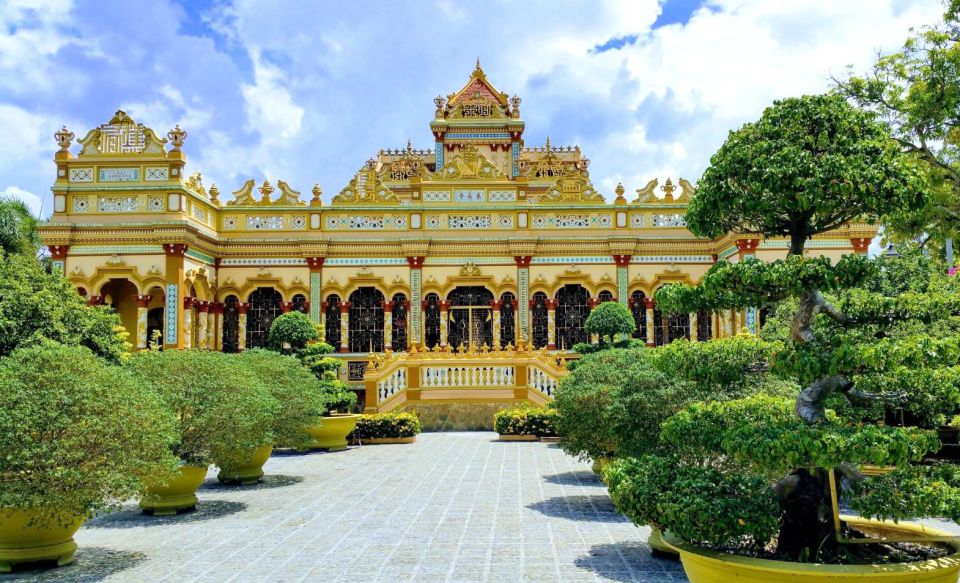
Then comes Munir Ansay Pagoda, a Khmer temple known for its unique structure. This stop matters because the Mekong Delta is not only Vietnamese. Khmer religious architecture appears here as part of the region’s cultural blend.
Dress code note: you need to cover shoulders and knees for the pagoda. Bring clothing that lets you do that comfortably. This is one of those rules that is easy to forget until you are standing at the gate.
Fruit Plantation by Boat: Seasonal Tastes Finish the Day
Near the end, you take a boat to visit a fruit plantation. You then enjoy seasonal fruit.
This is a satisfying close because it ties back to Day 1’s orchard focus. You start with fruit-growing as an economic driver, you see local workshop production, you bike through orchards, and you end by tasting what is in season right now.
After lunch, you return to Ho Chi Minh City to close the tour. The return time depends on traffic, and the local operator notes it is not responsible for delays.
Price and Value: Is $112 Fair for Two Days?
At $112 per person for 2 days, you are paying for more than transportation. The package includes:
- Boat trips (Day 1 canals and Day 2 river/market approach)
- A live English guide
- Entrance fees
- Meals as listed (1 breakfast, 2 lunches)
- One overnight hotel night in Can Tho (twin/double shared room)
- All program sightseeing and transport between points
Where this price feels especially fair is when you compare it to piecing together the same river time, market visit, pagoda stop, and meals with separate bookings. The itinerary is dense, but it is also clear about what you get.
Where it can feel less fair is if you are the type who wants more free time, fewer stops, or higher-end restaurant meals. Even with that, this tour is built around local experiences, and the cost reflects that.
Common Tradeoffs You Should Plan For
Here are the main practical issues that can affect your day, based on the way this tour operates:
- The schedule is full: you start early, move often, and spend a lot of time outdoors.
- Food quality can vary: one traveler found meals mediocre. When you know it is local lunch included in the program, you can adjust expectations.
- Floating market visuals are timing-dependent: if you expected a guaranteed picture-perfect abundance of boats, you might be slightly disappointed when the morning looks calmer.
- Return time depends on traffic: plan your evening in Ho Chi Minh City without assuming a strict hour.
Also, this tour is not for everyone. It is listed as not suitable for pregnant women, people with mobility impairments, people with heart problems, and wheelchair users.
Who This Mekong Delta 2-Day Tour Suits Best
This is a strong fit if you want:
- More river time than just one market photo
- A mix of culture, food, and landscapes tied to daily life
- An English-speaking guide who explains how trade and village living connect
- A ready-made structure from Ho Chi Minh City to Can Tho without complex planning
If you want quiet travel, minimal walking, or a slow pace with lots of downtime, you might find the day-to-day moving schedule harder. And if food is your top priority, you may prefer a more flexible route so you can choose restaurants on your own.
Should You Book This Mekong Delta 2 Days?
Yes, if you want a guided, hands-on introduction to the Mekong Delta and you are comfortable with an active two-day pace. The combination of cai be canal paddling, garden lunch, village workshop visits, and the Day 2 market + Khmer temple + fruit tasting makes this package feel like a real slice of the delta.
Before you book, make your decision around three points:
- Are you okay with early starts and a packed schedule?
- Can you match the dress code for pagoda visits (shoulders and knees covered)?
- Do you expect local set meals rather than restaurant-level food?
If those match your style, this tour is a solid way to see the delta’s water life and orchard culture without building the whole plan yourself.
FAQ
Where is the meeting point in Ho Chi Minh City?
The meeting point is at 112 Tran Hung Dao Street, Ben Thanh Ward, District 1, Ho Chi Minh City. The meeting time is 07:30 AM, and you should arrive at least 10 minutes early.
Can I get pickup from my hotel?
Pickup is optional and available for select locations in Ho Chi Minh City’s central District 1. The designated pick-up/drop-off areas include Ben Thanh Ward, Cau Ong Lanh Ward, and a portion of Saigon Ward. Pickup is not included from Nguyen Binh Khiem Street, Nguyen Huu Canh Street, and Tan Dinh Ward.
What does the tour price include?
It includes transportation and sightseeing as per the program, boat trips, a guide, all entrance fees, meals as indicated (1 breakfast and 2 lunches), and accommodation in a twin/double shared room.
What meals are provided during the 2 days?
You get 1 breakfast and 2 lunches during the tour, as listed in the program.
What should I bring for the trip?
Bring your passport or ID card, comfortable shoes, sunglasses, and a sun hat.
What should I wear for the Khmer pagoda visit?
For Munir Ansay Pagoda, you need to dress appropriately with shoulders and knees covered.
Is the tour suitable for people with limited mobility or heart problems?
No. The tour is not suitable for people with mobility impairments, wheelchair users, or heart problems, and it is also not suitable for pregnant women.
Are pets and oversize luggage allowed?
Pets are not allowed, and oversize luggage is not allowed.
How flexible is cancellation and payment?
You can cancel up to 24 hours in advance for a full refund. You can also reserve now and pay later, meaning you do not pay anything today.